16 Trending Farmhouse Interior Ideas for a Warm, Welcoming and Wonderful Home
Farmhouse interior design combines reclaimed wood, black iron hardware, and a soft, neutral color palette into a look that feels warm and welcoming without tipping into overly rustic or dated territory. This list breaks down the specific materials, colors, and details that define this style throughout a home, from shiplap walls to an apron-front sink, along with notes on how to keep the look feeling current rather than like a themed reproduction. Whether you’re renovating an actual farmhouse or simply drawn to this warm, approachable aesthetic, these ideas should help you build the look room by room.
Trend & Background
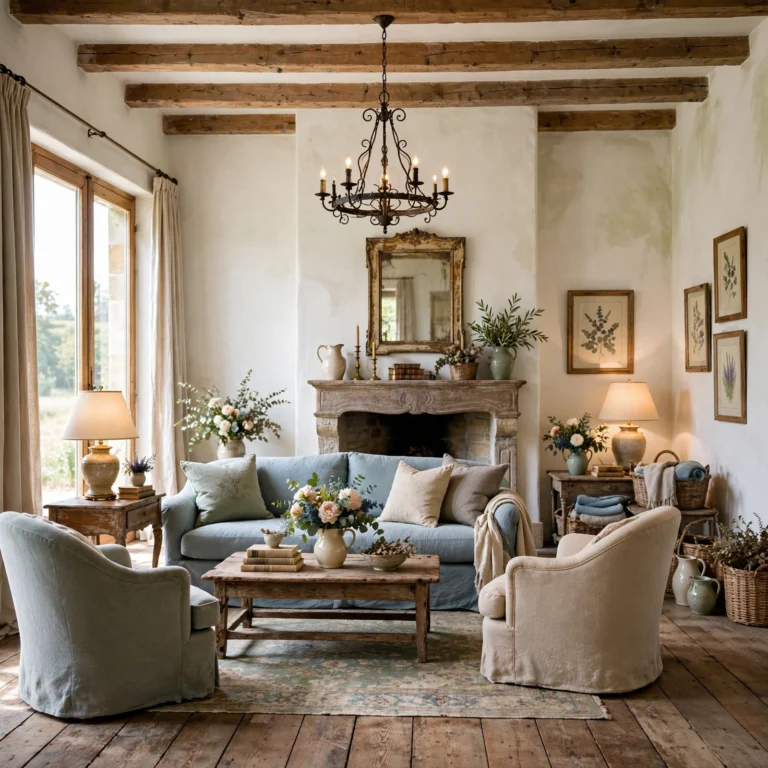
Farmhouse interior design surged in popularity over the past decade, driven partly by home renovation media that popularized the style’s specific combination of rustic materials and a bright, neutral color palette. This look draws on genuine rural and agricultural architectural history, referencing the practical, unfussy design choices found in actual working farmhouses, then updating those elements with a more polished, considered execution. As the style has matured, many homeowners and designers have moved away from its earlier, sometimes overly literal interpretation toward what’s often called modern farmhouse, balancing the classic rustic elements with cleaner, more current furniture lines and a slightly more restrained approach to rustic signage and decor.
Key Takeaways
- Farmhouse interior design combines rustic, reclaimed materials with a light, neutral color palette, creating a look that feels both warm and current rather than dated.
- Black iron hardware and fixtures provide a consistent thread of contrast throughout the house, tying together the style’s otherwise soft, neutral surfaces.
- Open shelving and visible storage play a bigger decorative role in farmhouse design than in most other styles, turning everyday items into part of the room’s overall look.
- Balancing rustic, imperfect textures with cleaner, more current furniture lines keeps a farmhouse interior from feeling overly themed or costume-like.
1. Shiplap Wall Paneling
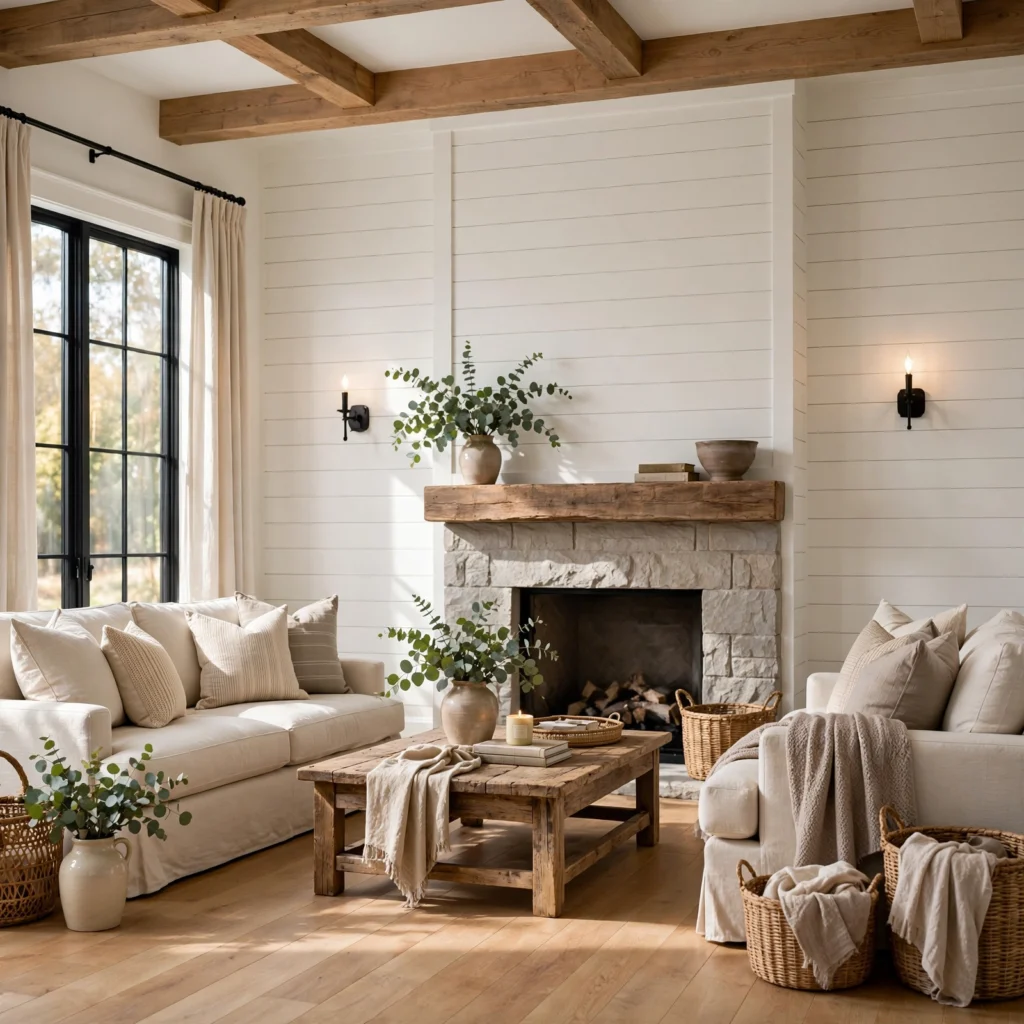
Shiplap wall paneling installs horizontal wood boards with a distinctive overlapping edge across a wall or ceiling, creating the textured, linear look most closely associated with farmhouse style. Painting the shiplap white or a soft cream color keeps the overall look bright and current, while a stained or natural wood finish leans into a more rustic, cabin-adjacent direction. This detail works particularly well as an accent wall or a full room treatment in a living room, bedroom, or entryway, adding texture without requiring elaborate millwork detail.
| Farmhouse Element | Material | Common Placement |
| Shiplap Paneling | Wood | Accent walls, ceilings |
| Apron-Front Sink | Fireclay or cast iron | Kitchen |
| Reclaimed Beams | Salvaged wood | Ceiling, mantel |
2. Apron-Front Farmhouse Sink
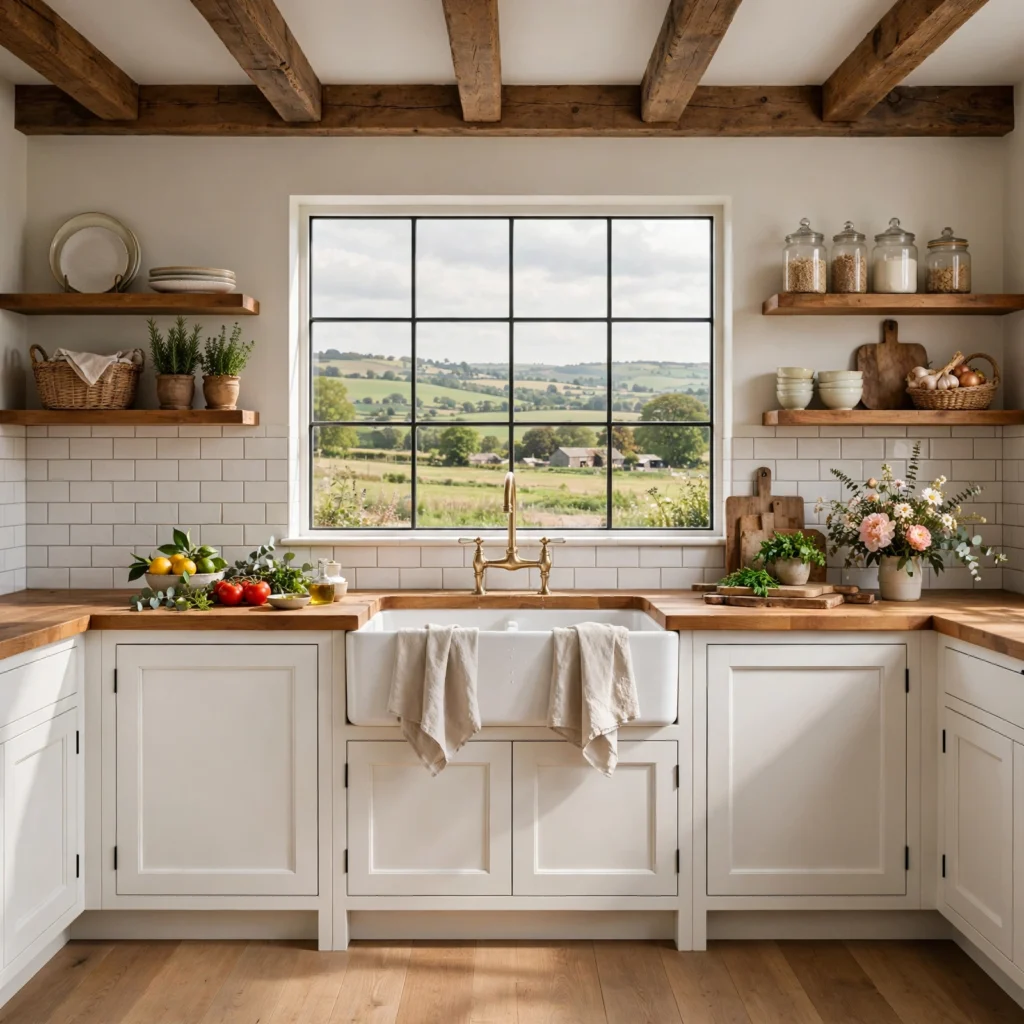
An apron-front farmhouse sink features a deep basin with an exposed front panel that extends past the surrounding cabinetry, rather than being tucked entirely beneath the countertop the way a standard undermount sink is installed. This detail is one of the most recognizable, signature elements of farmhouse kitchen design, referencing the deep, practical sinks found in actual working farmhouse kitchens historically. Choosing a fireclay or cast iron material provides better durability for this heavily used fixture than a more decorative but less practical option.
In order to see more options for small house interior CLICK HERE
3. Reclaimed Wood Beams
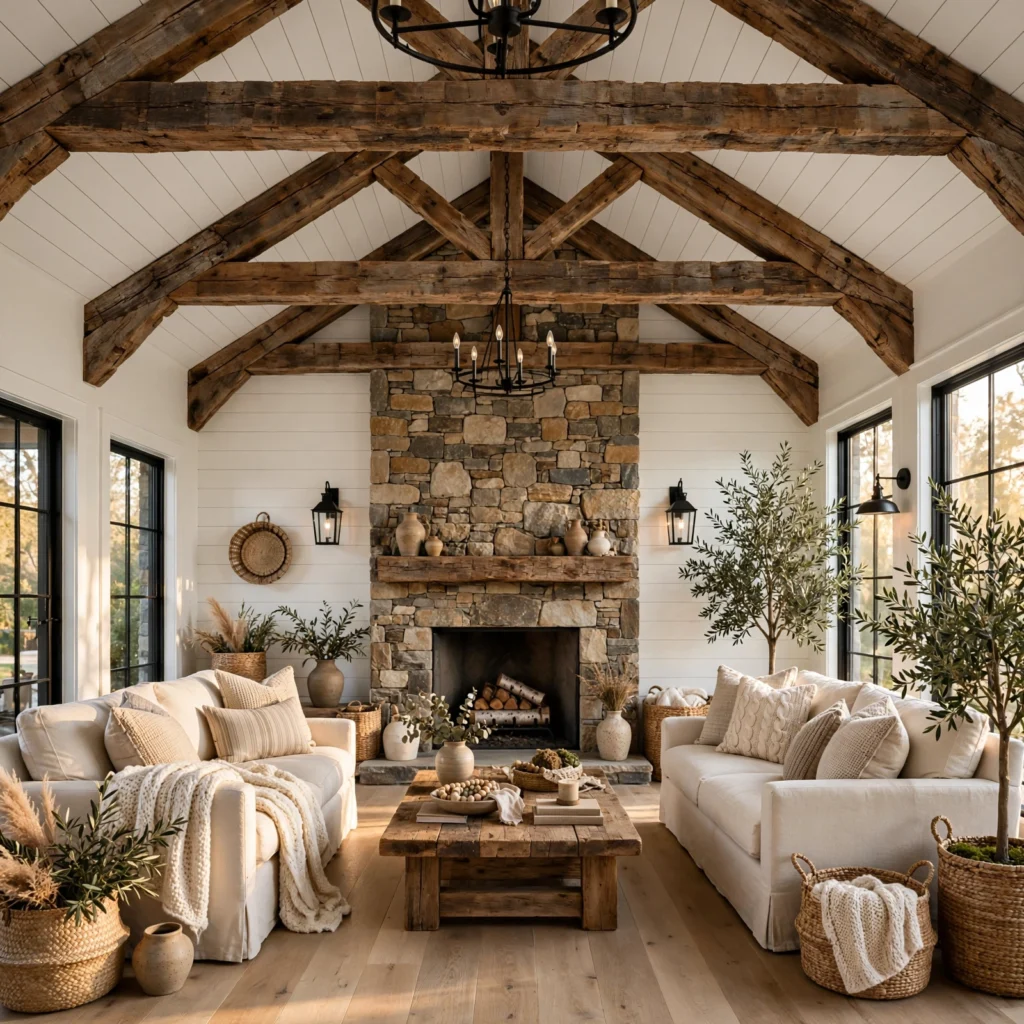
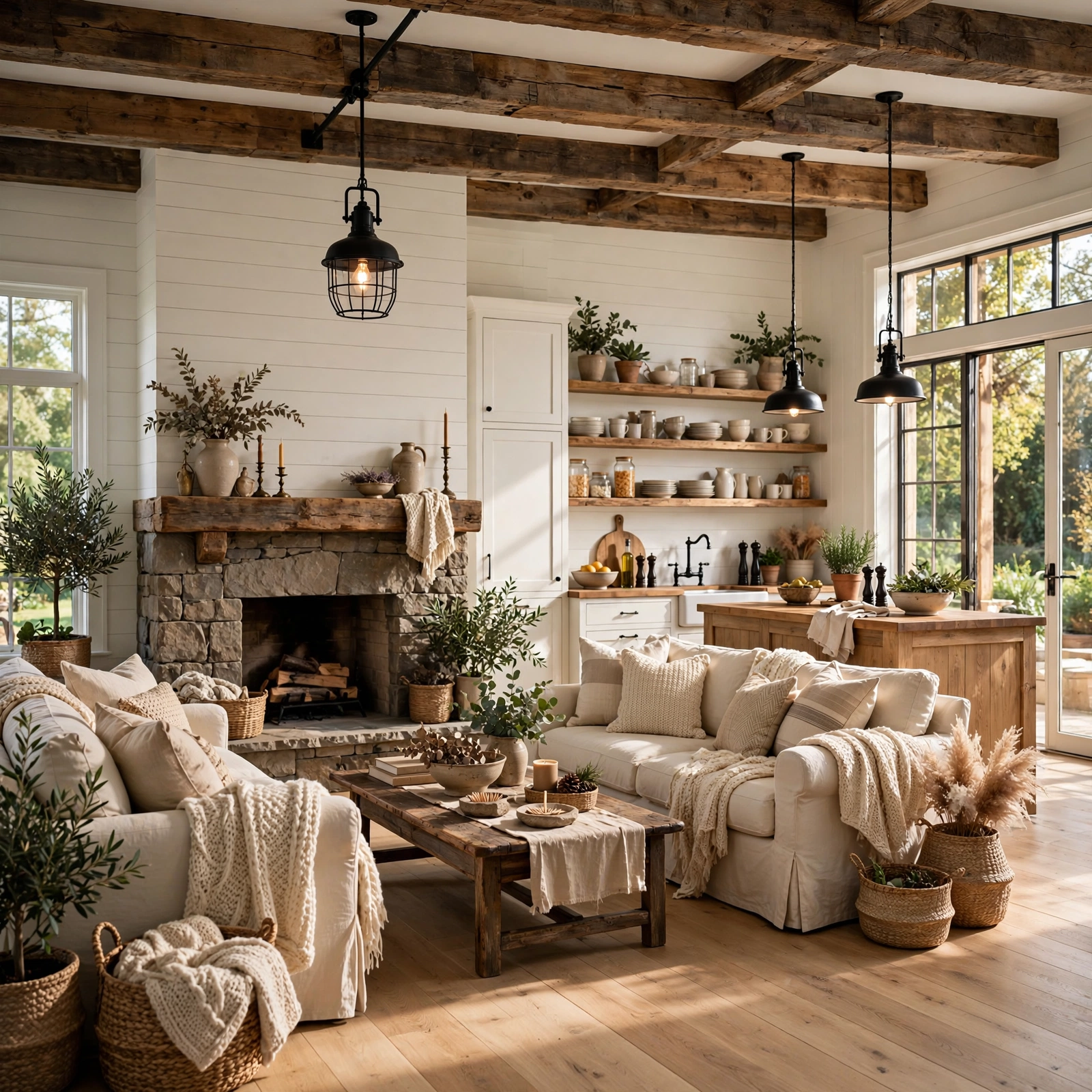
Reclaimed wood beams add ceiling or mantel detail using salvaged lumber, often sourced from old barns or factory buildings, bringing genuine architectural age and character into a home regardless of the structure’s actual age. This detail works particularly well in a room with adequate ceiling height to support the beams’ visual weight without feeling overly heavy or low. Choosing beams with visible saw marks, nail holes, or weathering, rather than a uniform, new-looking wood, reinforces the reclaimed, storied quality central to this detail’s appeal.
4. Black Iron Hardware Throughout
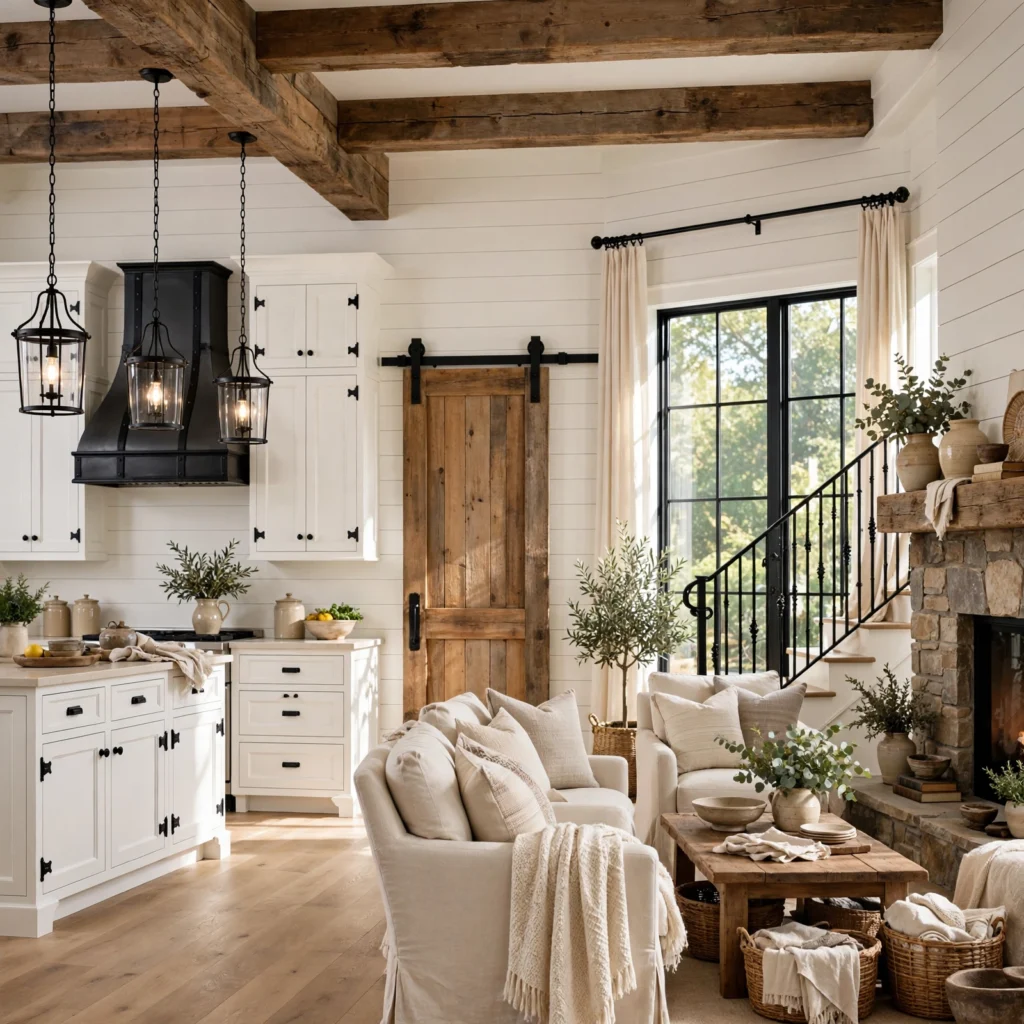
Black iron hardware throughout the house applies a consistent matte black finish to cabinet pulls, light fixtures, and door hardware, providing a graphic thread of contrast against farmhouse design’s typically lighter, neutral wall and cabinetry colors. This finish reads as more current than a shinier, more polished black alternative, and it pairs particularly well with both white shiplap and warmer wood tones found elsewhere in this style. Applying this hardware finish consistently across the kitchen, bathrooms, and any other cabinetry throughout the home reinforces the sense of cohesion this style depends on.
5. Open Shelving with Crockery Display
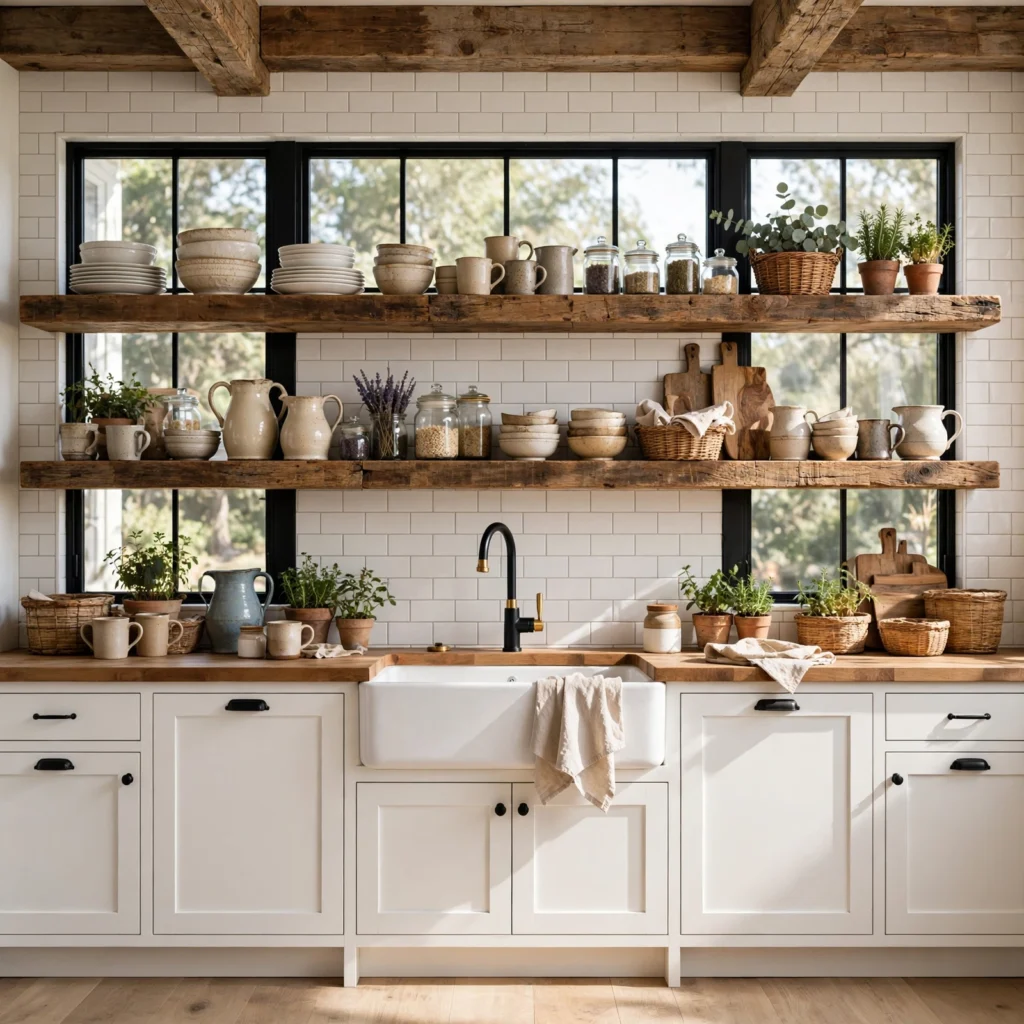
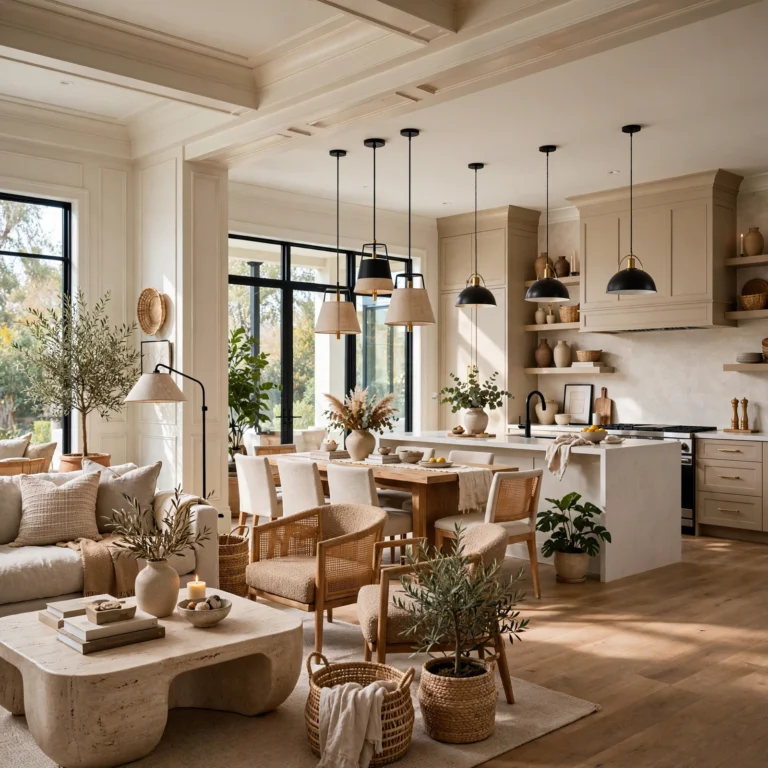
Open shelving with a crockery display replaces some or all upper kitchen cabinets with exposed shelving, showing off stacked plates, bowls, and pitchers as part of the room’s overall decorative styling rather than hiding them behind closed doors. This detail works particularly well with a collection of white or cream ceramic dishware, which suits farmhouse design’s overall neutral palette better than a mismatched, brightly colored collection would. Styling the shelves with some intentional negative space, rather than filling every available inch, keeps the display looking curated rather than cluttered.
6. Distressed Wood Furniture
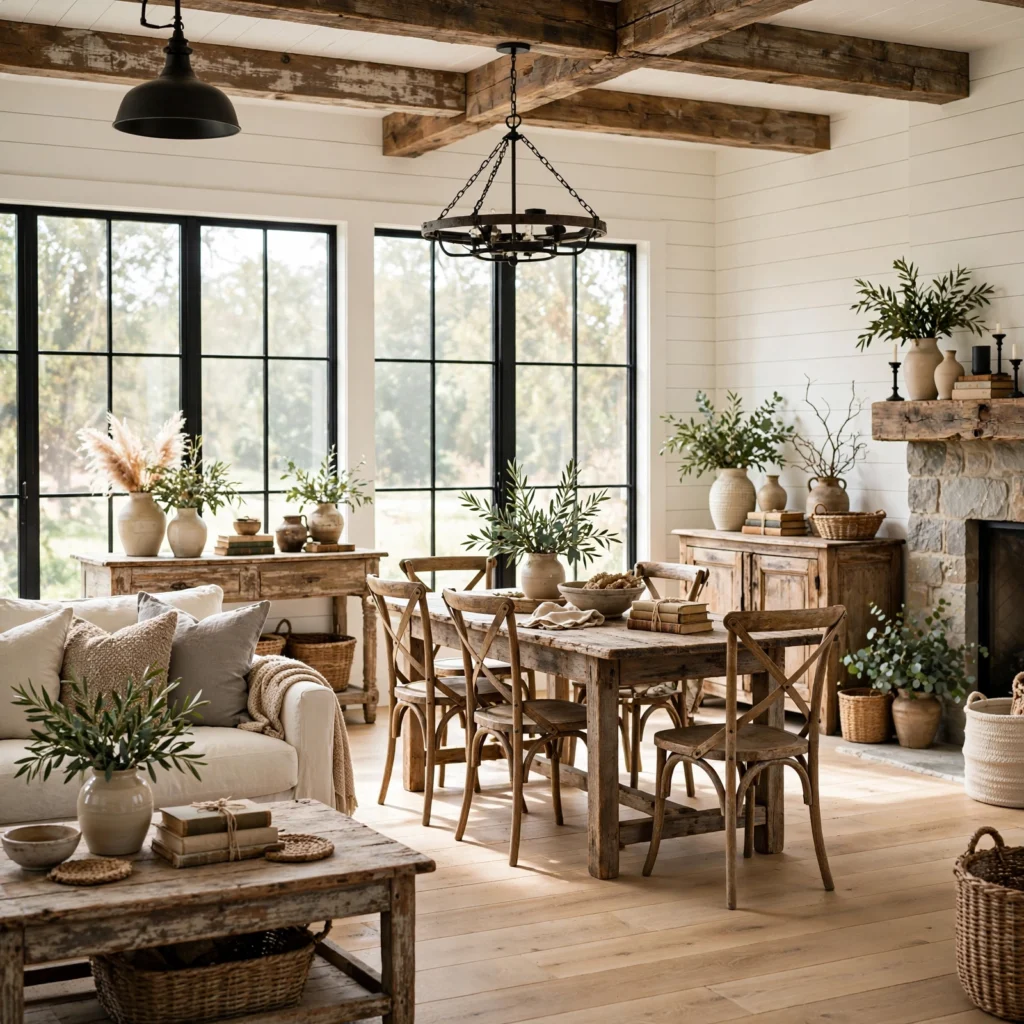
Distressed wood furniture uses pieces with an intentionally weathered, slightly worn finish, whether through genuine age or a deliberately applied distressing technique, adding texture and a sense of history throughout the home. This furniture style pairs particularly well with a farmhouse dining table or a console table in an entryway, where the weathered surface becomes a genuine focal point. Balancing a few distressed pieces with cleaner, more current furniture elsewhere in the same room prevents the overall look from feeling overly rustic or theatrically aged.
7. Neutral Cream and White Palette
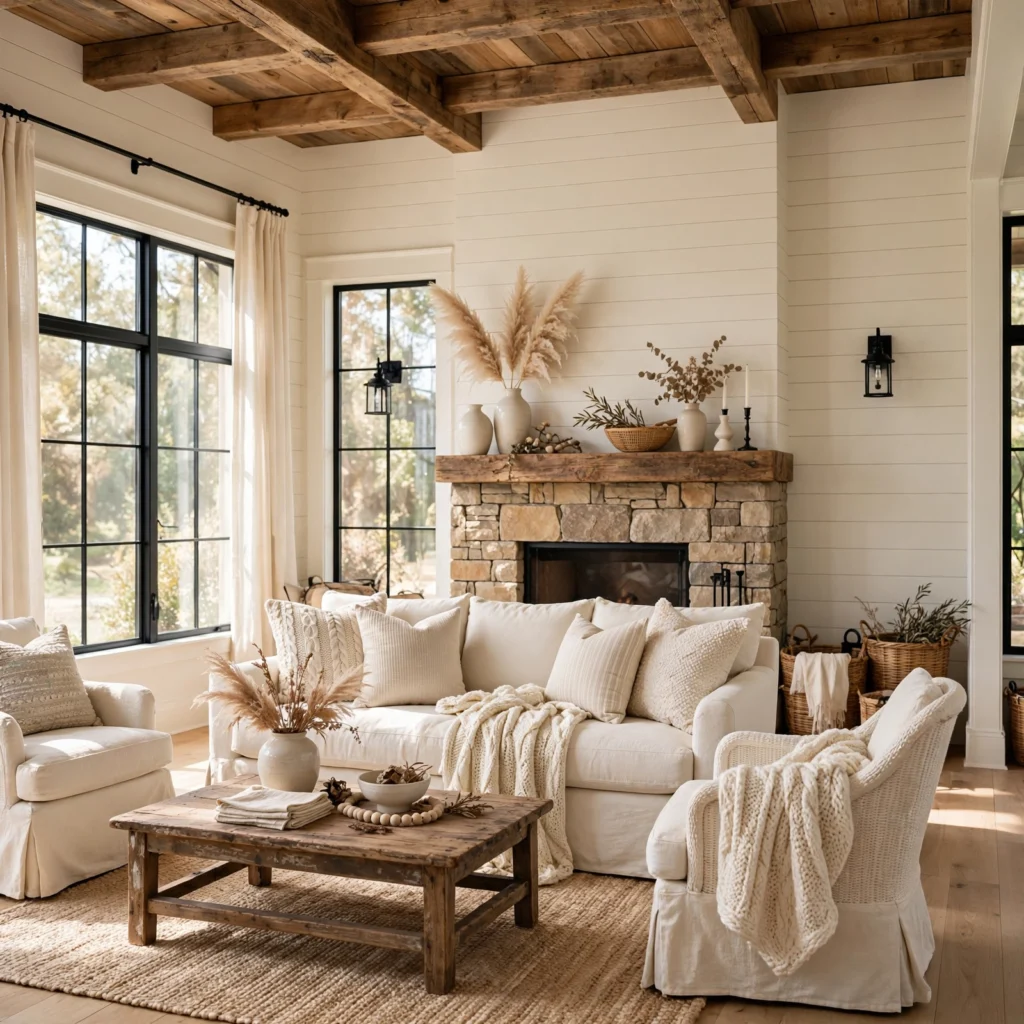
A neutral cream and white palette forms the foundation of most farmhouse interiors, applied across walls, larger furniture pieces, and cabinetry throughout the house. This palette keeps the home feeling bright and airy, providing a versatile backdrop for the rustic wood tones and black iron accents that add most of the style’s textural interest. Introducing warmer, earthier accent colors, like a soft sage green or a warm terracotta, through smaller textiles and accessories adds depth to this palette without abandoning its overall light, neutral foundation.
8. Galvanized Metal Accents
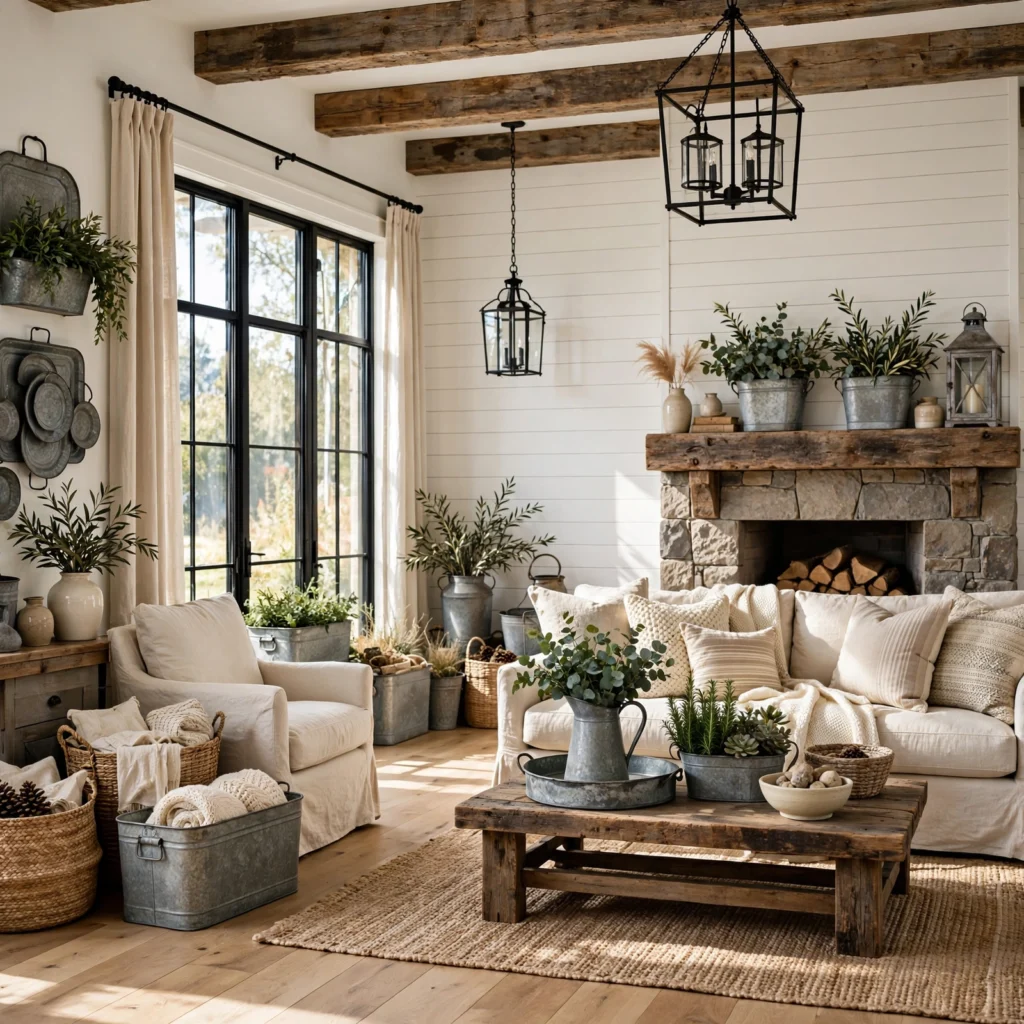
Galvanized metal accents bring in a silvery, slightly textured metal finish through smaller decorative pieces, like a galvanized tray, a pendant light shade, or a decorative bucket used for plant storage. This material reads as more rustic and utilitarian than a polished chrome or brass finish, referencing the practical metal buckets and containers found in an actual working farm setting. Using galvanized pieces sparingly, as accents rather than a dominant material throughout the home, keeps this detail feeling intentional rather than overused.
9. Vintage Sign and Typography Art
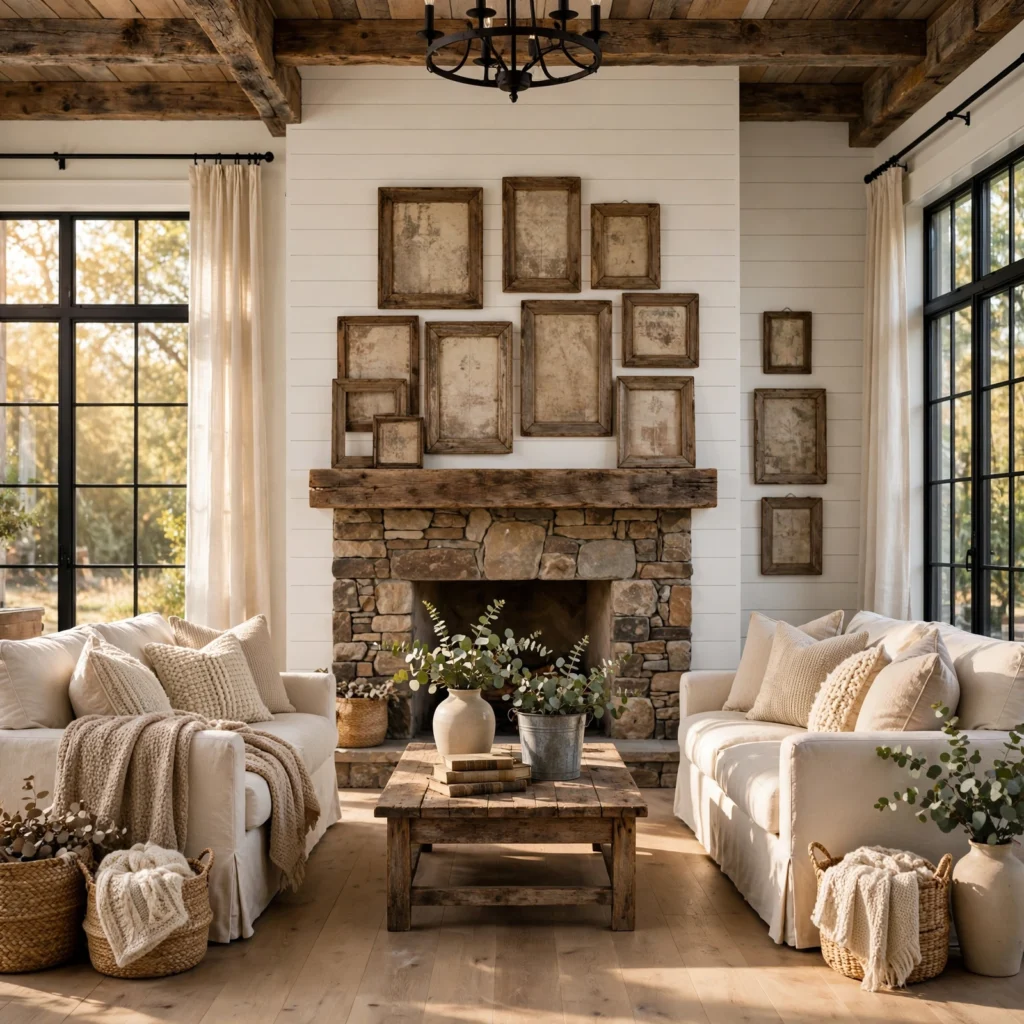
Vintage sign and typography art displays reproduction or genuinely vintage advertising signs, simple painted wood signs, or typographic prints throughout the home, referencing farmhouse style’s connection to rural, small-town Americana. Choosing pieces with a limited, cohesive color palette, rather than several unrelated bright colors, keeps this detail feeling intentional rather than like a scattered collection of unrelated novelty items. This detail works particularly well in a kitchen, mudroom, or entryway, where a single well-chosen sign can serve as a genuine decorative focal point.
10. Woven Textile Layering
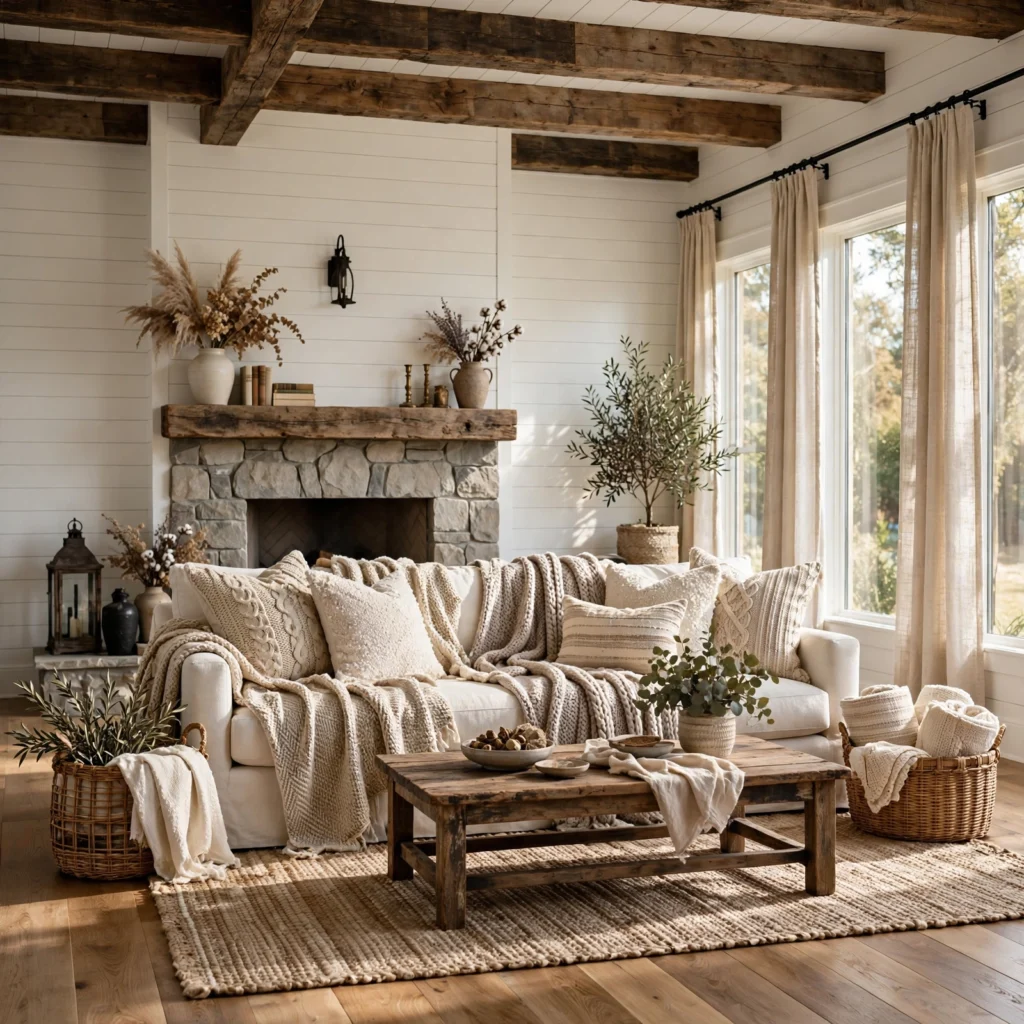
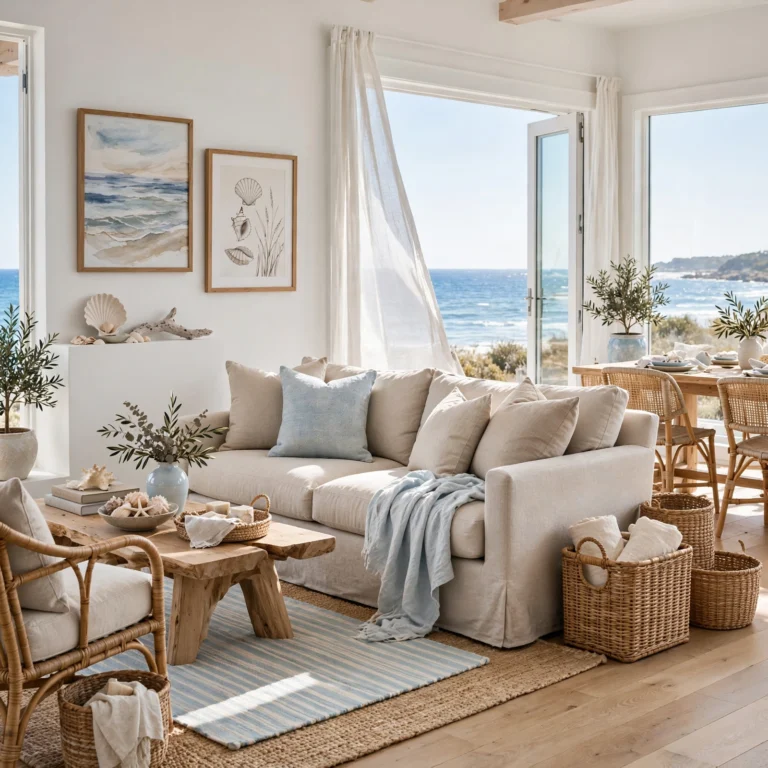
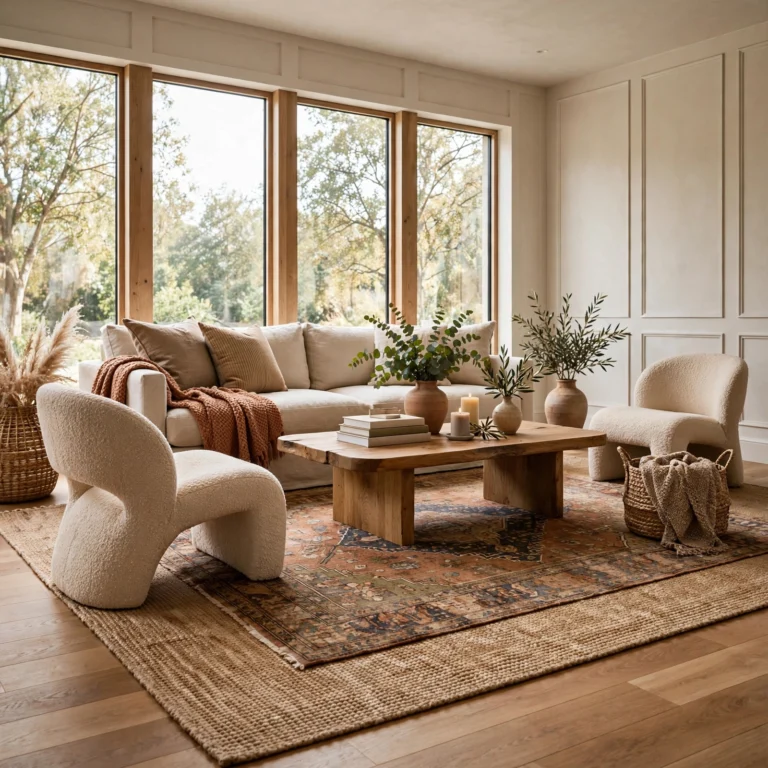
Woven textile layering incorporates natural fiber rugs, woven baskets, and textured throw blankets throughout the house, adding softness and warmth that balance out farmhouse design’s harder surfaces like reclaimed wood and iron hardware. Choosing textiles in the style’s characteristic neutral tones, occasionally paired with a simple stripe or plaid pattern, keeps this layering consistent with the overall palette. This detail also serves a practical storage function, since woven baskets in particular work well for corralling blankets, magazines, or toys throughout the home.
11. Farmhouse Table with Bench Seating
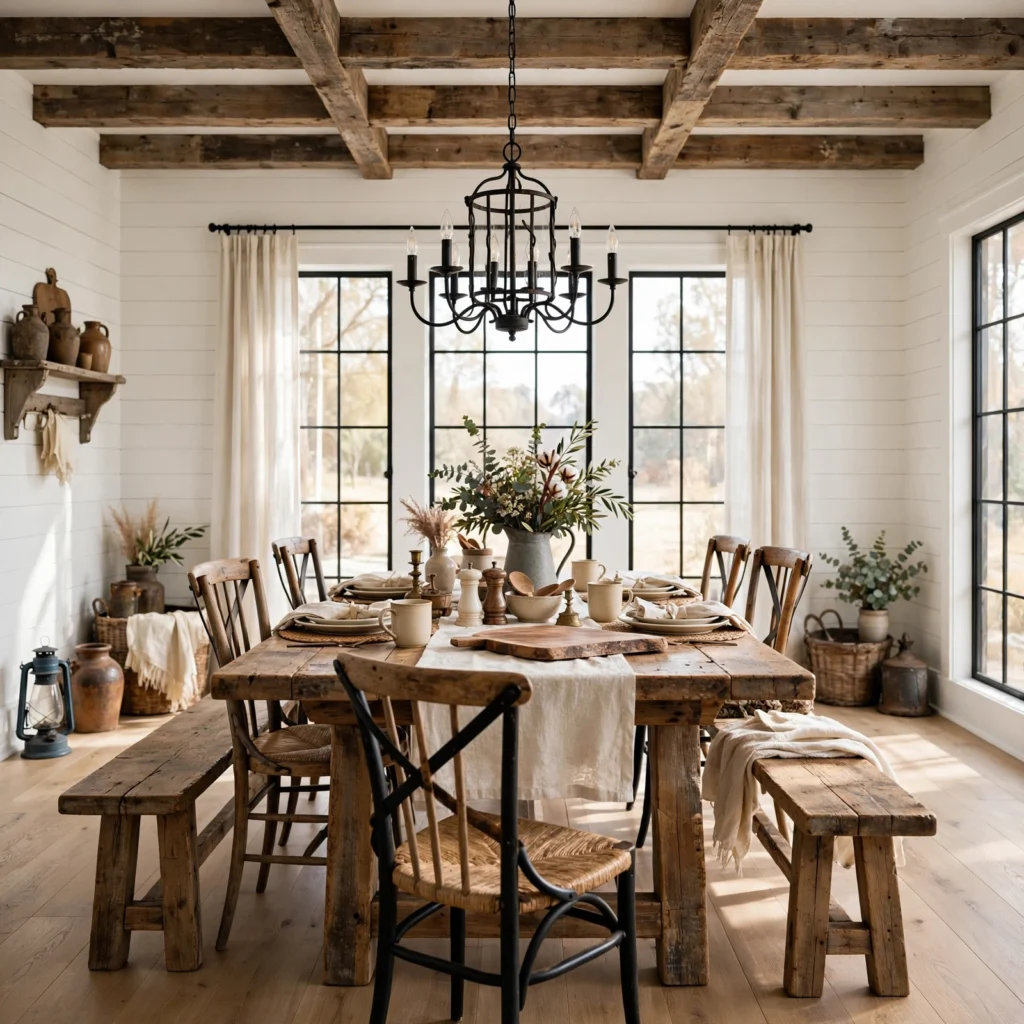
A farmhouse table with bench seating pairs a substantial, often trestle-style wood dining table with one or two long benches instead of individual chairs on at least one side, referencing the communal, practical seating found in an actual farmhouse dining setting. This detail works particularly well for a household that regularly hosts larger gatherings, since benches can typically seat more people in the same linear space than individual chairs. Choosing a table with a distressed or matte finish, rather than a glossy lacquer, keeps this piece consistent with the style’s overall textural, slightly imperfect character.
| Farmhouse Furniture | Material Finish | Best Room |
| Trestle Dining Table | Distressed wood | Dining room |
| Bench Seating | Matte wood | Dining room, entryway |
| Console Table | Weathered wood | Entryway, living room |
12. Barn Door Room Divider
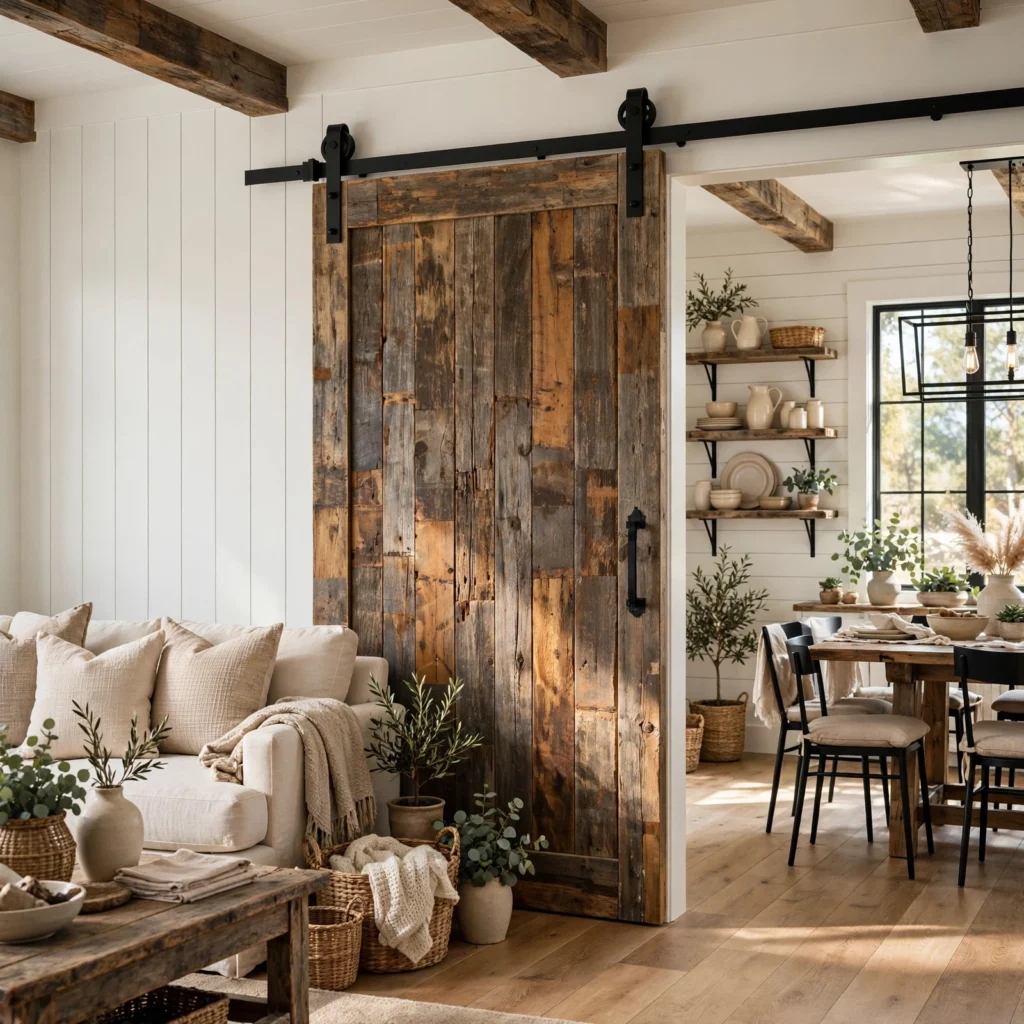
A barn door room divider uses a sliding door mounted on an exposed track, typically featuring the same horizontal plank construction as shiplap paneling, to divide or conceal a room without requiring the floor clearance a standard swinging door needs. This detail is one of the most recognizable farmhouse architectural elements, referencing the actual sliding barn doors this style draws inspiration from. This detail works particularly well concealing a pantry, a home office, or a laundry area, adding both function and a genuine style statement to the space it’s covering.
13. Wraparound Front Porch Styling
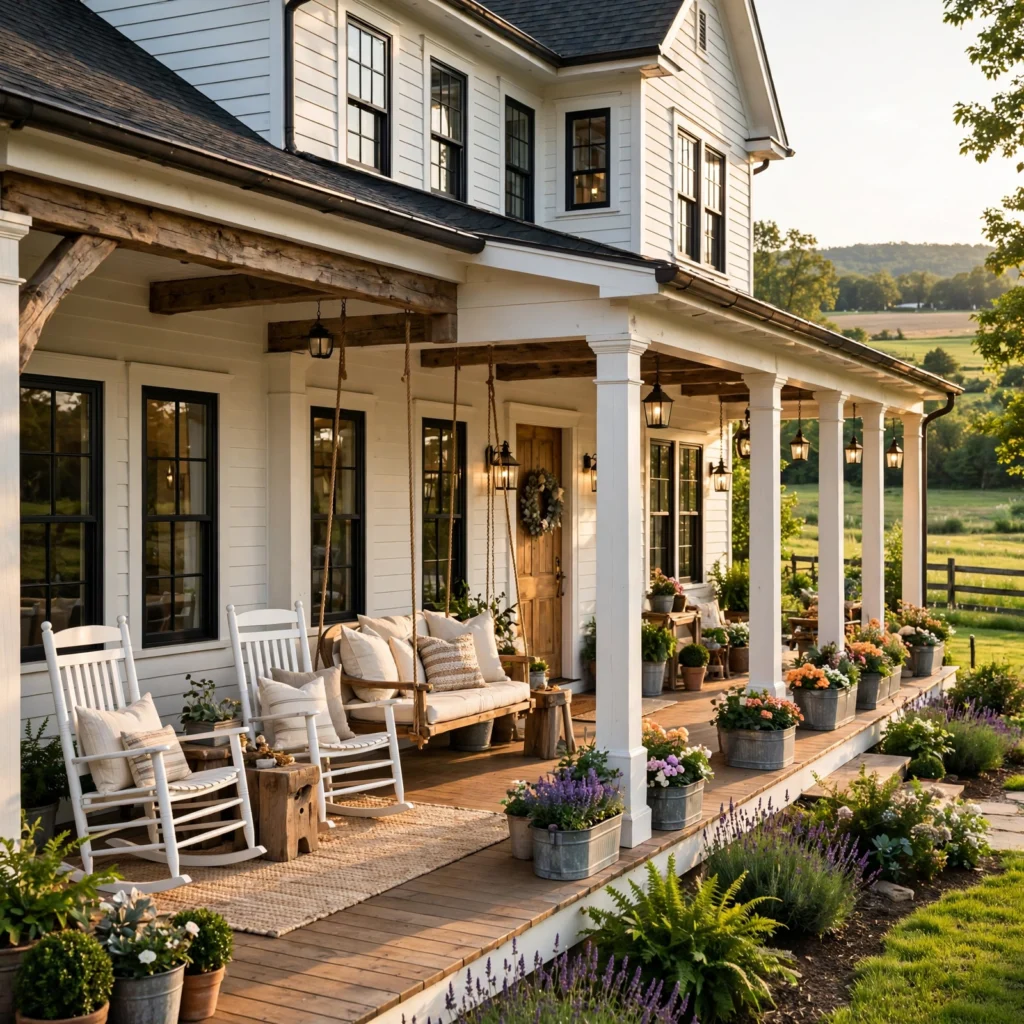
Wraparound front porch styling extends farmhouse design’s warm, welcoming character to the home’s exterior entry space, using rocking chairs, a porch swing, and simple potted plants to create an inviting outdoor sitting area. This detail works particularly well on a home with an existing wraparound or covered front porch, reinforcing the connection between interior and exterior style that farmhouse design often emphasizes. Choosing furniture in a painted white or a natural wood finish keeps this outdoor space consistent with the interior’s overall neutral, warm palette.
14. Cast Iron Light Fixtures
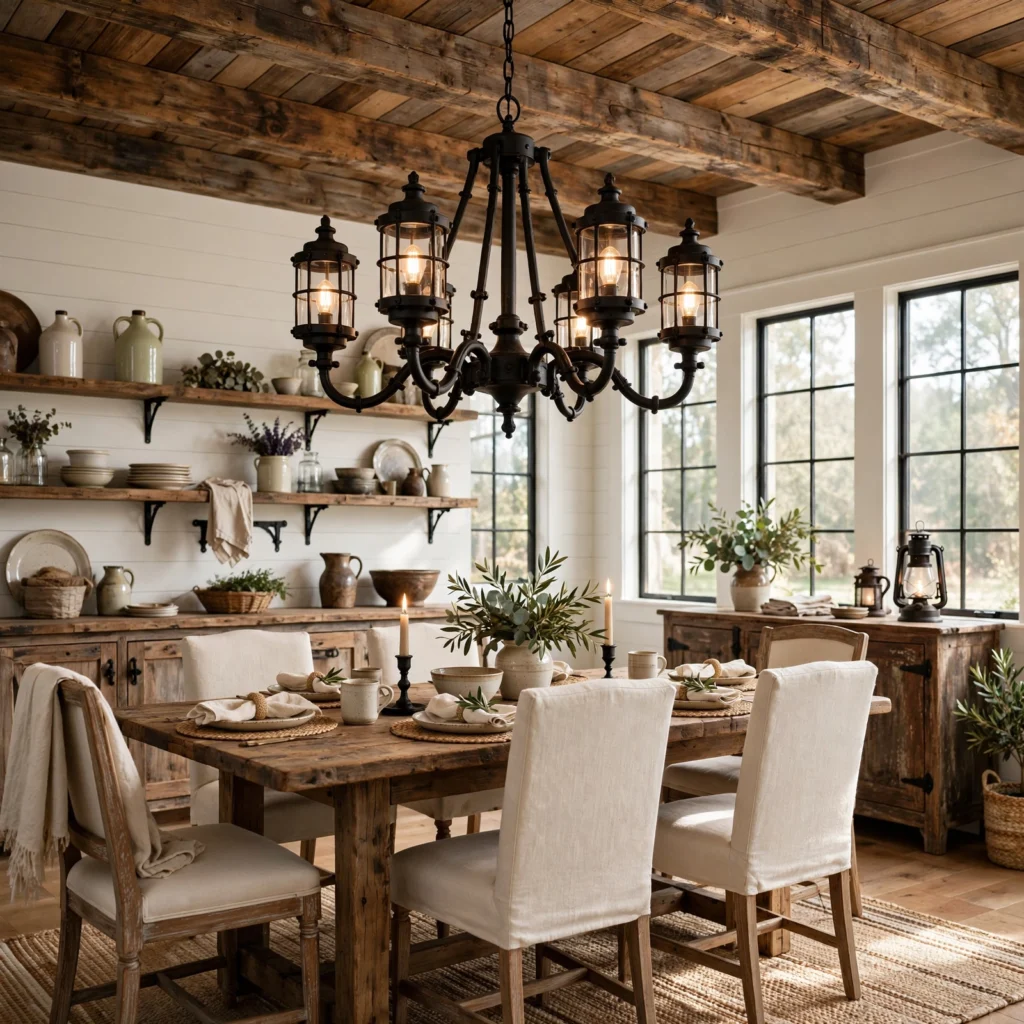
Cast iron light fixtures use dark, matte metal fixtures throughout the home, whether a lantern-style pendant in the kitchen or a simple sconce in a hallway, providing consistent lighting hardware that complements the style’s black iron cabinet and door hardware. This detail works particularly well paired with warm, amber-toned bulbs, which reinforce the cozy, inviting atmosphere central to farmhouse design’s overall appeal. Choosing fixtures with visible, exposed bulb elements, rather than fully enclosed shades, adds to the style’s slightly industrial, utilitarian character.
15. Checkerboard Floor Pattern
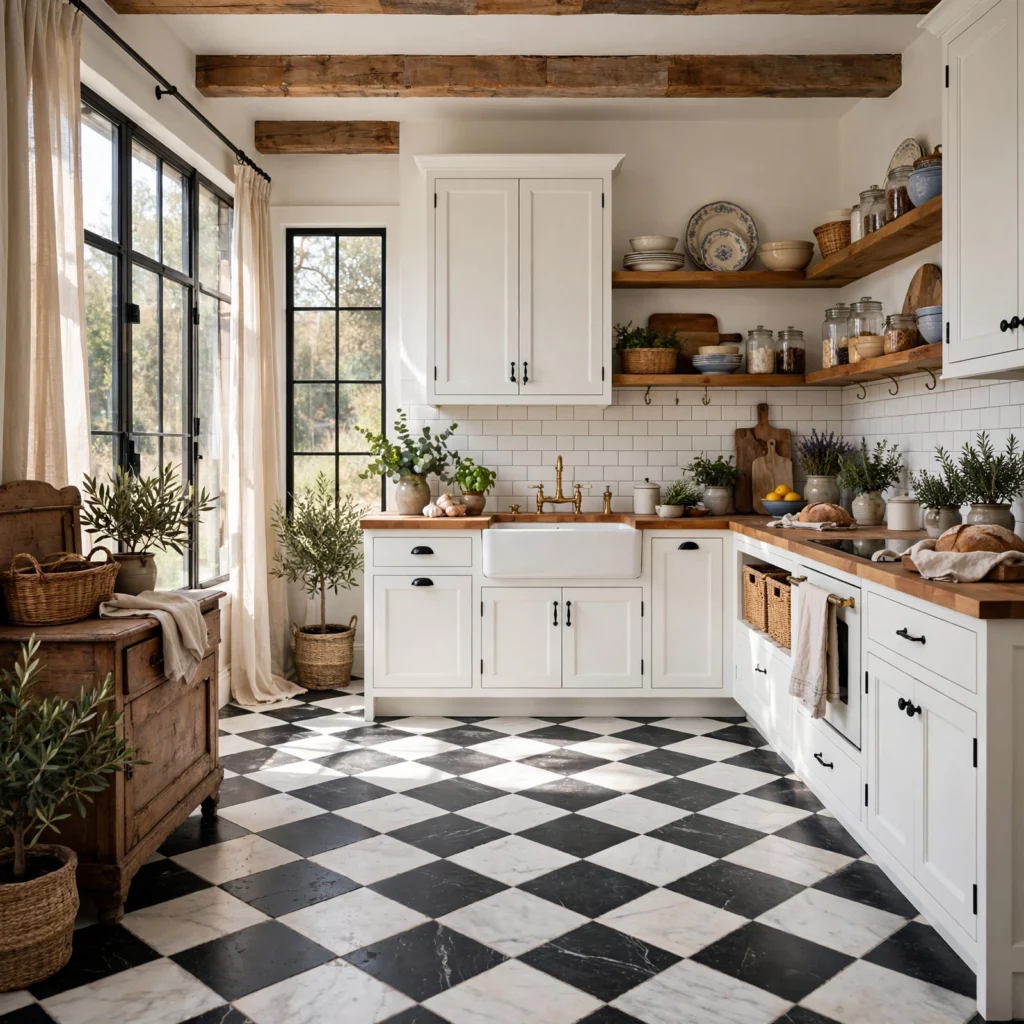
A checkerboard floor pattern uses alternating black and white or cream tile squares, typically in a kitchen or entryway, referencing a classic pattern found in many historic farmhouse and country homes. This detail provides a graphic, high-contrast floor treatment that stands out against the style’s otherwise more neutral, textural surfaces elsewhere in the room. Choosing a slightly softened off-white rather than a stark, bright white for the lighter tile squares keeps the pattern feeling warm and consistent with farmhouse design’s overall cream-leaning palette.
16. Mason Jar and Crate Storage
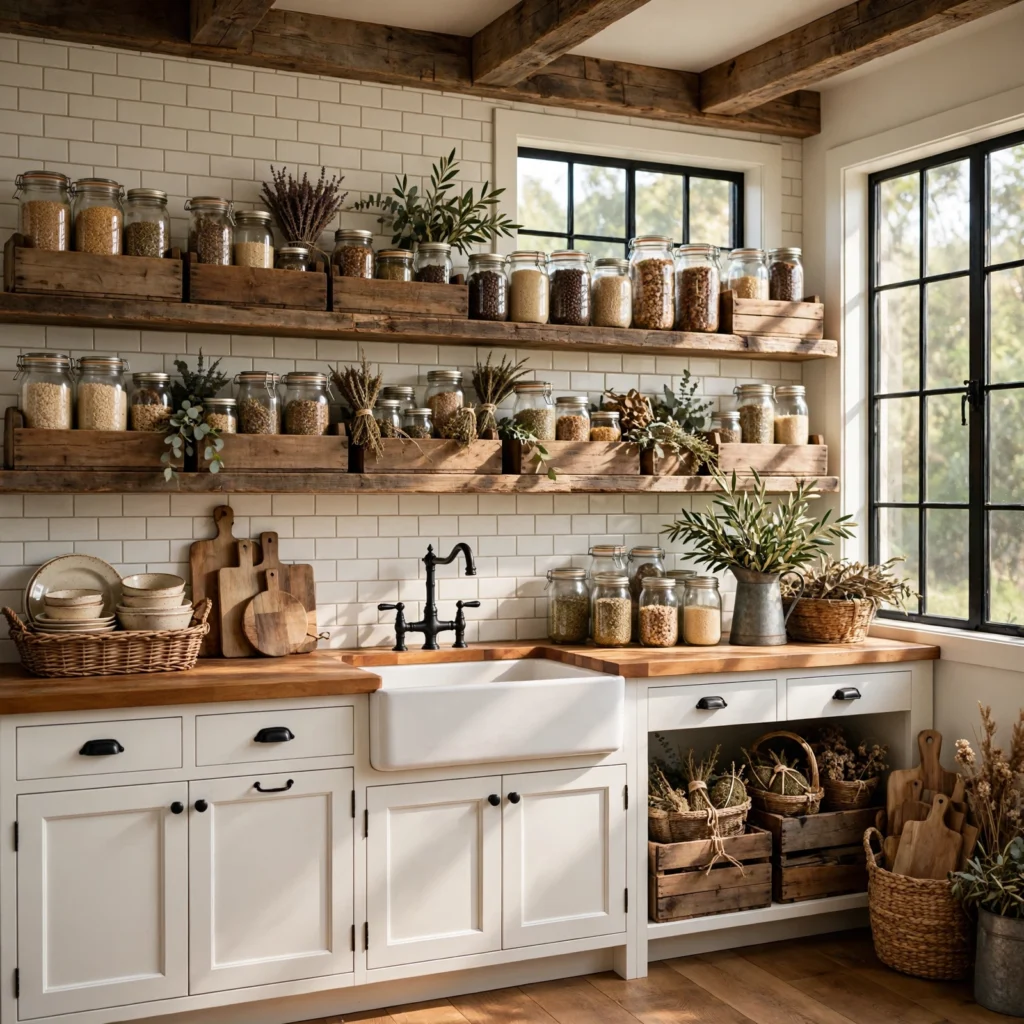
Mason jar and crate storage uses glass mason jars for pantry ingredient storage and small wood crates for general organization throughout the house, turning practical storage solutions into genuine decorative elements consistent with farmhouse style’s overall aesthetic. This detail works particularly well in a kitchen pantry or a mudroom, where the jars and crates remain visible as part of the room’s styling rather than hidden away in closed cabinets. Labeling mason jars with simple, consistent typography reinforces the style’s connection to vintage signage and lettering found elsewhere in farmhouse decor.
Shop the Look
A well-executed farmhouse interior typically combines a few signature architectural elements with consistent hardware and textile choices throughout the home. Shiplap paneling paired with reclaimed wood beams establishes the main architectural character in key rooms. Black iron hardware and cast iron lighting fixtures tie the kitchen, bathrooms, and living spaces together with a consistent metal finish. Open shelving displaying simple white crockery, paired with woven baskets and natural textiles, rounds out the styling with both function and texture throughout the home.
Common Farmhouse Interior Mistake to Avoid
The most common mistake is leaning too heavily into farmhouse design’s more theatrical, novelty elements, like an excessive number of vintage signs or overly literal rustic decor, without balancing those choices against cleaner, more current furniture and finishes elsewhere in the room. This imbalance can push a farmhouse interior toward feeling like a themed reproduction rather than a genuinely lived-in home. Choosing just a few well-placed signature details, like shiplap or an apron-front sink, and pairing them with simpler, more restrained furniture and decor throughout the rest of the space produces a more convincing, modern farmhouse result.
FAQs
What’s the difference between farmhouse and modern farmhouse design?
Traditional farmhouse design tends to lean more heavily into overtly rustic, vintage-referencing details, like distressed finishes and vintage signage throughout, while modern farmhouse design balances those same signature elements, like shiplap and black iron hardware, with cleaner furniture lines and a more restrained overall approach to decor. Modern farmhouse has become the more commonly referenced version of this style in recent years, particularly in newer construction and renovation projects.
Does farmhouse design work in a home that isn’t an actual farmhouse?
Farmhouse design works well in a wide range of home types beyond an actual historic farmhouse, since the style’s core elements, like a neutral color palette, black iron hardware, and reclaimed wood accents, can be incorporated into a suburban home, a townhouse, or even an apartment through furniture and finish choices alone. The style doesn’t require the home’s actual architecture or location to match its rural reference points.
How do I add farmhouse style without a full renovation?
Incorporating farmhouse elements through furniture, textiles, and smaller decor choices, like a distressed wood console table, woven baskets, and black iron light fixtures, allows for a meaningful style shift without requiring structural changes like shiplap installation or an apron-front sink replacement. Starting with these more accessible, furniture-level changes is a practical way to test whether the full style genuinely suits your taste before committing to larger architectural updates.
Is shiplap still a good choice, or has it become dated?
Shiplap remains a popular and functional wall treatment, though using it more selectively, such as on a single accent wall rather than throughout an entire home, tends to keep the detail feeling current rather than overused. Pairing shiplap with more contemporary furniture and finishes elsewhere in the room, consistent with the modern farmhouse approach, also helps this specific detail avoid feeling dated regardless of broader trend cycles.
What colors work best with farmhouse design’s neutral palette?
Soft, muted accent colors like sage green, dusty blue, and warm terracotta all pair well with farmhouse design’s neutral cream and white foundation, adding depth without disrupting the style’s overall light, airy feel. These colors work particularly well introduced through smaller textiles and accessories, like throw pillows or a table runner, rather than large furniture or wall color commitments.
Conclusion
These farmhouse interior ideas combine reclaimed materials, black iron hardware, and a warm, neutral palette into a look that feels both welcoming and current when balanced thoughtfully. Choose a few signature architectural details to anchor the style, then pair them with cleaner, more restrained furniture and decor to avoid tipping into an overly themed result. Save this post to Pinterest for your next home project, and check out our related post on house interior design for more style comparisons if you’re still deciding on the right direction for your home.
This list draws on years of helping homeowners translate farmhouse style’s rustic, historic references into a genuinely livable, current home rather than a themed reproduction.