17 Trending House Interior Decor Ideas to Layer Throughout Your Home
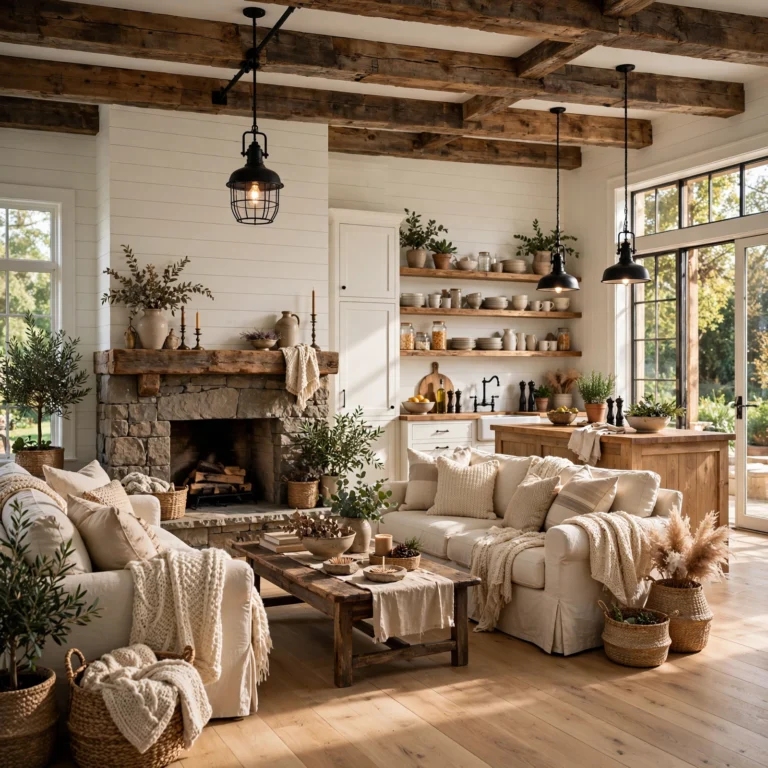
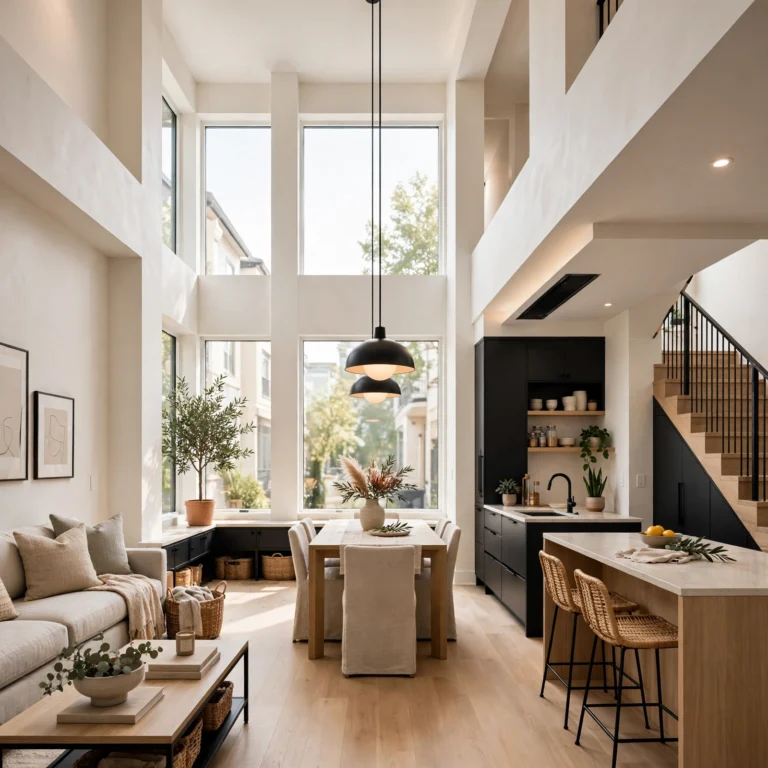
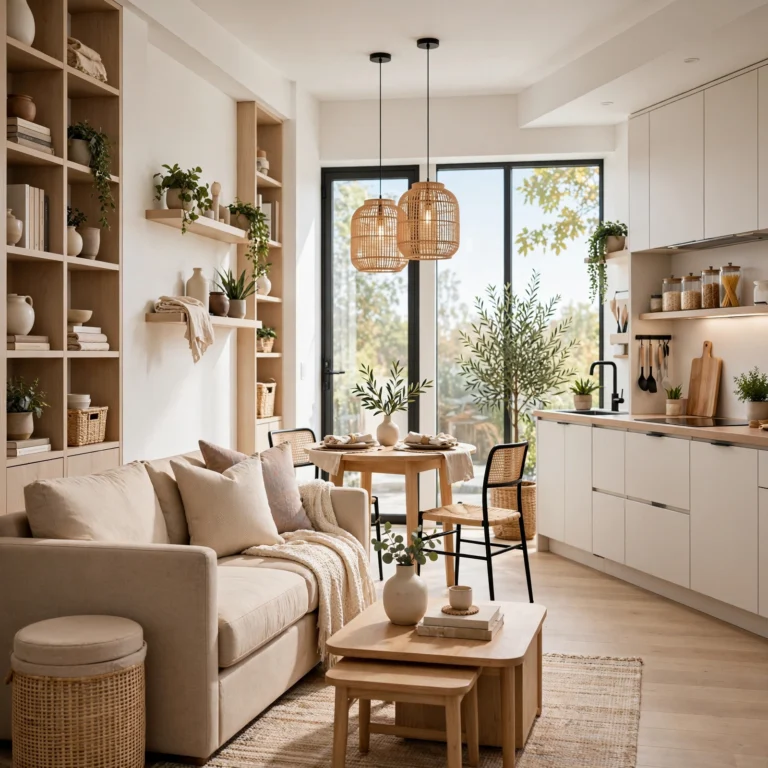
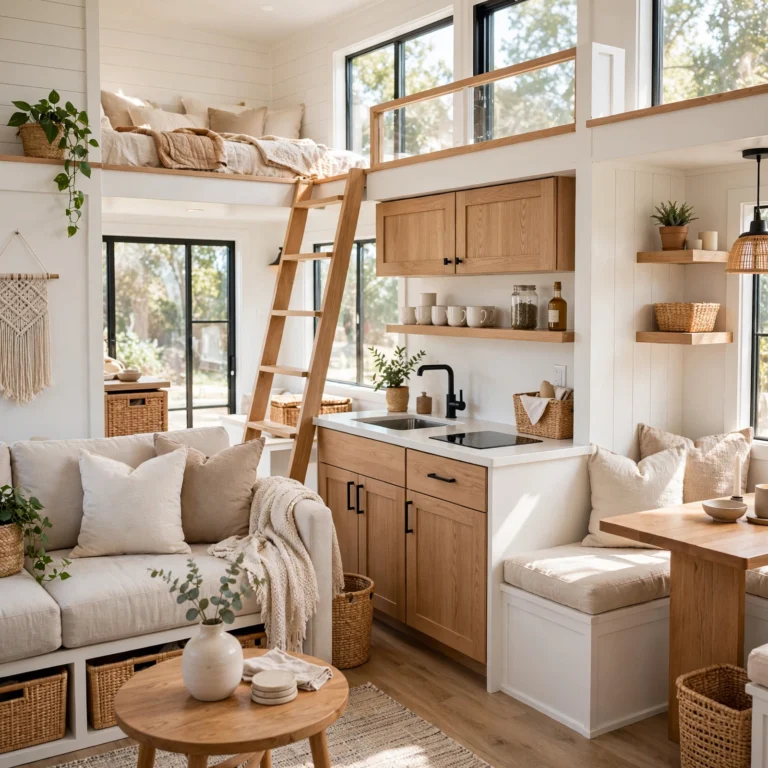
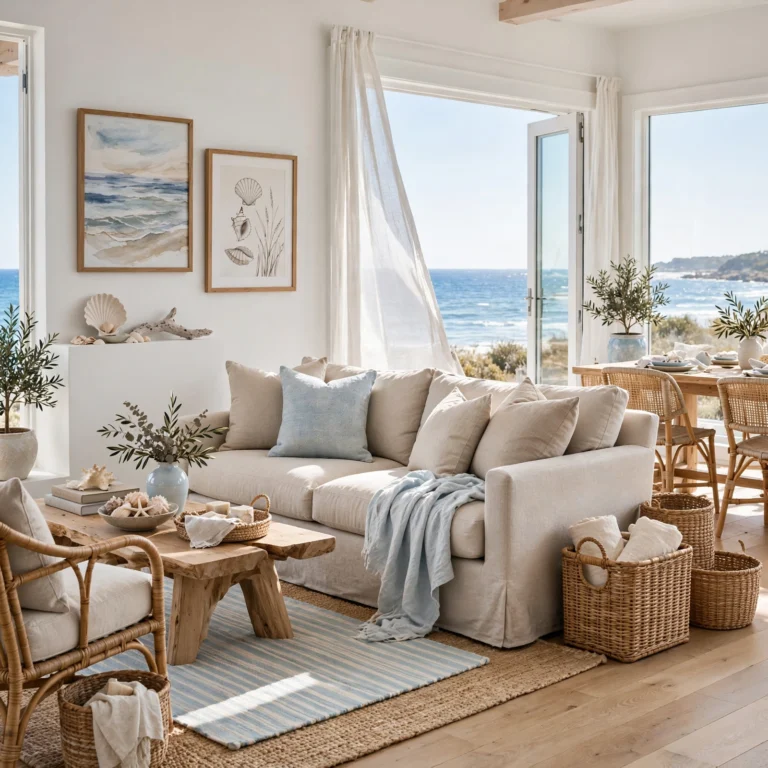
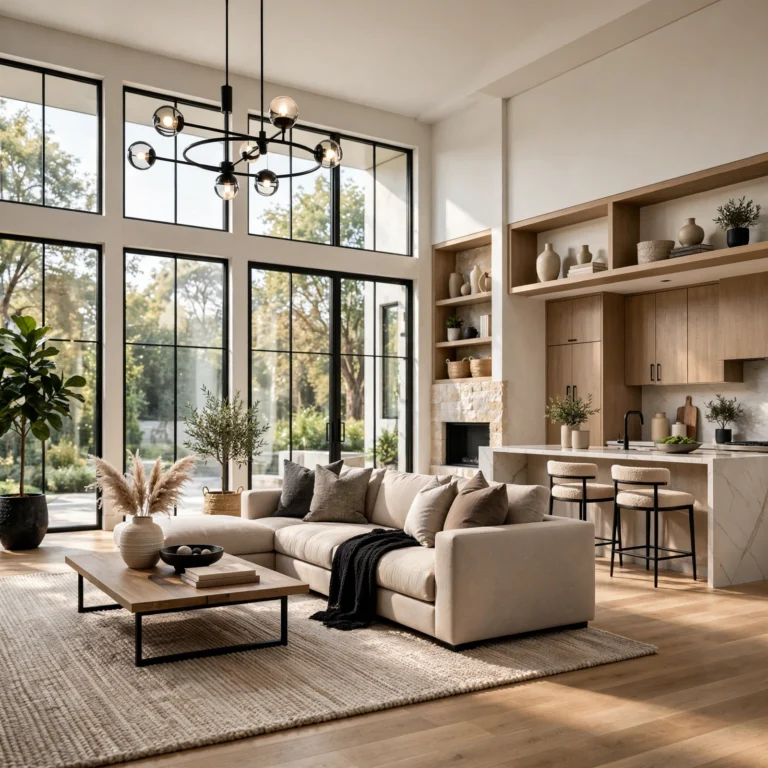
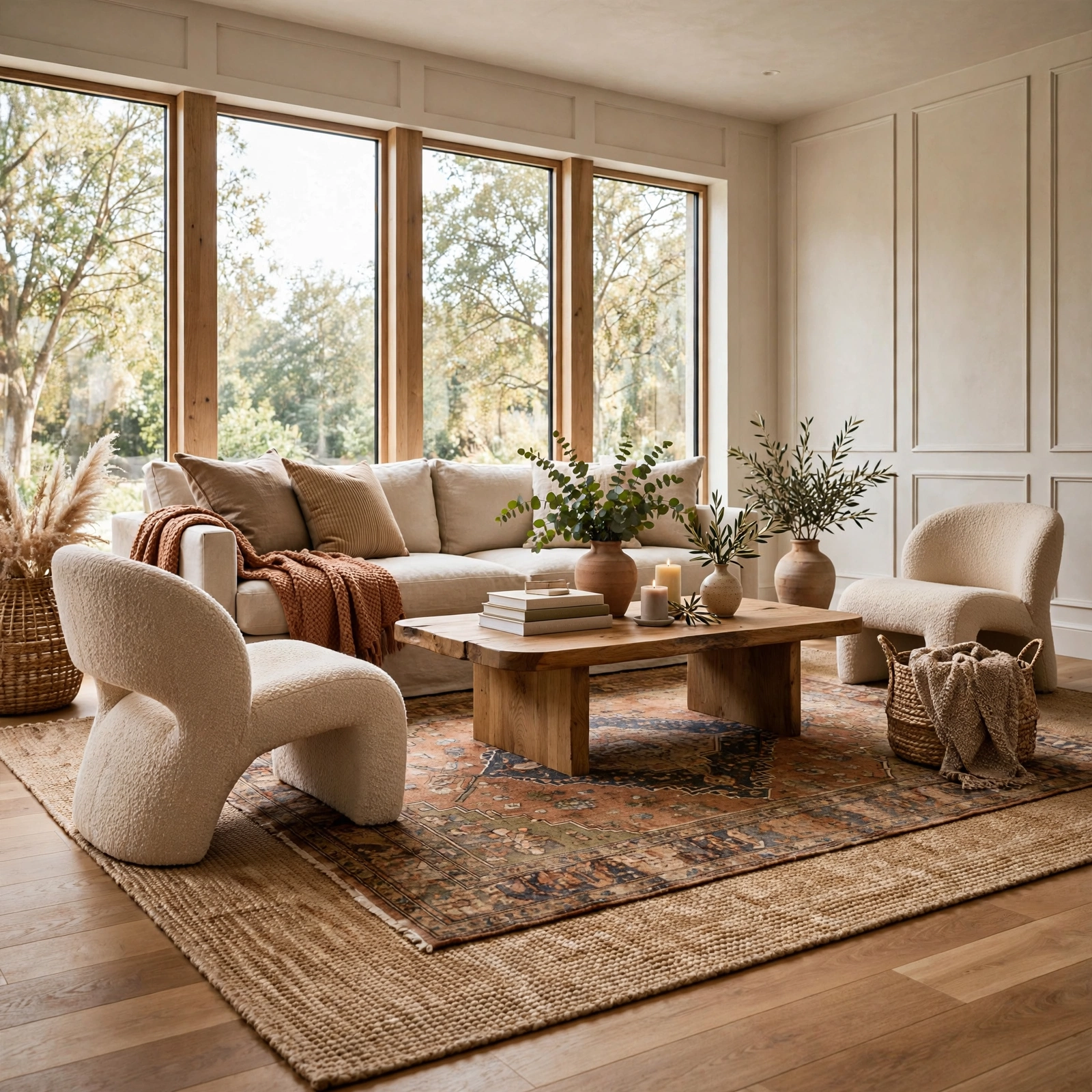
House interior decor covers the layer of accessories, textiles, and styling choices applied on top of a home’s existing architecture and furniture, the details that make a room feel finished and personal rather than simply furnished. This list focuses specifically on that decorative layer, covering techniques and objects that work across multiple rooms throughout a house rather than architectural or renovation-level changes. Whether you’re decorating a full home from scratch or refreshing a space that’s felt a bit flat, these ideas should help you add the kind of considered detail that makes a house feel genuinely decorated rather than just occupied.
Trend & Background
House interior decor has increasingly emphasized personal, evolving styling over a single, fully purchased decorating scheme, with homeowners favoring a home that visibly develops over time through collected objects, rotating seasonal touches, and small styled vignettes throughout. This reflects a broader shift away from treating decor as a one-time purchase and toward viewing it as an ongoing practice, similar to how a wardrobe or a bookshelf naturally grows and changes over the years. Techniques like intentional vignette styling and layered candlelight, once reserved mostly for professionally staged homes, have also become more mainstream as homeowners apply the same level of consideration to their own everyday living spaces.
Key Takeaways
- House interior decor works as a layer applied on top of a home’s architectural bones, using accessories, textiles, and styling techniques rather than structural or renovation-level changes.
- Small, repeatable styling techniques, like vignette grouping or consistent candle placement, add polish across multiple rooms without requiring a large decorating budget.
- Personal touches, like a travel souvenir display or a family photo wall, distinguish a genuinely lived-in home from one that reads as generically styled.
- Rotating certain decor elements seasonally keeps a home feeling current and tended to without requiring a full redecorating effort each time.
1. Vignette Styling on Every Surface
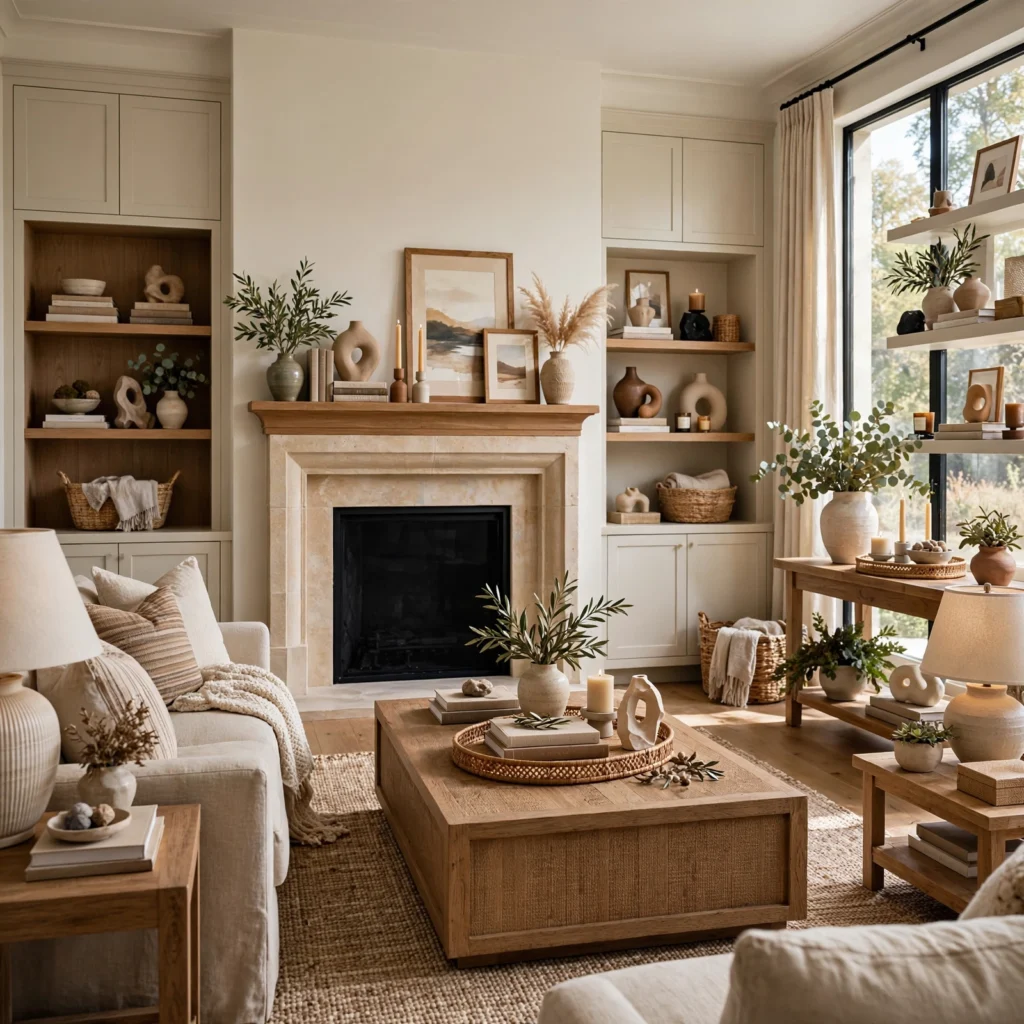
Vignette styling on every surface groups two to four related objects together on tabletops, shelves, and console surfaces throughout the house, rather than placing single, isolated items or leaving flat surfaces entirely bare. Varying the height across each grouping, such as pairing a taller vase with a shorter stack of books, creates more visual interest than several same-sized objects placed side by side. Repeating this technique consistently across different rooms gives the whole house a cohesive sense of intentional styling, even as the specific objects vary from surface to surface.
| Vignette Element | Role | Example |
| Height Anchor | Tallest piece | Vase, lamp, tall candle |
| Textural Layer | Adds material variety | Books, small basket |
| Organic Touch | Softens the grouping | Plant, dried stem |
2. Coffee Table Book Stacking
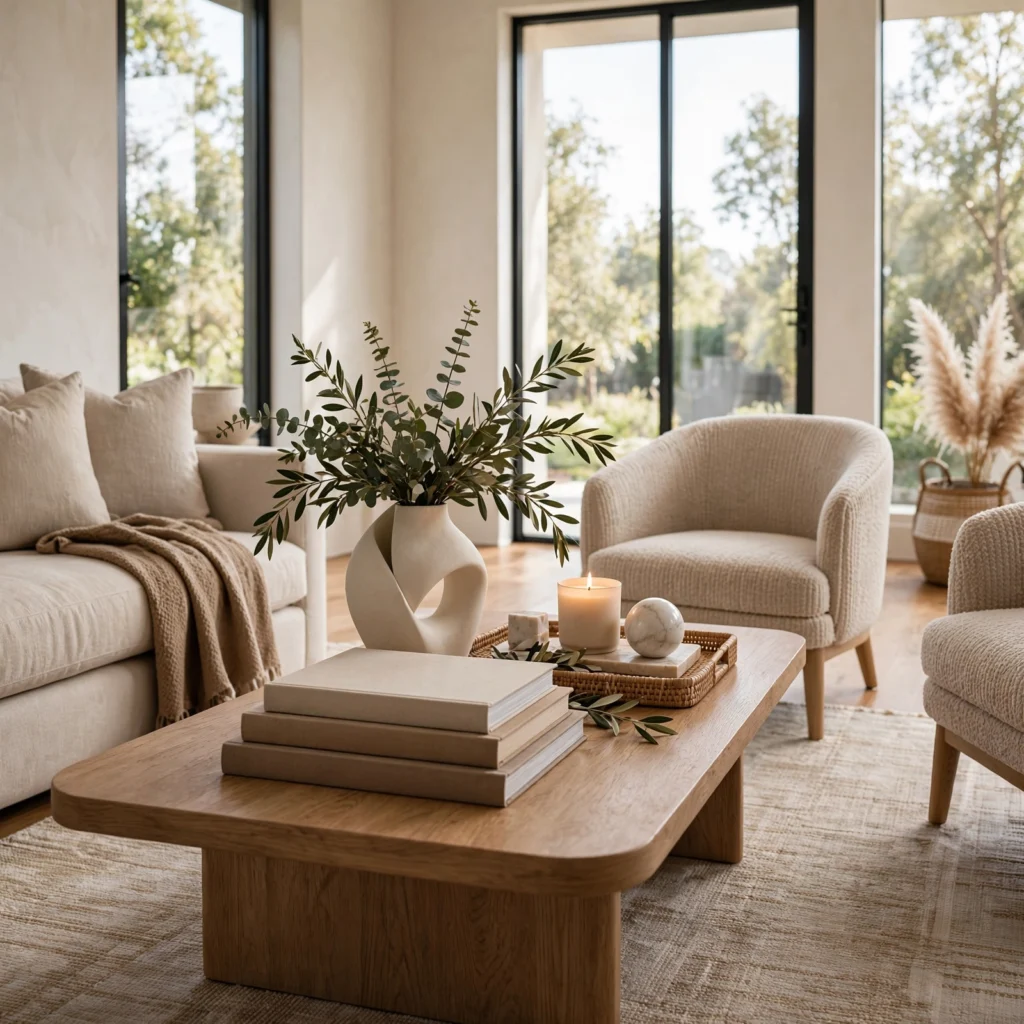
Coffee table book stacking arranges a small selection of hardcover books, typically two to four at a time, in a neat stack on a coffee table or ottoman, often topped with a small decorative object like a candle or a small dish. Choosing books with visually appealing covers or spines, rather than simply whatever’s currently being read, keeps this detail feeling curated for display purposes specifically. This technique works particularly well repeated in slightly different forms across a living room, primary bedroom, and home office, using different book selections suited to each room’s specific character.
3. Layered Throw Pillow Combinations
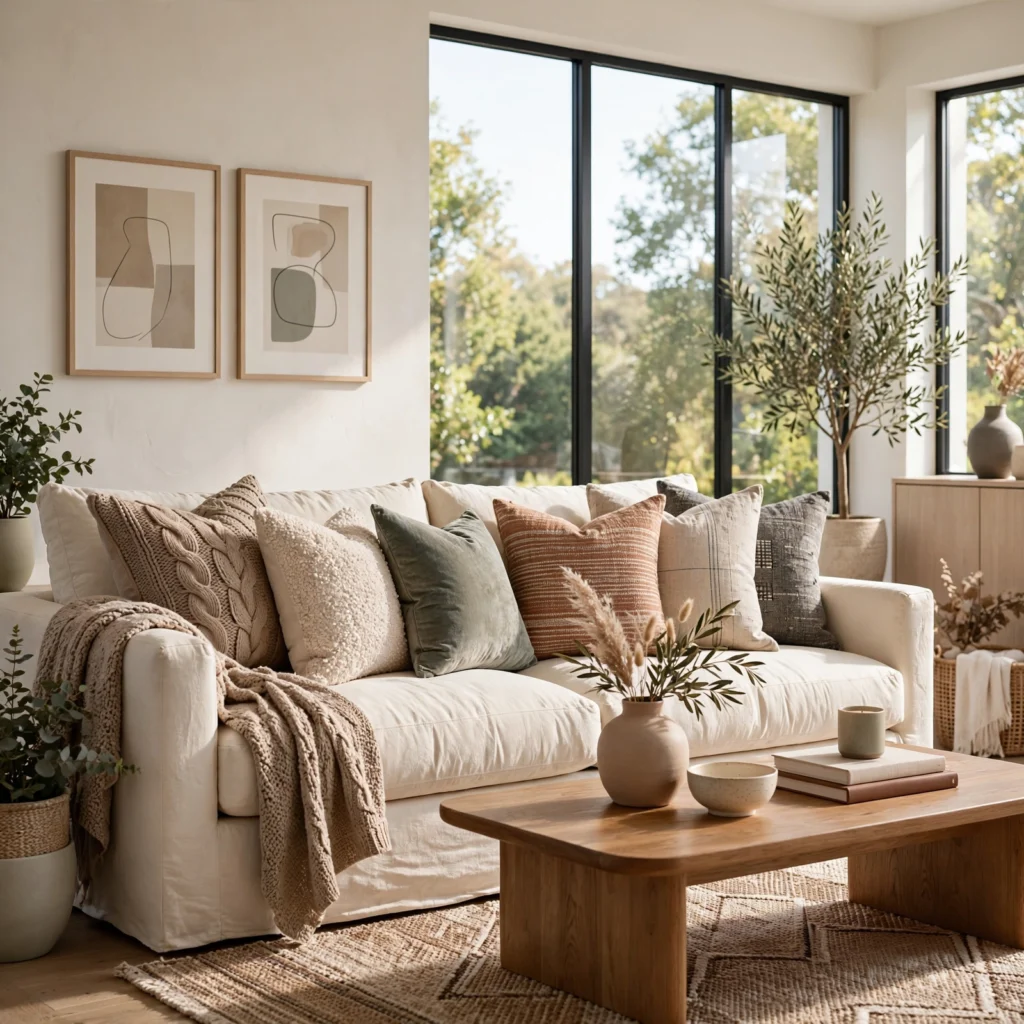
Layered throw pillow combinations mix a few different sizes, textures, and patterns across sofas, chairs, and beds throughout the house, rather than relying on a single matched set in every room. Keeping the overall color palette limited to two or three coordinating tones across the whole house, even as specific patterns vary by room, helps this layered approach read as intentional rather than mismatched. This detail is also one of the most affordable and easily updated decor elements, making it a practical entry point for anyone just starting to build out their home’s decor.
In order to see more options for house interior CLICK HERE
4. Seasonal Wreath Rotation
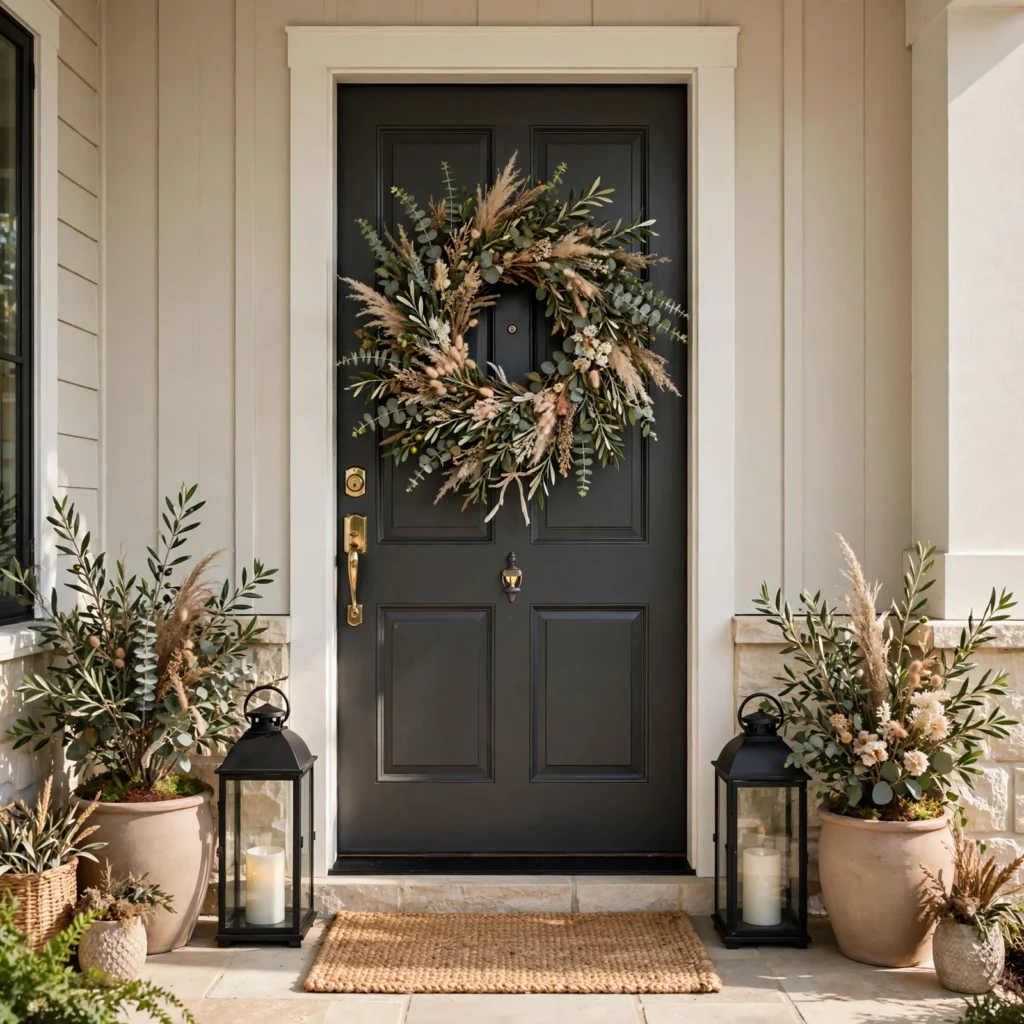
A seasonal wreath rotation swaps the front door’s wreath or a similar entryway decoration several times a year, aligning with different seasons or holidays throughout the calendar. This detail gives visitors an immediate, welcoming impression that also signals a home that’s actively tended to rather than static year-round. Storing off-season wreaths in a labeled box makes the rotation process quick and simple to maintain consistently rather than becoming a forgotten, abandoned habit after the first attempt.
5. Family Photo Display Wall
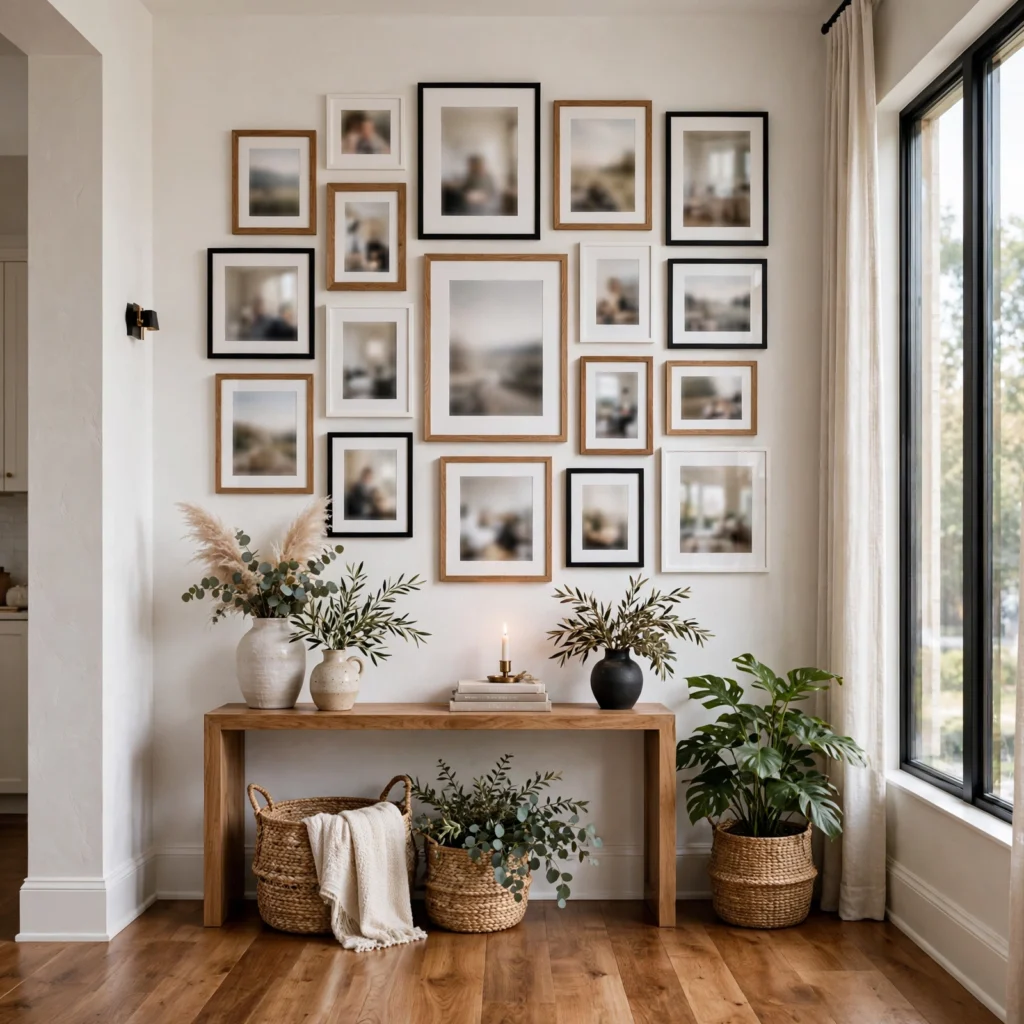
A family photo display wall groups printed photos in a range of frame styles and sizes along a hallway, staircase, or living room wall, creating a personal, evolving gallery that a purely decorative art collection can’t replicate. Mixing black and white photography with color images, and varying the time periods represented, adds visual interest beyond what a chronological or uniformly styled arrangement would provide. This detail is one of the most effective ways to make a house feel distinctly like a specific family’s home rather than a generically decorated space.
6. Fresh and Dried Floral Mix
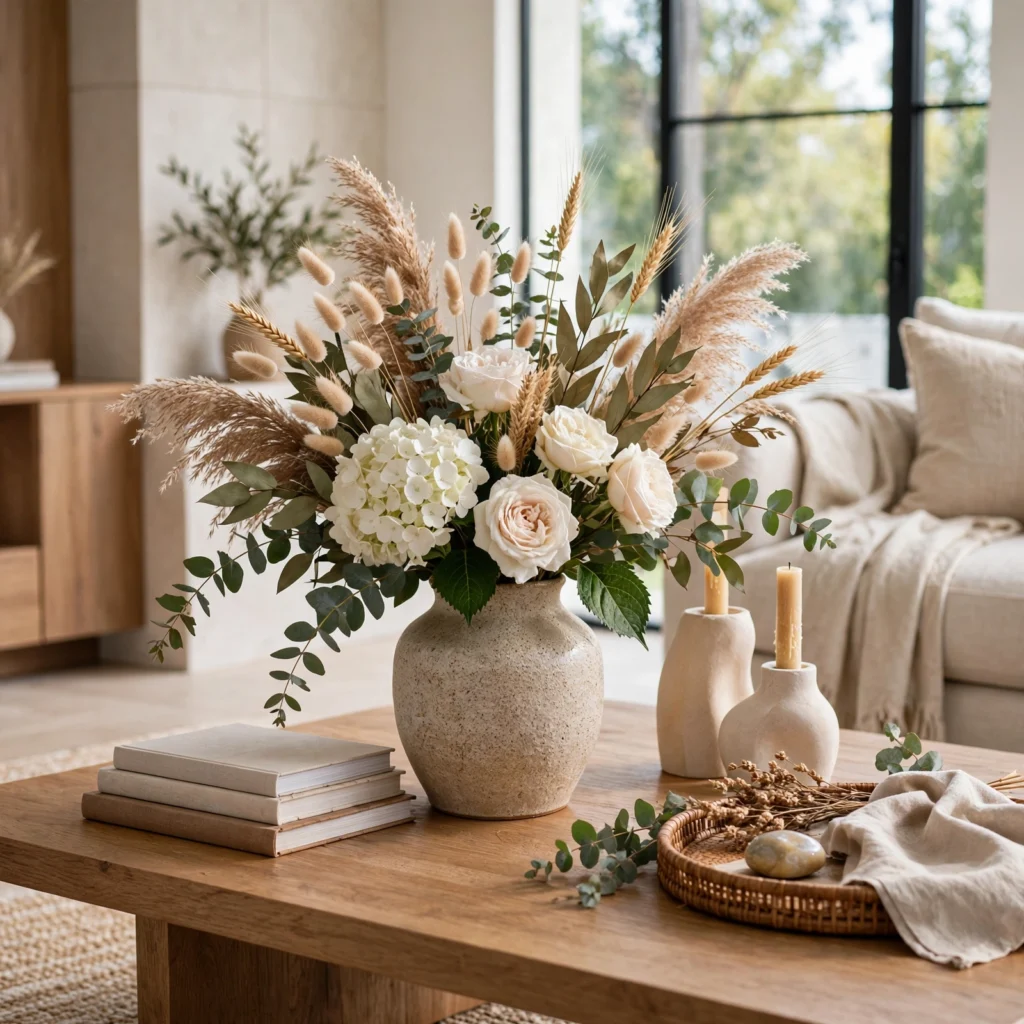
A fresh and dried floral mix combines a rotating selection of fresh-cut flowers with more permanent dried arrangements throughout the house, balancing the higher-maintenance beauty of fresh blooms with the low-maintenance, long-lasting quality dried florals provide. Placing fresh flowers in high-visibility spots, like an entry table or a dining room centerpiece, while reserving dried arrangements for less frequently refreshed spots, like a bedroom or a home office, makes practical sense of this combined approach. This detail adds a layer of natural, living decor that furniture and hard accessories alone can’t provide.
7. Decorative Bowl and Tray Groupings
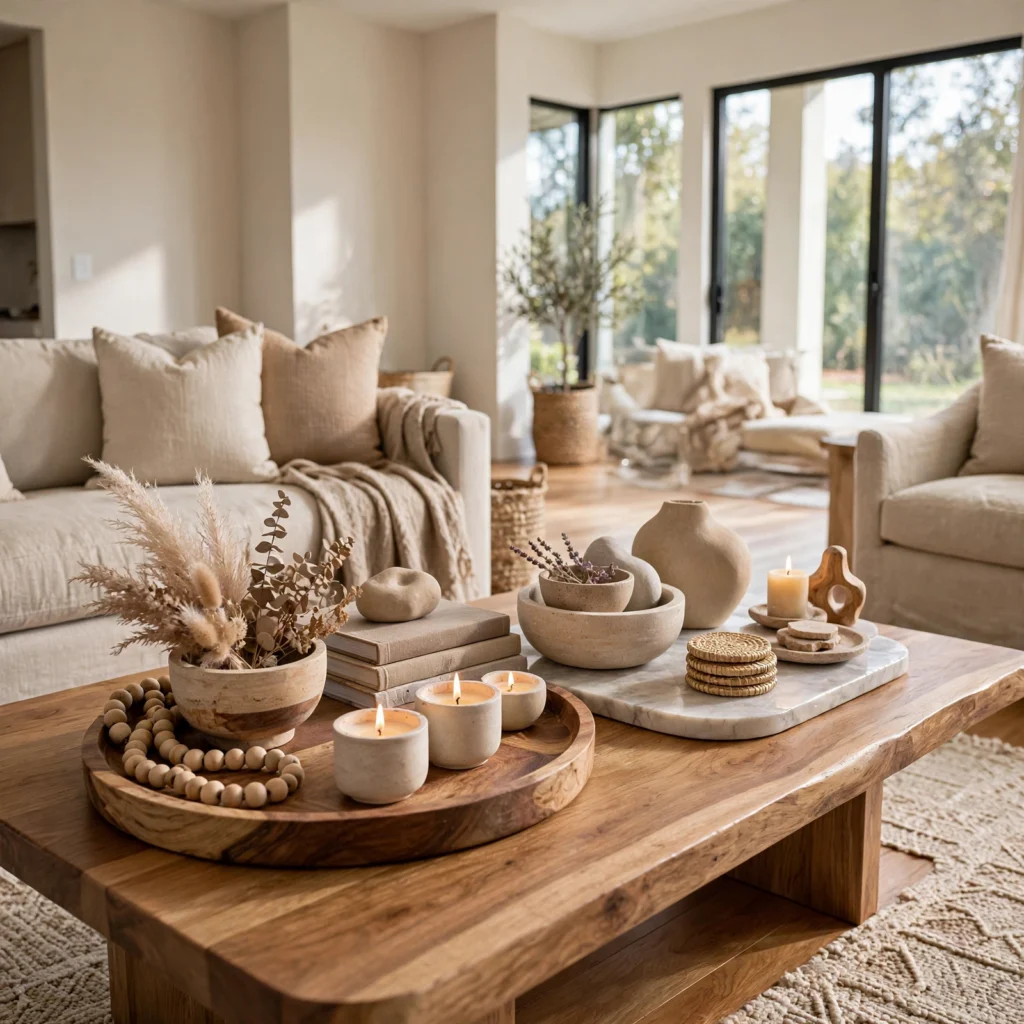
Decorative bowl and tray groupings use a shallow dish or tray to define a specific styled zone on a console table, dresser, or kitchen counter, corralling smaller objects like keys, jewelry, or a candle into one organized, visually contained area. Choosing trays in a material that complements the room’s existing metal or wood tones, such as marble in a more polished space or wood in a warmer, more casual room, ties this detail into the broader material palette. This technique also serves a genuinely practical function, keeping smaller items from spreading loosely across a surface.
8. Candlelight Layering by Room
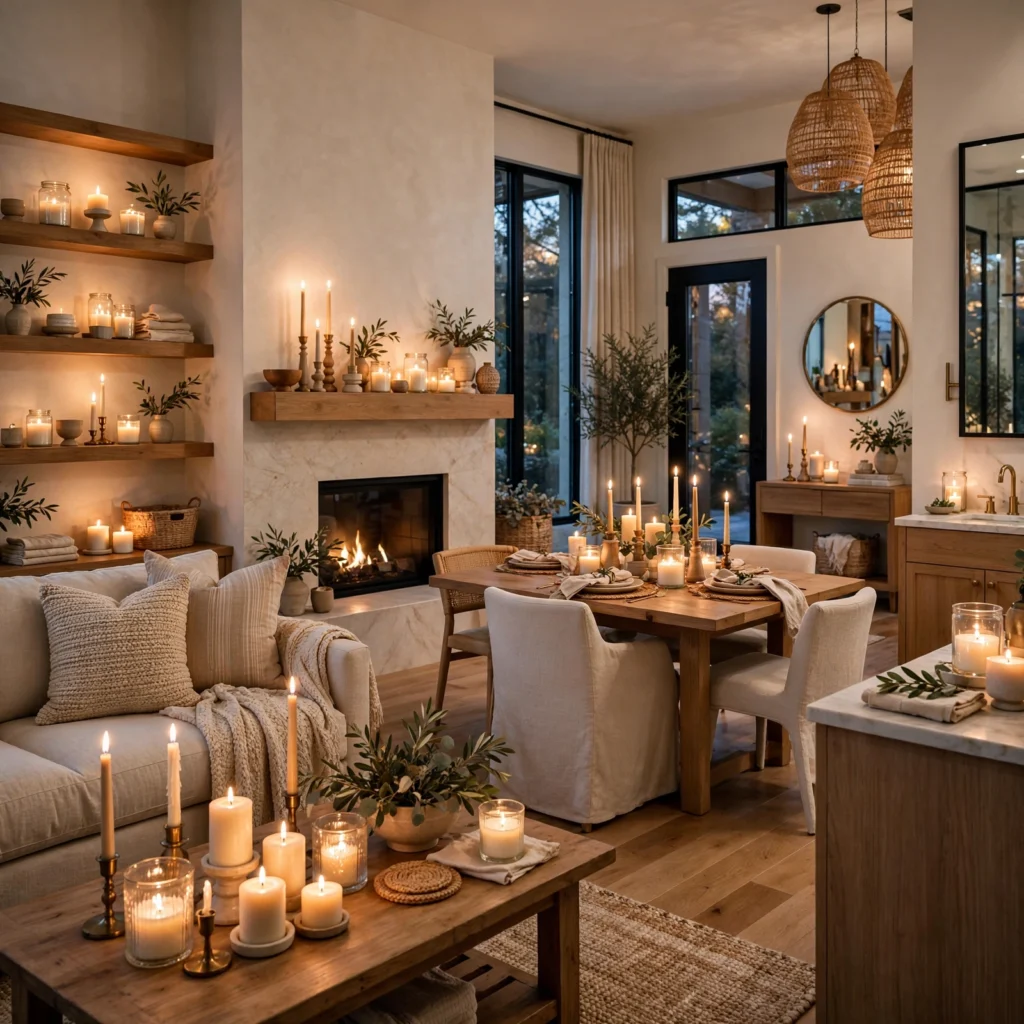
Candlelight layering by room places two or three candles of varying heights in key spots throughout the house, chosen with scents and vessel styles suited to each specific room’s mood and function. A more energizing citrus or herbal scent might suit a kitchen or home office, while a warmer, woodier scent works well in a bedroom or living room during evening hours. This detail adds both a decorative object and a sensory layer that purely visual decor choices can’t provide on their own.
9. Curtain and Drapery Coordination
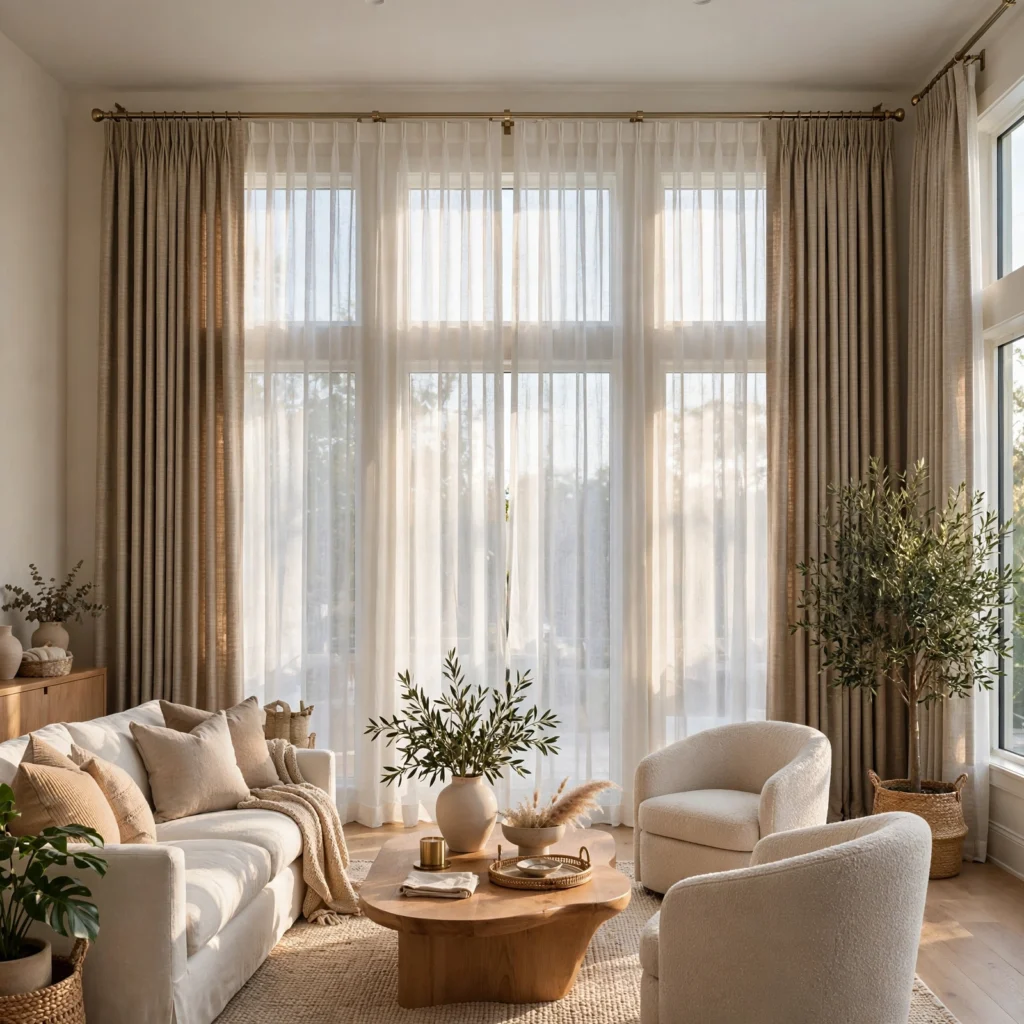
Curtain and drapery coordination chooses window treatments throughout the house that share a related color palette or fabric weight, even when the specific rooms and window sizes vary considerably. This detail creates a subtle sense of continuity as you move through a home, particularly in a floor plan where multiple windows are visible from a shared hallway or open living space. Hanging curtain rods a few inches above each window frame and wider than the glass itself, consistently throughout the house, also creates a cohesive sense of proportion from room to room.
| Coordination Element | Consistency Level | Visual Effect |
| Color Palette | High | Cohesive from room to room |
| Fabric Weight | Moderate | Consistent texture, varied pattern |
| Rod Height Placement | High | Uniform proportions throughout |
10. Mirror Placement Strategy
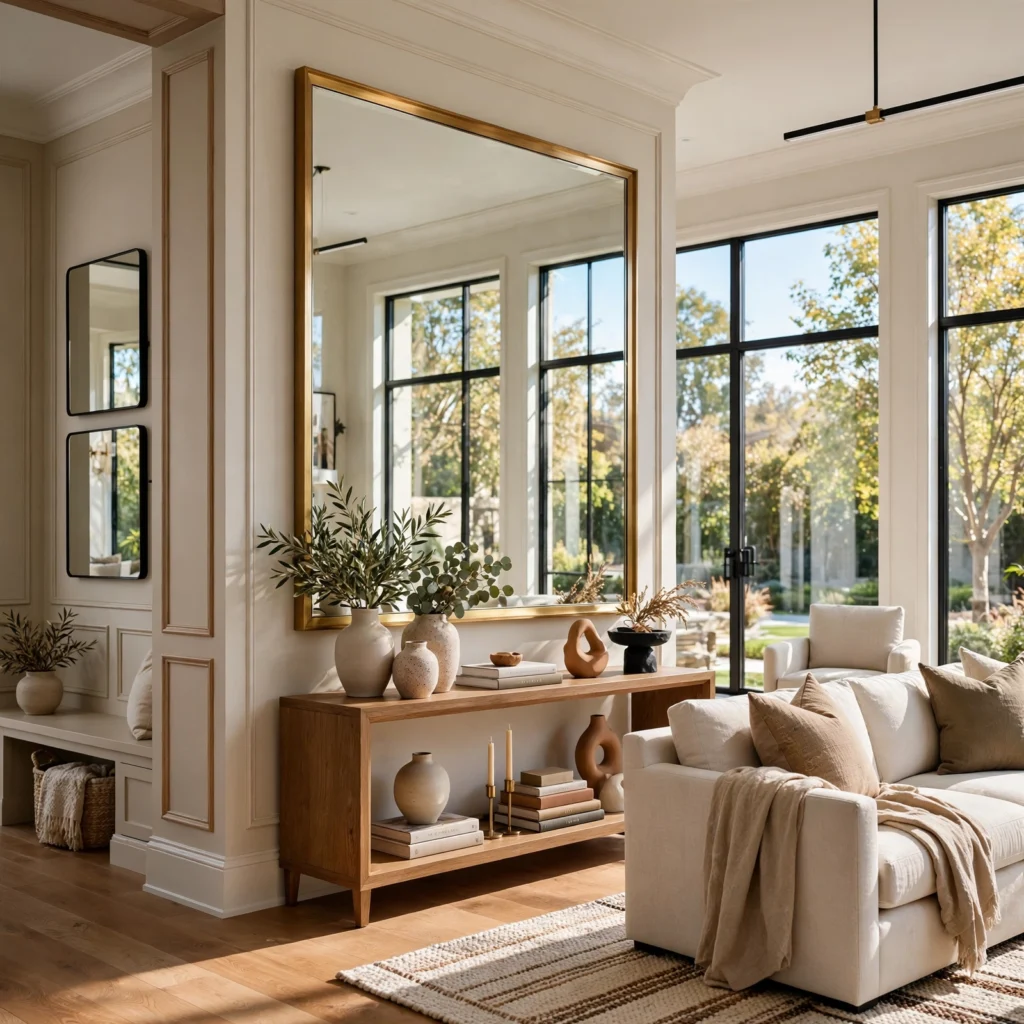
A mirror placement strategy positions mirrors throughout the house specifically to maximize natural light reflection and perceived depth, typically opposite windows or at the end of a hallway where the reflected view extends the visual space. Choosing mirror frames in a consistent metal finish across different rooms, even as the specific shapes vary, ties this practical, light-enhancing detail into the home’s broader decor scheme. This technique works particularly well in a home with several smaller or darker rooms that benefit from the brightening effect a well-placed mirror provides.
11. Bookshelf Styling by Color
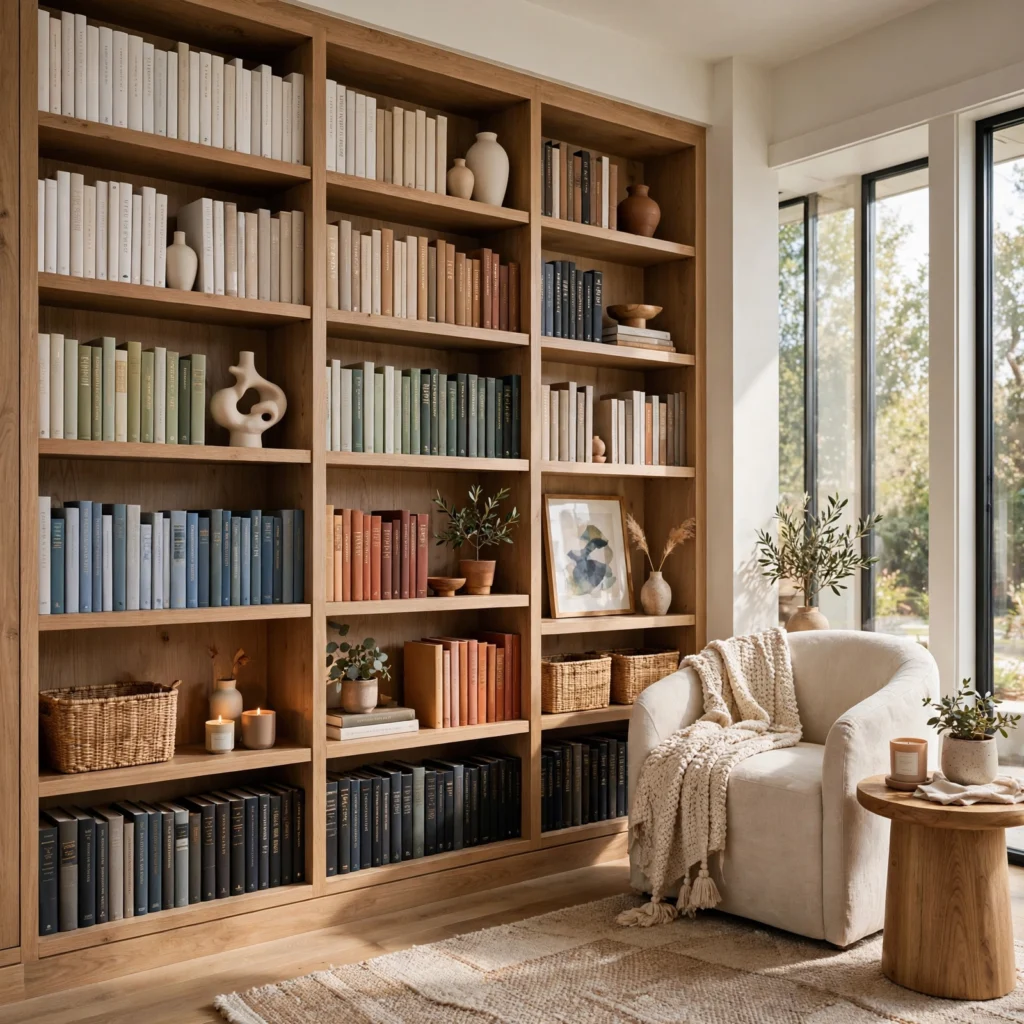
Bookshelf styling by color arranges books according to their spine color rather than by author or genre, creating a more visually striking, gradient-like display across open shelving throughout the house. This approach works particularly well on a shelf meant primarily for display rather than frequent reference use, since color-based organization makes locating a specific title by author or title considerably more difficult. Mixing in a few non-book objects, like a small sculpture or a framed photo, between color-grouped sections breaks up what could otherwise feel like an overly uniform, repetitive pattern.
12. Scented Diffuser Placement
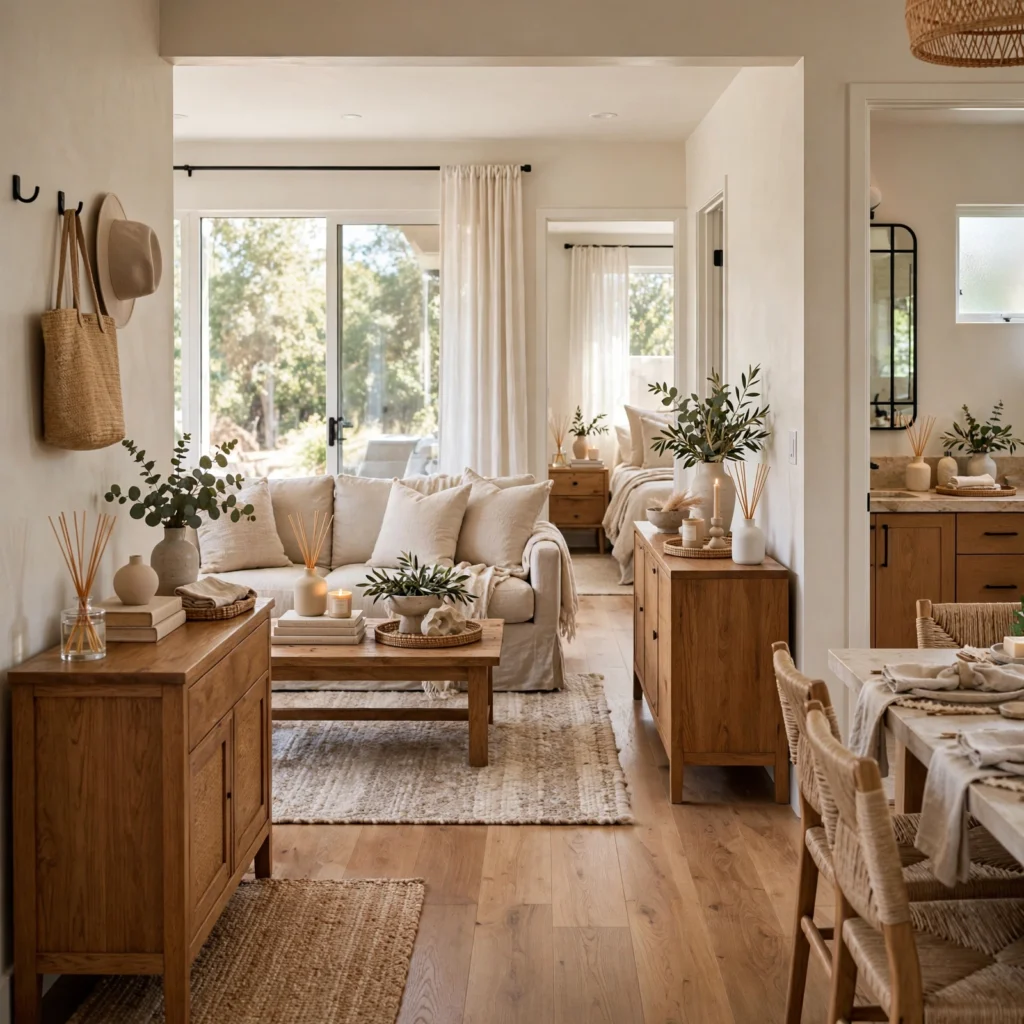
Scented diffuser placement positions reed diffusers or plug-in scent devices in transitional spaces throughout the house, like entryways, hallways, and bathrooms, providing a consistent, low-maintenance layer of fragrance that doesn’t require the ongoing attention a candle needs. Choosing complementary scents across these different transitional spaces, rather than combining conflicting fragrances in nearby rooms, prevents an unpleasant clash as air moves between connected areas. This detail works especially well in higher-traffic zones that see frequent passage but less dedicated decorating attention than a primary living space.
13. Statement Rug Layering
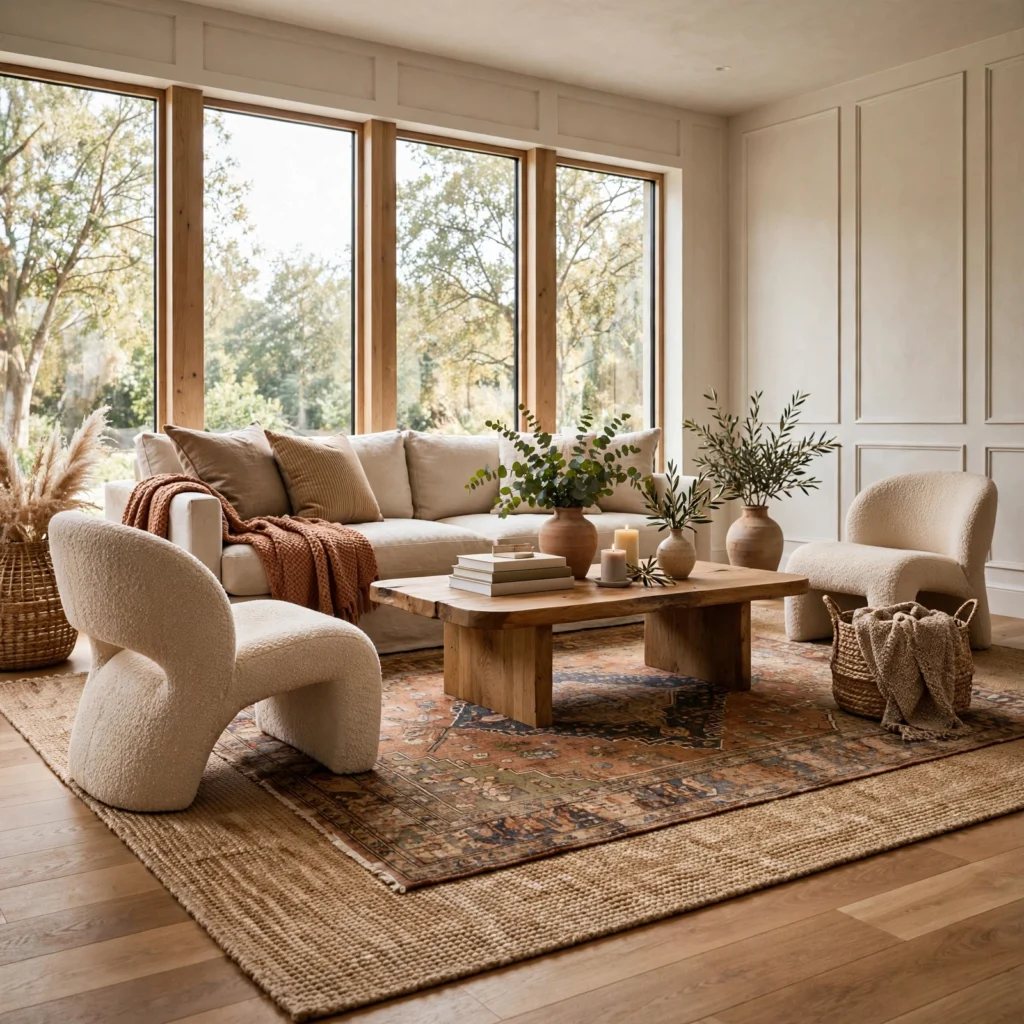
Statement rug layering places a smaller, patterned rug over a larger, more neutral base rug in select rooms throughout the house, adding visual depth at floor level without requiring one single rug to carry the entire room’s pattern and color needs. This technique works particularly well in an entryway, a reading nook, or beneath a dining table, where the layered effect adds textural interest to a floor that might otherwise remain visually flat. Choosing top-layer rugs with a shared color thread, even as the specific patterns vary by room, maintains cohesion throughout the house.
14. Wall Sconce Ambient Lighting
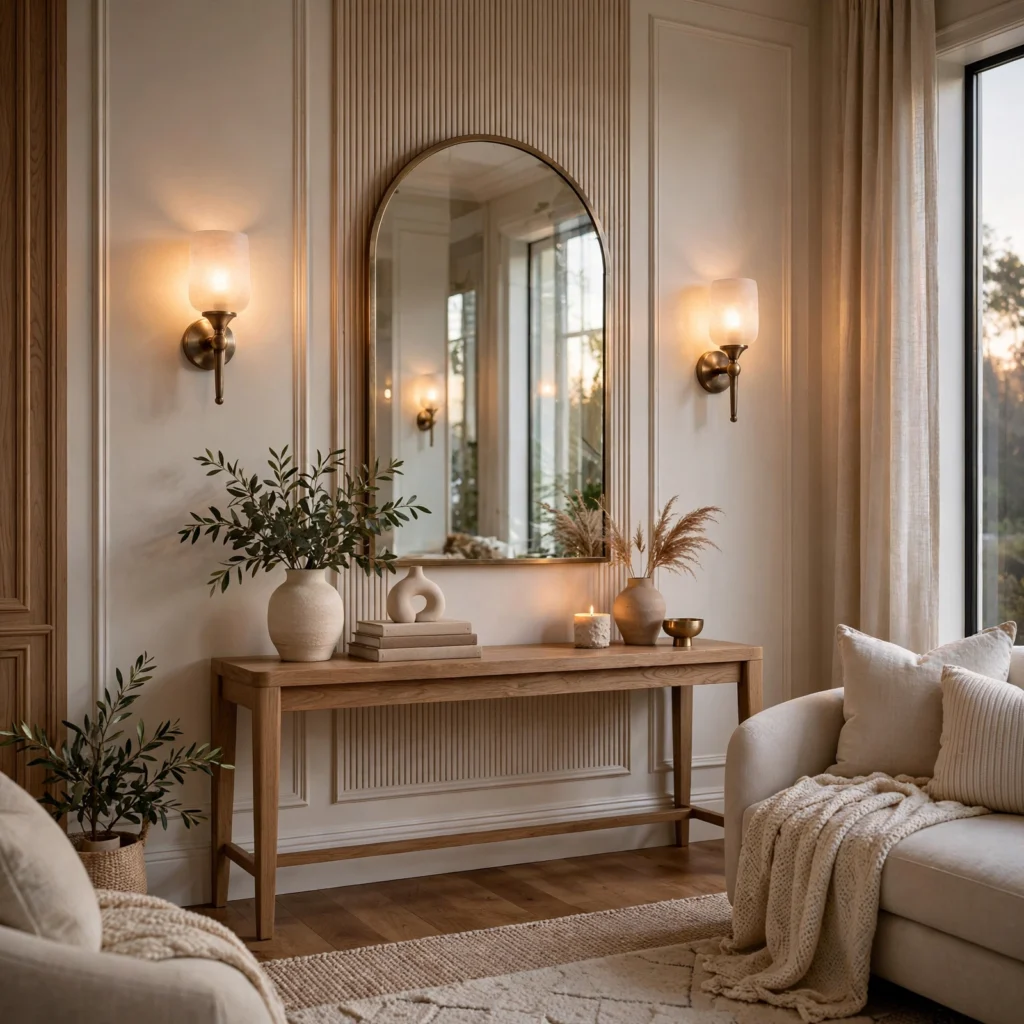
Wall sconce ambient lighting adds fixtures at eye level throughout hallways, bedrooms, and living spaces, supplementing overhead lighting with a softer, more flattering secondary light source positioned lower in the room. Choosing a consistent sconce style or finish throughout connected spaces creates a subtle sense of continuity as you move through the house, even when the specific rooms serve very different functions. This detail significantly affects a home’s evening ambiance, since sconce lighting tends to feel considerably warmer and more intimate than relying on overhead fixtures alone.
15. Personal Travel Souvenir Display
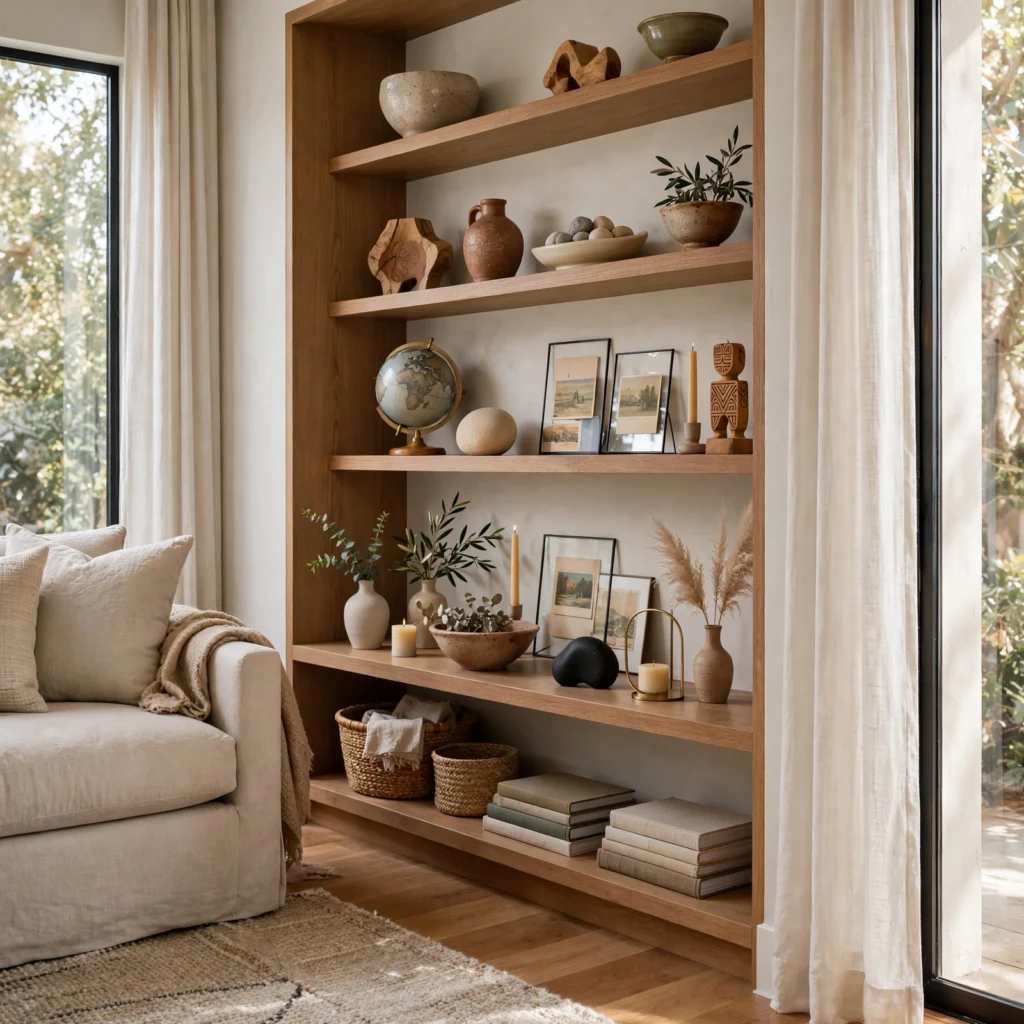
A personal travel souvenir display groups items collected during trips, like small sculptures, textiles, or framed ticket stubs, into an intentional grouping on a shelf or console table rather than scattering them individually throughout the house without any organizing theme. This detail adds genuine personal history and storytelling to a home’s decor in a way that purchased, generic accessories can’t replicate. Rotating which souvenirs are on display periodically, rather than showing the entire collection at once, keeps this detail feeling fresh and gives lesser-seen items their turn in the spotlight.
16. Rotating Art Print Frames
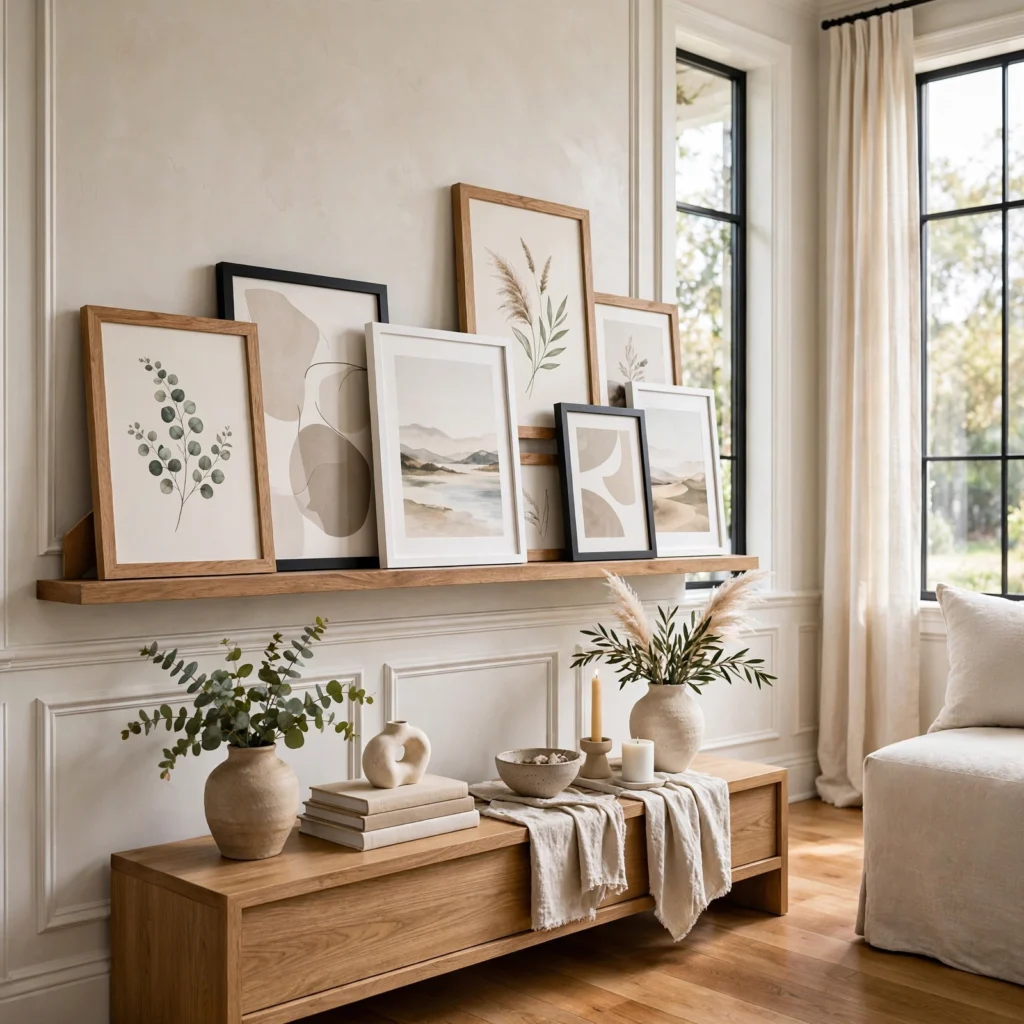
Rotating art print frames use a few strategically placed frames throughout the house designed for easy, tool-free swapping, allowing the specific artwork on display to change seasonally or whenever the mood strikes without needing to rehang an entirely new piece each time. This detail works particularly well in a smaller entryway or hallway frame, where a lower-commitment rotating display makes more sense than a larger, permanently mounted piece. Keeping a small collection of prints sized to fit these rotating frames on hand makes the swapping process quick and genuinely sustainable as an ongoing habit.
17. Textural Throw Blanket Placement
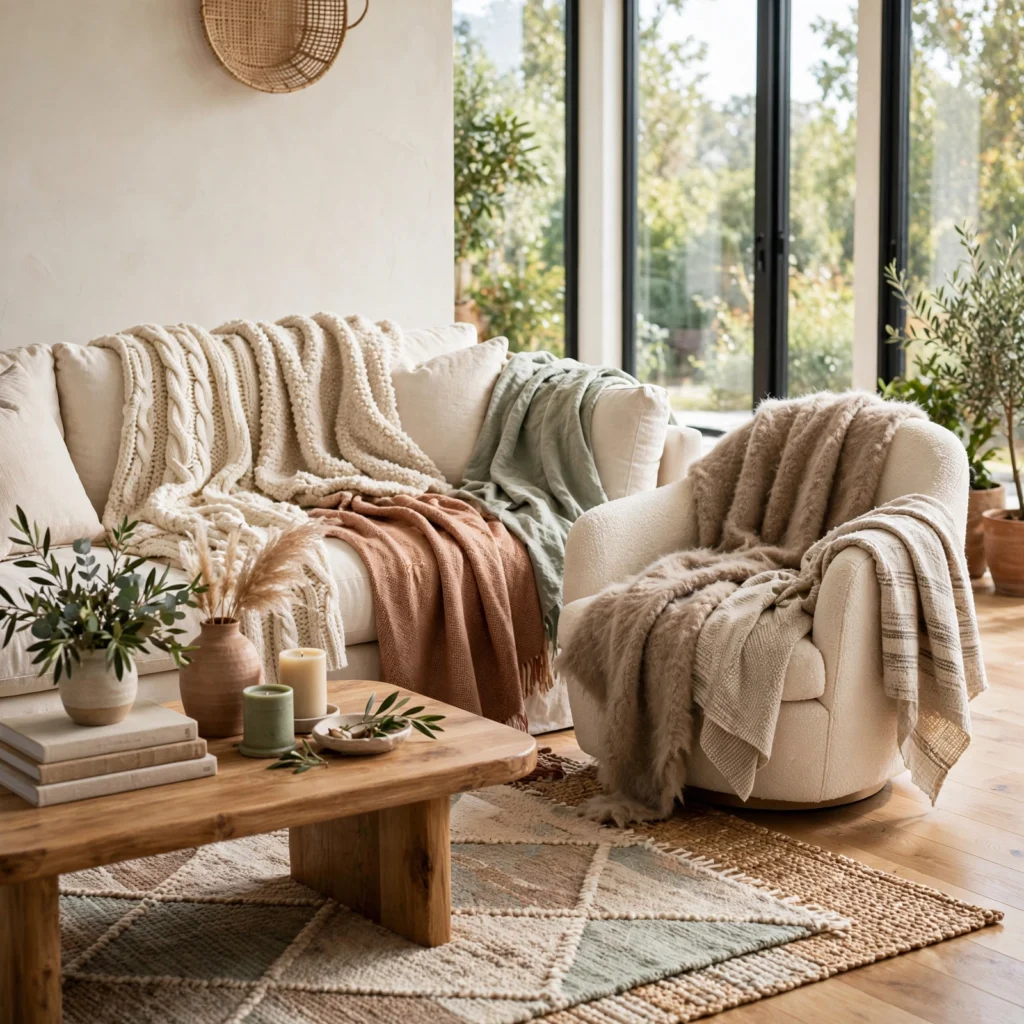
Textural throw blanket placement drapes a blanket over the arm of a sofa, the foot of a bed, or the back of a dining chair throughout the house, adding a layer of texture and a suggestion of coziness to rooms that might otherwise read as purely functional. Choosing throws in a range of materials, such as a chunky knit in the living room and a lighter cotton weave in a bedroom, adds variety suited to each room’s specific use and climate needs. This detail is one of the simplest, most affordable ways to add a layer of warmth and personality to nearly any room in the house.
Shop the Look
A well-decorated house interior typically layers a handful of these techniques consistently across multiple rooms rather than treating each space as an entirely separate decorating project. Vignette styling on key surfaces, paired with layered throw pillows and a textural throw blanket, builds a cohesive soft-goods layer throughout the main living spaces. A family photo wall and a travel souvenir display add personal history to the home’s overall story. Consistent candle scenting and wall sconce lighting round out the sensory and ambient details that tie the whole house together in the evening hours.
Common House Interior Decor Mistake to Avoid
The most common mistake is decorating each room as an entirely separate project without applying any consistent styling techniques or color threads throughout the house, resulting in a home where individual rooms might look appealing but don’t feel connected to one another. Repeating a handful of specific techniques, like vignette grouping, a consistent candle scent family, or a shared throw pillow color palette, across multiple rooms creates a sense of intentional cohesion that room-by-room decorating in isolation often misses. This kind of repeated, consistent styling is often what separates a house that feels genuinely, cohesively decorated from one that simply contains several individually decorated rooms.
FAQs
How do I start decorating a house that feels completely undecorated?
Starting with a few repeatable techniques, like vignette styling on key surfaces and layered throw pillows in a consistent color palette, gives you a manageable starting point rather than trying to fully decorate every room at once. Applying these same techniques room by room, gradually working through the house, tends to produce more cohesive results than attempting to finish one room completely before starting the next.
Is it okay if my house decor changes seasonally?
Seasonal changes to decor, such as a rotating wreath or swapped throw pillow covers, are a normal and often recommended part of keeping a house feeling current and tended to throughout the year, rather than suggesting anything is unfinished about the underlying decorating scheme. Reserving these seasonal changes for smaller, easily swapped items, while keeping larger furniture and color choices more permanent, is the most practical way to incorporate this kind of rotation.
How many decor styles can I mix within one house?
Mixing decor styles throughout a house works well as long as there’s some connecting thread, like a shared color palette or a consistent material choice, tying the different rooms together despite their varying specific styles. Combining too many entirely unrelated styles without any connecting element, on the other hand, tends to make a house feel disjointed rather than intentionally eclectic.
What’s the most affordable way to improve house interior decor?
Textiles like throw pillows and blankets, along with small vignette styling using items you likely already own, are among the most affordable ways to meaningfully improve house interior decor without a significant financial investment. Rearranging existing decor into more intentional groupings, rather than purchasing anything new at all, can also make a noticeable difference at no cost whatsoever.
How often should I update my house’s interior decor?
There’s no fixed timeline, though refreshing smaller, easily changed items like textiles and seasonal accents every few months keeps a home feeling current, while larger furniture and color decisions typically only need revisiting every several years or when personal taste genuinely shifts. Treating decor as an ongoing, evolving practice rather than a single finished project tends to produce a more genuinely lived-in, personal home over time.
Conclusion
These house interior decor ideas focus on the accessories, textiles, and styling techniques that layer on top of a home’s architecture and furniture, adding the personal, considered detail that makes a house feel genuinely decorated. Apply a handful of these techniques consistently across multiple rooms, rather than treating each space as an entirely separate project, to build a home that feels cohesive from room to room. Save this post to Pinterest for your next decorating project, and check out our related post on house interior for more foundational ideas covering the architectural and structural side of a home’s overall design.
This list draws on years of helping homeowners build out their home’s decor gradually and personally, with a focus on techniques that make a house feel collected and lived-in rather than generically staged.