12 Genius Balcony Garden Ideas for Small Outdoor Spaces
A balcony rarely offers more than a few square feet of usable space, yet the right balcony garden ideas can turn even a narrow 4-by-6-foot ledge into a genuine green retreat. Working within strict weight limits, railing rules, and wind exposure forces smarter choices than a full backyard ever requires. This post covers twelve practical balcony garden ideas, from rail planters to vertical walls, with real weight and spacing guidance for making the most of a small elevated space.
Trend & Background
Balcony gardening has expanded rapidly alongside apartment and condo living, with many renters and owners treating a balcony as their only real outdoor space rather than a secondary feature of a larger yard. Lightweight, modular planter systems have grown in popularity specifically because building codes and HOA rules increasingly restrict what can be permanently attached to a balcony railing or floor. At the same time, rising interest in home food growing has pushed compact, dwarf vegetable varieties bred for container life onto balconies that would never support an in-ground vegetable bed.
Key Takeaways
- These balcony garden ideas work within weight limits and railing restrictions common to apartment living.
- Vertical growing and rail-mounted planters maximize space without adding to the floor footprint.
- Wind exposure and drainage require different solutions than a ground-level garden typically needs.
- Several ideas fit balconies as narrow as 3 feet deep without feeling cramped.
1. Balcony Rail Planter Box
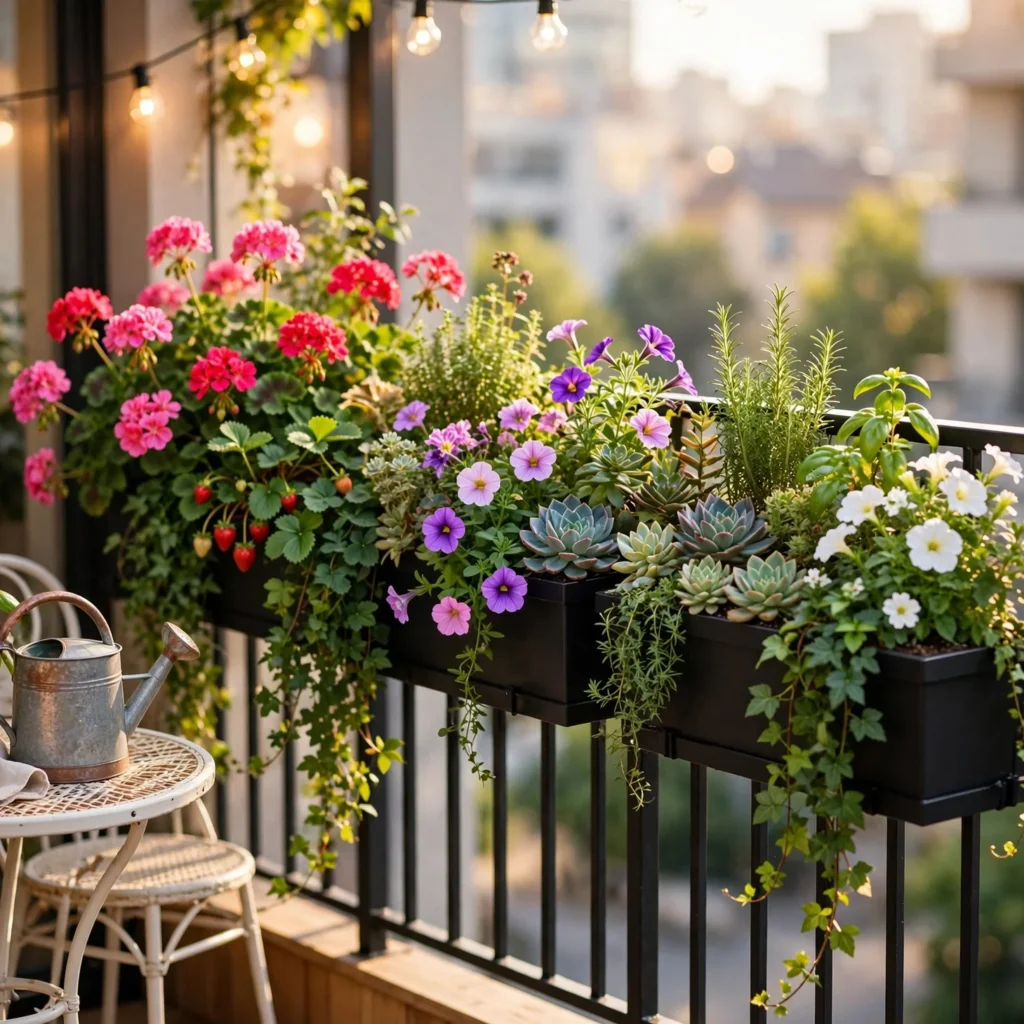
A balcony rail planter box clips directly onto an existing railing, adding growing space without using any floor area at all, which matters most on the smallest balconies. Most rail planters fit rail widths between 3.5 and 5.5 inches, so measuring the actual railing before buying prevents a mismatched or unstable fit. Herbs, lettuce, and compact flowering annuals all do well in the shallower soil depth these planters typically offer.
2. Vertical Living Wall Panel
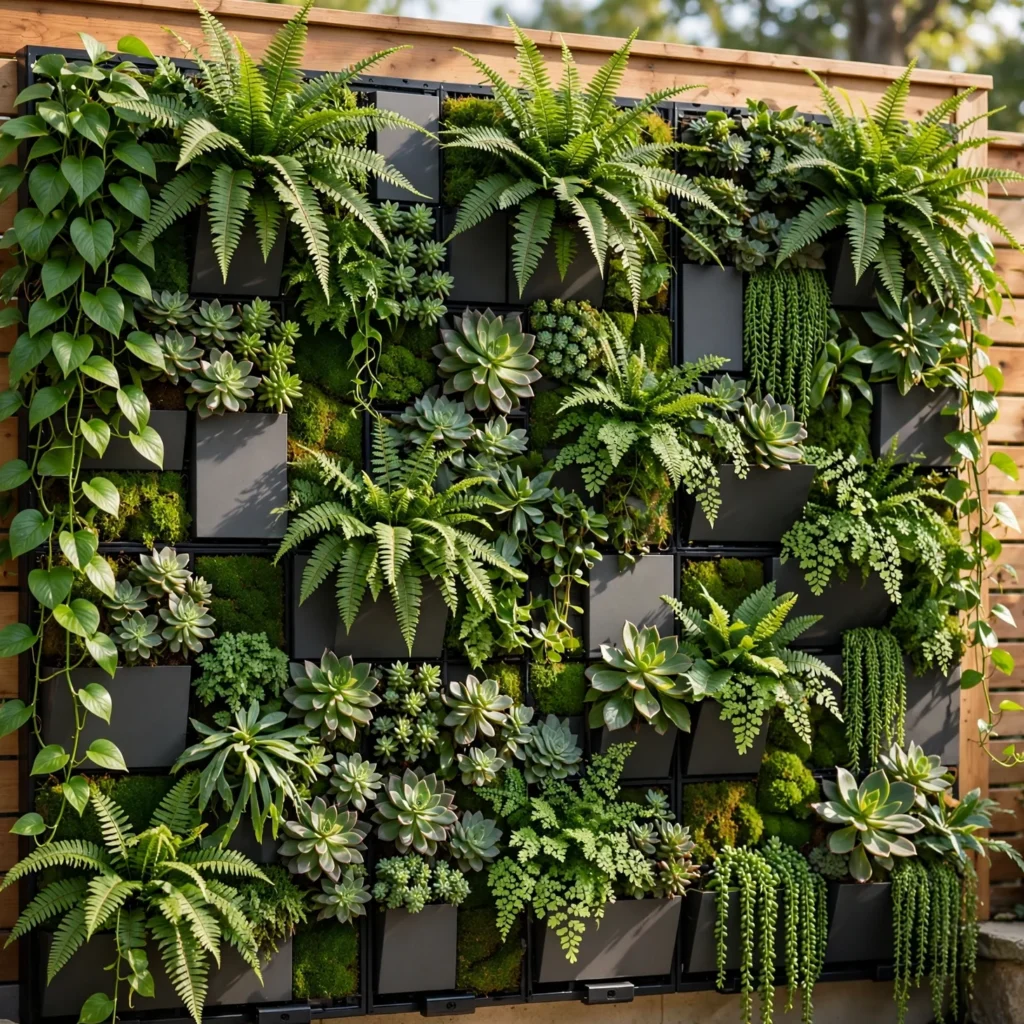
A vertical living wall panel mounted to the balcony’s back wall turns unused vertical space into a dense planting surface without competing with floor space needed for seating. Modular felt pocket systems stay lightweight enough for most balcony weight allowances, while succulents and shallow-rooted herbs handle the thin soil depth these systems typically offer. Positioning the wall on the more sheltered side of the balcony protects the shallow-rooted plants from wind that would otherwise dry them out quickly.
| Balcony Depth | Best Layout | Key Constraint |
| Under 4 ft | Rail planters, wall-mounted only | Floor space essentially none |
| 4-6 ft | Small bistro set + rail/vertical planting | Balance seating and growing space |
| 6+ ft | Tiered containers + dining area | Weight limit becomes main factor |
3. Tiered Container Plant Stand
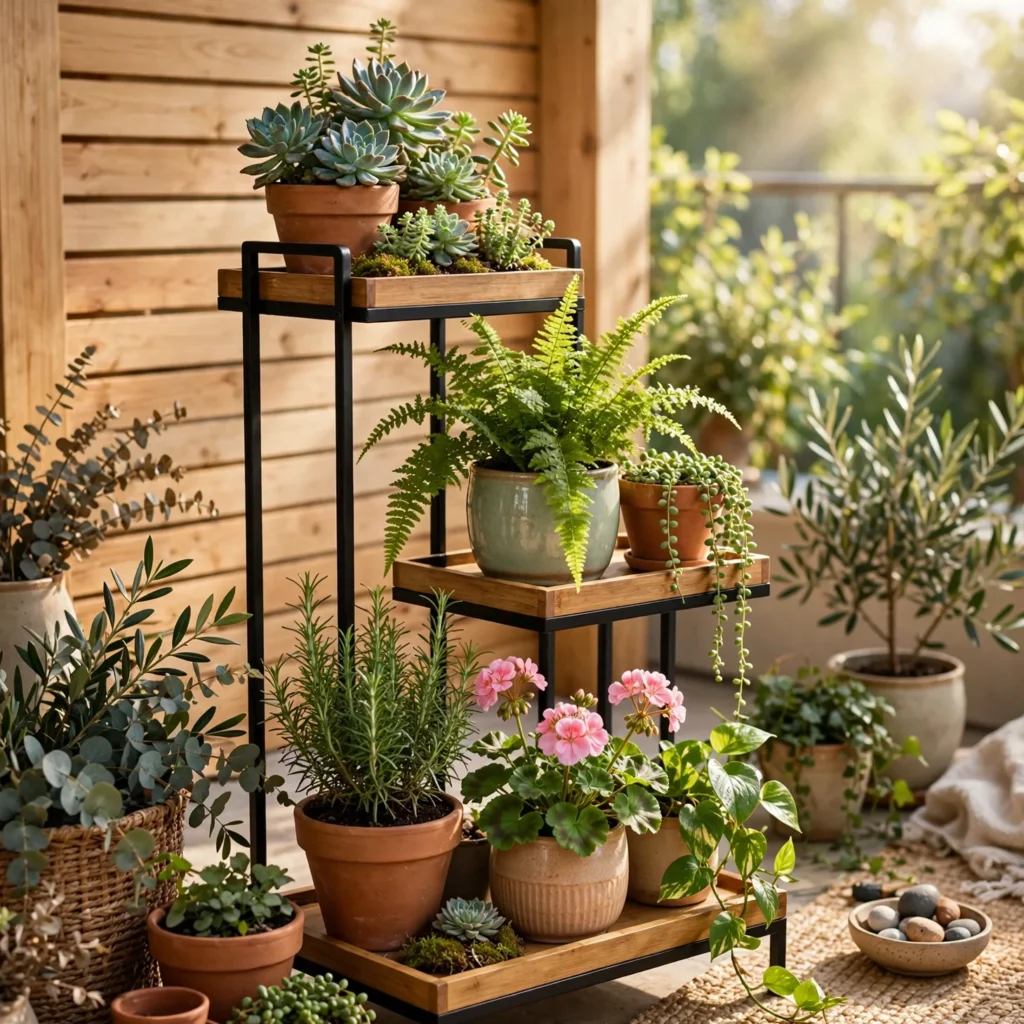
A tiered plant stand holds multiple pots at graduated heights on a single narrow footprint, letting a full plant collection fit into a corner that would otherwise hold just one or two pots side by side. Lightweight resin construction matters more here than on a ground-level patio, since balcony weight limits and the need to move pots for cleaning both favor materials easier to lift. Placing sun-loving plants on the top tier and shade-tolerant trailing varieties lower down takes advantage of the stand’s natural light gradient.
4. Hanging Basket Grouping
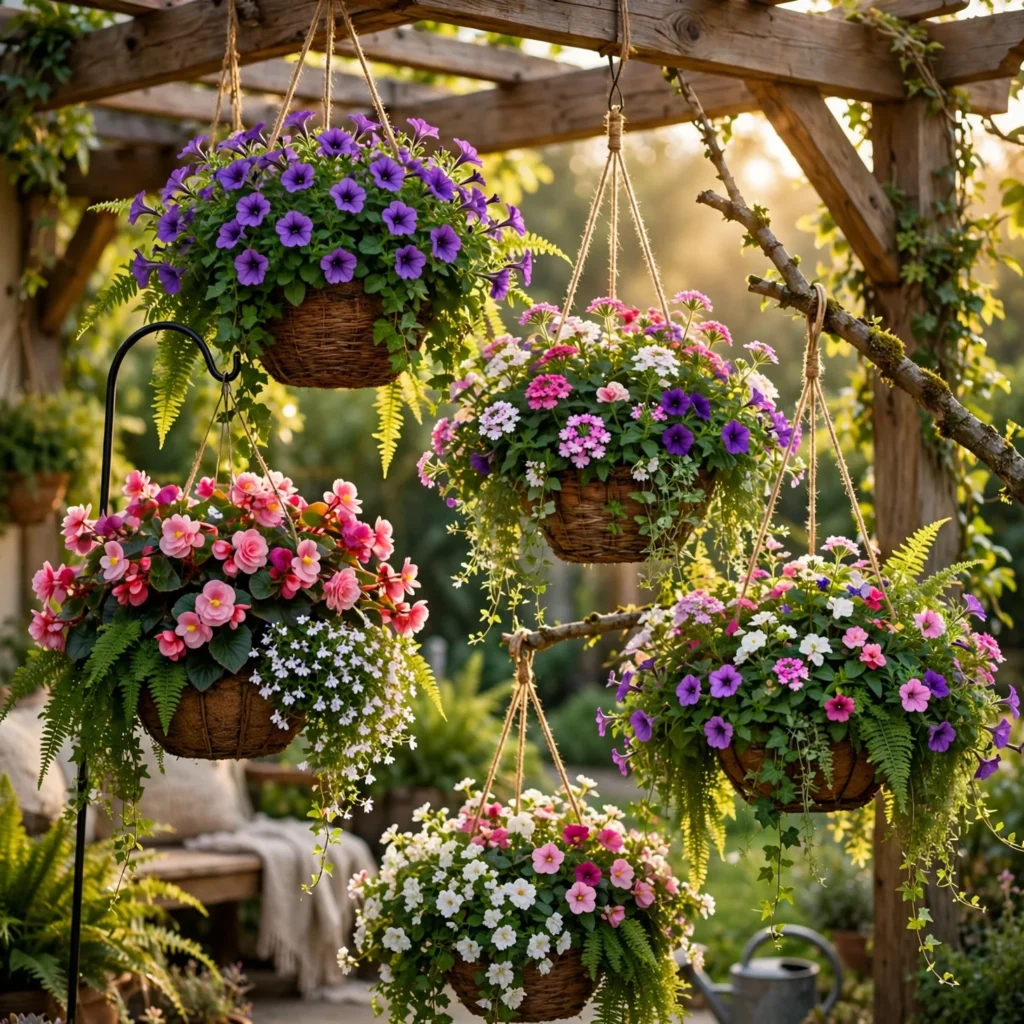
A grouping of hanging baskets suspended from a ceiling hook or an overhead structure adds planting space entirely above floor level, which works especially well on balconies too narrow for any additional furniture or containers. Baskets 10 to 12 inches in diameter keep total hanging weight manageable while still giving trailing plants like petunia or cherry tomato enough root room for a full season. Checking the ceiling or overhang’s actual load rating before hanging anything heavier than a single lightweight basket prevents a serious safety issue.
5. Compact Bistro Set With Container Border
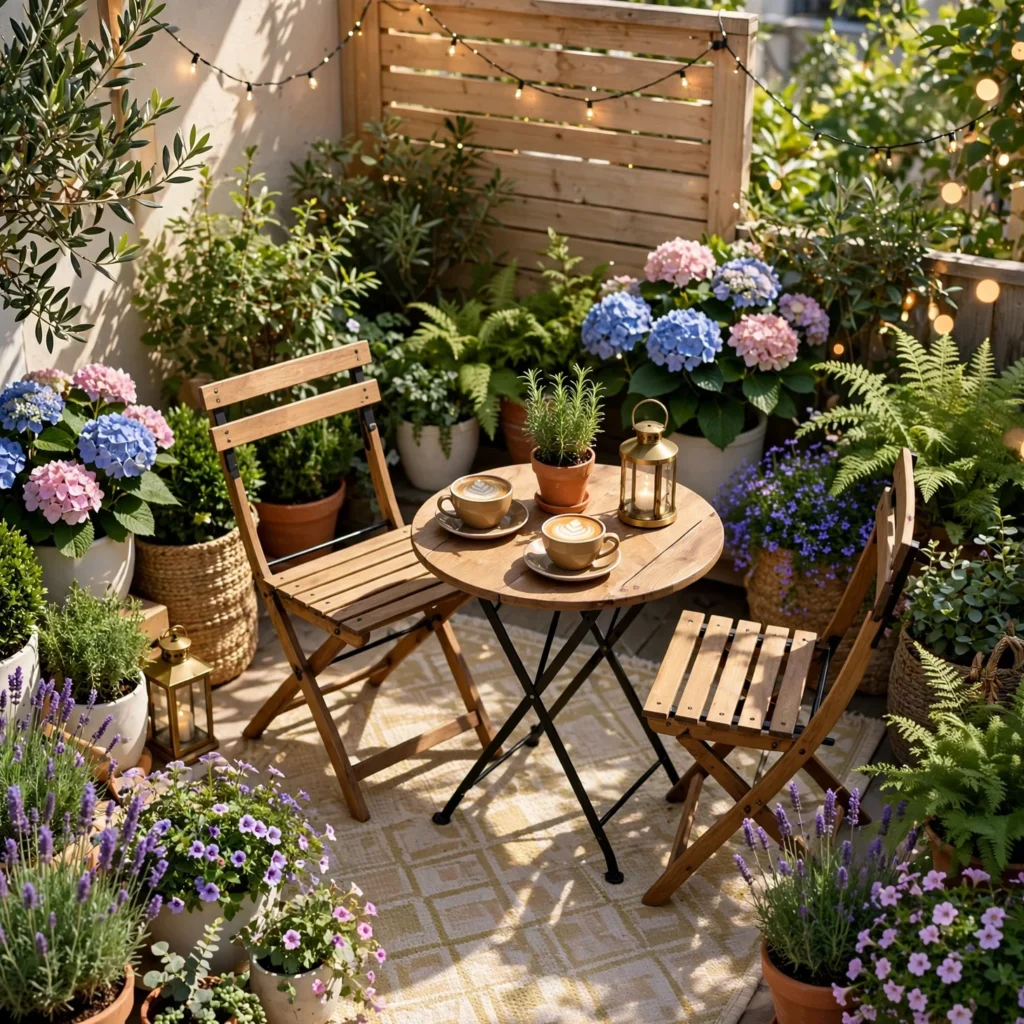
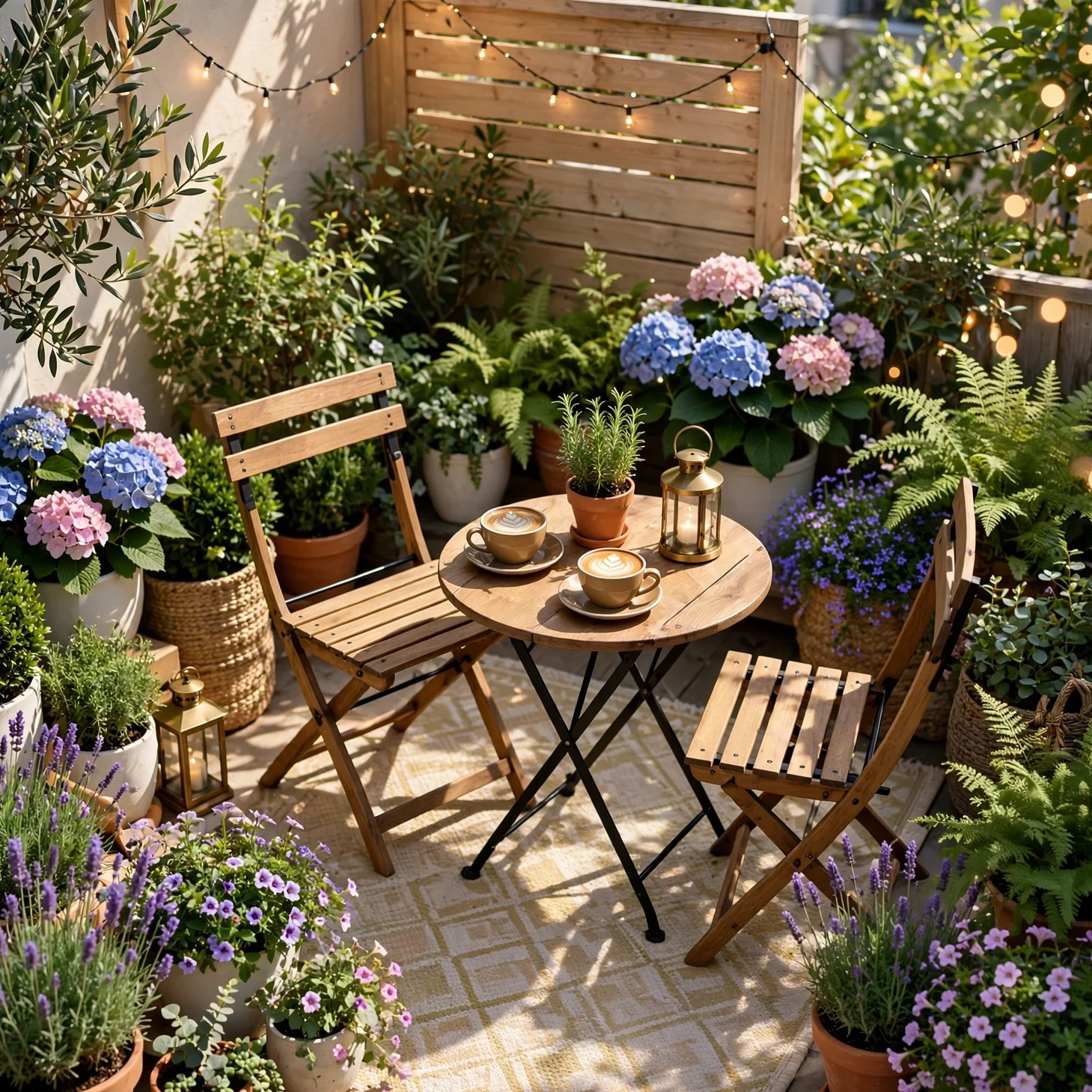
A small bistro table and two chairs paired with a border of containers along the railing lets a balcony function as both a dining spot and a garden without either purpose crowding out the other. Folding or stackable bistro sets free up floor space when not in use, which matters considerably on a balcony under 6 feet deep. Positioning containers along the railing rather than around the furniture keeps the walking path between table and door clear.
Add color and charm to your outdoor space with our garden edging ideas, filled with seasonal blooms and easy planting tips.
6. Dwarf Vegetable Container Garden
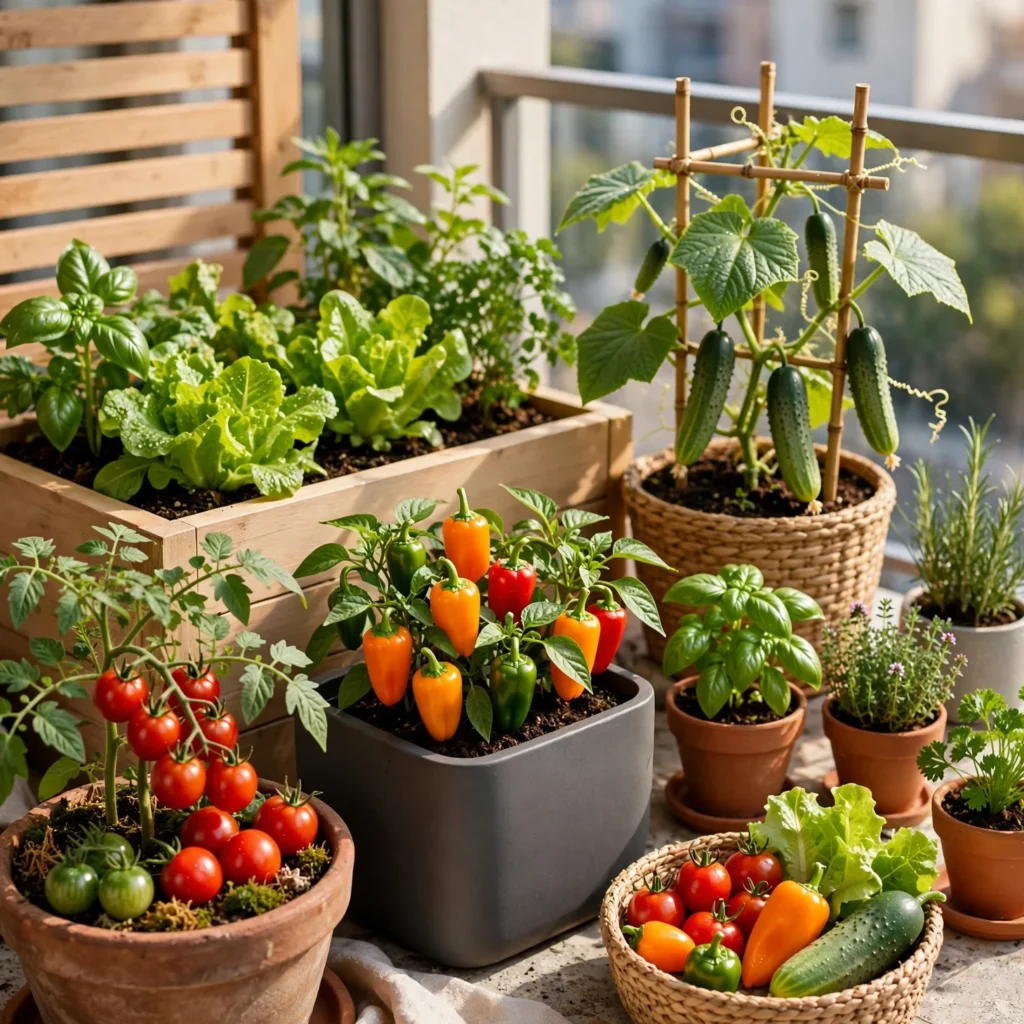
A dwarf vegetable container garden brings real food production to a balcony using compact, patio-bred varieties of tomato, pepper, and bush bean developed specifically for container life. Pots of 15 to 20 gallons give these varieties enough root room for a full harvest despite the smaller plant size compared to standard garden varieties. Positioning containers to catch at least six hours of direct sun, which often means testing different balcony spots before settling on a final layout, matters more for vegetables than for most ornamental plants.
7. Trellis Panel for Vertical Screening
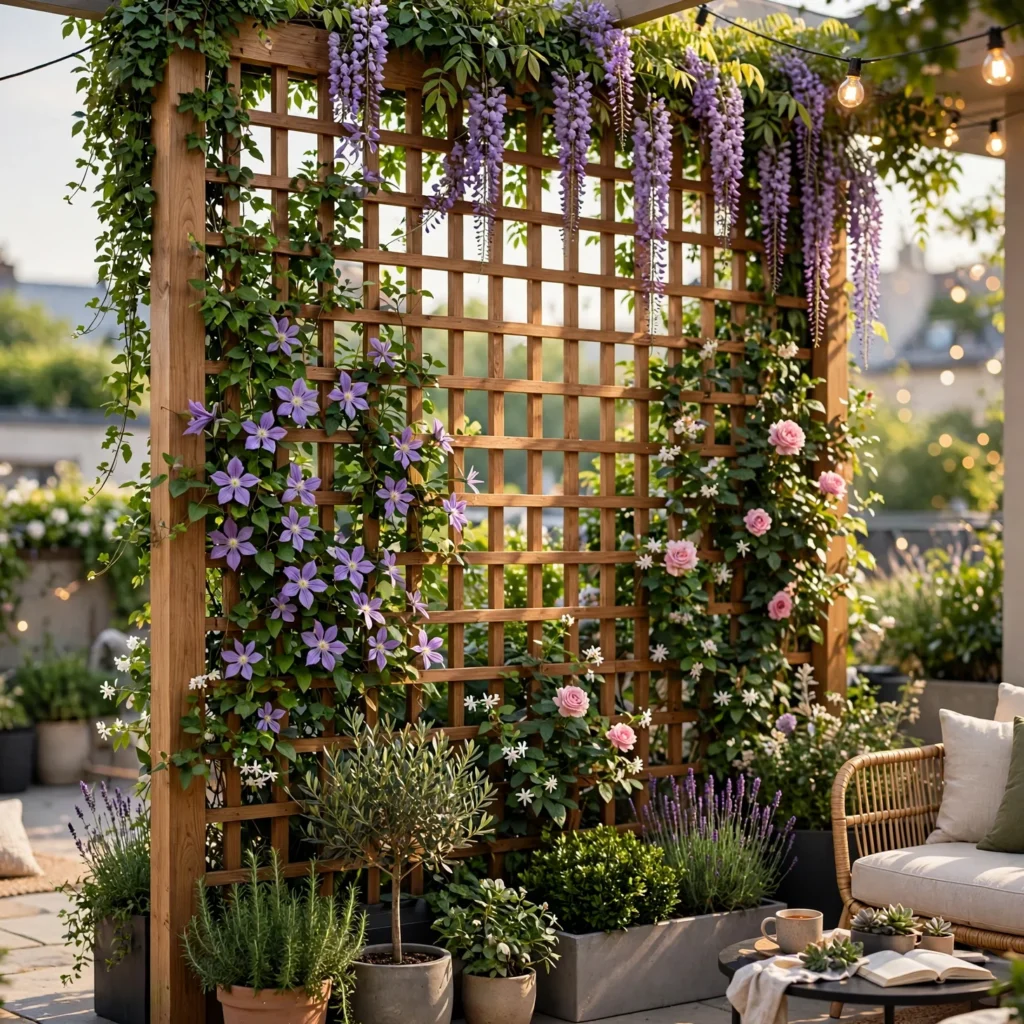
A trellis panel planted with a fast-growing vine like black-eyed Susan vine or morning glory blocks a specific sightline, such as a neighboring balcony or a street-facing view, without the bulk a solid screen would add to a small space. A single freestanding panel in a large container can be repositioned seasonally if privacy needs change throughout the year. This approach also lets some light filter through, which matters on a balcony where blocking too much sun would hurt the rest of the plantings.
8. Window Box on the Balcony Ledge
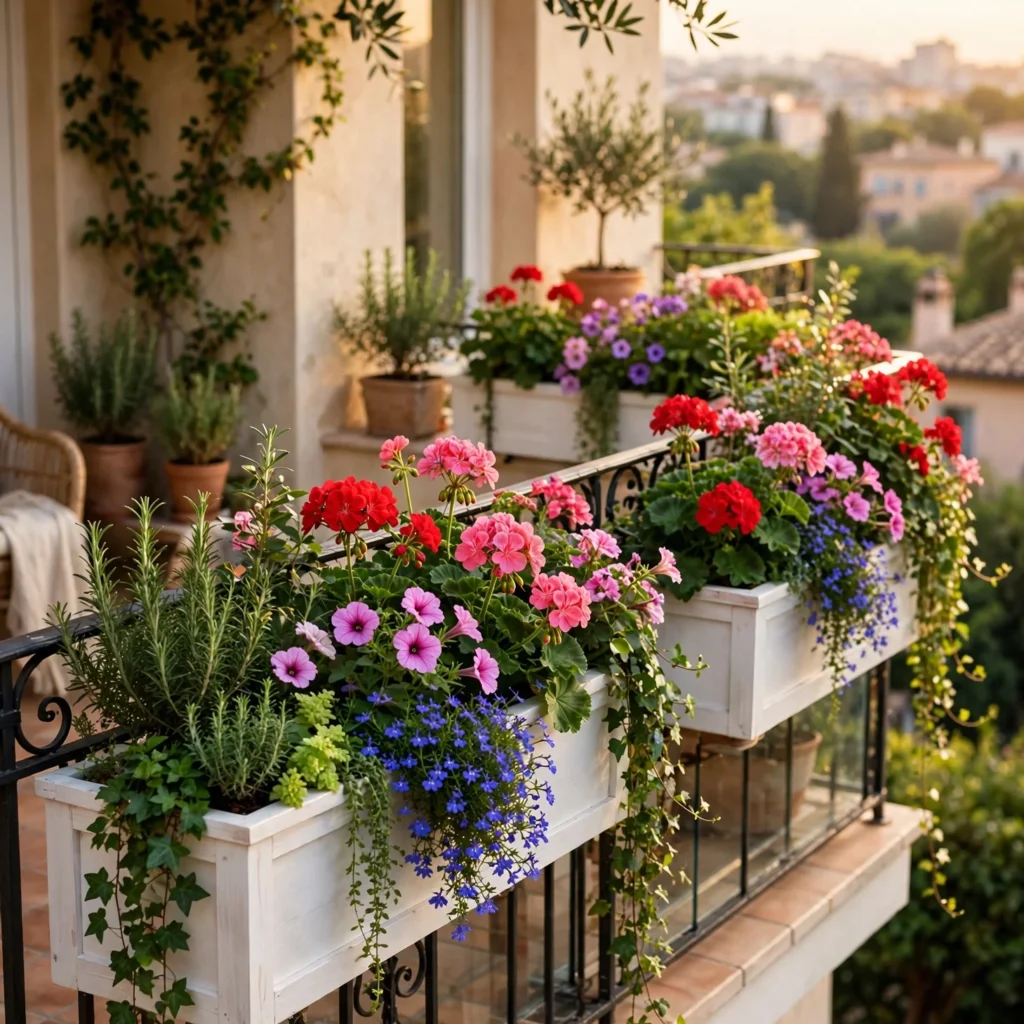
A window box mounted along the outer balcony ledge, where building rules allow it, adds a defined planting line at railing height without consuming any floor space at all. Cedar or powder-coated metal boxes both hold up to weather, though checking whether the building permits exterior-mounted planters is essential before installation, since many HOAs restrict anything visible from the street. Trailing plants like sweet potato vine paired with upright flowers create a layered look even within the box’s limited depth.
9. Solar Lantern and String Light Layer
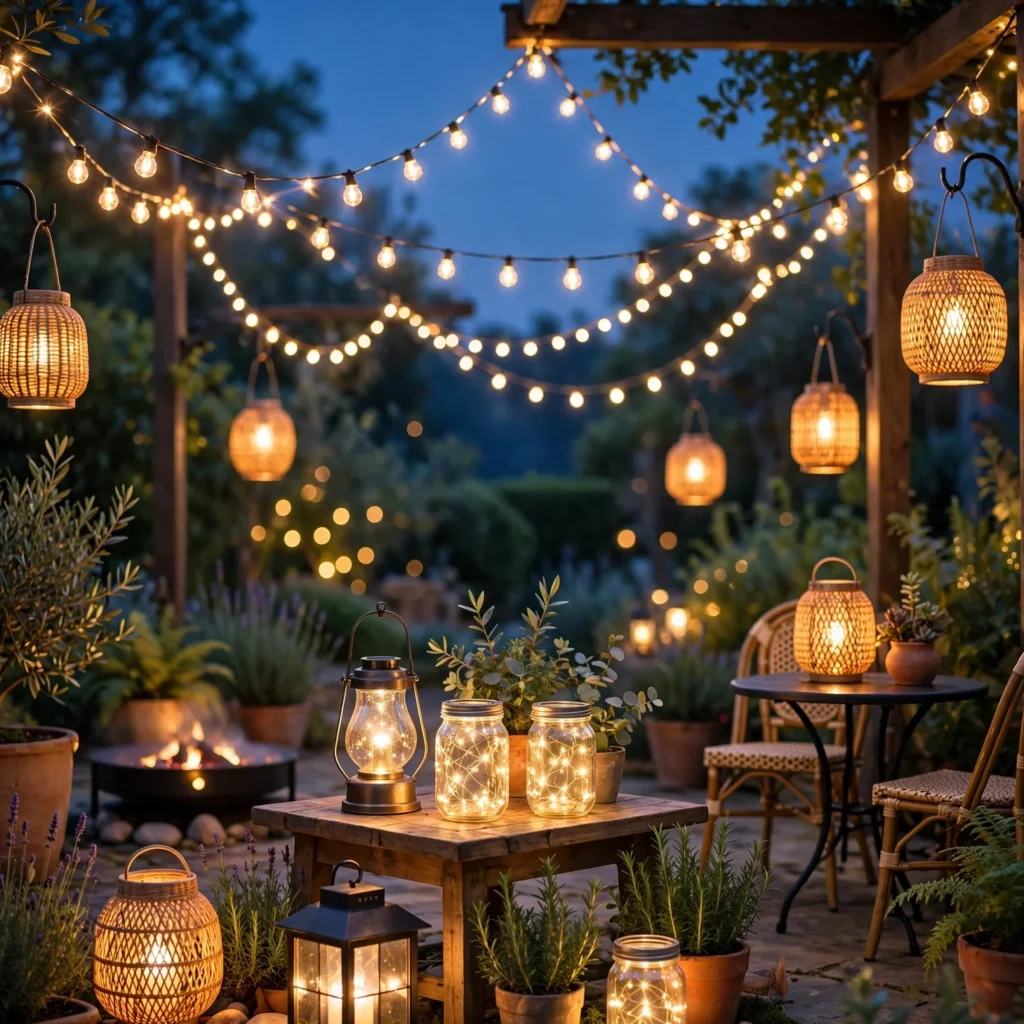
Layering solar lanterns among the plants with string lights strung along a railing or overhead structure extends balcony use into the evening without any wiring, which matters since most balconies don’t have convenient outdoor outlets. Warm white bulbs in the 2700K range read as more inviting than the bluish tone of cooler LED strings. Running lights along a defined edge, such as the railing line, rather than draping them randomly across the space, keeps a small balcony from looking cluttered after dark.
10. Herb Box Near the Door
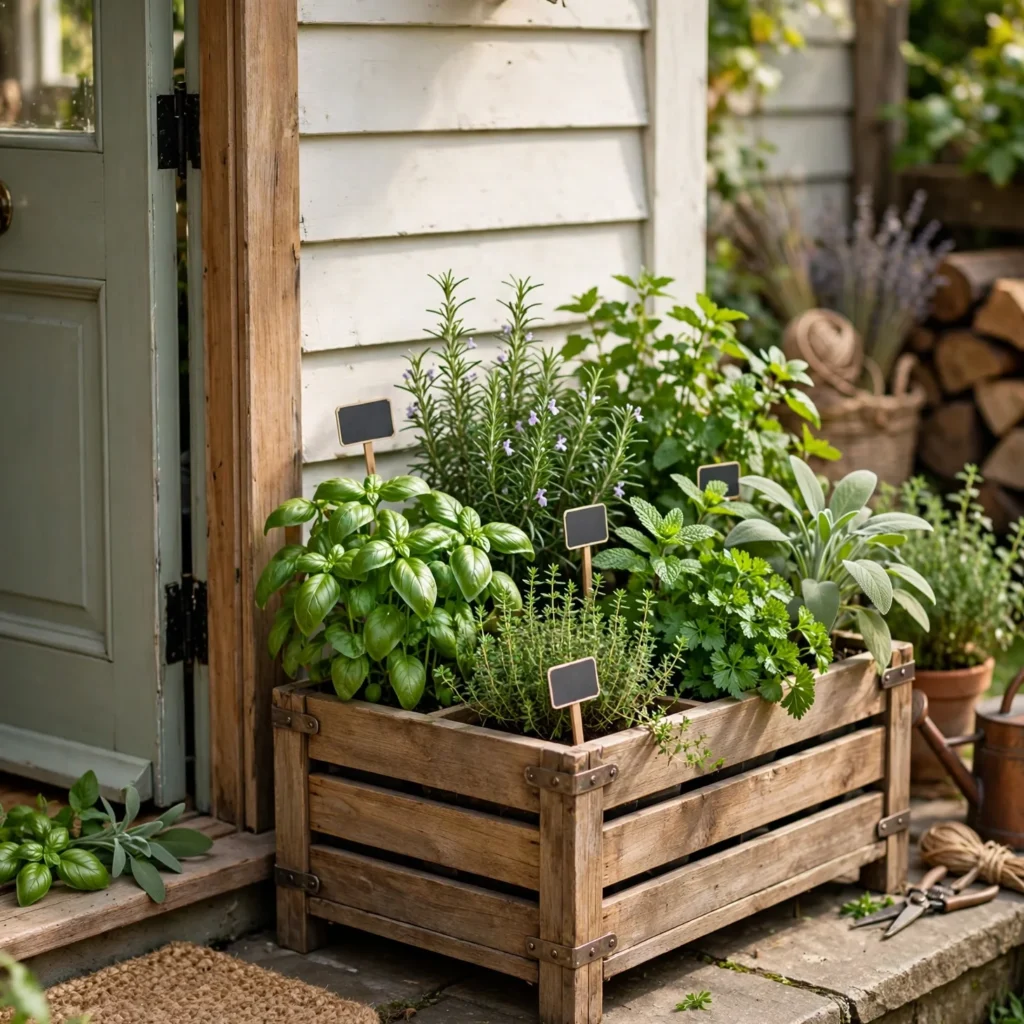
A dedicated herb box positioned just outside the balcony door keeps frequently used herbs within arm’s reach of the kitchen, cutting down on the awkward reach across a small space that a herb box in the back corner would require. Basil, chives, and thyme all tolerate the shallow soil depth typical of a compact box without much issue. This placement also means the herbs get checked and watered more consistently, simply because they’re seen every time the door opens.
11. Foldable Furniture for Multi-Use Space
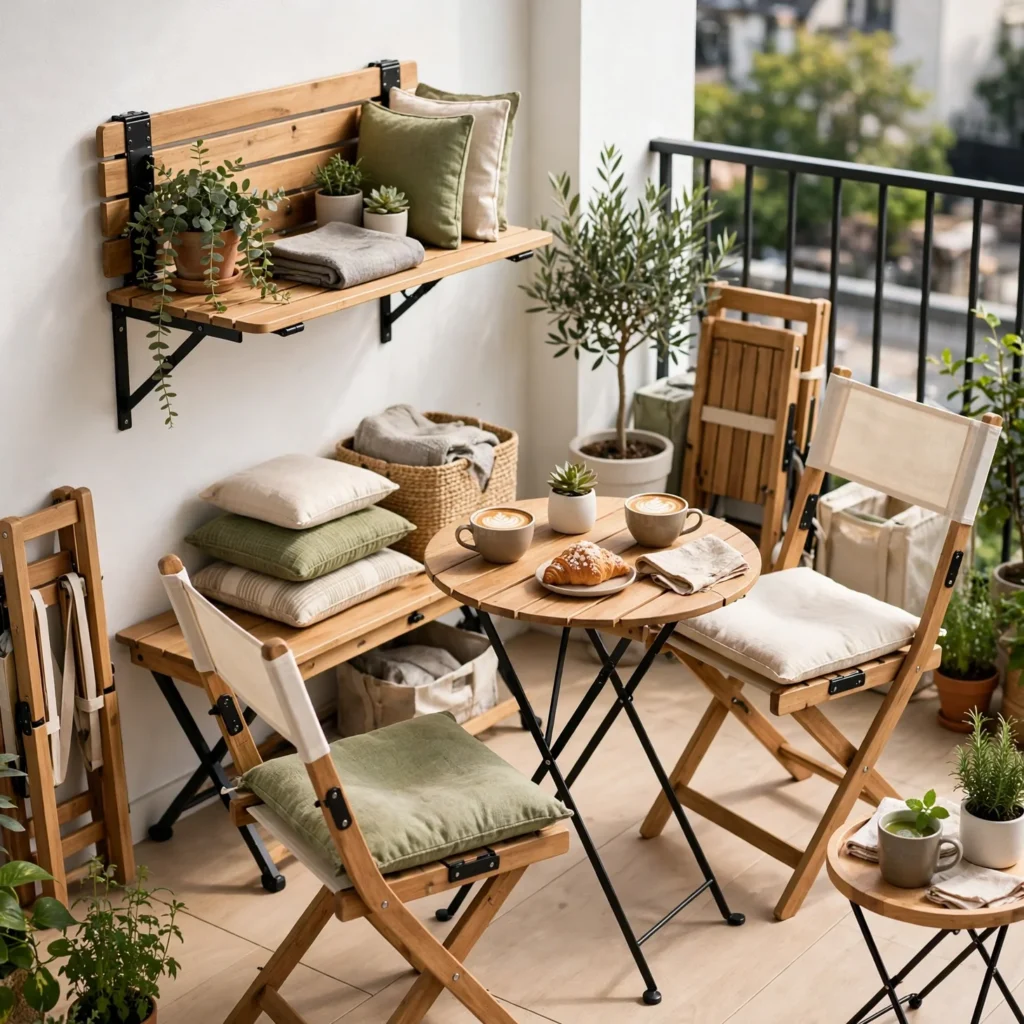
Foldable or stackable furniture lets a balcony shift between a garden-focused layout and an open, furniture-free space depending on the day, which matters most on balconies under 40 square feet where a fixed furniture arrangement would permanently limit growing space. Lightweight aluminum or teak folding chairs store flat against a wall or in a small closet when not in use. This flexibility means a balcony garden doesn’t have to compete permanently with the need for a place to sit.
12. Balcony Garden Ideas With a Privacy Screen Divider
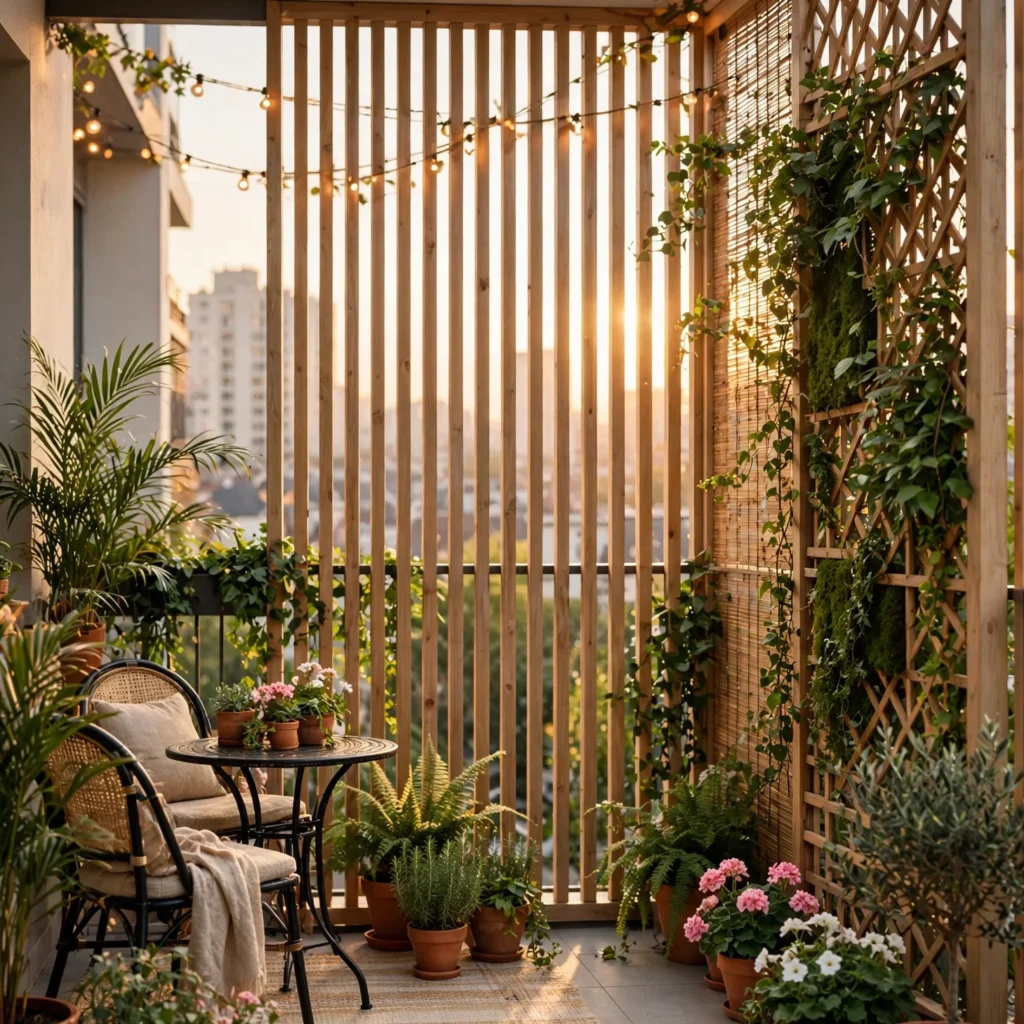
Among the most useful balcony garden ideas for shared or side-by-side units is a privacy screen divider, a freestanding or railing-mounted panel that blocks the direct sightline to a neighboring balcony while still allowing airflow through slats or a woven pattern. Bamboo or synthetic wicker screening both work well for this purpose and install without any permanent alteration to the railing itself. Positioning trailing plants along the screen’s edge softens its look while reinforcing the privacy it provides.
Shop the Look
A set of railing planter boxes with adjustable brackets fits most standard balcony rail widths without tools. A modular felt living wall panel turns a bare balcony wall into growing space in an afternoon. A foldable bistro set frees up floor space for gardening when dining isn’t needed. A solar-powered string light set extends balcony use into the evening without any wiring.
Common Mistake to Avoid
The most common mistake in balcony gardening is overloading rail planters or hanging baskets without checking the railing’s actual weight rating, which becomes a real safety concern once soil is saturated with water and adds significantly more weight than the dry planter alone. A single rail planter filled with wet soil can weigh 20 pounds or more, and multiplying that across a full railing length adds up fast on a structure that may not be rated for much additional load. Checking the building’s balcony weight guidelines, or erring toward lighter soilless mixes and smaller planters, avoids this risk entirely.
FAQs
What plants grow best on a balcony?
Compact and container-friendly plants grow best on a balcony, including dwarf tomatoes, herbs like basil and thyme, and trailing flowers such as petunia or sweet potato vine that don’t need deep root runs to thrive. Wind-tolerant options like ornamental grasses also do well on higher-floor balconies where exposure is more intense than at ground level. Choosing varieties specifically labeled “patio” or “dwarf” generally outperforms full-sized varieties squeezed into the limited container depth a balcony typically allows.
How much weight can a balcony hold for a garden?
Balcony weight capacity varies significantly by building age and construction, which makes checking official documentation or asking a building manager essential before adding significant planting weight. Many residential balconies are rated for standard live loads that leave limited margin once furniture, people, and saturated soil are all factored in together. Lightweight soilless growing mixes and fewer, larger containers rather than many small heavy ones generally keep total weight more manageable.
Can I put plants on a balcony railing?
Whether plants can go on a balcony railing depends entirely on the building’s specific rules, since many HOAs and apartment leases restrict anything mounted to or hanging over a railing due to liability concerns about items falling. Rail planters designed to sit fully on the inside of the railing, rather than hanging over the outer edge, are generally safer and more commonly permitted than outward-facing options. Checking the lease or HOA guidelines before installing anything on the railing avoids a conflict after the garden is already planted.
How do I protect balcony plants from wind?
Protecting balcony plants from wind typically involves choosing wind-tolerant species like ornamental grasses and sedum for the most exposed spots, combined with a partial windbreak such as a slatted trellis panel positioned along the prevailing wind direction. Grouping more delicate plants behind hardier ones, or against the more sheltered back wall of the balcony, extends what can successfully grow in an otherwise exposed location. Securing containers and tall plant stands firmly also prevents wind damage during unexpected gusts, which matter more at height than at ground level.
What is the best way to water a balcony garden?
The best way to water a balcony garden depends on how much time is available for daily care, since small containers dry out considerably faster than in-ground beds, especially in direct sun and wind at height. A simple battery-powered drip irrigation timer solves this for balconies with several containers, delivering consistent water without requiring someone home every day. For a small handful of pots, a self-watering container with a built-in reservoir often eliminates the need for a full irrigation system.
Conclusion
These balcony garden ideas prove that even a few square feet of elevated space can support a genuine garden, whether that means a rail planter box of herbs or a full vertical wall paired with a compact dining set. Starting with a weight and railing rule check, then adding one vertical element and one seating solution, keeps a balcony garden project manageable rather than overwhelming the limited space all at once. Save this post to Pinterest for reference, and check the related post on terrace garden ideas for pairing inspiration.