12 Clever Garden Edging Ideas That Define Every Bed
A garden bed without defined edging tends to blur into the surrounding lawn within a single growing season, no matter how carefully the plants inside it are chosen. The right garden edging ideas hold a clean line between bed and grass, prevent grass from creeping into planting areas, and give even a simple bed a finished, deliberate look. This post covers twelve practical garden edging ideas, from steel strips to brick borders, with real material and installation guidance for keeping bed lines crisp season after season.
Trend & Background
Garden edging has become a bigger focus as more homeowners invest in defined, low-maintenance landscaping rather than loosely bordered beds that require constant hand-trimming to keep grass from invading planted areas. Steel and aluminum edging in particular has grown in popularity over traditional plastic, since it holds a cleaner line through freeze-thaw cycles and doesn’t become brittle or pop out of the ground the way older plastic edging often did. At the same time, mowing-strip edging, a flush paver or brick border set at grass height, has caught on as homeowners look for ways to cut lawn maintenance time without sacrificing a clean bed line.
Key Takeaways
- These garden edging ideas range from budget-friendly steel strips to permanent stone and brick borders.
- The right edging material depends on bed shape, since curved beds need flexible options steel or plastic handle better than rigid brick.
- Several ideas double as a mowing strip, eliminating the need for hand-trimming along bed edges.
- Material choice affects long-term maintenance as much as upfront installation cost.
1. Steel Landscape Edging
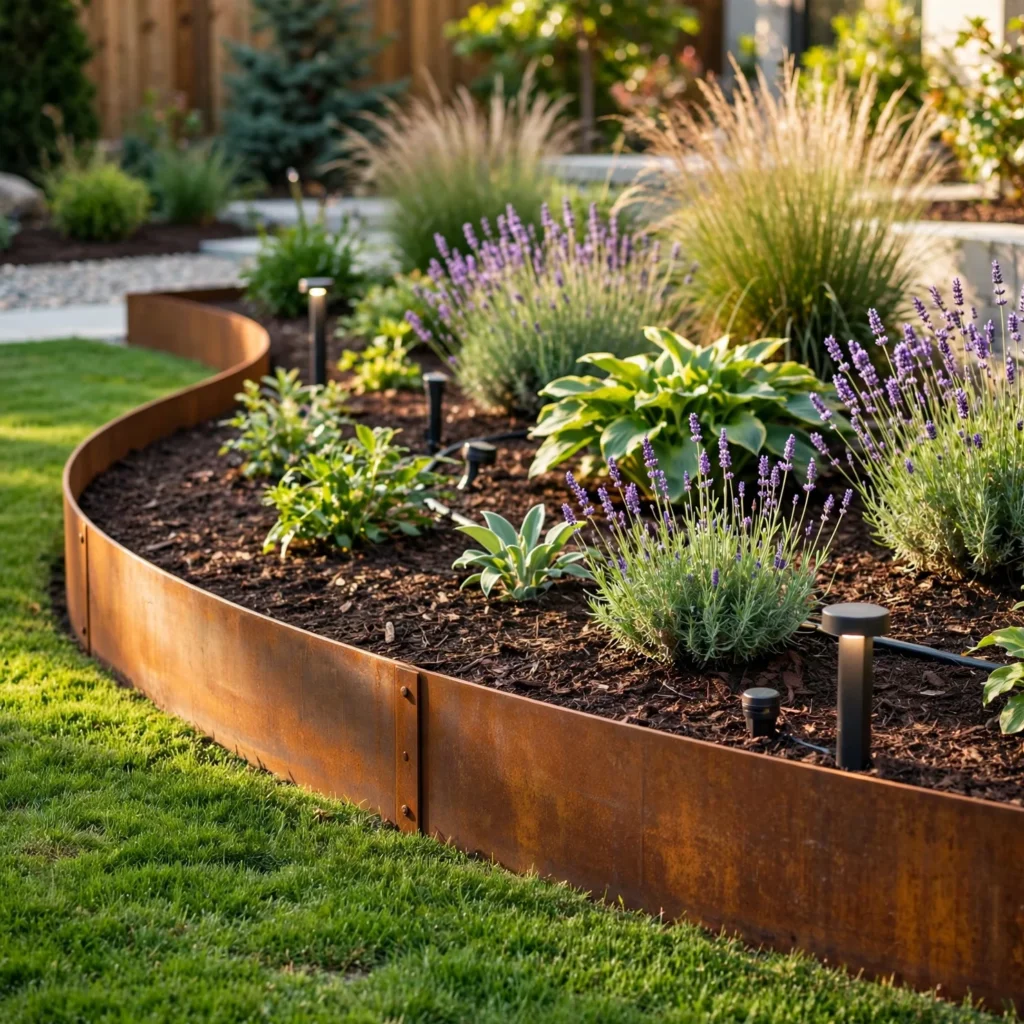
Steel landscape edging holds a crisp, nearly invisible line between bed and lawn, flexing easily around curves without the kinking that stiffer materials like brick or stone can’t achieve. A thickness of 14 to 16 gauge resists bending underfoot while still allowing enough flexibility for a gentle curved bed line. Powder-coated versions resist rust longer than raw steel, though a natural rust patina on uncoated steel is a look some homeowners prefer for a more weathered aesthetic.
2. Brick Border Edging
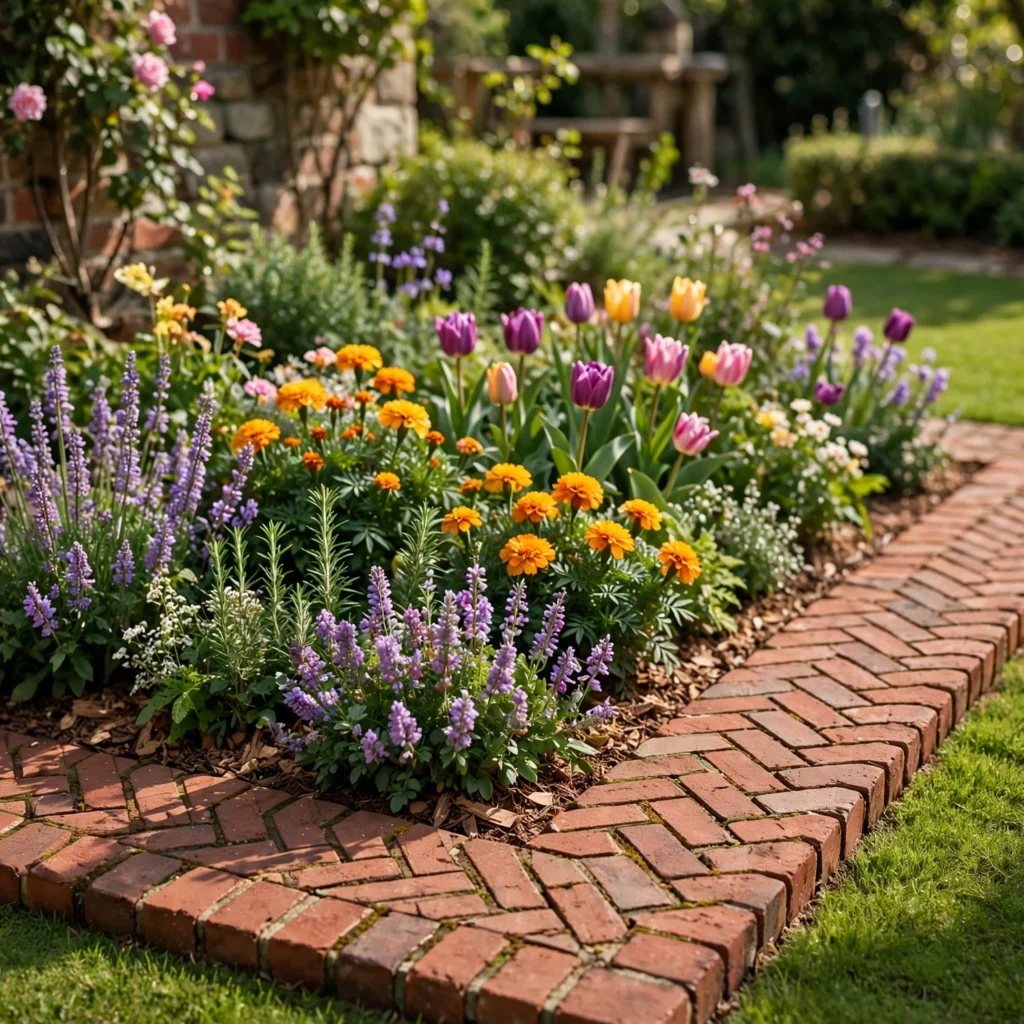
A brick border edging, whether set flat or angled on a diagonal in a classic sawtooth pattern, gives a garden bed a traditional, structured look that holds up for decades with minimal maintenance. Setting bricks into a shallow trench with sand beneath keeps the line level and prevents individual bricks from shifting after heavy rain. This material works best for straight or gently curved beds, since brick’s rigid shape makes tight curves difficult to execute cleanly.
| Edging Material | Best For | Typical Lifespan |
| Steel/aluminum | Curved beds, modern look | 20-30 years |
| Brick/paver | Straight lines, traditional look | 25+ years |
| Plastic/rubber | Budget projects, temporary beds | 5-10 years |
3. Natural Stone Edging
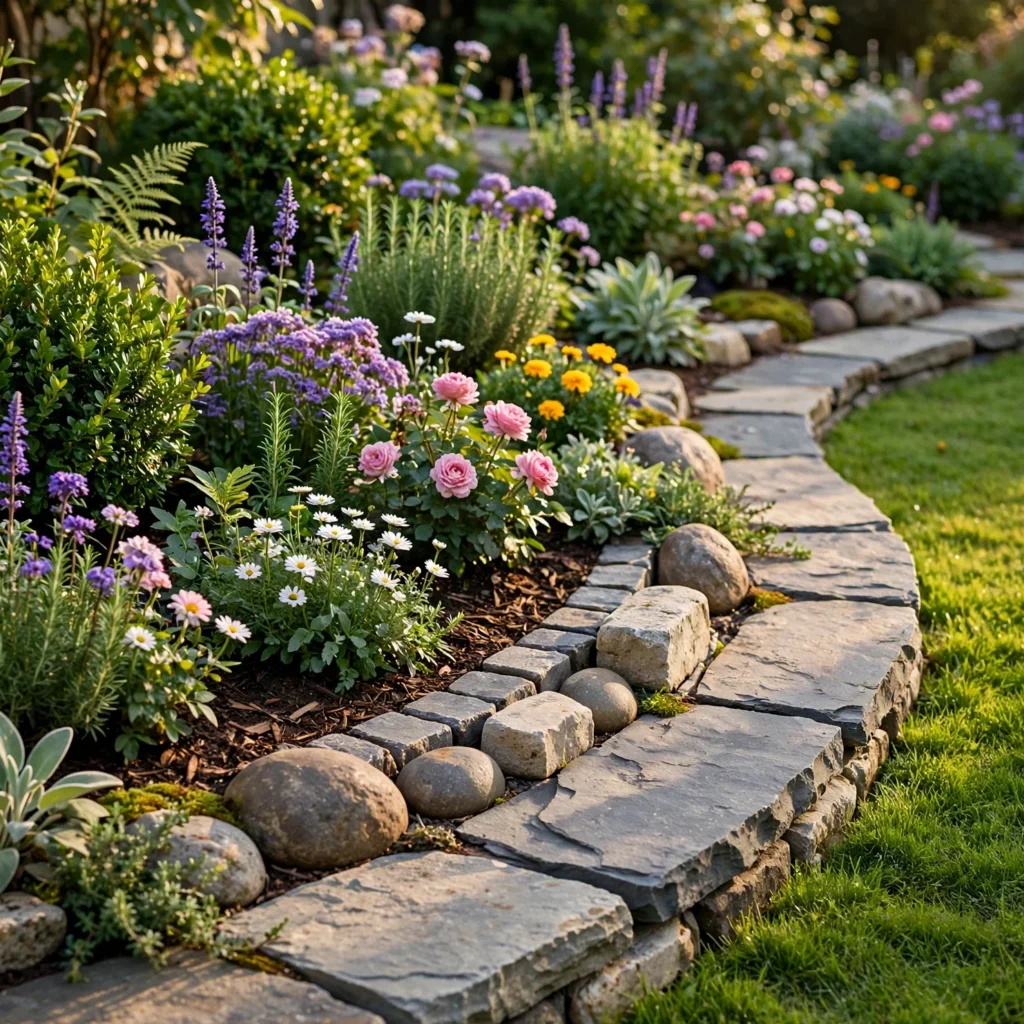
Natural stone edging uses irregular fieldstone or flat flagstone pieces set partially into the ground to create a rustic, organic border that suits cottage-style or naturalistic garden beds. Burying roughly a third of each stone below grade keeps the border stable underfoot and through seasonal freeze-thaw cycles common in colder climates. Because no two stones are identical, this style tolerates a less precise installation than brick or steel while still looking intentional.
Discover stunning rock garden ideas to boost your home’s curb appeal with plants, pathways, and modern garden features.
4. Concrete Mowing Strip
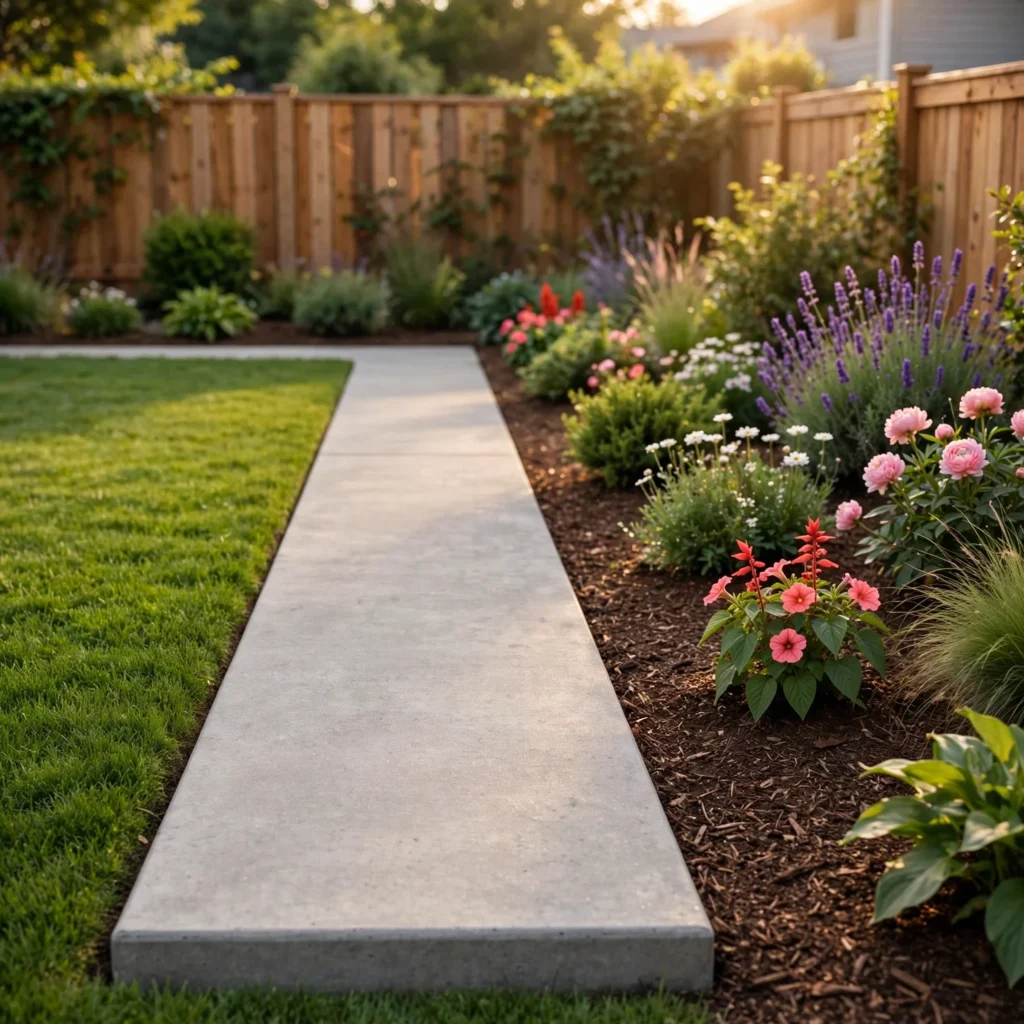
A concrete mowing strip sits flush with the lawn at grass height, letting a mower wheel roll directly along the edge without needing any hand-trimming along the bed line afterward. Pouring the strip 4 to 6 inches wide and slightly below the surrounding grass height prevents the mower deck from scraping against the concrete during regular passes. This approach costs more upfront than most edging options but eliminates one of the most time-consuming parts of regular lawn maintenance.
5. Corten Steel Edging
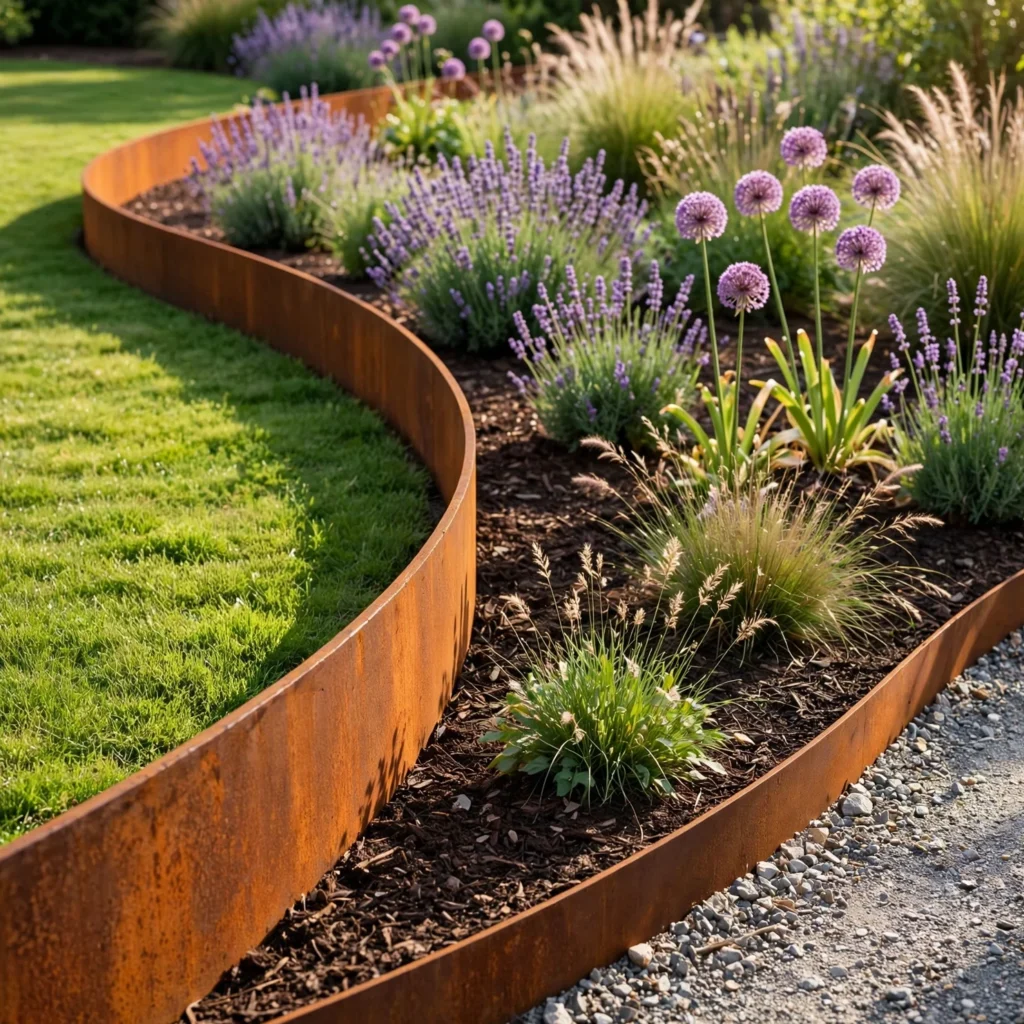
Corten steel edging develops a stable rust-colored patina within its first year of exposure that actually protects the metal underneath from further corrosion, giving it a distinctive warm tone that plain galvanized steel doesn’t offer. This material holds a clean, modern line similar to standard steel edging while adding visual warmth that suits both contemporary and rustic garden styles. The initial rusting process can stain adjacent light-colored pavers or concrete if not planned for, so positioning it away from these surfaces during the first season helps avoid discoloration.
6. Rope or Chain Edging
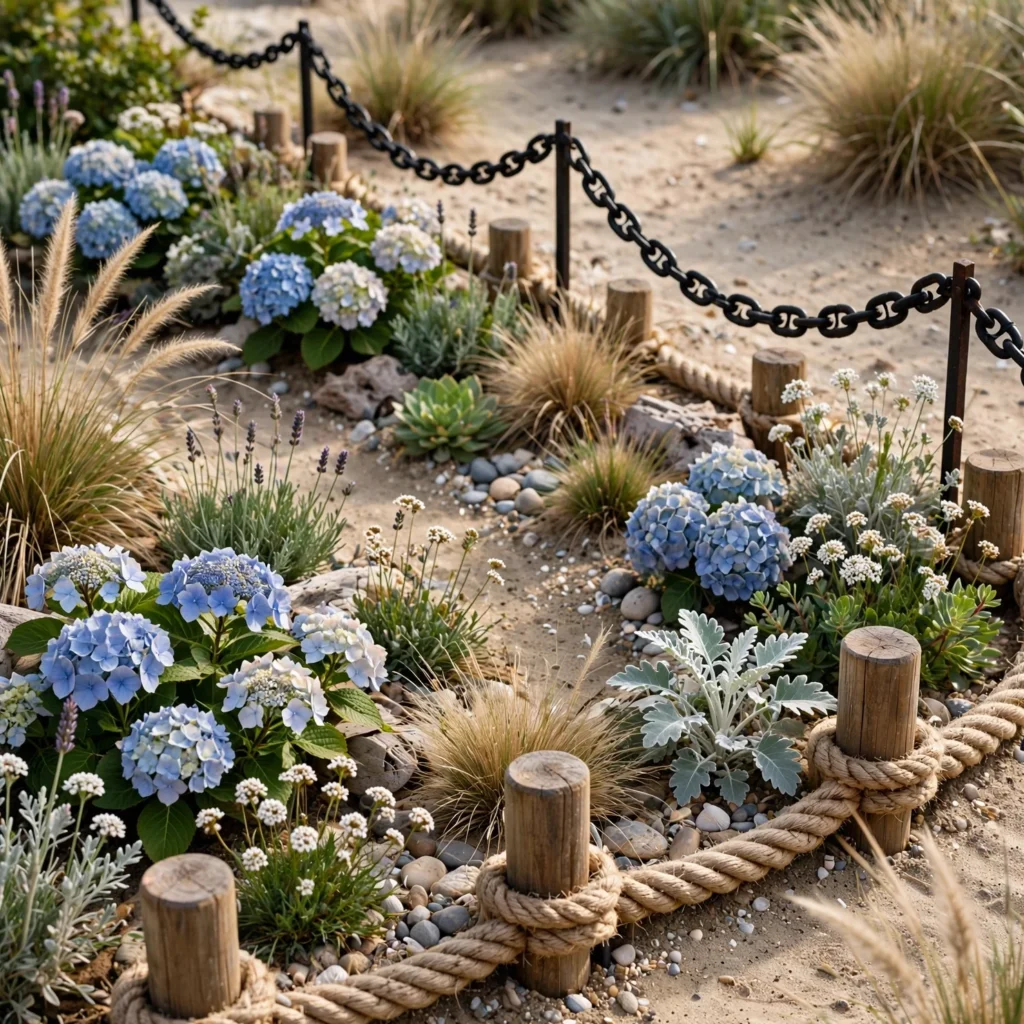
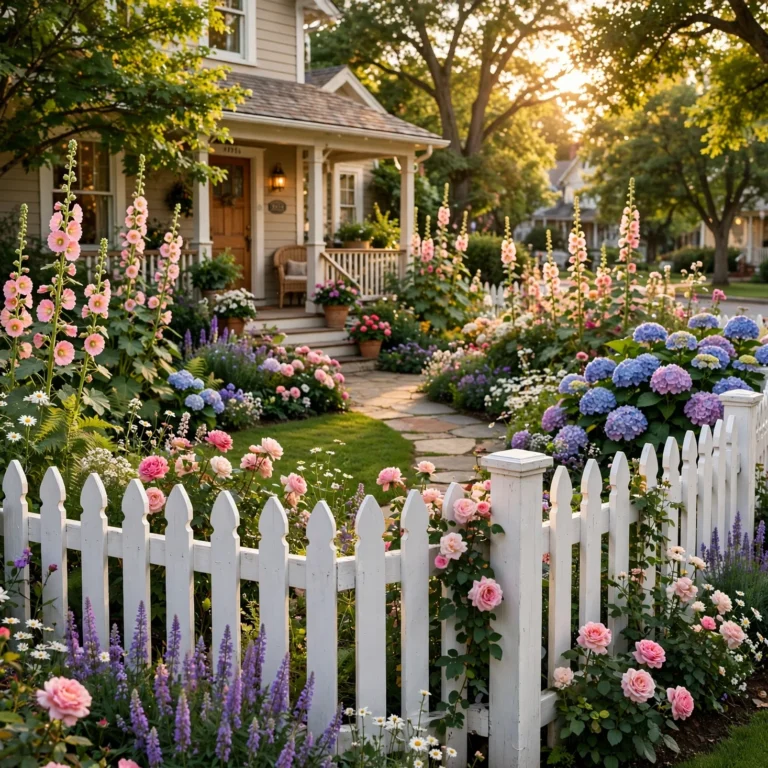
Rope or chain edging strung between short decorative posts gives a garden bed a soft, cottage-style boundary that suggests rather than strictly enforces a hard line. This style works better as a visual cue than a functional barrier against grass encroachment, since gaps beneath the rope still allow grass runners through. It suits informal front-yard beds or cottage gardens where a strict, impenetrable edge isn’t the primary goal.
7. Log or Timber Edging
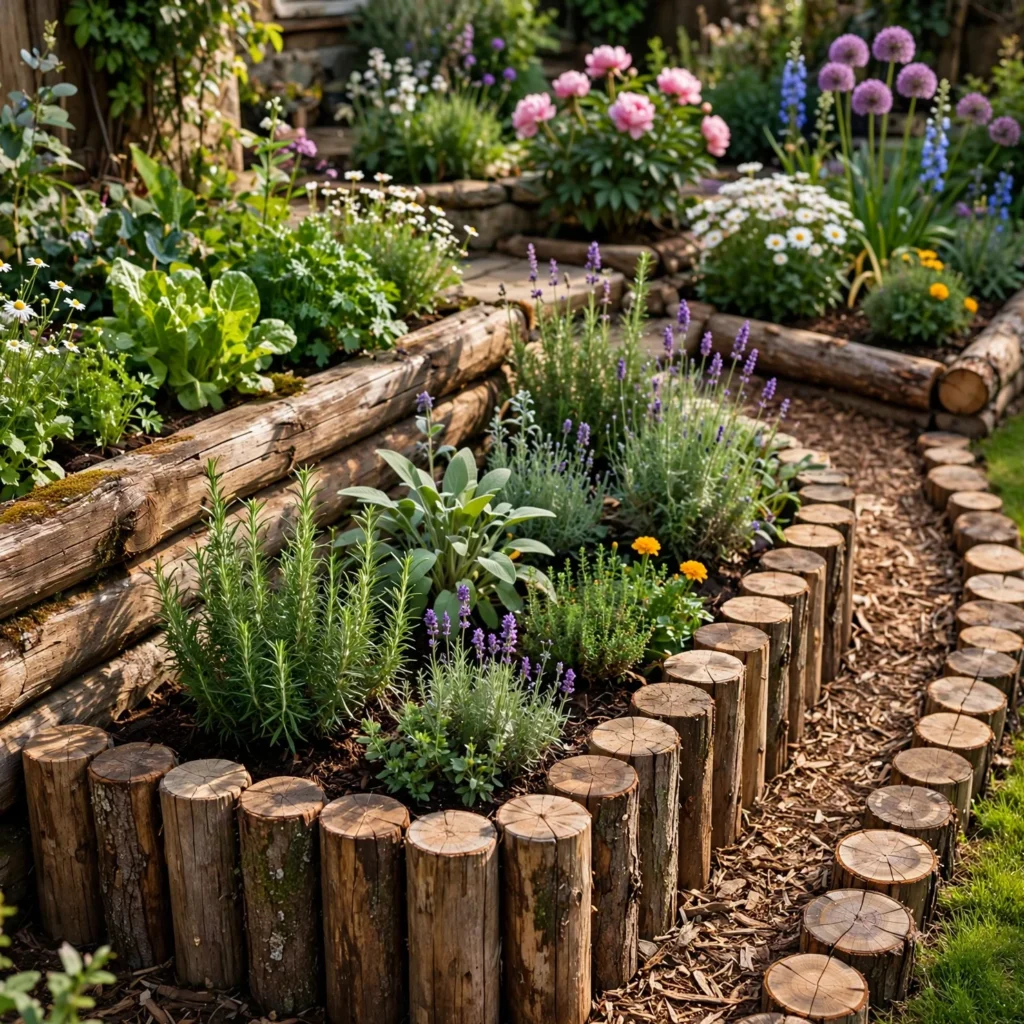
Log or timber edging uses short sections of untreated or pressure-treated wood set on end or laid horizontally to create a rustic border well suited to woodland-style or naturalistic garden beds. Cedar and locust resist ground rot longer than pine, which matters since this edging sits in direct contact with moist soil continuously. This style pairs especially well with mulched beds, since the wood tones blend naturally with bark mulch in a way stone or metal edging doesn’t.
8. Interlocking Paver Edging
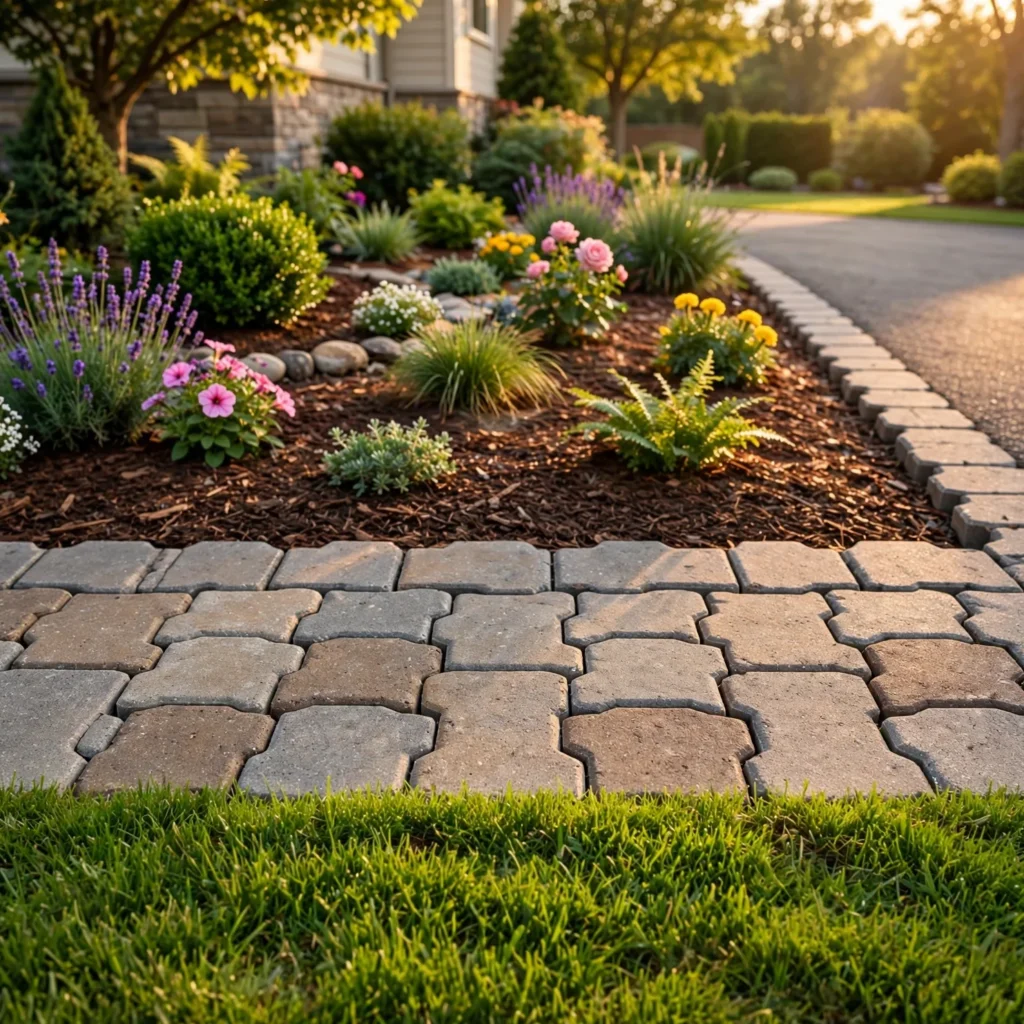
Interlocking paver edging uses small, uniform concrete or stone units that click together along a bed line, offering more flexibility around curves than rigid brick while still holding a defined, structured look. Many systems include a scalloped or wave-pattern top edge as a design detail, adding visual interest beyond a purely functional border. This material installs faster than individually set stone or brick, since the interlocking design keeps units aligned without needing string lines for every section.
9. Raised Bed Frame as Edging
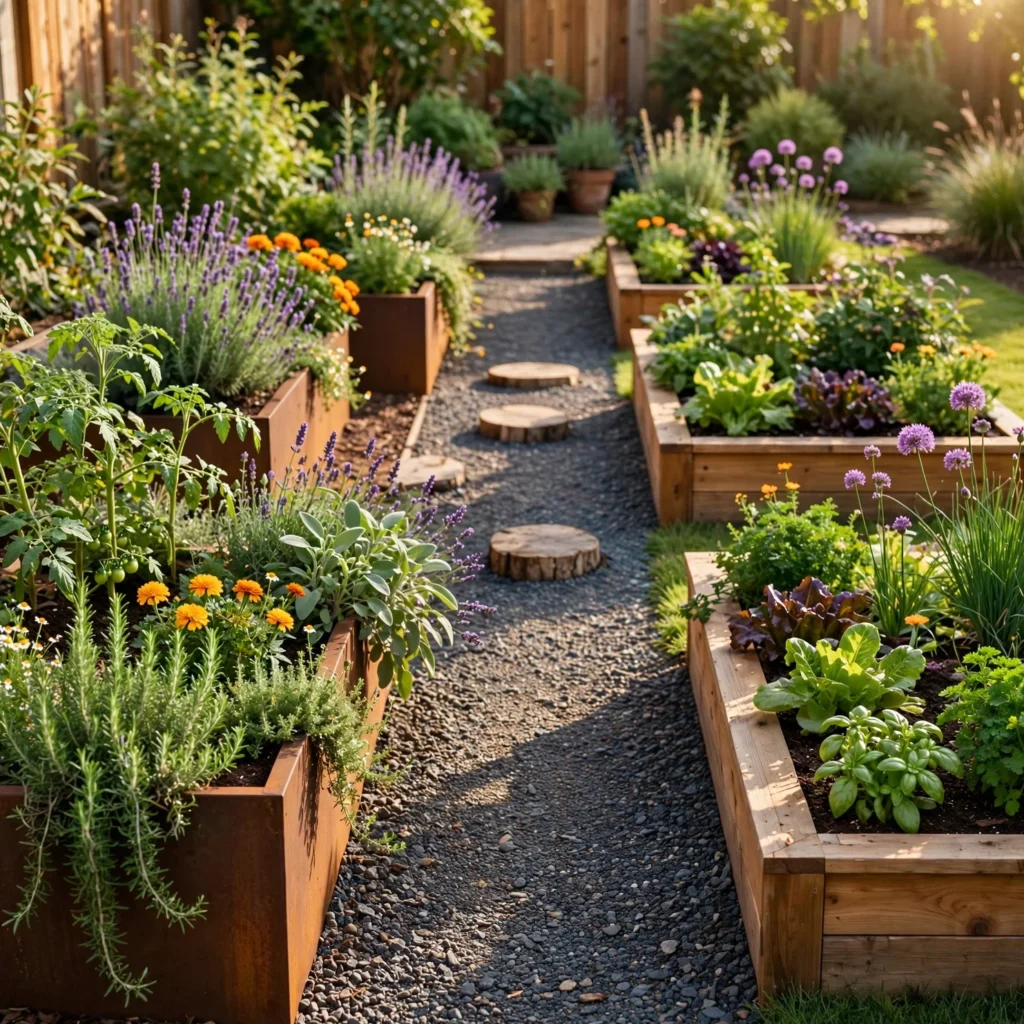
Building a raised bed frame doubles as its own edging solution, since the structure itself creates the boundary between planted soil and surrounding lawn without needing a separate border material at all. Cedar or composite lumber frames 6 to 12 inches tall handle this dual purpose well, containing soil while also defining the bed’s footprint clearly. This approach works especially well for vegetable and cutting gardens, where the added soil depth benefits the plants as much as the definition benefits the bed’s appearance.
10. Living Edging With Low Groundcover
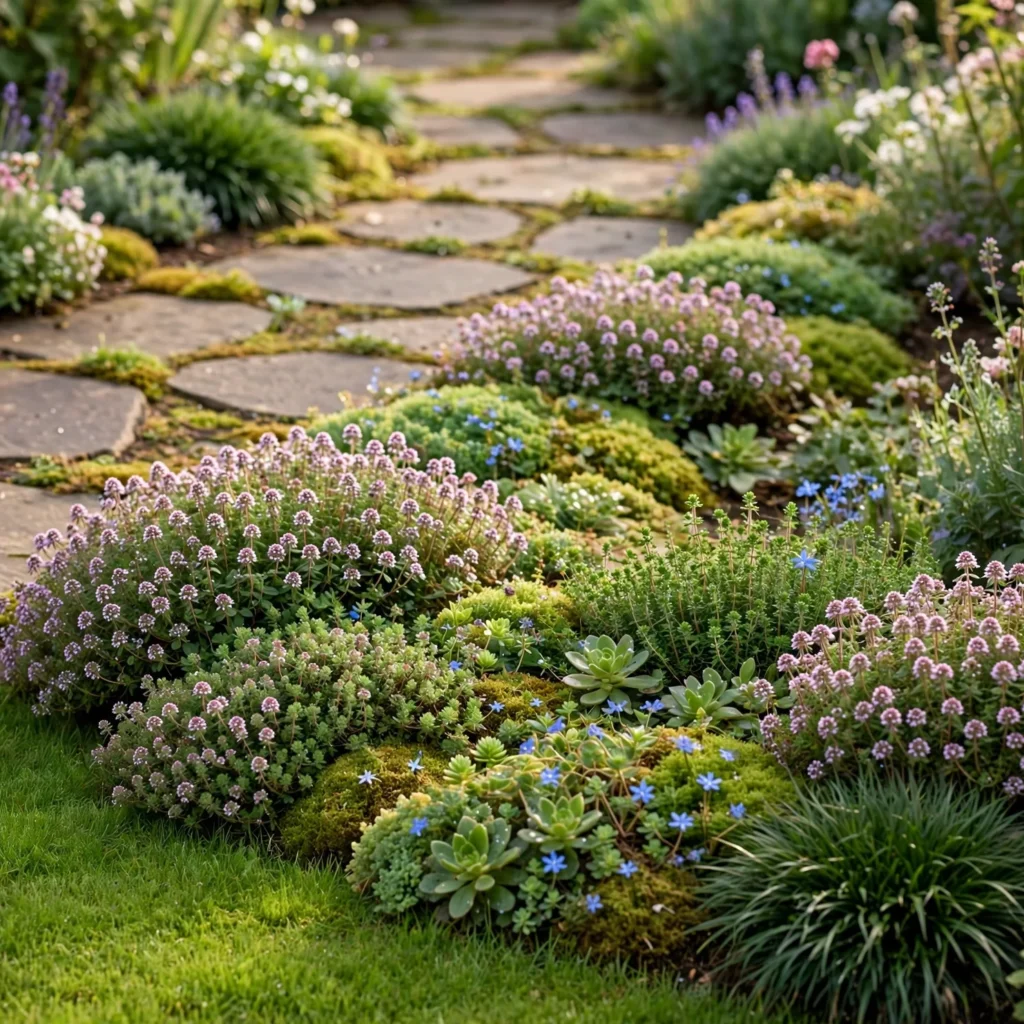
A living edge planted with low, spreading groundcover like creeping thyme or dwarf mondo grass creates a soft, green border that grows and fills in rather than remaining a static material line. This approach requires more patience than a hard material edge, since it typically takes one to two seasons for groundcover to fill in fully and read as a defined border. Once established, though, a living edge blurs the harder look of most material-based edging while still marking a clear transition between bed and lawn.
11. Rubber Edging Strip
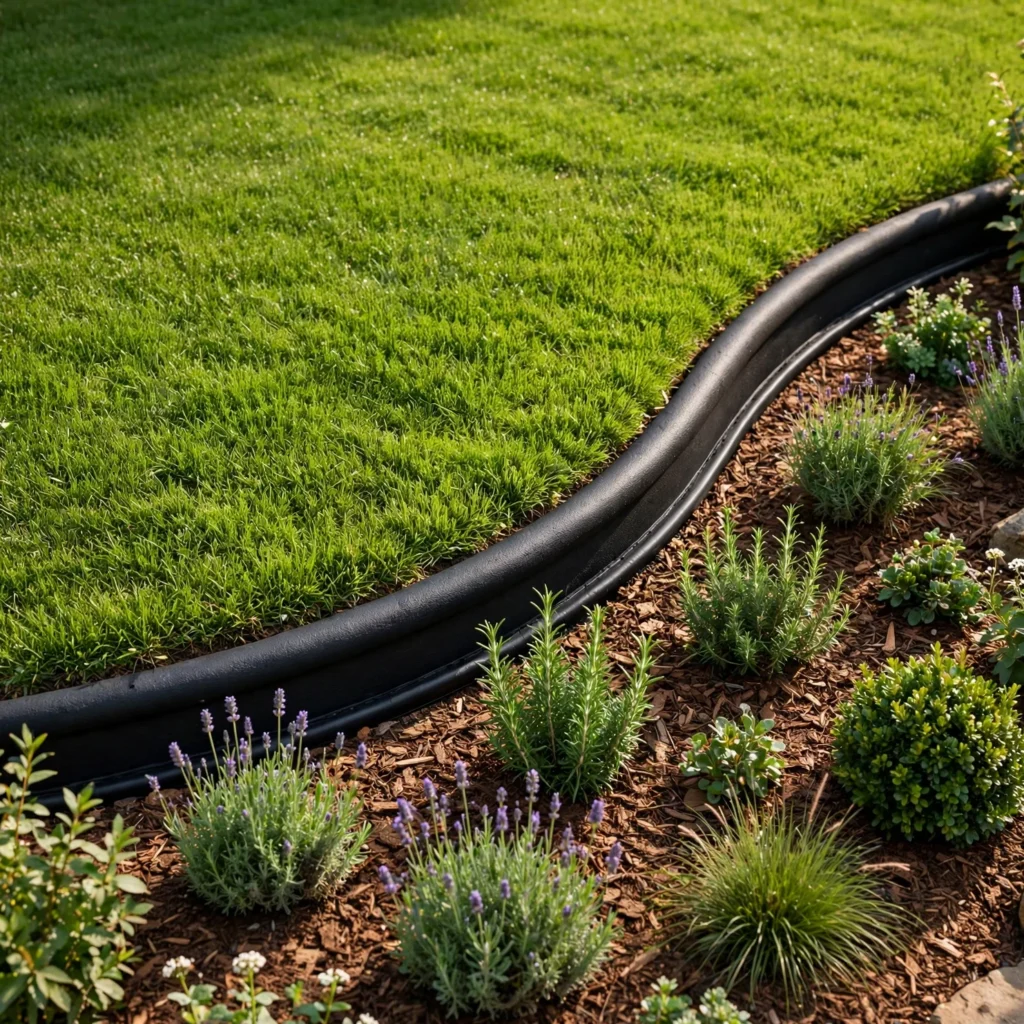
Rubber edging strips, often made from recycled tire material, offer a flexible, budget-friendly option that handles curves easily and resists the cracking that plastic edging tends to suffer over time in cold climates. This material stays more forgiving underfoot than steel or stone, making it a reasonable choice for beds bordering high-traffic areas like a play space. Rubber edging typically costs less upfront than metal or stone options, though it doesn’t hold as crisp or permanent a line over the long term.
12. Garden Edging Ideas With a Gabion Border
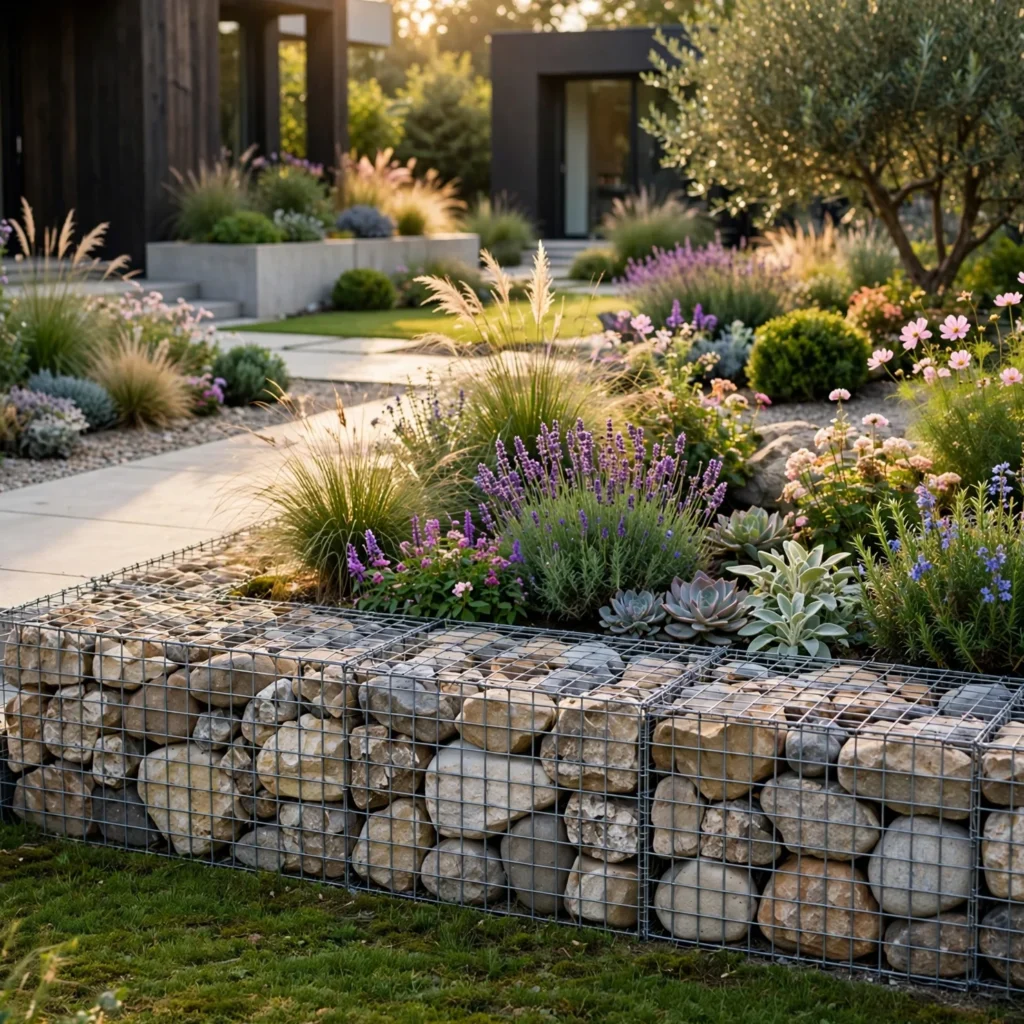
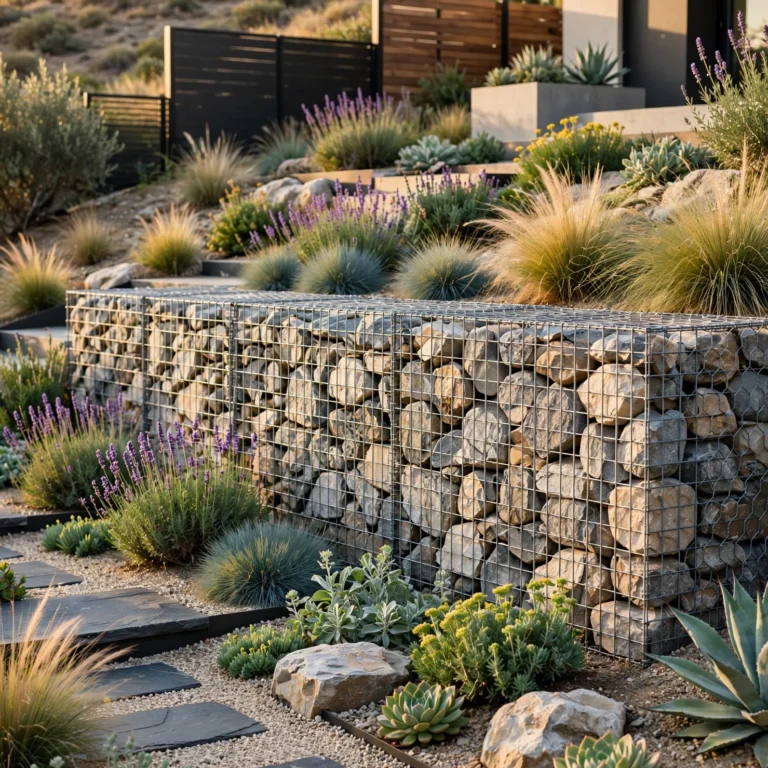
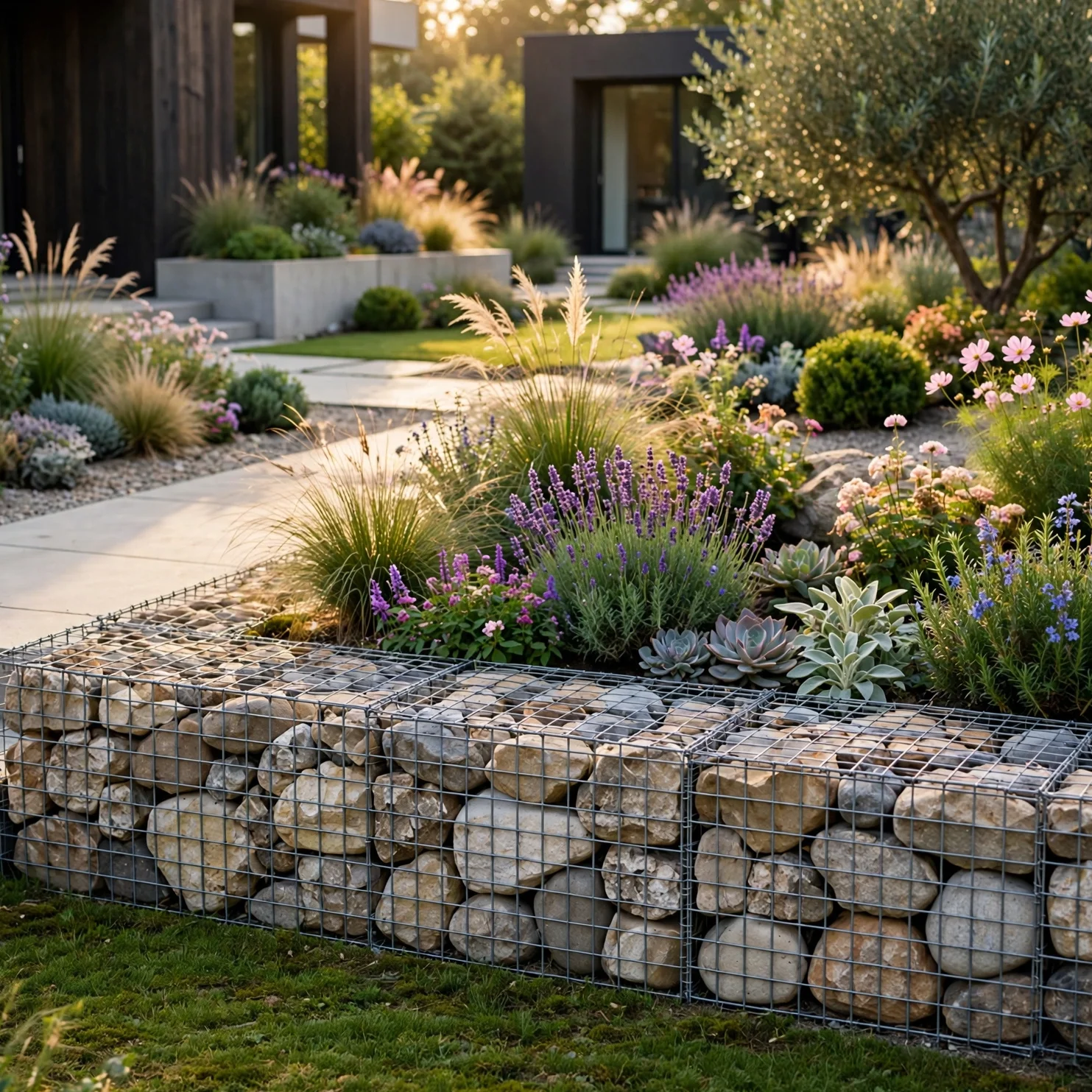
Among the more modern garden edging ideas is a low gabion border, a wire cage filled with small stones that creates a defined, textured edge without the labor of dry-stacking loose stone by hand. A cage 6 to 8 inches tall works well as bed edging without becoming a full retaining structure, giving a contemporary look that pairs especially well with gravel beds or xeriscape planting. This approach holds up to weather with essentially no maintenance once installed, unlike wood or rope options that degrade over time.
Shop the Look
A roll of powder-coated steel landscape edging holds a clean curved line without the rust concerns of uncoated metal. A set of interlocking scalloped-top pavers gives a bed a defined, structured border without a full brick installation. A cedar raised bed frame kit combines edging and planting depth into a single structure. A small gabion cage kit adds a modern textured border to a gravel or xeriscape bed.
Common Mistake to Avoid
The most common mistake in garden edging is choosing a rigid material like brick or stone for a bed with tight curves, which forces awkward cuts and gaps that undermine the clean line the edging was meant to create in the first place. A curved bed designed around a tree or a sweeping lawn line generally calls for flexible steel, rubber, or interlocking paver edging instead, since these materials bend smoothly without requiring custom-cut pieces. Matching the edging material to the bed’s actual shape from the start avoids a costly redo once the installed line doesn’t follow the intended curve.
FAQs
What is the best edging for curved garden beds?
Steel or aluminum edging works best for curved garden beds, since the material flexes smoothly around gentle curves without kinking or requiring cut pieces the way rigid brick or stone does. Rubber edging strips offer a similar flexibility at a lower cost, though they don’t hold as crisp a line over many years. Interlocking pavers with a slightly flexible joint system can also handle gentle curves reasonably well, though tight radius curves still favor steel over any rigid material.
How deep should garden edging be installed?
Most garden edging should be installed with roughly a third to half of its total height buried below grade, which provides enough stability to resist frost heave and prevents grass roots from creeping underneath into the bed. Steel edging typically needs at least 4 inches below ground, while stacked stone or brick borders rely more on their own weight and a compacted base than deep burial. Checking the manufacturer’s specific depth recommendation for manufactured edging products ensures the installation holds up through the first freeze-thaw cycle.
How do I stop grass from growing into my garden bed?
Stopping grass from growing into a garden bed requires edging that extends deep enough below grade to block horizontal root and rhizome spread, generally at least 4 inches for aggressive grass types like Bermuda. A physical barrier alone sometimes isn’t enough for the most persistent grass varieties, so pairing edging with an occasional herbicide application directly along the border, or periodic hand-trimming, offers a more complete solution. Concrete mowing strips solve this most effectively, since they eliminate the soil gap grass would otherwise use to creep through.
What is a mowing strip and do I need one?
A mowing strip is a flush, hard-surfaced border set at grass height that allows a mower wheel to roll directly along a bed edge without needing separate hand-trimming afterward. Whether a mowing strip is worth the added installation cost depends mainly on how much time is currently spent hand-edging beds, since the strip essentially trades an upfront investment for ongoing time savings on every mowing cycle. Larger properties with extensive bed borders tend to see the most value from this approach, while a single small bed may not justify the additional cost.
Can I install garden edging myself?
Most garden edging materials, including steel strips, rubber edging, and interlocking pavers, are designed for straightforward do-it-yourself installation using basic hand tools and a rubber mallet. Brick and stone borders take considerably more time and physical effort, since they require digging a level trench and often a compacted base layer to prevent shifting over time. Concrete mowing strips are the one option that typically benefits from professional installation, given the forms, mixing, and leveling work involved in getting a flush, durable pour.
Conclusion
These garden edging ideas range from a simple rubber strip to a full concrete mowing border, giving homeowners options across nearly every budget and bed shape. Matching the material to the bed’s actual curves and traffic level, rather than picking based on looks alone, is what keeps an edging choice holding its line for years rather than needing a redo after one season. Save this post to Pinterest for reference, and check the related post on rock garden ideas for pairing inspiration.