
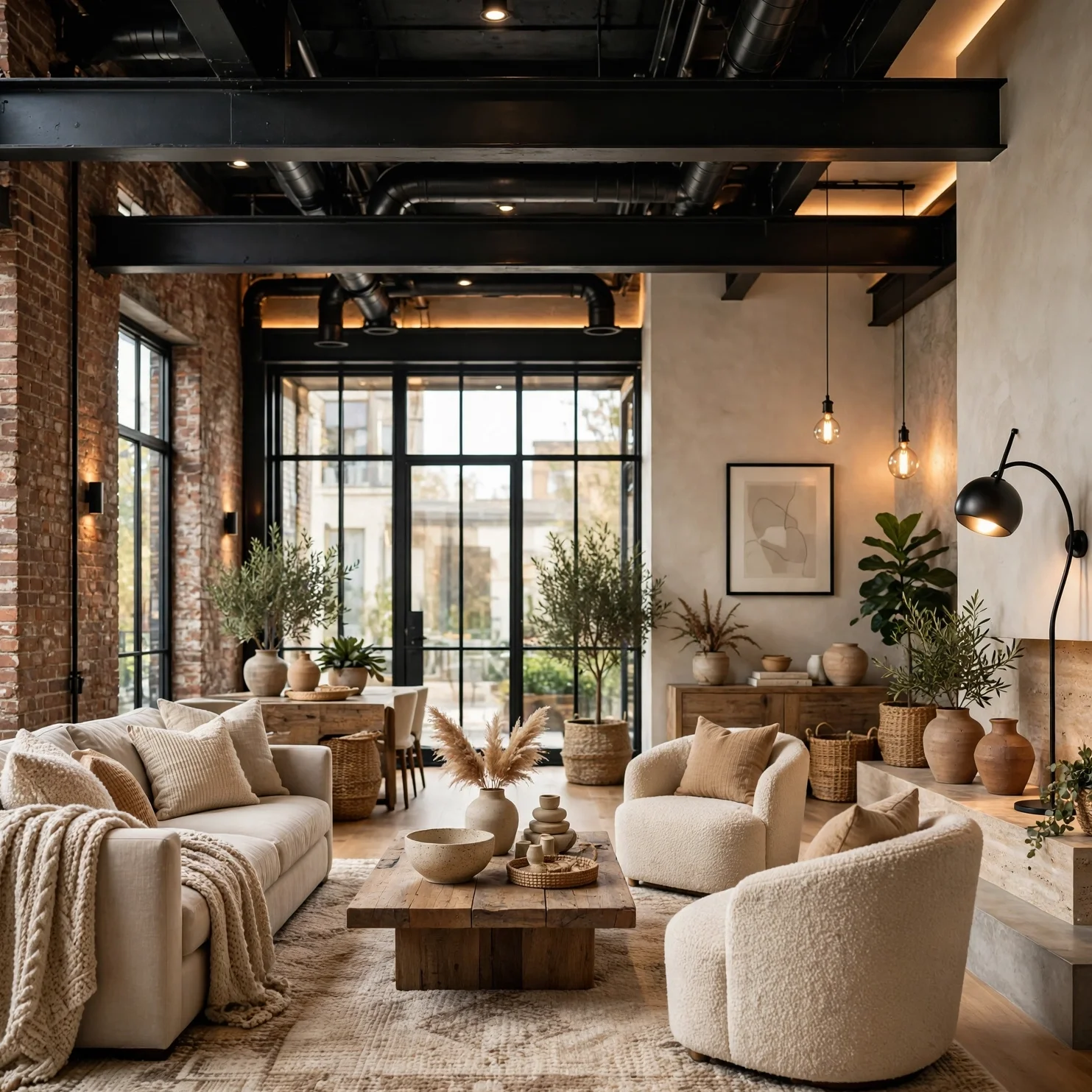
12 Trending Industrial Interior Design Ideas That Avoid Feeling Cold
Industrial interior design ideas often get reduced to exposed brick and black metal, without addressing how to keep a space feeling warm and livable rather than cold and unfinished. This post covers twelve specific design concepts, each with real materials and placement guidance, so you can apply the industrial aesthetic in a way that still feels comfortable for daily living or use. Whether you’re working on a full loft renovation or bringing industrial touches into a more traditional home, you’ll find practical notes to help you balance the style’s raw materials with genuine warmth.
Trend & Background
Industrial interior design originated from the adaptive reuse of old factories and warehouses, where exposed brick, structural steel, and worn wood floors were left visible rather than covered over during residential conversion. As the style moved beyond actual former industrial buildings into new construction and standard home renovations, it has increasingly incorporated warmer materials and softer lighting to avoid the cold, unfinished feeling that can come from leaning too heavily into raw metal and concrete alone. This matters now because the industrial style’s popularity means many spaces attempt it without the softening elements that keep it from reading as harsh or uninviting.
Key Takeaways
- These industrial interior design ideas balance raw, exposed materials with enough warmth to keep spaces from feeling sterile.
- Mixing metal and wood remains the defining combination of the style, though warmer tones are replacing stark, cold finishes.
- Several ideas include material and placement comparisons to help you plan an industrial-inspired space room by room.
- Small additions like warm lighting or textiles can soften the harder edges the industrial style is known for.
1. Exposed Brick Wall
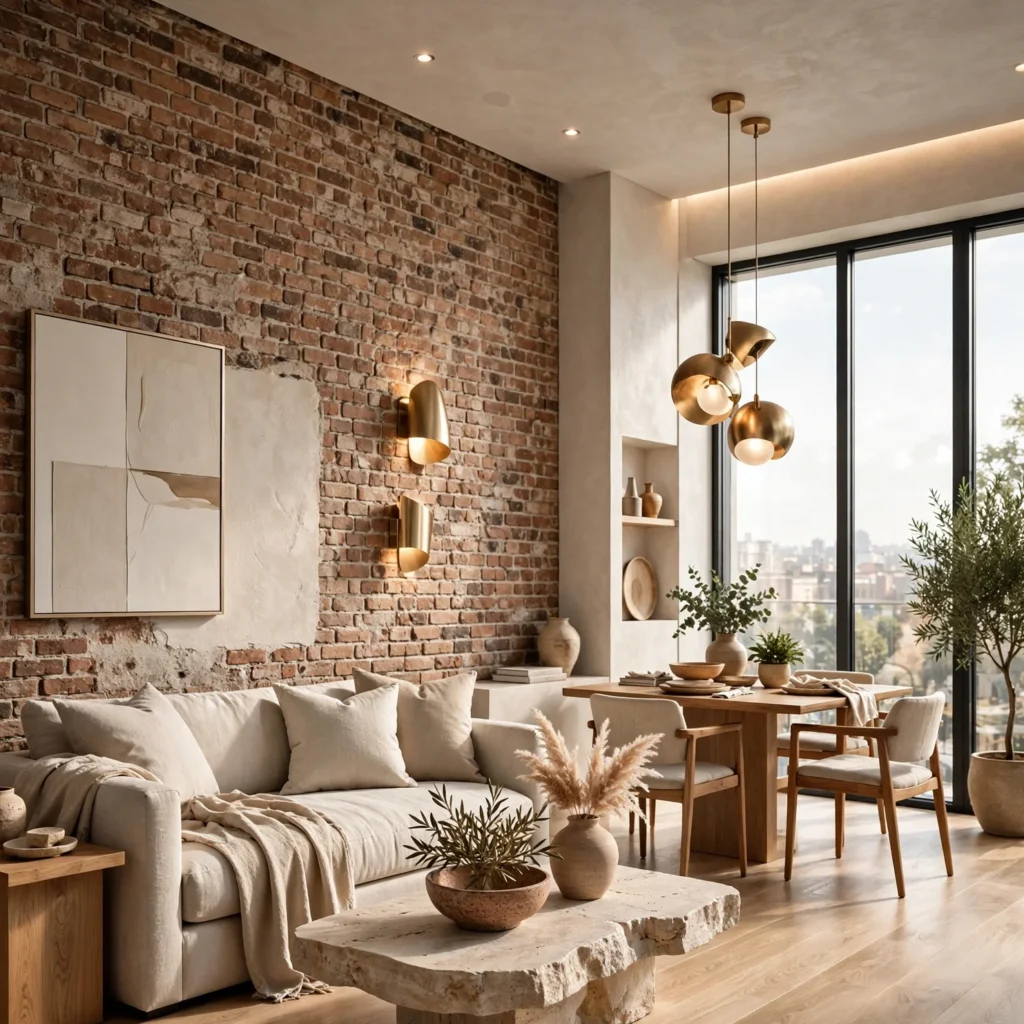
An exposed or exposed-look brick wall remains one of the most recognizable elements of industrial design, whether it’s original brick uncovered during a renovation or a manufactured brick veneer applied to mimic the look in new construction. This works particularly well as a single feature wall rather than applied throughout an entire room, since too much exposed brick can start to feel heavy and reduce a room’s overall brightness. Pairing the brick with warmer lighting and softer textiles elsewhere in the room helps balance its rougher texture.
2. Structural Steel Beams
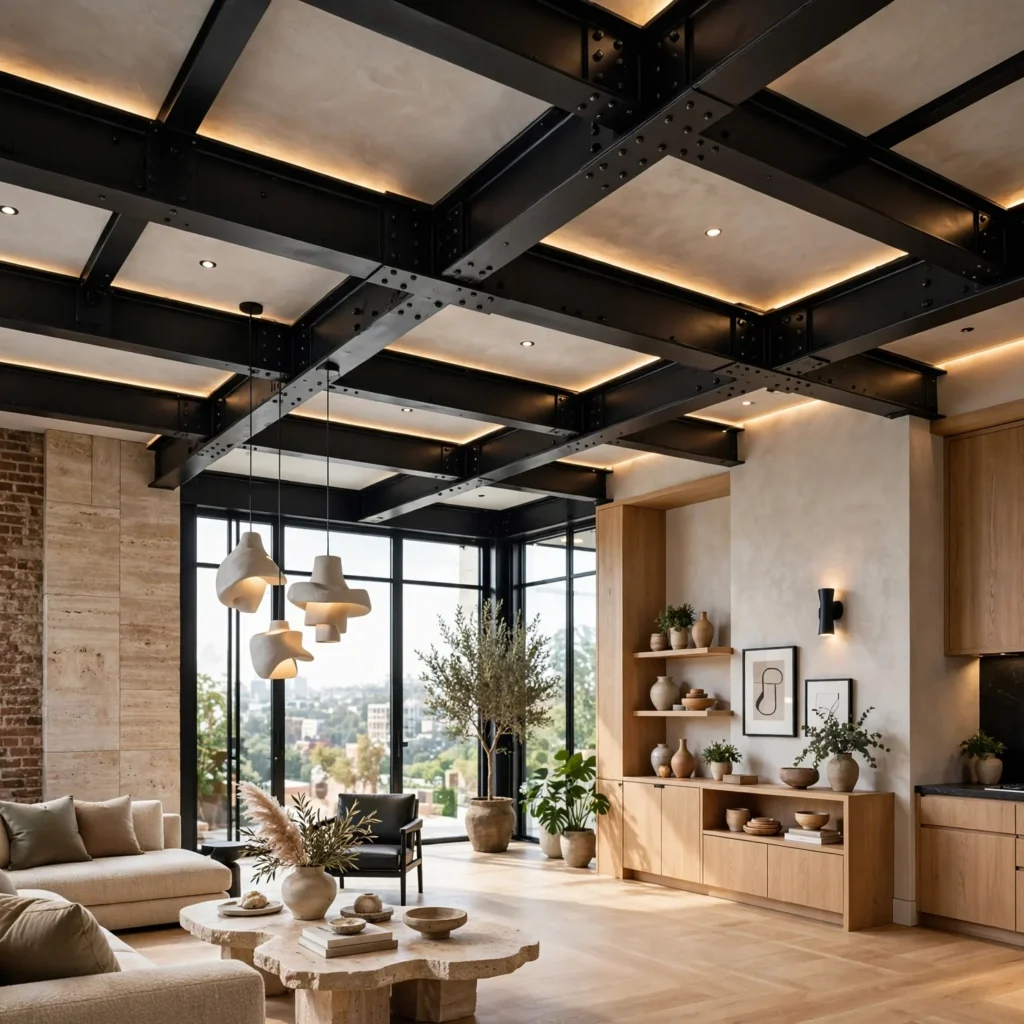
Exposed structural steel beams, whether genuinely load-bearing or decorative elements added to mimic the look, add a strong architectural statement associated with converted industrial buildings. This works particularly well in rooms with higher ceilings, where the beams have enough visual room to read as a considered design feature rather than a lowered, cramped ceiling element. Painting beams in a matte black or a deep charcoal tends to read as more intentional than leaving raw, unfinished steel exposed without any treatment.
| Steel Element | Structural Function | Common Finish |
| Exposed Beams | Often load-bearing | Matte black, raw steel |
| Steel Shelving Brackets | Decorative, functional | Black or aged metal |
| Steel Window Frames | Structural | Matte black |
3. Black Steel Window Frames
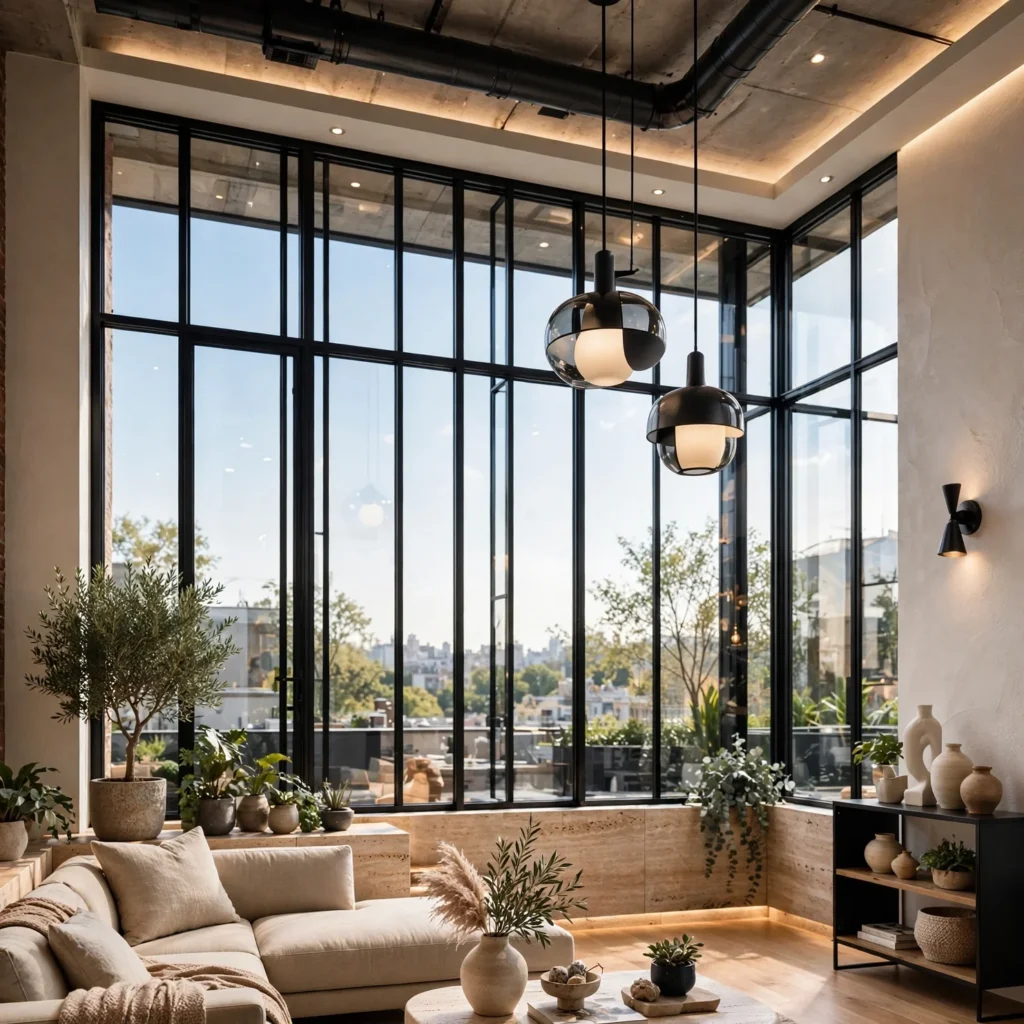
Black steel window frames, whether original to a converted industrial building or a modern manufactured version, add a strong linear element to a room while allowing significant natural light through large glass panels. This works particularly well in open-concept spaces, where the black frames provide definition between rooms without fully blocking sightlines the way a solid wall would. Multi-pane steel windows, divided into a grid pattern, are especially associated with the industrial aesthetic’s warehouse origins.
4. Warm Wood Flooring Contrast
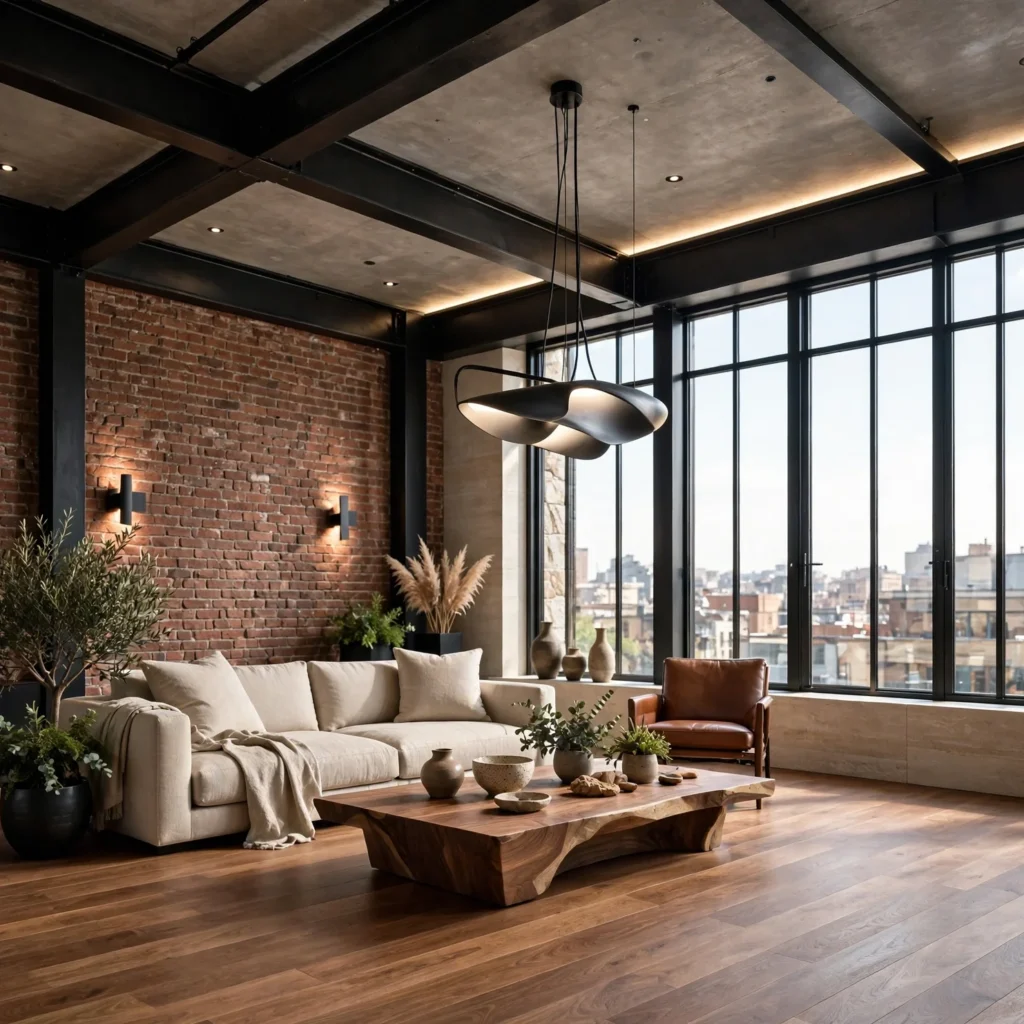
Pairing industrial elements like exposed brick and steel with warm wood flooring, rather than polished concrete throughout, introduces a softer, more residential material that keeps the space from feeling entirely cold and utilitarian. Reclaimed wood flooring in particular suits the industrial aesthetic well, since its visible age and character complement the worn, adaptive-reuse quality associated with the style’s origins. This idea is one of the more effective ways to soften an otherwise heavily metal-and-brick space without abandoning the industrial material palette entirely.
Create your dream retreat with our latest interior design bedroom, from cozy minimalist spaces to luxurious master suites.
5. Edison Bulb Pendant Lighting
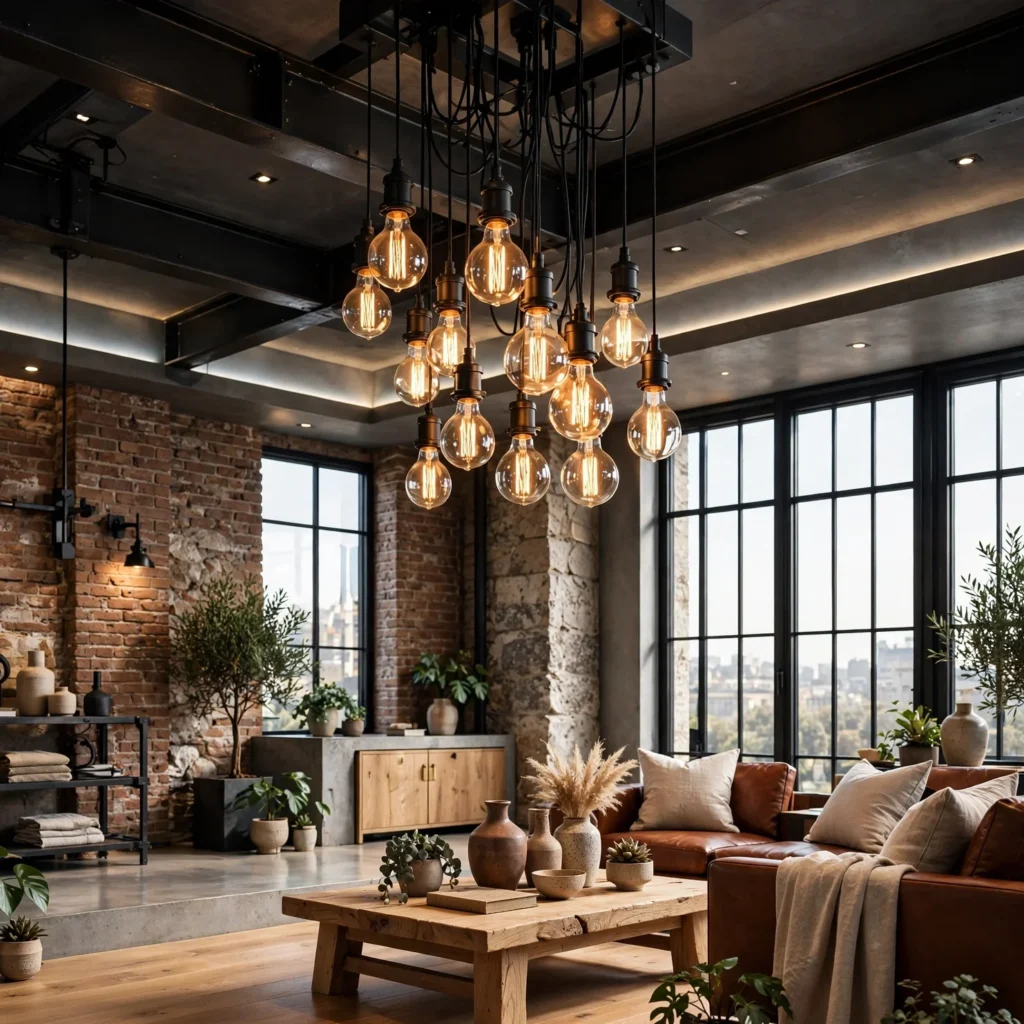
Exposed filament bulbs, often in a warm amber glow, paired with a simple black metal cage or pendant fixture, add both function and a strong stylistic marker associated with industrial design. This works particularly well over a kitchen island or dining table, where the warm bulb glow softens the harder lines of the surrounding metal fixtures. Spacing multiple pendants evenly across a counter or table length creates a more intentional look than a single isolated fixture.
6. Leather and Metal Seating
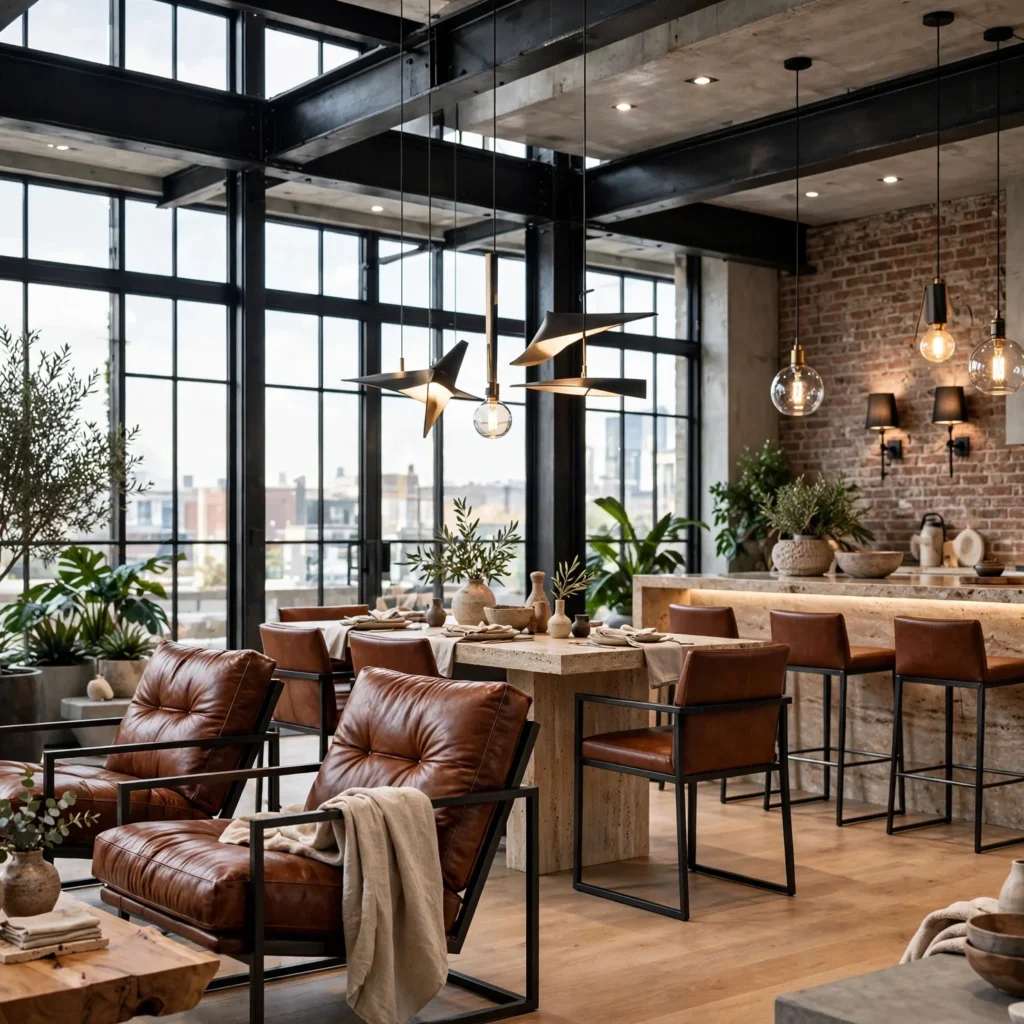
Seating that combines a leather or leather-look upholstery with exposed metal legs or frames reinforces the industrial material story while still providing a comfortable, tactile surface for daily use. Aged or distressed leather in particular suits the style better than a stiff, glossy leather finish, since the worn quality echoes the adaptive-reuse origins of the broader aesthetic. This idea works well for a sofa, accent chair, or dining chairs, depending on which piece of furniture serves as the room’s primary seating focus.
| Seating Material | Industrial Fit | Comfort Level |
| Leather with Metal Frame | Strong | High |
| Fabric Upholstery Alone | Weak | High |
| Metal Only (No Upholstery) | Very Strong | Low |
7. Concrete Countertops
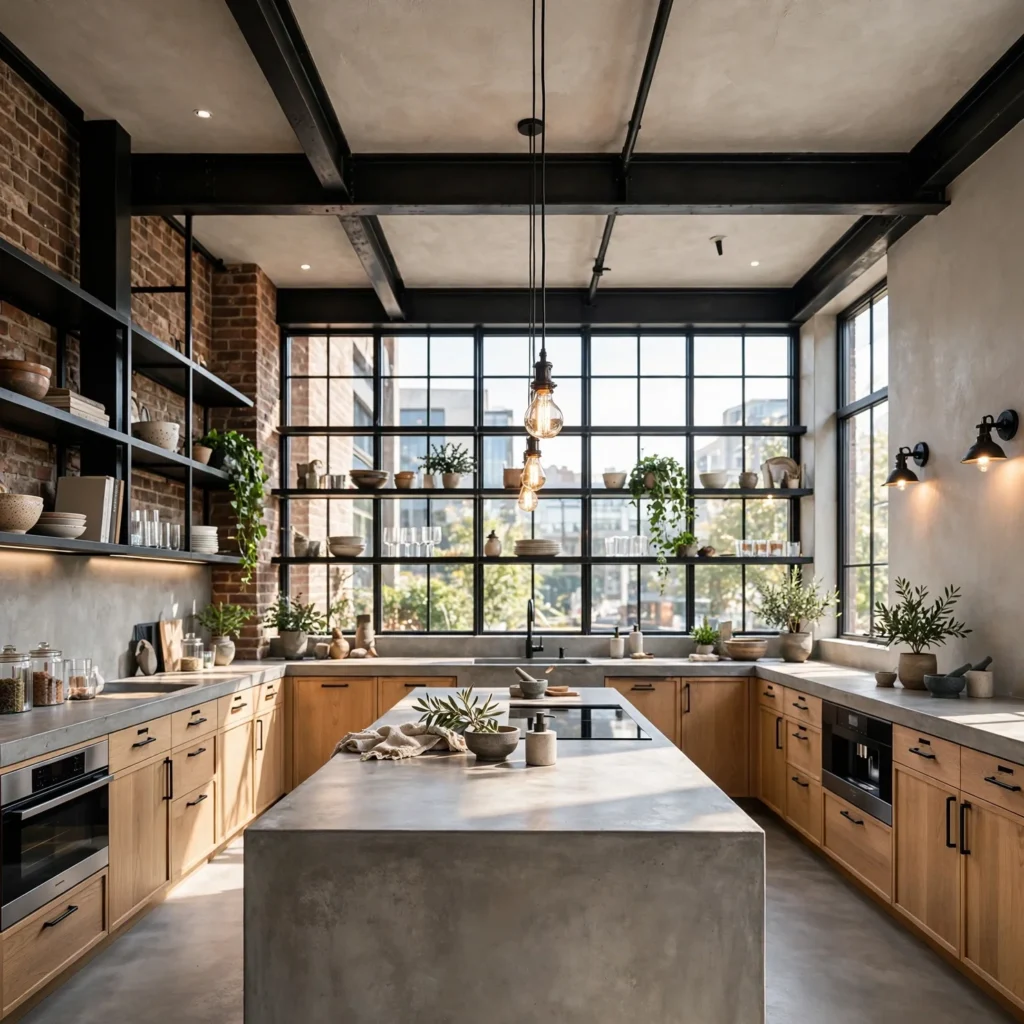
Concrete countertops, whether poured in place or prefabricated, offer a raw, matte surface that fits naturally within an industrial material palette, particularly in a kitchen or bathroom setting. Concrete does require sealing to resist staining, and it can develop small hairline cracks over time as part of its natural character, which some homeowners embrace as part of the material’s authenticity while others find undesirable. This idea works particularly well paired with warm wood cabinetry, balancing the concrete’s cool, raw quality with a softer material elsewhere in the room.
8. Metal Shelving Units
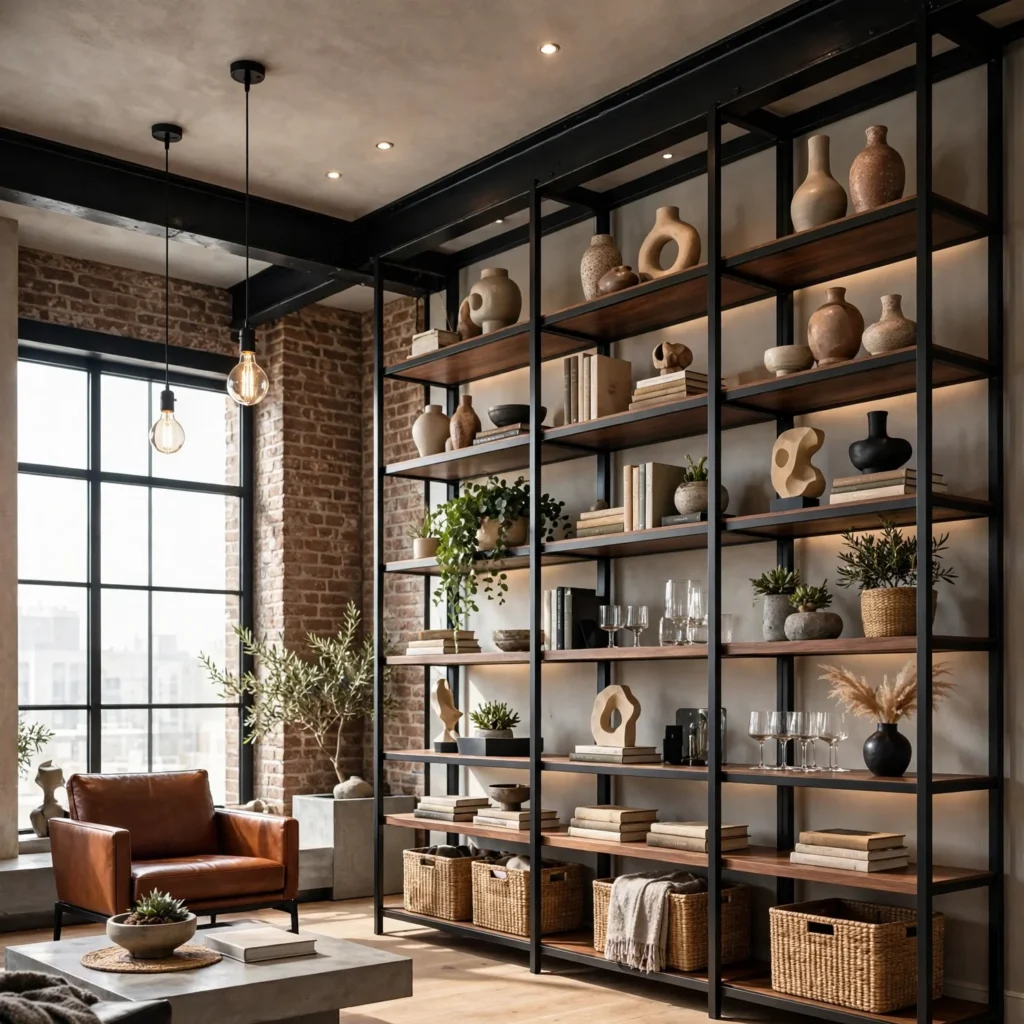
Open metal shelving, either wall-mounted brackets or a freestanding unit with a metal frame, provides storage and display space while reinforcing the industrial material story more directly than closed wood cabinetry would. This works particularly well in a kitchen, home office, or living room, displaying books, plants, or decorative objects against the exposed metal structure. Pairing metal shelving with warm wood accents on the shelves themselves, rather than metal alone, helps keep the display from feeling too cold or clinical.
9. Ductwork Left Exposed
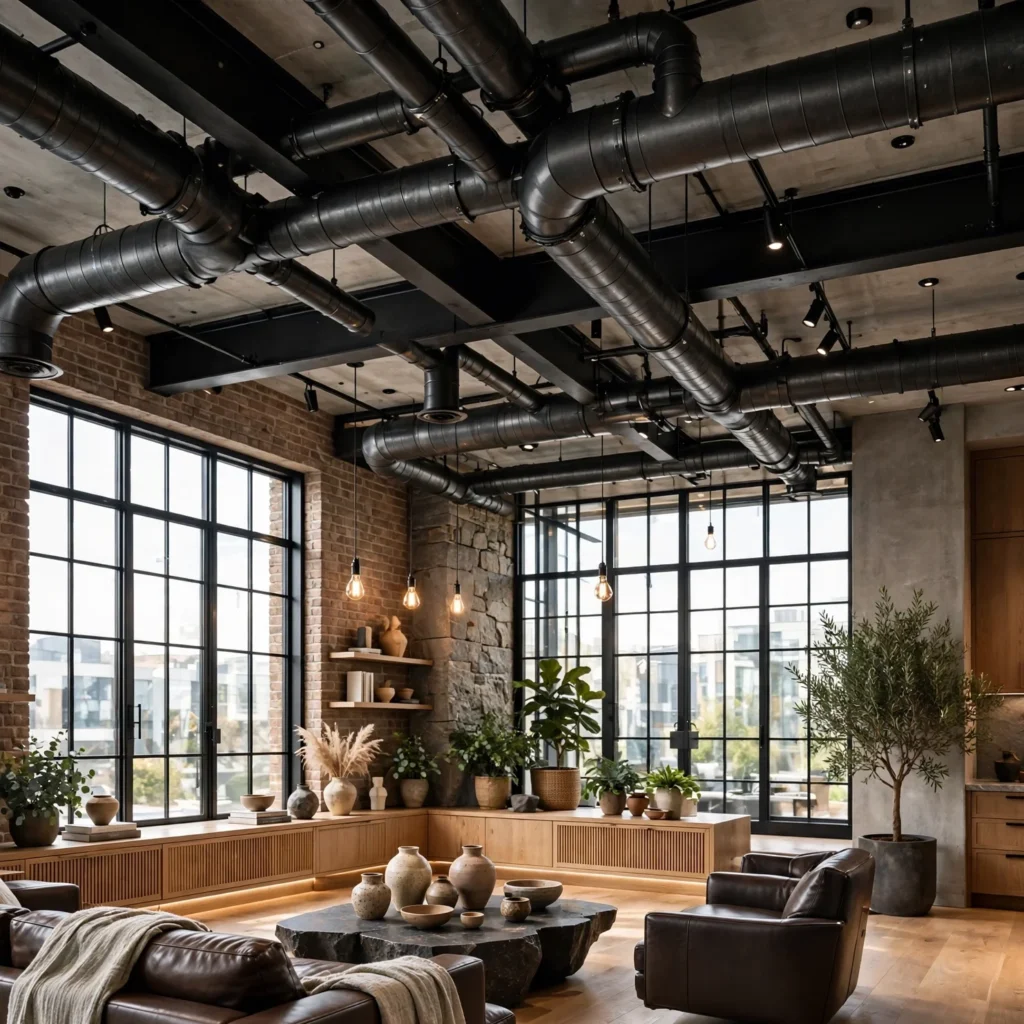
Leaving HVAC ductwork visible along the ceiling, rather than concealing it behind a dropped ceiling, is one of the clearest visual markers borrowed directly from converted industrial and warehouse spaces. Painting the ductwork a matte black or a color matching the surrounding ceiling helps it read as an intentional design choice rather than simply unfinished construction. This idea works best in spaces with adequate ceiling height, since exposed ductwork can make a room with lower ceilings feel more cramped rather than adding the intended architectural interest.
10. Reclaimed Wood Accent Pieces
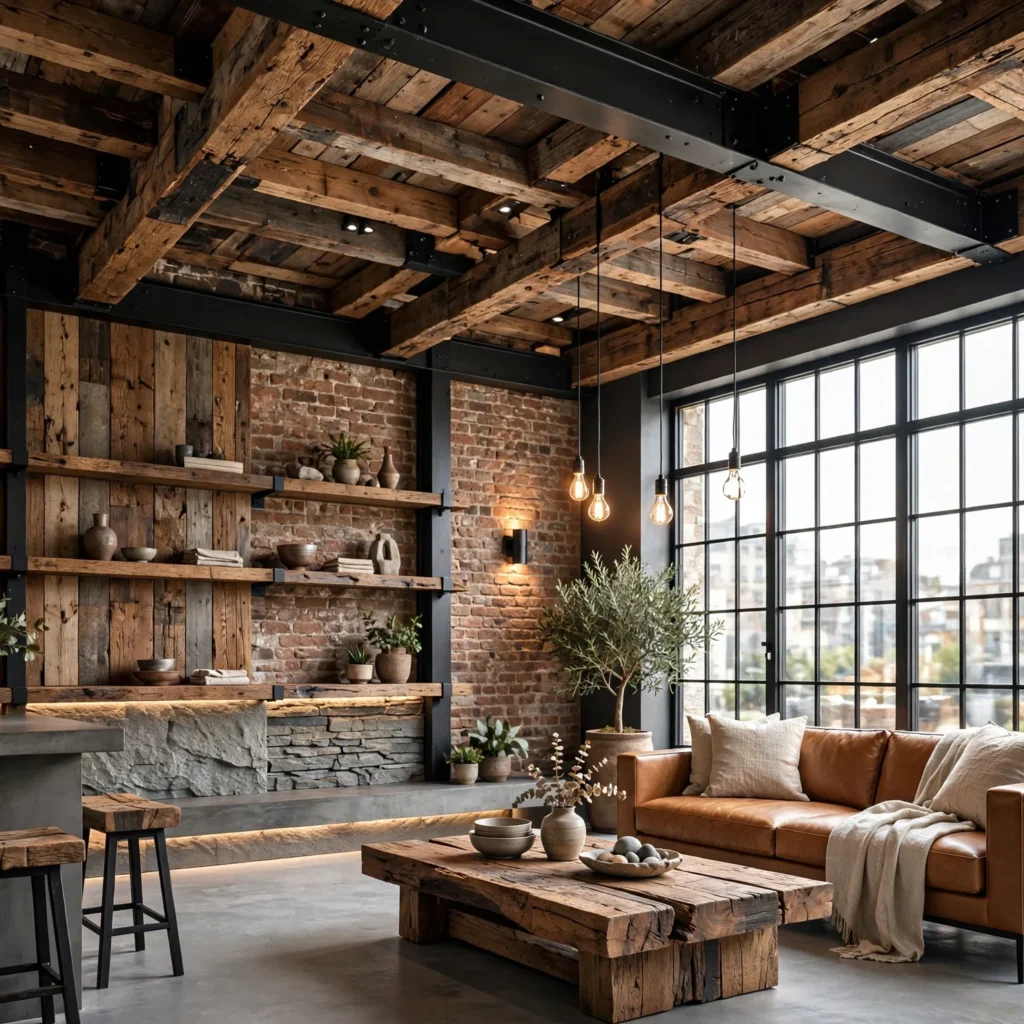
Furniture or accent pieces built from reclaimed wood, such as a dining table, a media console, or open shelving, bring visible age and texture into an industrial space, softening the harder metal and concrete elements elsewhere in the room. The wood’s visible grain, knots, and occasional nail holes from its previous use add authenticity that new, unfinished wood can’t fully replicate even with a distressed treatment applied. This idea works particularly well as a counterpoint to steel or black metal furniture frames, creating the warm-cool material contrast central to a balanced industrial look.
11. Matte Black Hardware Throughout
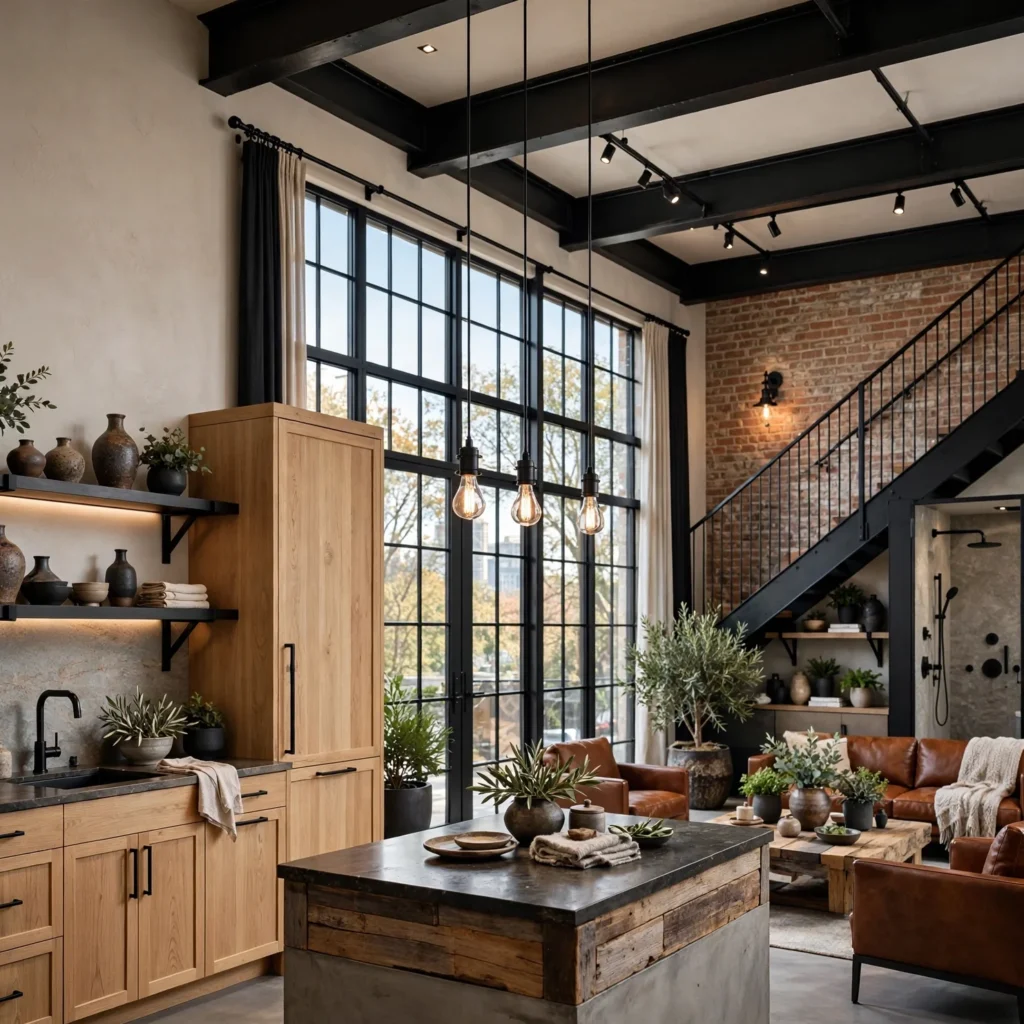
Using matte black hardware consistently across cabinet pulls, door hinges, light fixtures, and plumbing fixtures reinforces the industrial material story in a way that’s relatively low-cost compared to structural elements like exposed brick or steel beams. This works in any room, making it one of the more accessible ways to bring industrial design cues into a home that isn’t undergoing a full structural renovation. Consistency across multiple rooms, rather than isolating the black hardware to just the kitchen, helps extend the industrial aesthetic throughout the broader home.
12. Industrial Interior Design Ideas for Softening a Space
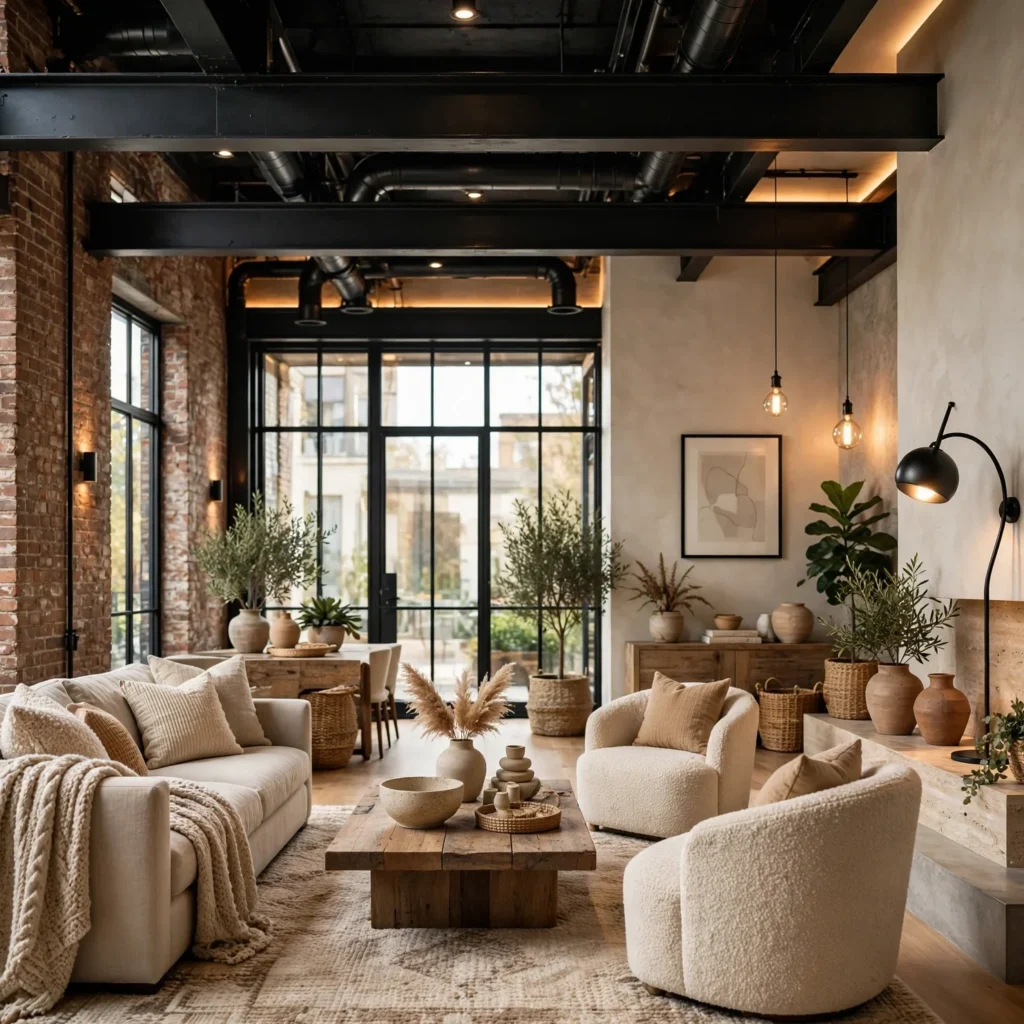
Among industrial interior design ideas, spaces leaning too heavily into raw metal, brick, and concrete without any softening elements risk feeling cold and uninviting rather than authentically industrial, which historically still included worn wood, warm lighting, and lived-in textiles even in genuine converted warehouse spaces. Adding a layered rug, warm-toned throw pillows, and dimmable warm lighting alongside the harder industrial materials helps maintain comfort without abandoning the aesthetic. This balance matters significantly for making an industrial-inspired space feel genuinely livable rather than a stylized but uncomfortable showroom.
Shop the Look
For a space built around these ideas, look at exposed filament Edison bulbs paired with black metal cage pendant fixtures from a supplier like Barn Light Electric, along with leather and metal seating from a brand like Restoration Hardware for a strong material anchor. Reclaimed wood furniture pieces, such as a dining table or media console, add warmth against black steel window frames or exposed structural beams. Matte black hardware throughout the kitchen and bathroom ties smaller details into the broader industrial material story without requiring structural changes.
Common Mistake to Avoid
The most common mistake is applying industrial design elements uniformly throughout an entire space without any warming counterbalance, resulting in a room that reads as cold and uninviting rather than authentically industrial, since even genuine converted warehouse spaces historically included worn wood, warm lighting, and lived-in textiles alongside the raw materials. Balancing exposed brick, steel, and concrete with reclaimed wood, leather seating, and warm-toned lighting throughout the space helps maintain the aesthetic’s authenticity while keeping the room comfortable for actual daily use.
FAQs
How do I keep industrial design from feeling cold?
Pairing raw materials like exposed brick, steel, and concrete with warmer elements like reclaimed wood furniture, leather seating, and warm-toned Edison bulb lighting keeps an industrial space from feeling sterile or uninviting. Textiles like a layered rug or throw pillows in warm tones also add tactile comfort that balances the harder surfaces central to the style.
Can industrial design work in a home without original architectural features?
Industrial design can be applied in newer construction or homes without original brick or steel beams, using manufactured brick veneer, decorative steel elements, and matte black hardware to evoke the aesthetic without requiring an actual converted warehouse space. This approach won’t have the same architectural authenticity as original features, but it can still successfully capture the style’s material palette and overall feel.
Is concrete flooring necessary for an industrial look?
Concrete flooring isn’t strictly necessary for an industrial aesthetic, and many successful industrial-inspired spaces use warm wood flooring instead, which helps balance the cooler materials like exposed brick and steel elsewhere in the room. Polished concrete does reinforce the style’s warehouse origins more directly, but it isn’t a requirement if a warmer flooring choice better suits a home’s overall comfort needs.
What lighting works best for industrial design?
Exposed filament Edison bulbs paired with simple black metal cage or pendant fixtures are strongly associated with the industrial aesthetic, offering both a warm light quality and a clear stylistic marker. Combining this fixture style with dimmable controls allows the warm bulb glow to soften further in the evening, helping counterbalance the harder surrounding materials typical of the style.
Does industrial design work well in a small space?
Industrial design can work in a small space, though elements like exposed ductwork or heavy structural steel beams tend to suit rooms with higher ceilings better, since they can make a lower-ceilinged room feel more cramped rather than adding the intended architectural interest. In smaller spaces, focusing on smaller-scale industrial details, like matte black hardware and Edison bulb lighting, tends to work better than large structural elements.
Conclusion
These industrial interior design ideas range from low-cost updates like matte black hardware to bigger investments like exposed structural steel beams, giving you a starting point no matter your space’s size or your renovation budget. If one of these stood out, save this post to Pinterest for later, or check out our related guide on interior design living room ideas for more room-specific inspiration.
One Comment
Comments are closed.