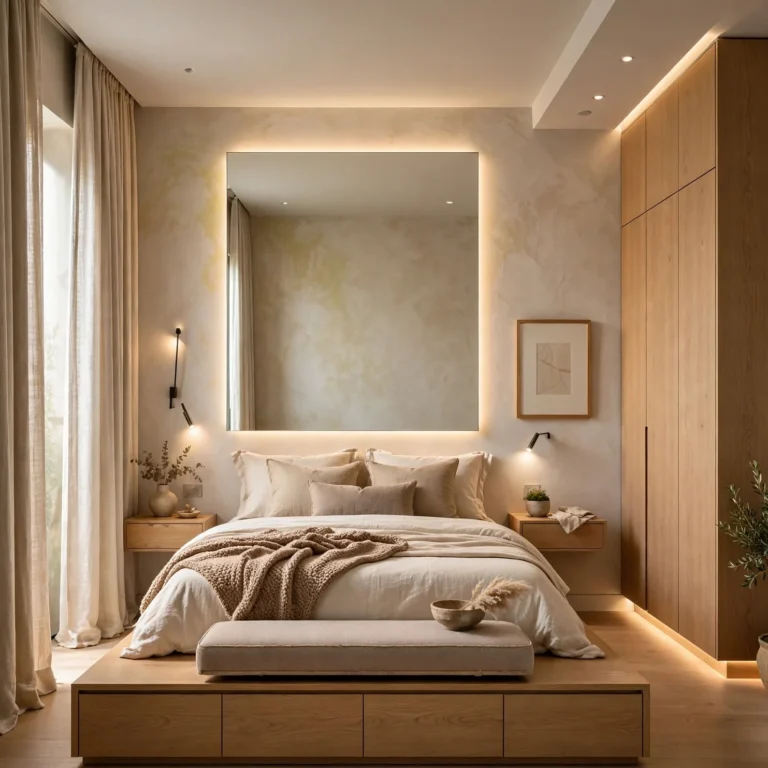
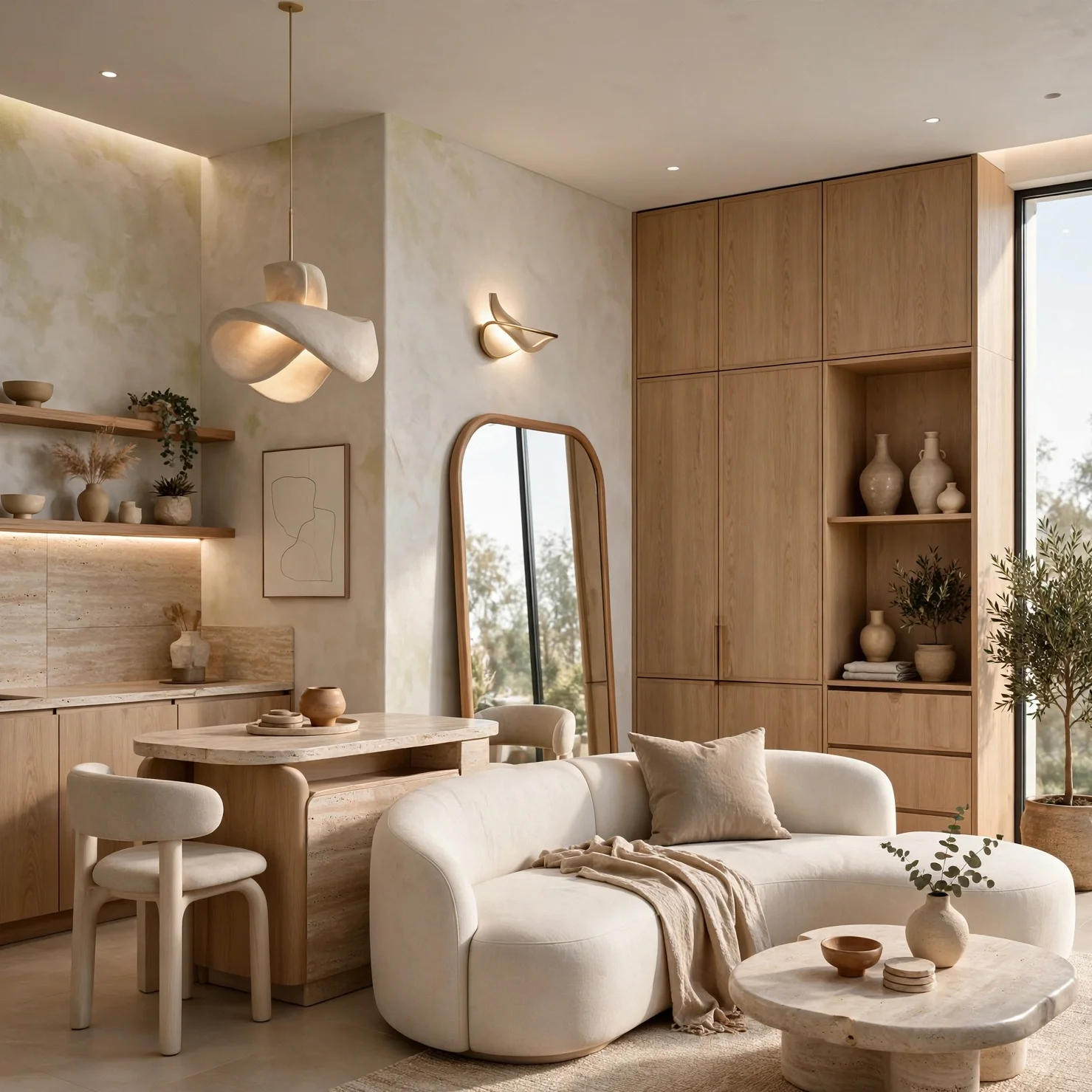
12 Trending Modern Interior Design Ideas for Clean, Livable Spaces
Modern interior design ideas often get confused with a purely minimal, all-white aesthetic, when genuine modern design is more specifically about clean lines, functional layouts, and an absence of unnecessary ornamentation rather than a lack of warmth or personality. This post covers twelve specific design concepts, each with real materials and placement guidance, so you can apply modern principles in a way that still feels comfortable and livable. Whether you’re furnishing a full home or updating a single room, you’ll find practical notes to help you balance clean, contemporary lines with genuine daily comfort.
Trend & Background
Modern interior design, rooted in early to mid-20th century design movements, has evolved considerably from its original emphasis on strict minimalism and industrial materials toward a warmer, more livable interpretation that still prioritizes clean lines and function but incorporates natural materials and softer textures. This shift reflects a broader recognition that a purely stark, minimal space can feel uncomfortable for daily living, even when it photographs well. This matters now because the term “modern” is often used loosely to describe very different aesthetics, making it worth clarifying which specific principles actually define genuinely successful modern design versus a merely trendy, sparse look.
Key Takeaways
- These modern interior design ideas focus on clean lines and functional layouts without tipping into a cold, sterile look.
- Warm minimalism, mixing simple forms with natural materials, is replacing the starker modern looks of past decades.
- Several ideas include material and proportion comparisons to help you plan a modern space room by room.
- Small choices like a curved furniture piece or a warm wood tone can keep modern design from feeling harsh.
1. Clean-Lined Furniture Silhouettes
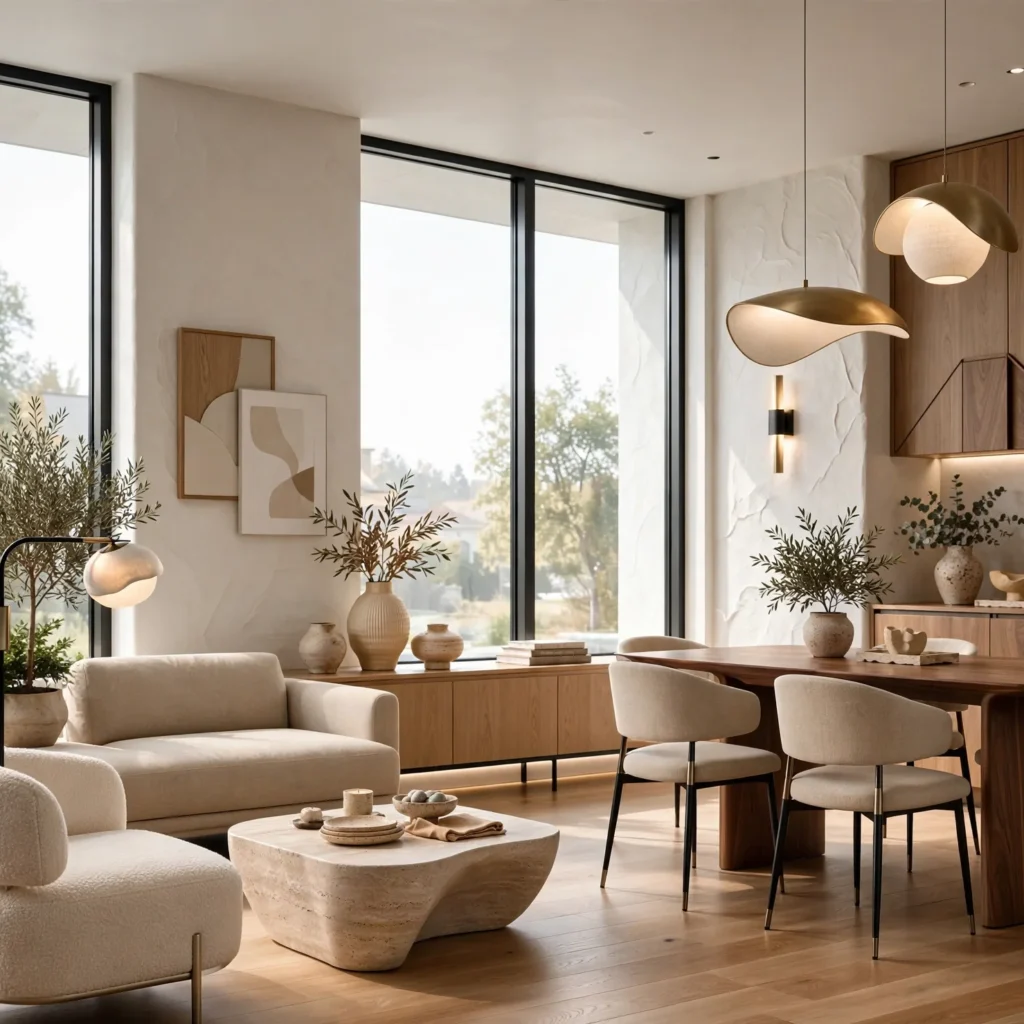
Furniture with simple, geometric silhouettes, avoiding ornate carving, tufting, or elaborate detailing, forms the foundational visual language of modern design across nearly every room. This doesn’t mean furniture needs to be purely rectilinear, since curved modern pieces, like a rounded sofa arm or an oval coffee table, remain consistent with the style as long as the overall form stays simple and uncluttered by decorative detail. This idea works as a starting point for nearly any modern room, guiding furniture selection before moving into material and color considerations.
2. Warm Wood Tones as a Counterbalance
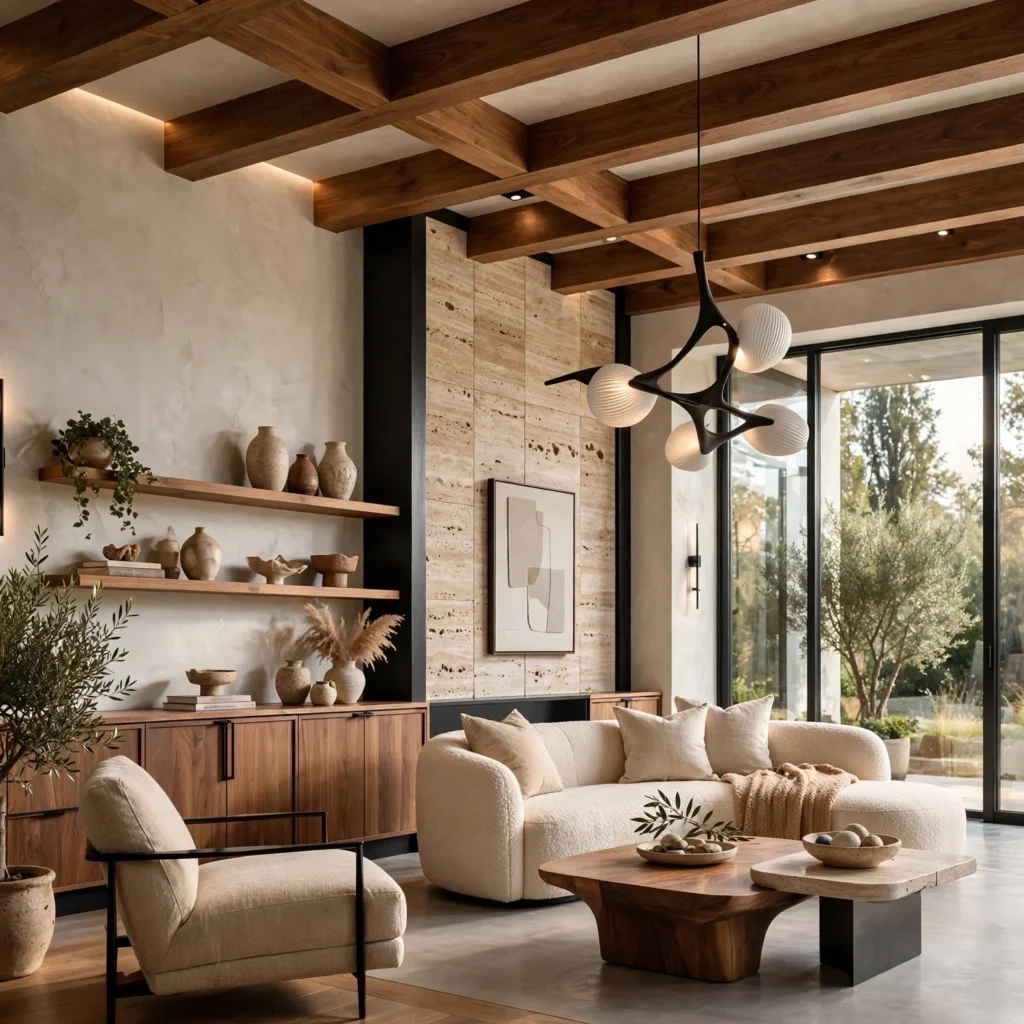
Incorporating warm wood tones, such as walnut or teak, alongside more minimal furniture forms and finishes keeps a modern space from tipping into a cold, clinical feel that can result from an all-white or all-gray palette applied too strictly. This works particularly well through flooring, a dining table, or select furniture pieces, providing organic warmth against cleaner, more geometric surrounding elements. This idea reflects the broader shift in modern design away from its more austere mid-century origins toward a warmer, more livable interpretation.
| Material Approach | Feel | Best For |
| All Cool Tones (white, gray, chrome) | Sleek, cool | Minimalist-leaning spaces |
| Mixed Warm Wood and Cool Tones | Balanced | Most livable modern homes |
| All Warm Wood | Cozy, less strictly modern | Transitional-modern blend |
3. Open Floor Plan Layout
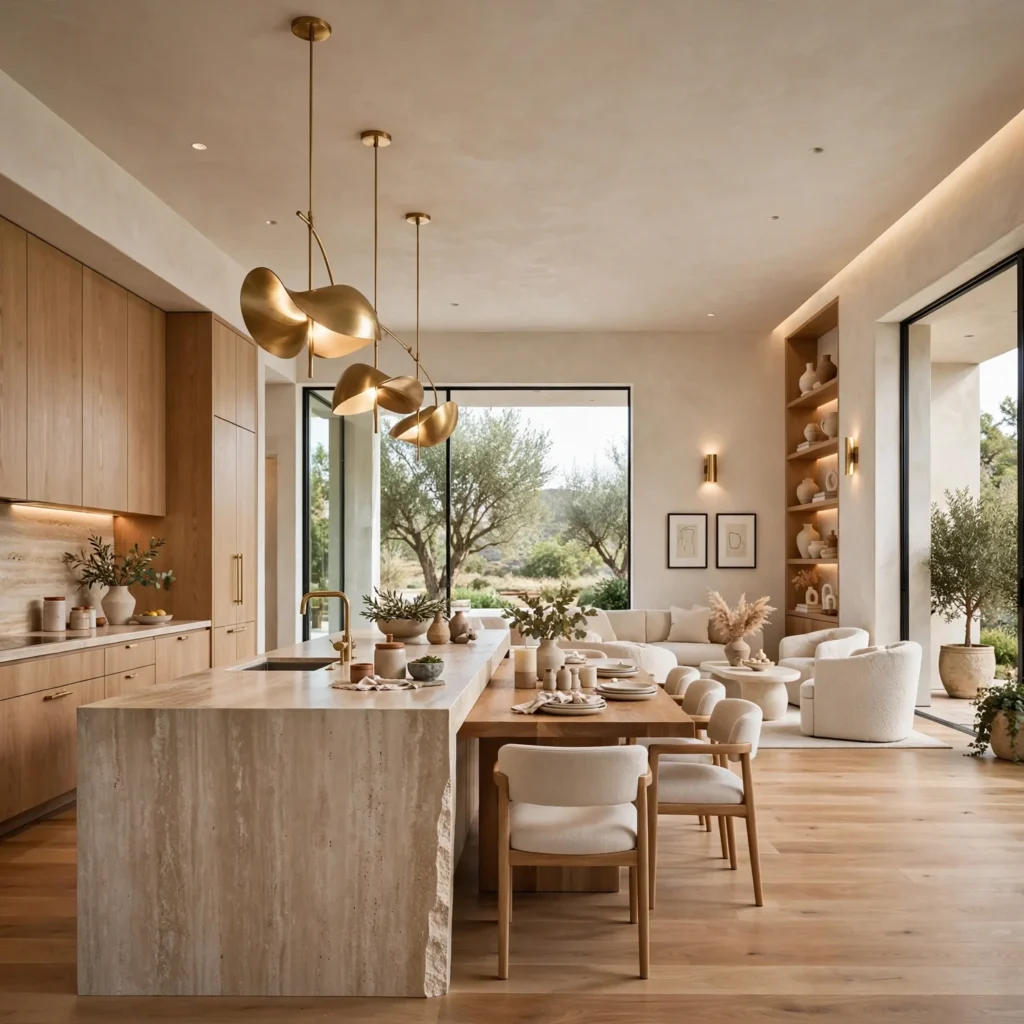
An open floor plan, removing walls between the kitchen, dining, and living areas, supports modern design’s emphasis on function and flow, allowing natural light and sightlines to move freely through connected spaces. This works particularly well paired with furniture arrangements that define zones through placement and rugs rather than walls, since open modern layouts still benefit from some visual structure to avoid feeling undifferentiated. This idea requires structural consideration if converting an existing home with load-bearing walls, making it a more significant undertaking than a purely cosmetic update.
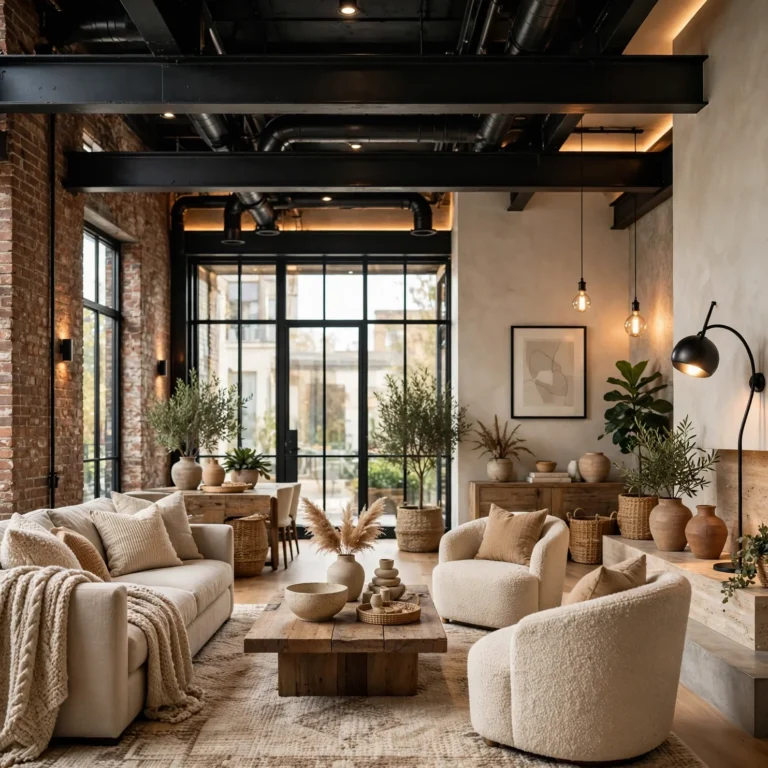
Transform your workspace with our industrial interior design ideas featuring modern layouts, ergonomic furniture, and productivity-boosting décor.
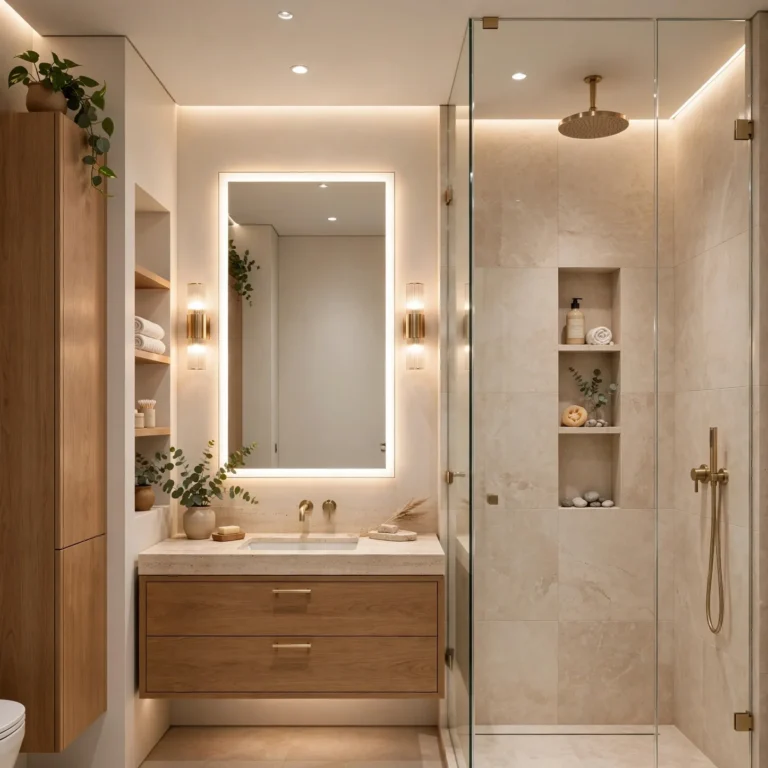
4. Minimal, Handle-Free Cabinetry
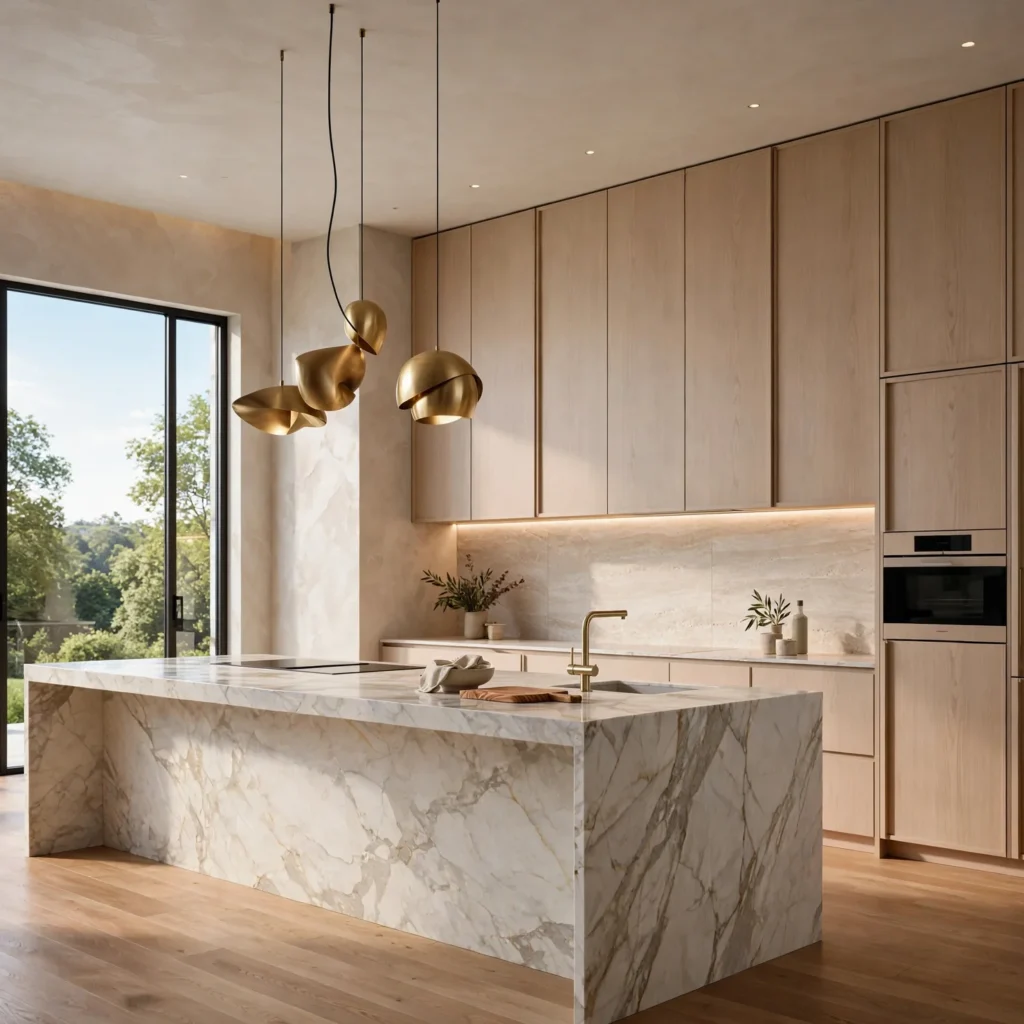
Slab-front cabinetry with integrated finger pulls or push-to-open mechanisms, rather than visible knobs or bin pulls, reinforces modern design’s clean-line principle by removing visual hardware clutter from cabinet fronts. This works particularly well in kitchens and bathrooms, where cabinet fronts make up a significant portion of the room’s visual field. This idea does require slightly more precise manufacturing than standard cabinetry with applied hardware, which can add modestly to cost depending on the cabinet maker.
5. Statement Lighting as Sculptural Object
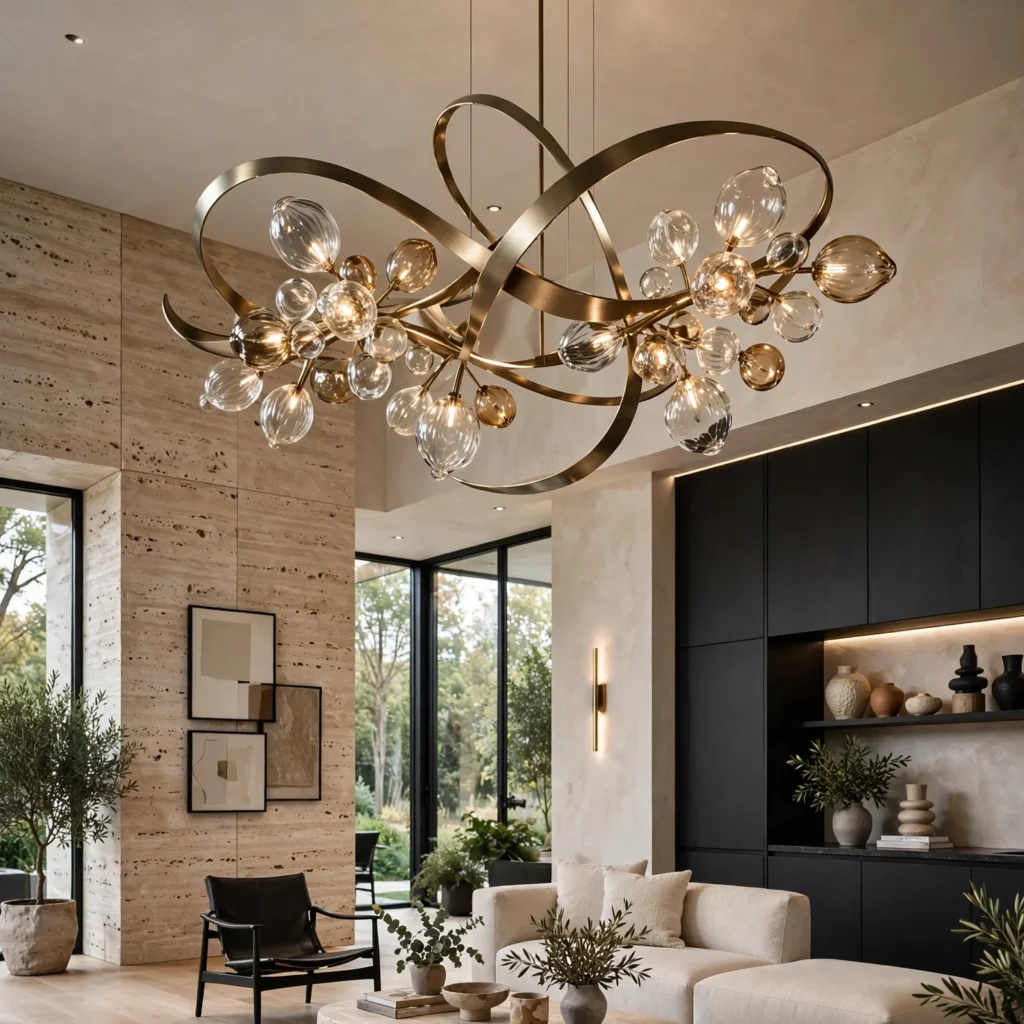
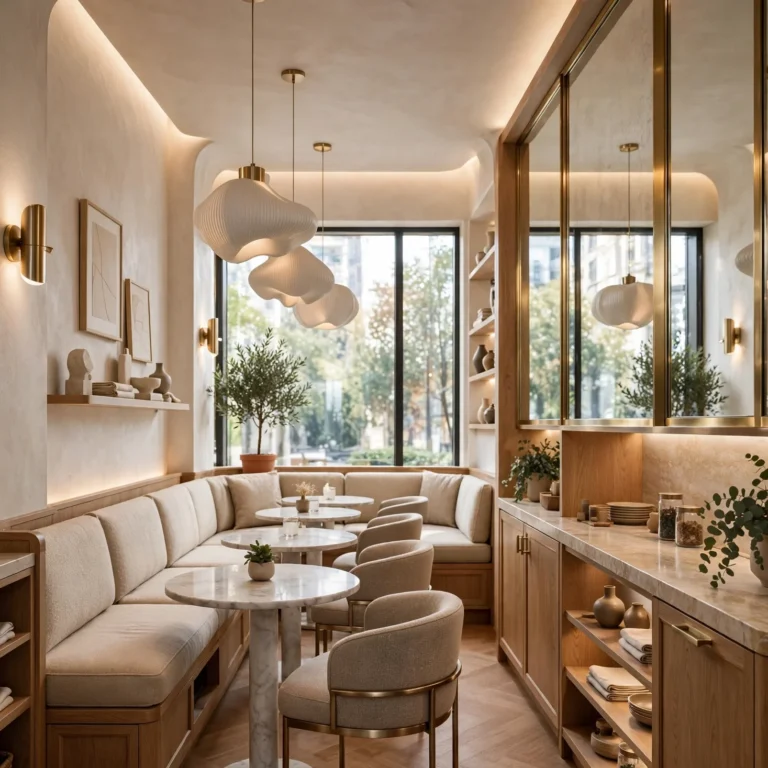
A single, well-chosen lighting fixture, such as a sculptural pendant or a minimalist floor lamp with a distinctive silhouette, can serve as a room’s primary decorative statement in a modern space that otherwise avoids heavy ornamentation elsewhere. This works well because modern design’s restraint in other areas, like wall decor or furniture detailing, gives a bold lighting choice more room to stand out as a clear focal point. Choosing one statement fixture per room, rather than several competing pieces, keeps this approach from becoming visually cluttered.
6. Neutral Base Palette With One Accent Color
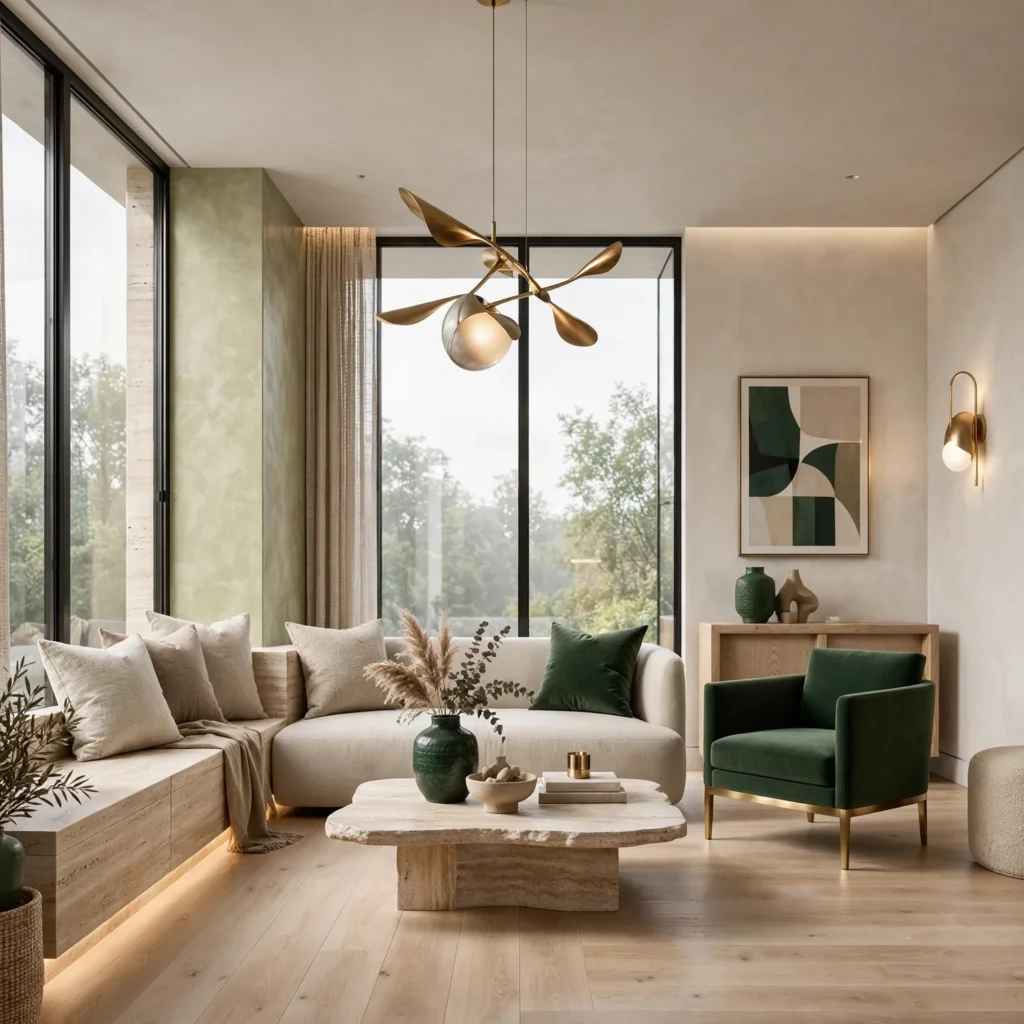
A neutral base palette, using whites, grays, or warm greiges across walls and larger furniture pieces, paired with a single accent color introduced through smaller elements like pillows, art, or a single accent chair, supports modern design’s preference for restraint while still allowing personality and visual interest. This works better than either a fully neutral, colorless room or one with several competing bold colors, since a single accent color reads as more intentional and easier to update over time than a full-color scheme. This idea suits nearly any room in a modern-leaning home.
7. Large-Format Materials
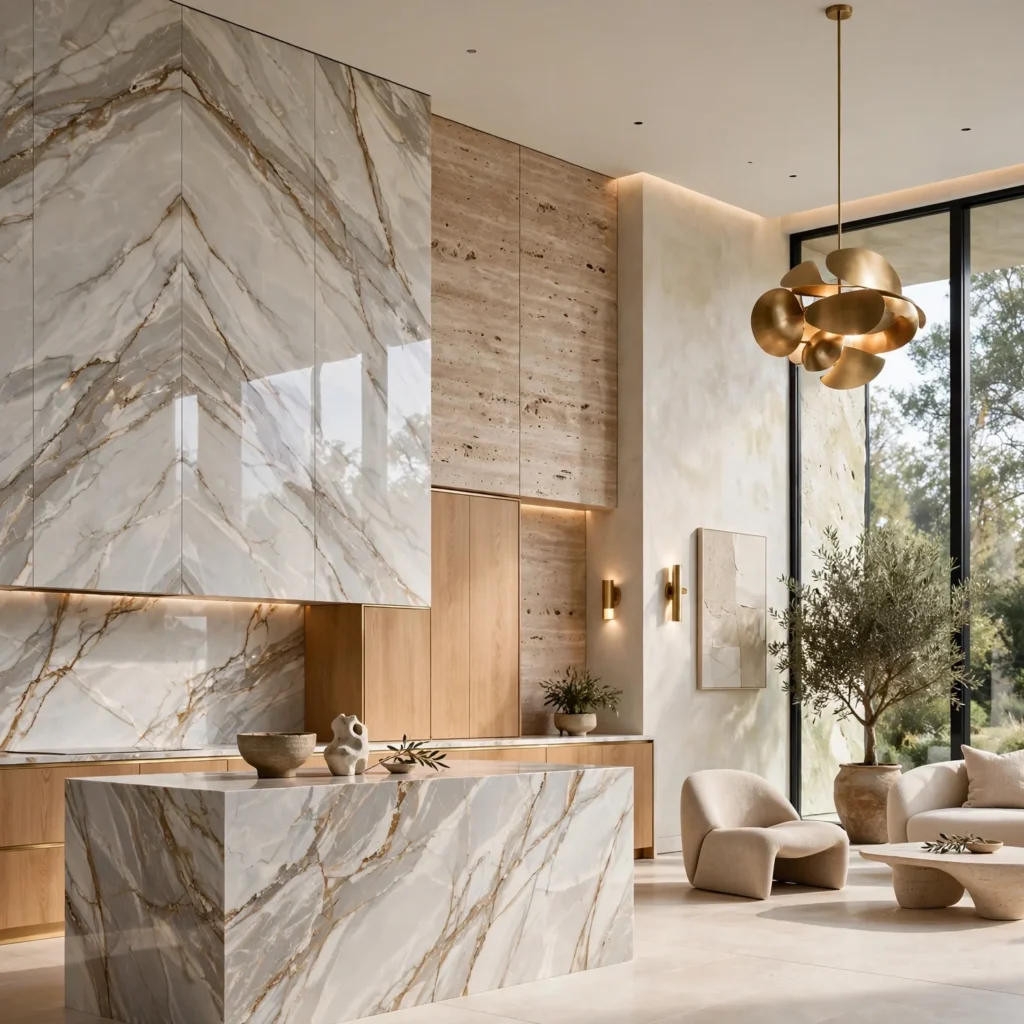
Large-format tile, expansive glass windows, and oversized furniture surfaces like a single-slab dining table all reduce the visual segmentation that comes from smaller, more broken-up materials, supporting modern design’s emphasis on clean, uninterrupted lines. This works particularly well in kitchens, bathrooms, and living rooms, where large-format choices reduce grout lines, seams, or paneled breaks that can make a space feel busier than intended. This idea does tend to cost more than smaller, more standard material sizes, given the fabrication and installation precision required.
| Material Application | Standard Size | Large-Format Alternative |
| Floor Tile | 12×12 inches | 24×24 inches or larger |
| Dining Table | Multi-panel construction | Single-slab surface |
| Window Panes | Multiple divided panes | Large, minimal-frame glass |
8. Curved Furniture Accents
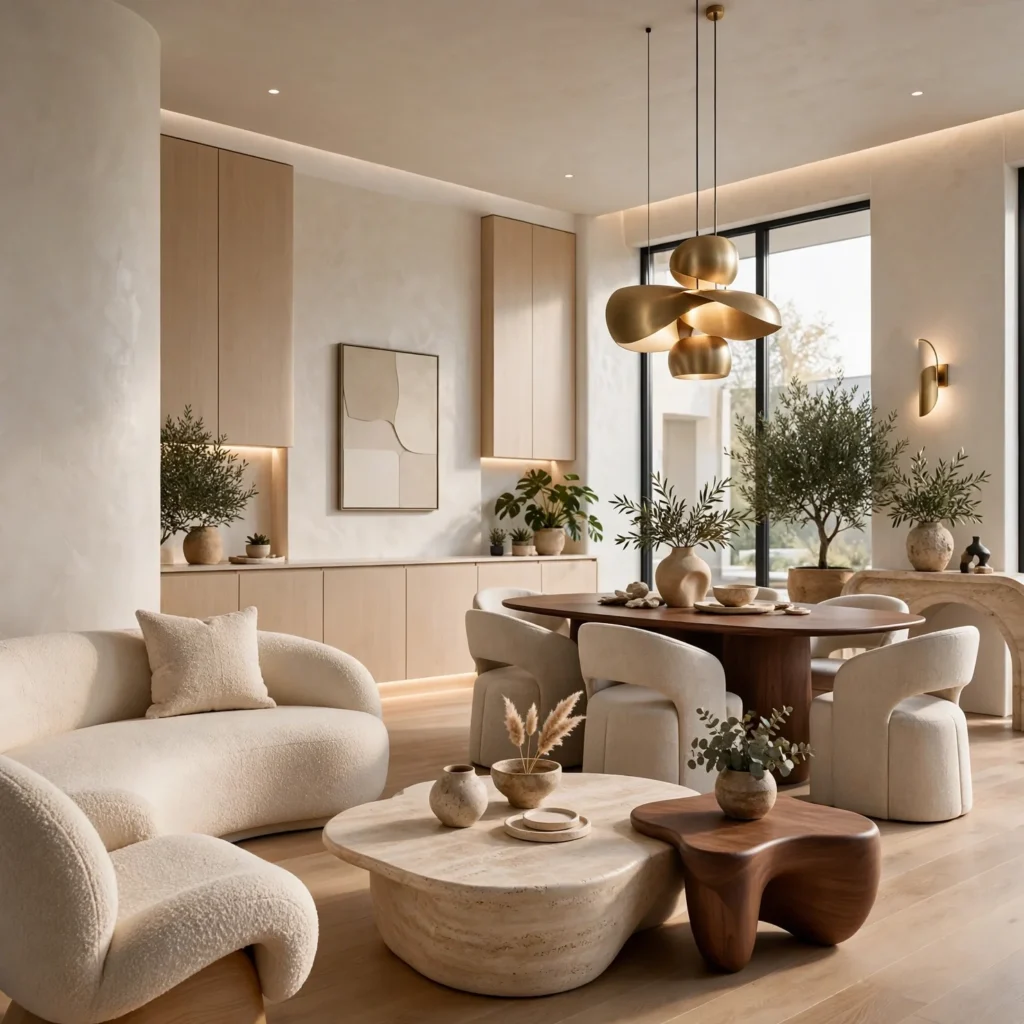
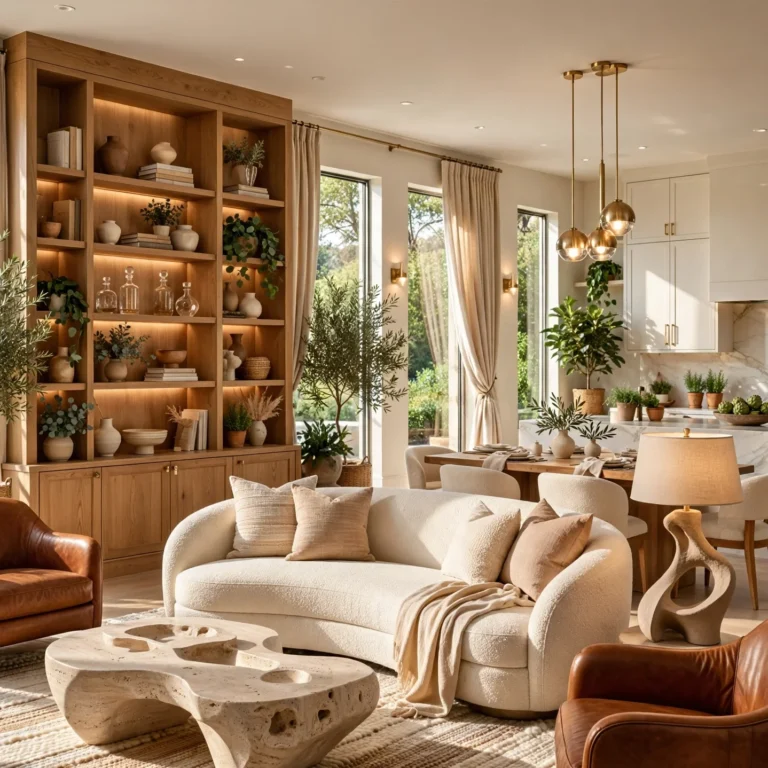
While modern design is often associated with rectilinear forms, incorporating one or two curved furniture pieces, such as a rounded accent chair or an oval coffee table, softens an otherwise angular room without abandoning the style’s core simplicity principle. This works particularly well as a counterpoint to a more linear sofa or a rectangular dining table, creating visual variety within an overall clean-lined room. This idea has grown more common in recent modern design as a direct response to spaces that lean too heavily into sharp angles feeling visually harsh.
9. Integrated Technology and Storage
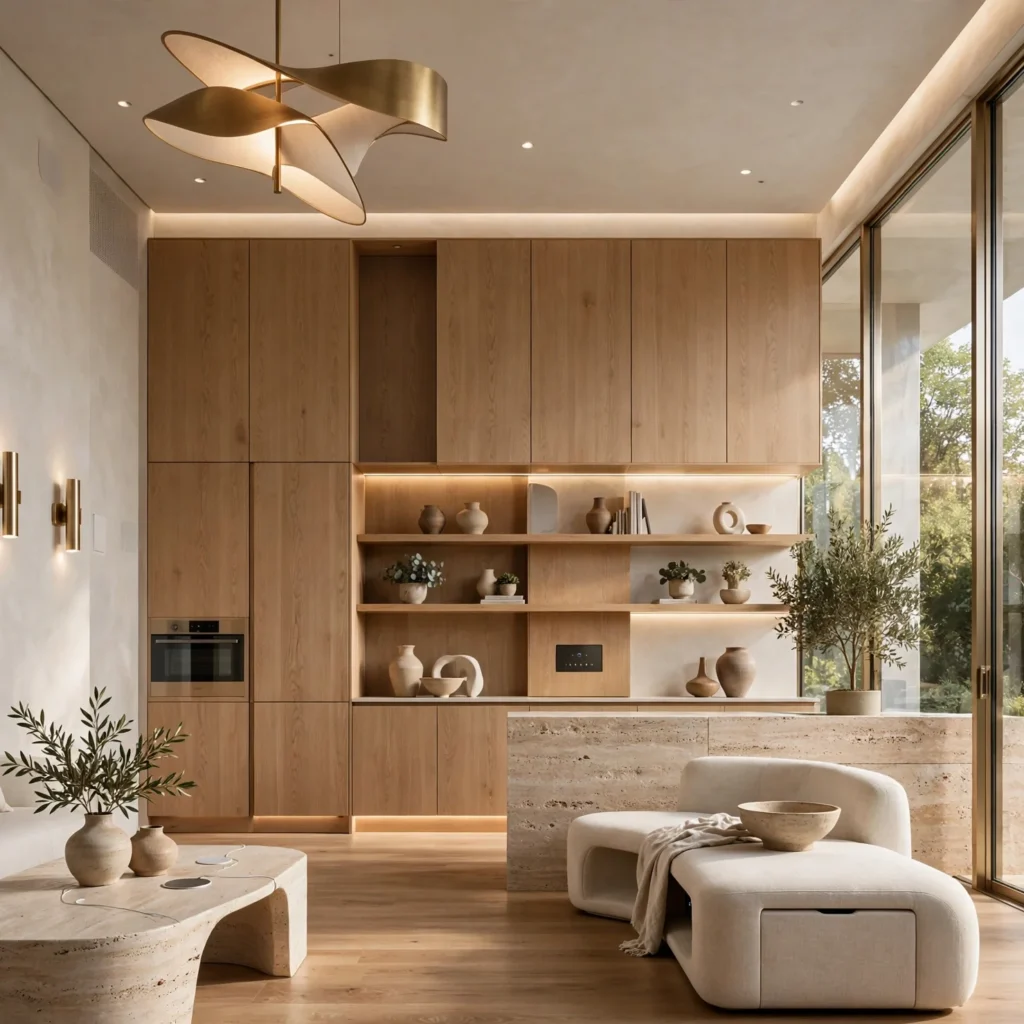
Built-in solutions for hiding televisions, speakers, and cables, such as a media wall with concealed wiring or a cabinet that fully closes over a television when not in use, support modern design’s preference for clean, uncluttered surfaces by removing visible technology from the room’s primary sightlines. This works particularly well in living rooms and home offices, where technology often represents one of the most visually disruptive elements in an otherwise minimal room. This idea requires planning during a renovation or built-in furniture selection process, rather than being easily retrofitted into an existing space.
10. Consistent Sightlines and Negative Space
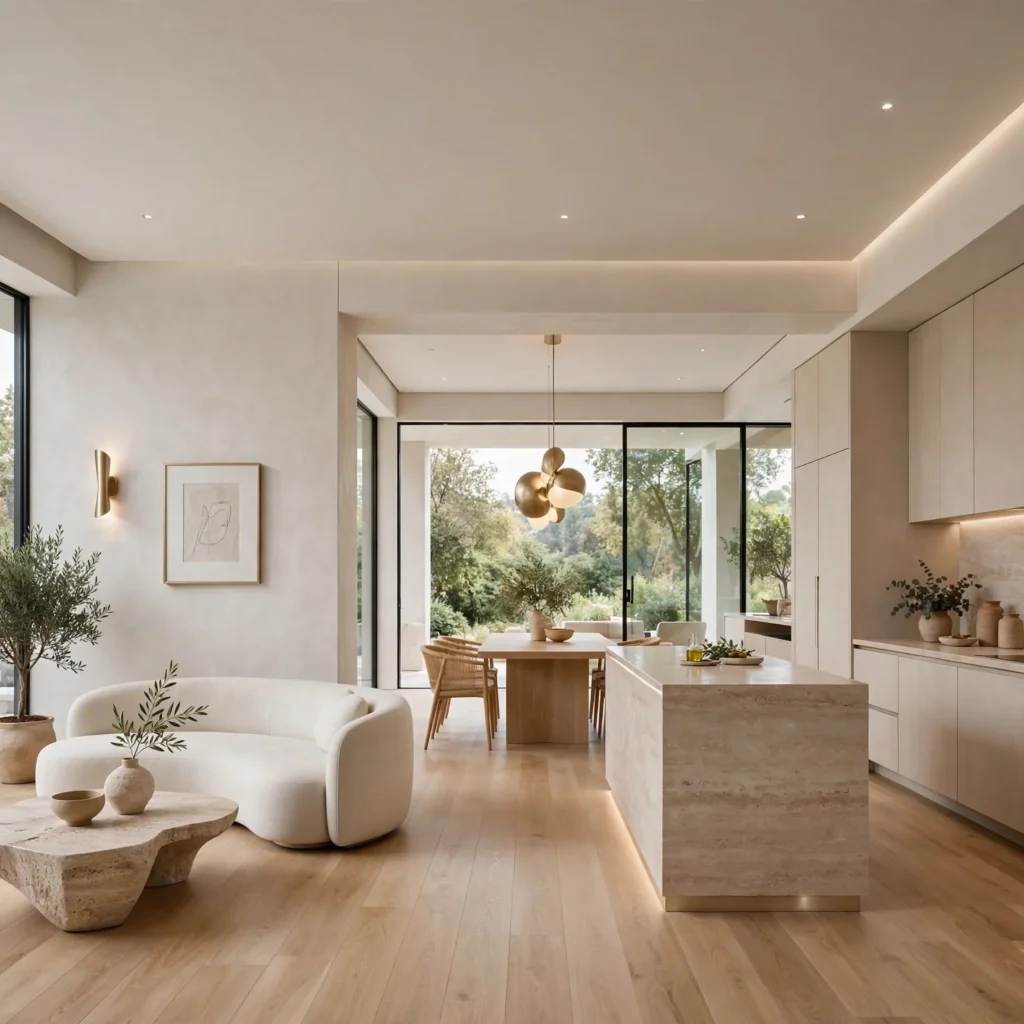
Modern design relies heavily on negative space, the deliberately empty areas between furniture and decor, to let individual pieces read clearly rather than competing for attention in a visually crowded room. This means resisting the urge to fill every wall or surface with decor, instead choosing fewer, more considered pieces and allowing more breathing room around each one. This idea costs nothing beyond restraint in the decorating process, but it significantly affects whether a space reads as genuinely modern or simply sparse and unfinished.
11. Matte Black or Brushed Metal Fixtures
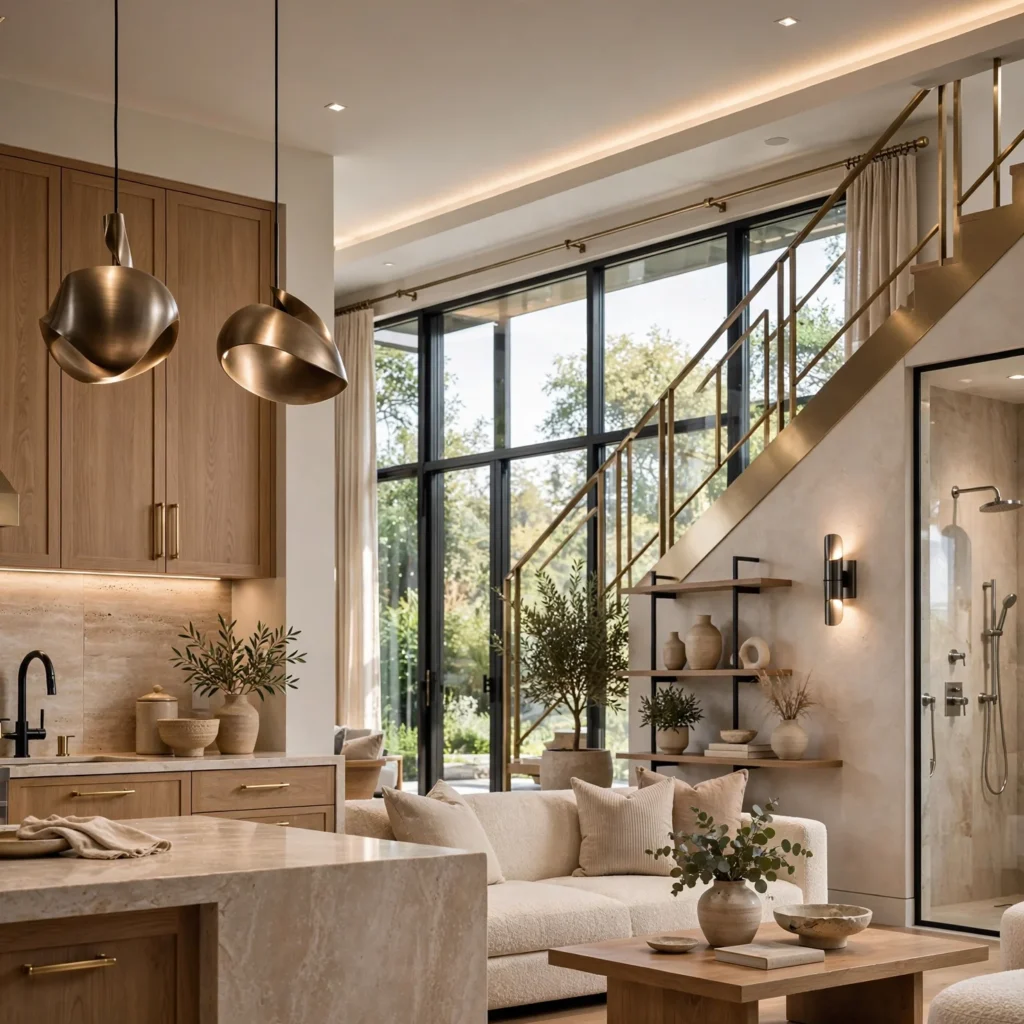
Matte black or brushed metal fixtures, used consistently for door hardware, faucets, and lighting, provide a cohesive, understated metal finish that supports modern design’s clean, uncluttered aesthetic better than ornate or heavily polished metal finishes would. This works in any room and represents one of the more accessible ways to reinforce a modern material language without requiring structural or furniture changes. Consistency across multiple rooms, rather than varying the metal finish room to room, helps extend the modern aesthetic throughout a broader home.
12. Modern Interior Design Ideas for Small Spaces
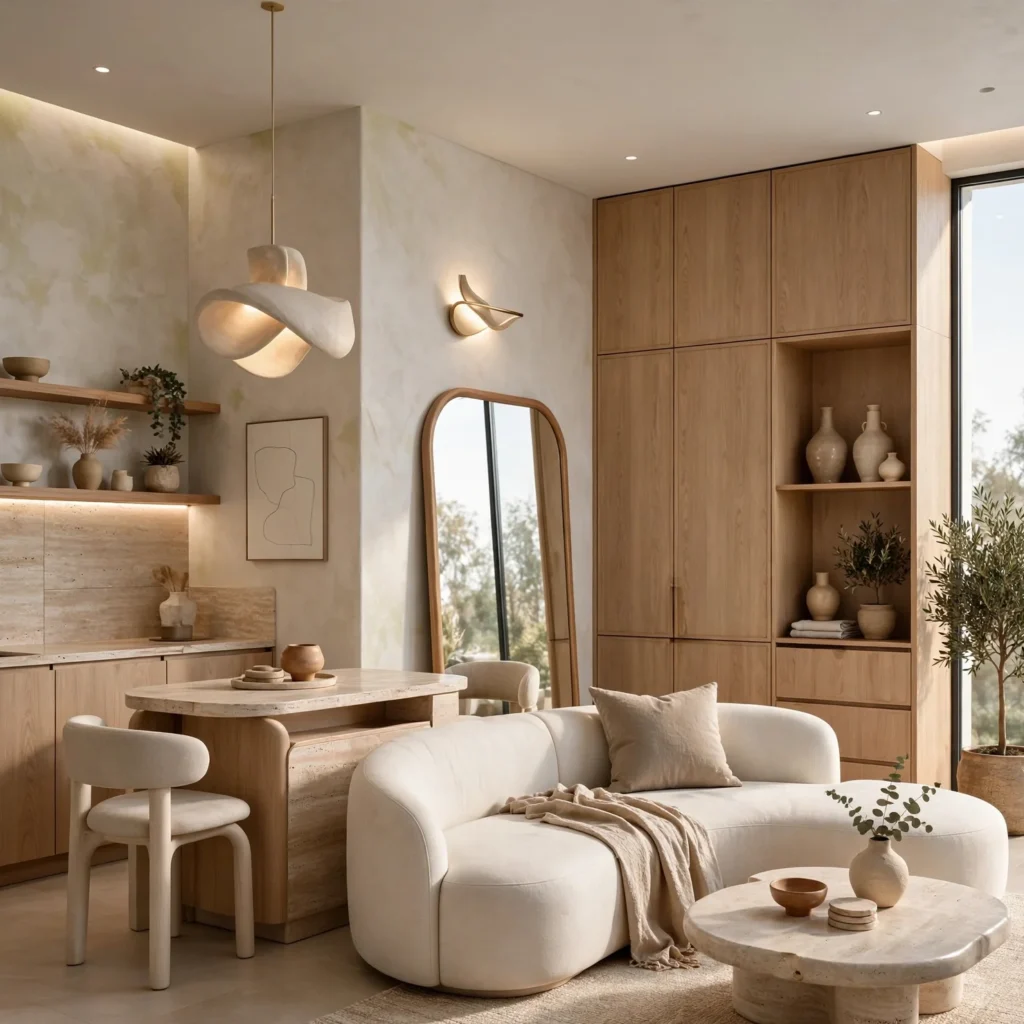
Among modern interior design ideas, small spaces benefit most from a restrained furniture count, multi-functional pieces, and a light, unified color palette, since modern design’s core principles of clean lines and negative space naturally support making a small room feel less cluttered. Choosing furniture with visible legs, rather than pieces that sit flush to the floor, also helps a small modern space feel more open by allowing sightlines to continue underneath. This approach lets modern design’s restraint work in favor of a small footprint rather than feeling like a compromise.
Shop the Look
For a space built around these ideas, look at clean-lined seating from a brand like Article or Design Within Reach, paired with a warm walnut or white oak dining table for material contrast against cooler surrounding tones. A sculptural pendant light from a brand like Schoolhouse serves as a room’s primary lighting statement, while matte black or brushed brass hardware ties cabinetry and fixtures together consistently. A single curved accent chair softens an otherwise linear seating arrangement, keeping the overall look balanced rather than overly rigid.
Common Mistake to Avoid
The most common mistake is equating modern design purely with minimalism, resulting in a space that feels cold and unfinished rather than genuinely well-designed, since authentic modern principles emphasize clean function and intentional restraint rather than simply having very little in the room. A modern space still benefits from warmth through material choices like wood, a single accent color, and thoughtful lighting, rather than stripping the room down to bare, purely functional elements without any counterbalancing warmth.
FAQs
What is the difference between modern and contemporary interior design?
Modern design refers specifically to the design principles and aesthetic that emerged from early to mid-20th century design movements, characterized by clean lines, function-driven forms, and minimal ornamentation. Contemporary design, by contrast, refers to whatever styles are currently popular at any given time, meaning it shifts continuously rather than referring to a fixed historical aesthetic the way modern design does, even though the two terms are often used interchangeably in casual conversation.
How do I keep modern design from feeling cold?
Incorporating warm wood tones, a single accent color, and layered lighting alongside modern design’s cleaner lines and more restrained color palette helps keep the aesthetic from tipping into a cold, sterile feel. Textiles like a wool rug or a textured throw blanket also add tactile warmth that balances the harder, more geometric surfaces often associated with strictly minimal interpretations of the style.
Is modern design more expensive than other interior design styles?
Modern design isn’t inherently more expensive, though certain modern-associated choices, like large-format tile, handle-free cabinetry, or single-slab furniture surfaces, do tend to cost more due to the precision fabrication involved. A modern aesthetic can also be achieved at a range of budget levels by focusing on clean-lined furniture silhouettes and a restrained color palette, which don’t require premium materials to execute successfully.
Does modern design work well in an older, traditional home?
Modern design can work in an older home, though it often benefits from a transitional approach that respects some of the home’s original architectural details, like trim or window styles, rather than attempting a fully modern renovation that conflicts with the existing structure. This blended approach tends to feel more cohesive than introducing starkly modern elements into a home with strongly traditional architectural bones without any bridging design choices.
What furniture pieces are essential for a modern living room?
A clean-lined sofa, a simple coffee table, either rectilinear or with a soft curve, and one statement lighting piece tend to form the foundational furniture pieces for a modern living room. Beyond these basics, restraint in additional furniture and decor, allowing for adequate negative space between pieces, matters more for achieving a genuinely modern feel than any specific additional furniture item.
Conclusion
These modern interior design ideas range from low-cost updates like consistent matte black hardware to bigger investments like an open floor plan renovation, giving you a starting point no matter your space’s size or your design budget. If one of these stood out, save this post to Pinterest for later, or check out our related guide on industrial interior design for more style-specific inspiration.