12 Trending Interior Design Portfolio Ideas to Win More Clients
Building an interior design portfolio involves more than compiling attractive project photos, since the way work is presented and organized often matters as much as the design quality itself when a potential client is deciding who to hire. This post covers twelve specific portfolio concepts, each with real formatting and content guidance, so you can build a presentation that communicates both your design sensibility and your professional process. Whether you’re a newer designer building a first portfolio or an established professional refreshing an existing one, you’ll find practical notes to help your work stand out to the right clients.
Trend & Background
Interior design portfolios have shifted away from simply displaying a gallery of finished room photos toward a more narrative approach that includes process documentation, mood boards, and specific project challenges alongside the final result. This reflects how potential clients now research designers, often comparing portfolios online before ever scheduling a consultation, making the online presentation itself a significant factor in whether a designer gets considered for a project. This matters now because a portfolio that only shows finished spaces, without context on budget, scope, or process, gives potential clients less information to judge whether a designer’s approach and price point actually fit their own project.
Key Takeaways
- These interior design portfolio ideas focus on presentation and structure, not just showcasing finished project photos.
- Process documentation and before-and-after storytelling are replacing portfolios that show only polished final shots.
- Several ideas include format and platform comparisons to help you choose the right presentation approach for your work.
- Small additions like a client testimonial or a materials breakdown can make a portfolio feel more credible and complete.
1. Before-and-After Documentation
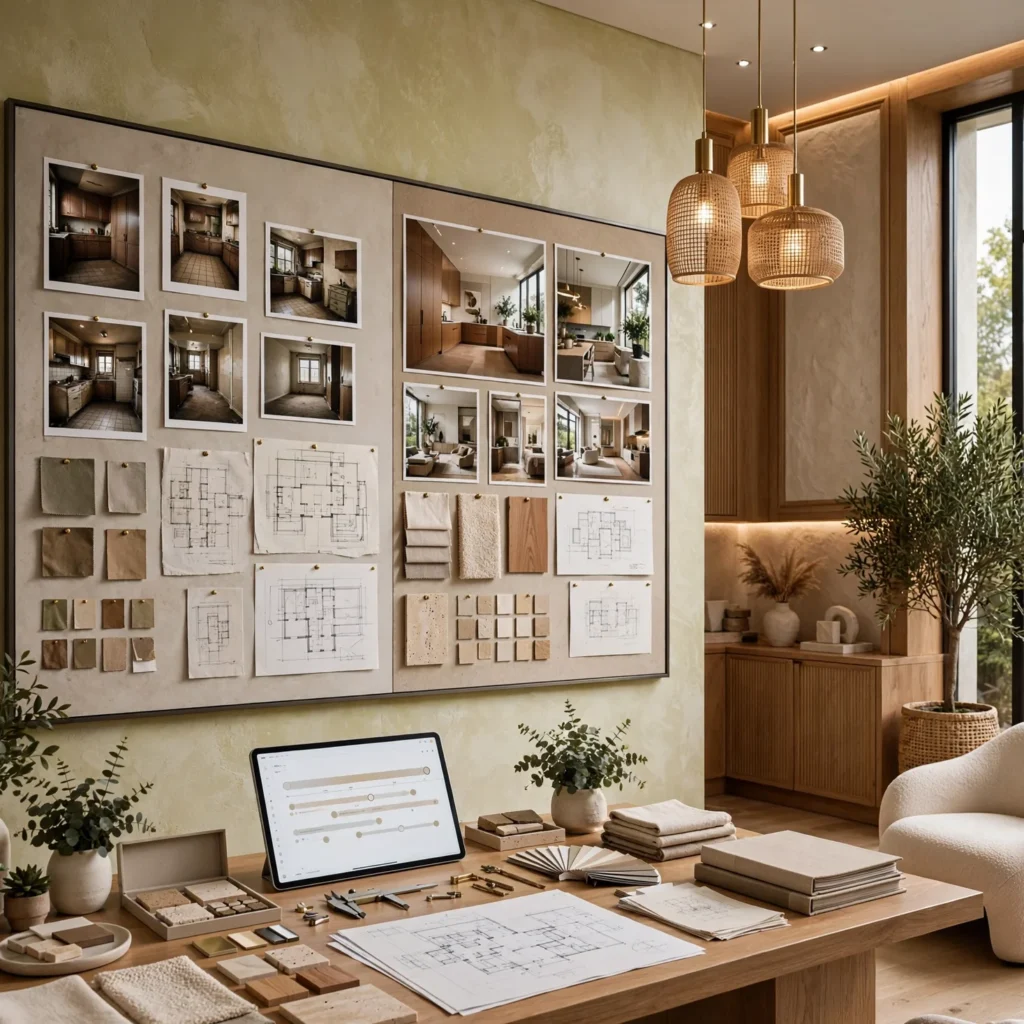
Including clear before-and-after photos for renovation projects demonstrates transformation in a way that finished photos alone can’t fully convey, giving potential clients a concrete sense of the scope and impact of your work. This works particularly well when the before and after images are shot from the same angle and under similar lighting conditions, making the comparison easier to read at a glance. This idea matters most for designers whose work frequently involves significant renovation, as opposed to purely decorative or staging-focused projects where a dramatic before-and-after contrast may not exist.
2. Process and Mood Board Reveal
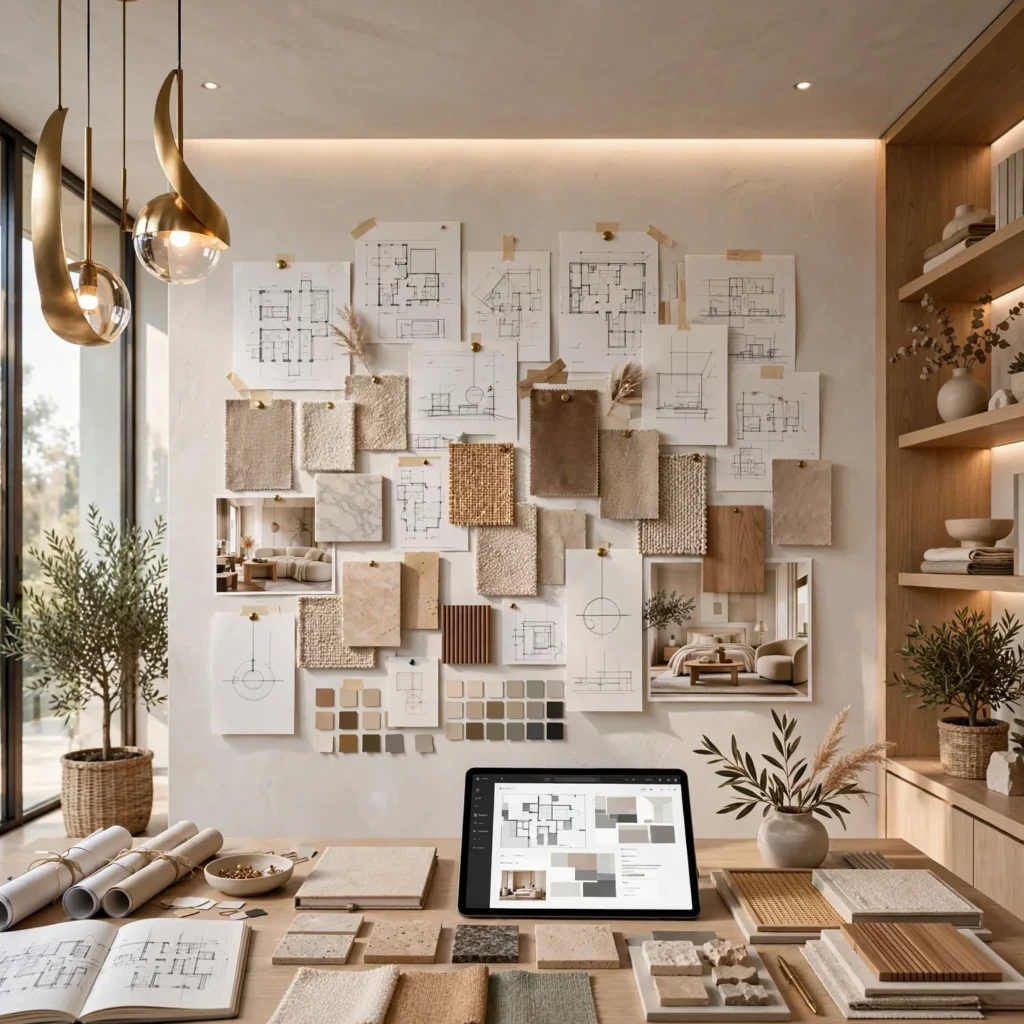
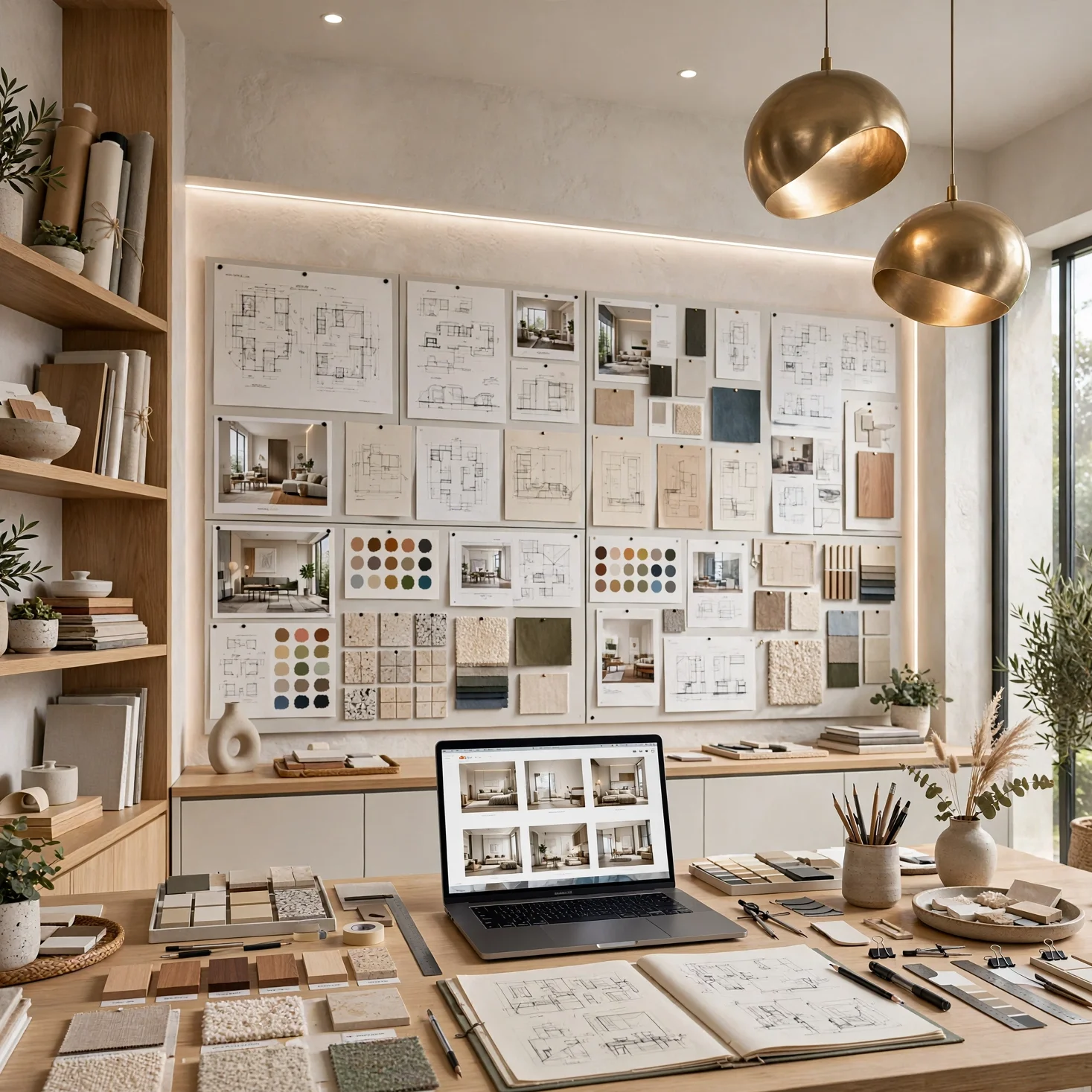
Showing a project’s original mood board or concept sketches alongside the final completed space gives potential clients insight into your design process, not just the end result, helping them understand how you translate an initial concept into a finished room. This works well as a supplementary section within a larger project case study, rather than the primary content, since most clients are still most interested in seeing polished final photography as the main draw. This idea helps differentiate a portfolio by demonstrating design thinking rather than just visual outcome.
| Portfolio Element | Primary Purpose | Best Placement |
| Final Photos | Primary visual draw | Lead image, main gallery |
| Before-and-After | Demonstrates transformation | Within project case study |
| Mood Board/Process | Shows design thinking | Supplementary, within case study |
3. Detailed Project Case Studies
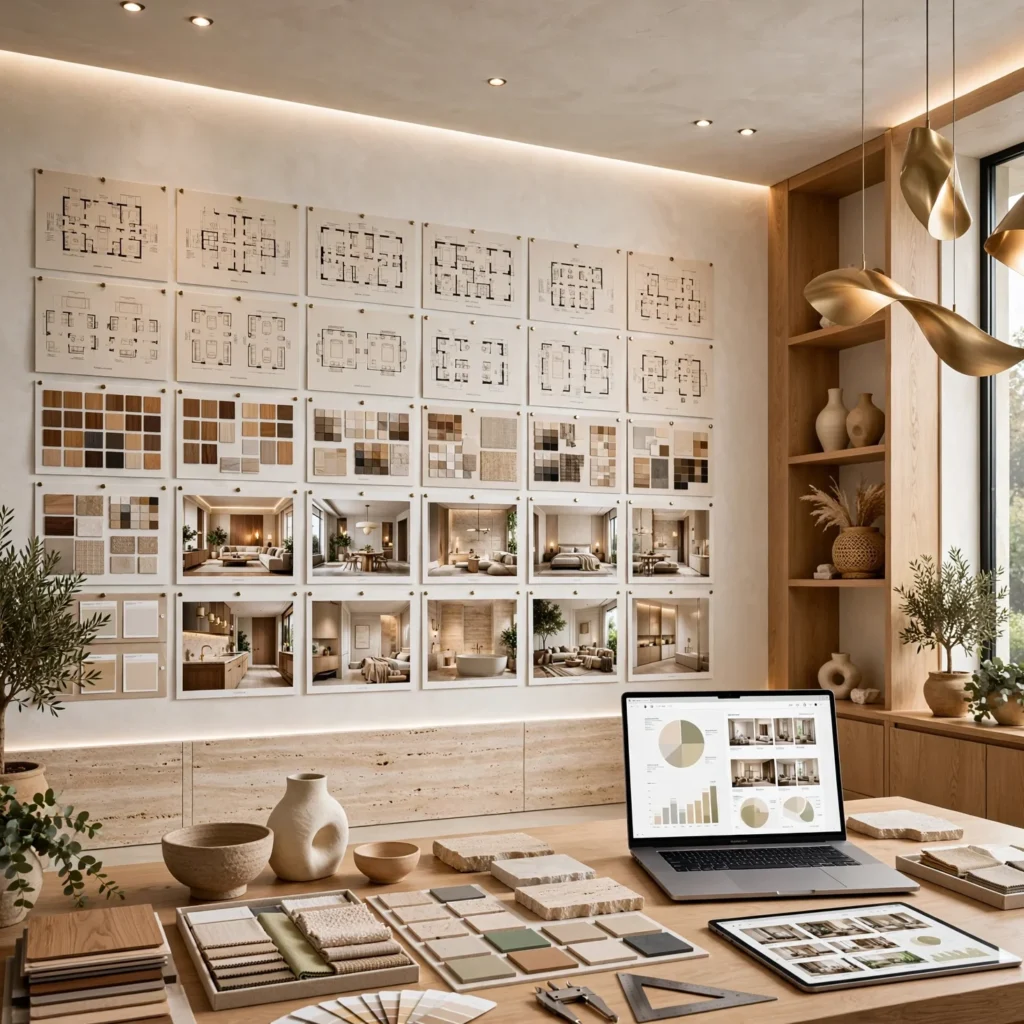
Rather than a single photo gallery per project, a detailed case study format includes the client’s brief, budget range, specific design challenges, and the solutions implemented, giving potential clients a fuller picture of how you approach a project from start to finish. This works particularly well for showcasing more complex projects, where a simple photo gallery wouldn’t fully communicate the scope of problem-solving involved. This idea requires more writing effort per project than a purely visual portfolio, but it tends to build more credibility with potential clients evaluating designers for a similarly complex project.
Discover the latest interior design styles to give your home a fresh, timeless, and sophisticated look.
4. Material and Sourcing Breakdown
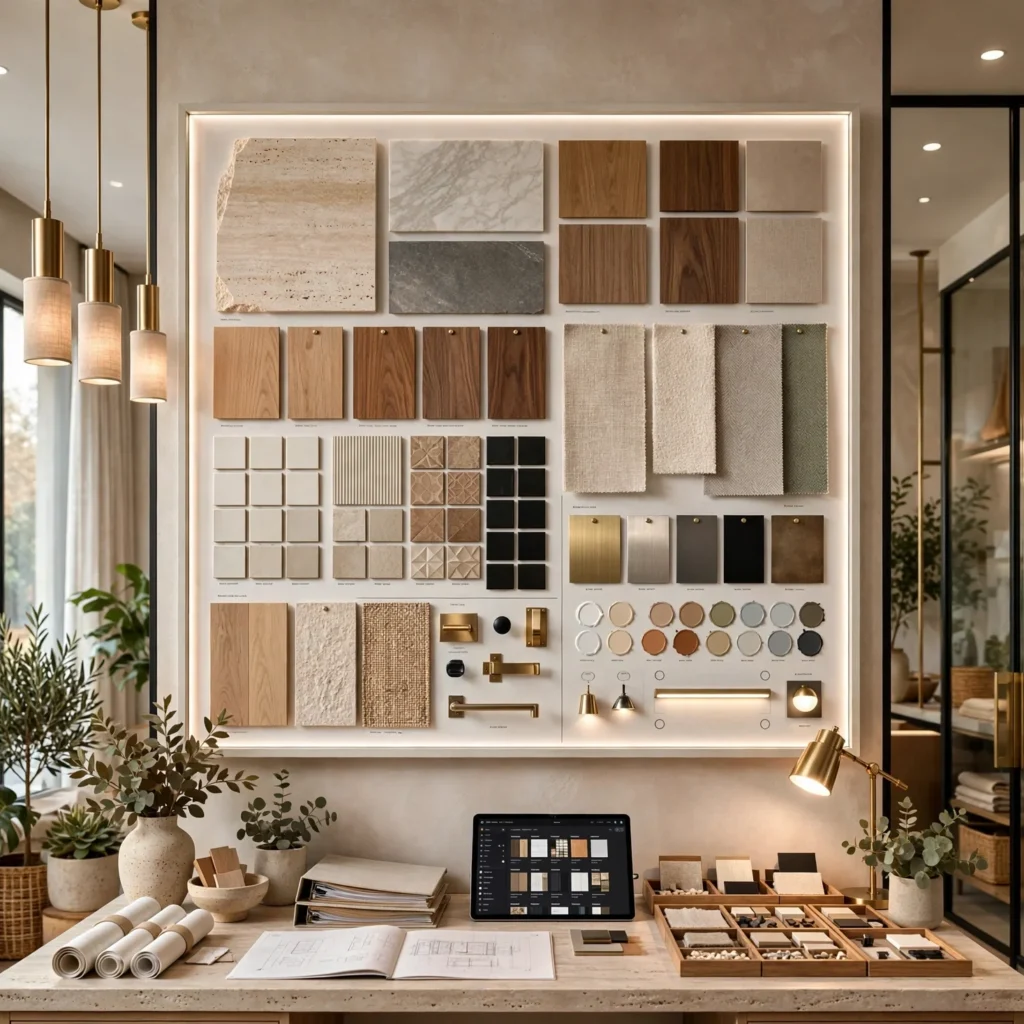
Including a brief breakdown of key materials, furniture sources, and finish choices used in a project gives potential clients a sense of your sourcing knowledge and aesthetic range, beyond what’s visible in a photo alone. This works well as a short supplementary list within a case study rather than an exhaustive itemized inventory, focusing on a handful of signature pieces or materials that defined the project’s overall look. This idea also signals professionalism to clients who may be evaluating multiple designers based partly on resource knowledge and vendor relationships.
5. Client Testimonials Integrated Per Project
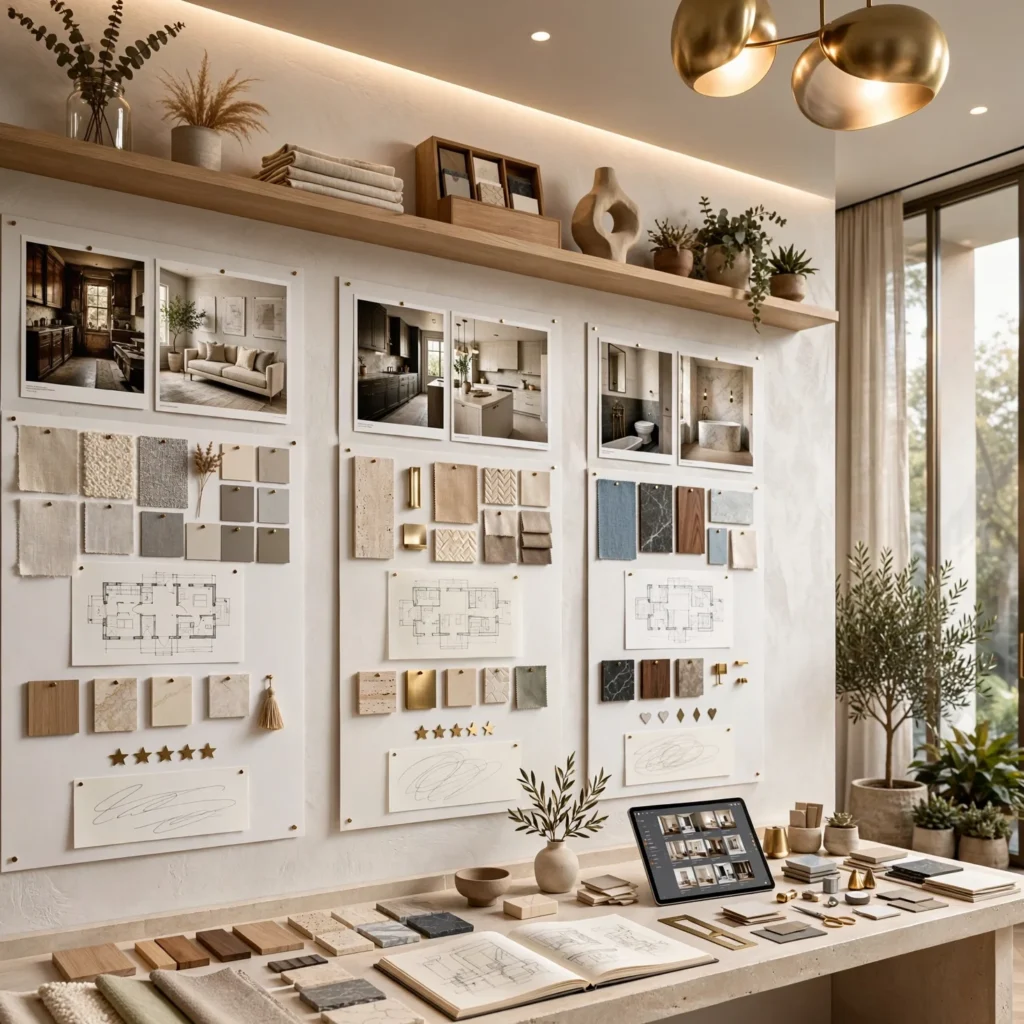
Rather than a single generic testimonials page separate from the project galleries, integrating a specific client quote directly within each relevant project case study connects the testimonial to concrete visual evidence of the work being praised. This works particularly well when the testimonial speaks to a specific aspect of the collaboration, such as communication or problem-solving during a challenging renovation, rather than a purely generic compliment. This idea requires collecting more granular feedback from clients, but it produces more credible, specific social proof than testimonials disconnected from any particular project.
6. Style-Categorized Portfolio Sections
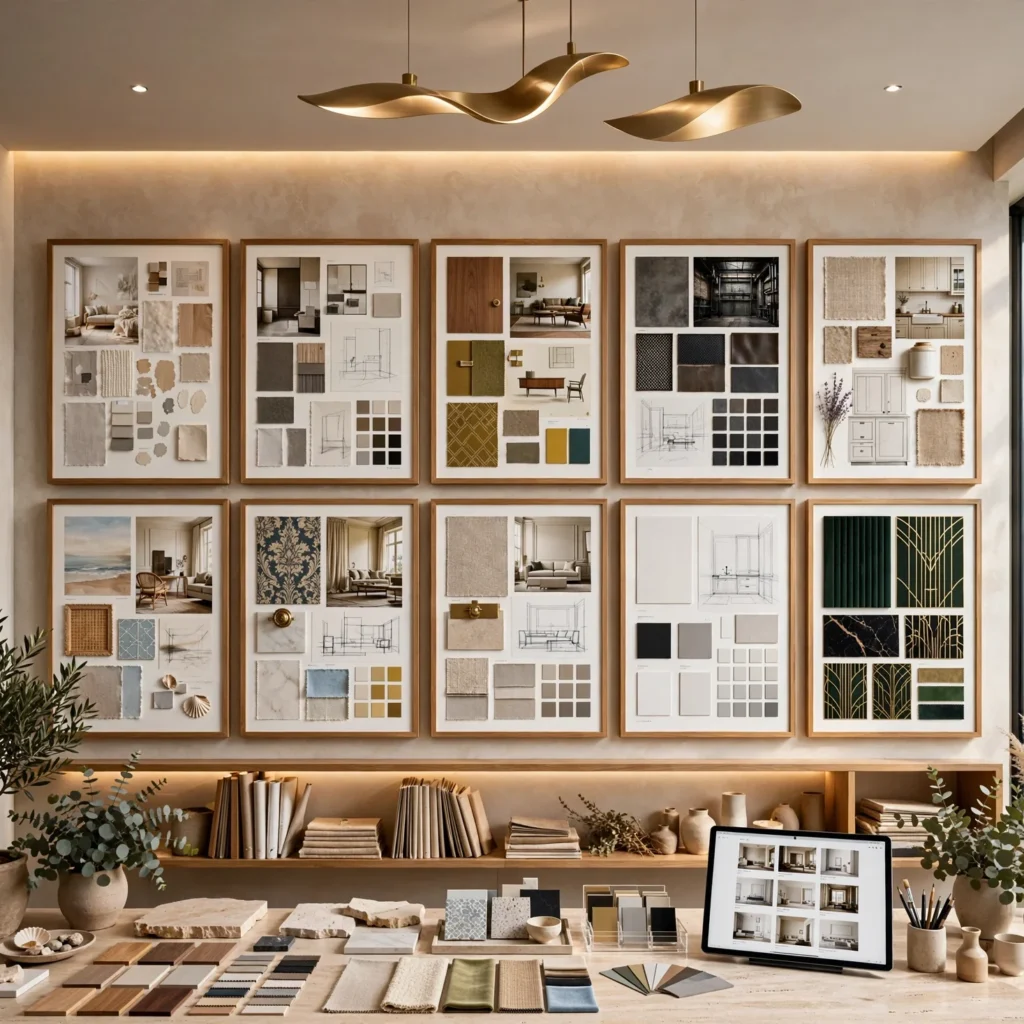
Organizing a portfolio into style-based categories, such as modern, traditional, or coastal, rather than a single undifferentiated gallery, helps potential clients quickly find examples most relevant to their own aesthetic preferences without scrolling through an entire body of work. This works particularly well for designers with a genuinely broad range of style capability, since it demonstrates versatility while still letting clients self-select toward the specific look they’re seeking. Designers with a narrower, more consistent style focus may not need this categorization, since their entire portfolio likely already reads cohesively.
| Organization Method | Best For | Client Experience |
| Chronological | Newer designers, limited projects | Simple, straightforward |
| Style-Categorized | Designers with broad range | Easier to find relevant examples |
| Project-Type Categorized | Designers with specialty focus | Highlights specific expertise |
7. Professional Photography Investment
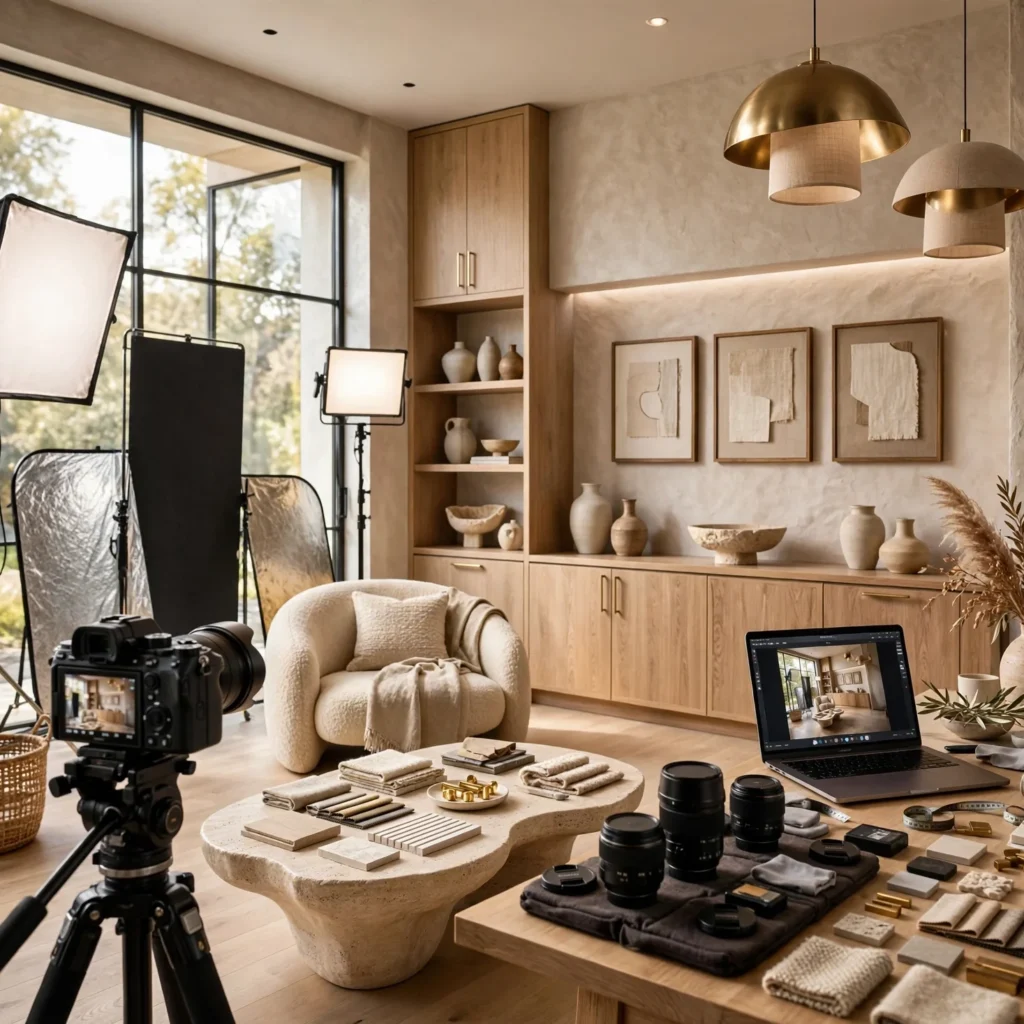
Investing in professional photography for completed projects, rather than relying solely on phone photos, significantly affects how polished and credible a portfolio appears, since lighting, composition, and image quality directly influence a potential client’s perception of the work itself. This matters particularly for a designer’s strongest, most representative projects, where professional photography helps ensure the presentation matches the actual quality of the design work completed. This idea does represent a real cost, but it tends to pay for itself through improved client conversion from portfolio views to inquiries.
8. Video Walkthroughs
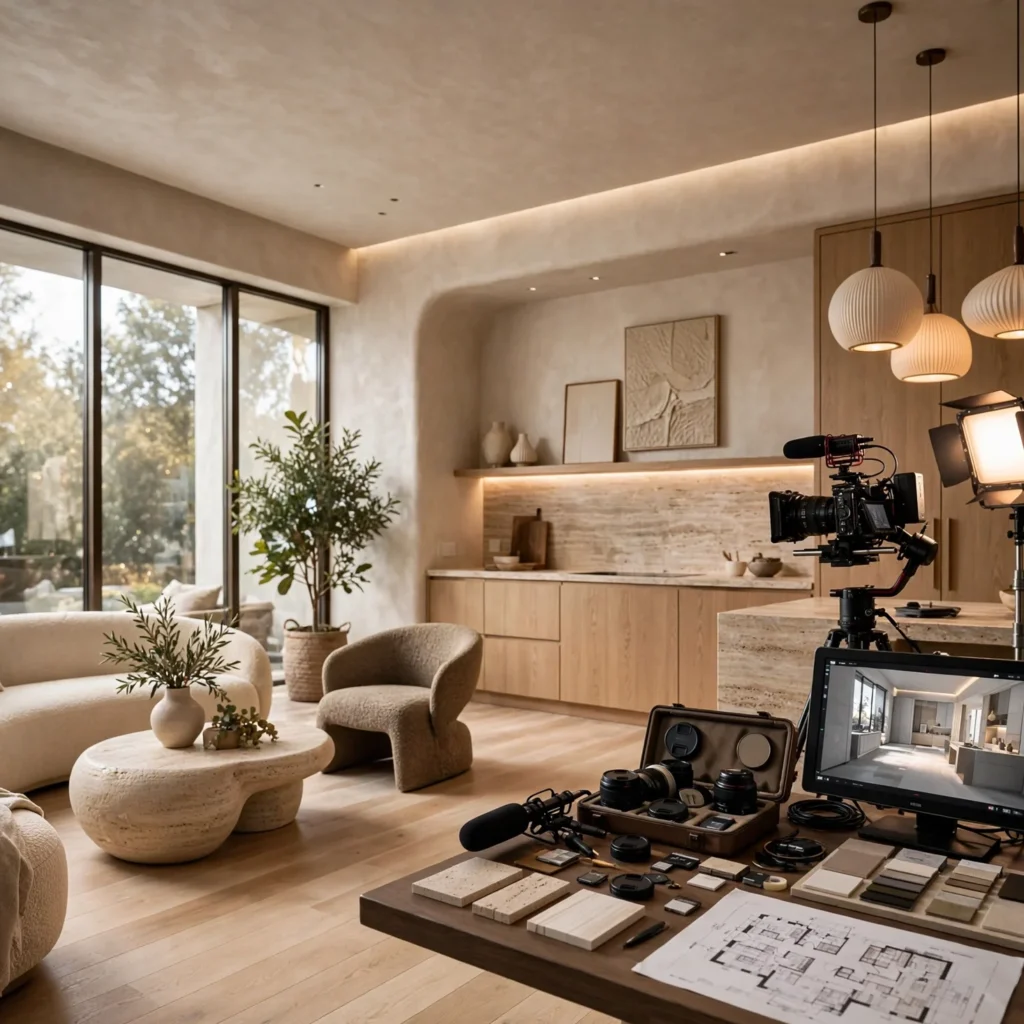
Short video walkthroughs of completed spaces, even simple ones recorded on a phone with basic editing, give potential clients a better sense of a room’s flow, scale, and lighting than static photos alone can convey. This works particularly well for larger or more architecturally complex projects, where a single photo can’t fully capture how the space feels to move through. This idea has grown more accessible with smartphone video quality improving significantly, making it a relatively low-cost addition to a portfolio that photos alone can’t replicate.
9. Specialty Project Type Highlight
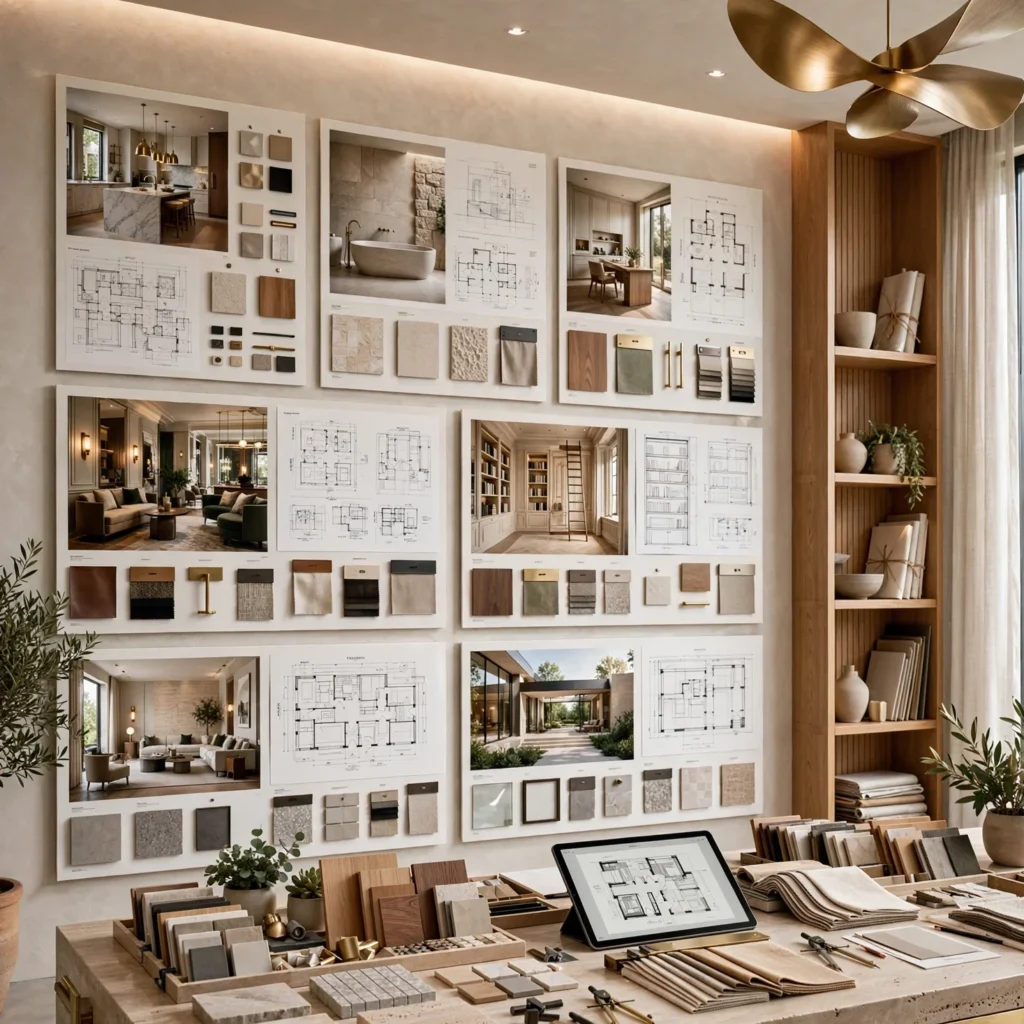
For designers with a specific area of specialty, such as small-space design, historic home renovation, or commercial hospitality projects, dedicating a distinct portfolio section to that specialty helps signal expertise to clients specifically seeking that kind of project. This works particularly well for differentiating a designer within a competitive market, since a portfolio emphasizing a clear specialty tends to attract more qualified inquiries than an undifferentiated general portfolio. This idea requires having enough relevant project examples to substantiate the specialty claim credibly.
10. Budget Range Transparency
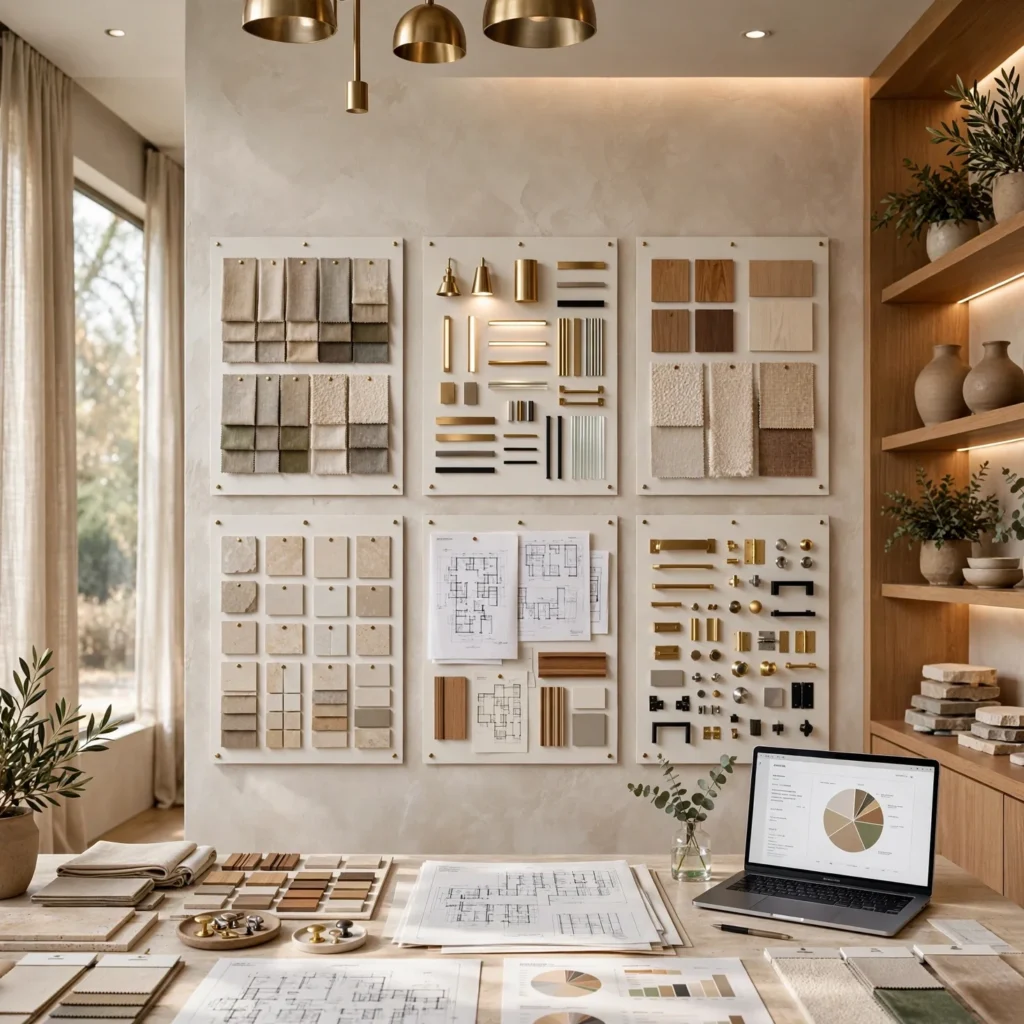
Including a general budget range for each project, even in broad terms rather than an exact figure, helps potential clients self-select whether a designer’s typical project scope aligns with their own budget expectations before reaching out for a consultation. This works particularly well for reducing mismatched inquiries, where a client expects a budget significantly different from what a designer typically works within. This idea requires some comfort with budget transparency, but it tends to improve the quality of inbound inquiries by filtering for better-matched potential clients upfront.
11. Behind-the-Scenes Process Content
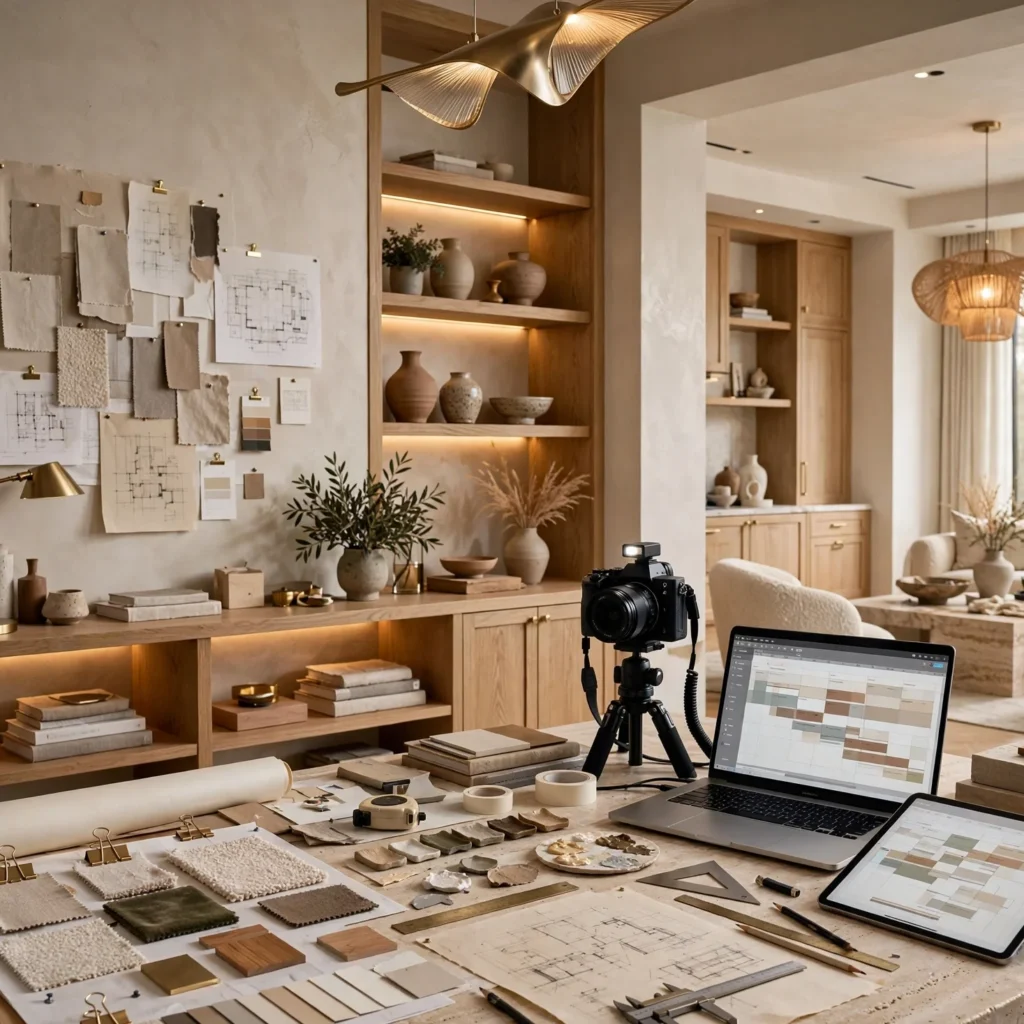
Sharing behind-the-scenes content, such as a photo of a mood board presentation meeting or a work-in-progress shot during installation, adds a more personal, humanized element to a portfolio beyond purely polished final photography. This works particularly well shared through a portfolio’s accompanying social media presence or blog, giving potential clients a sense of what working with the designer is actually like day to day. This idea helps build rapport with potential clients before a first consultation even takes place.
12. Interior Design Portfolio Ideas for New Designers
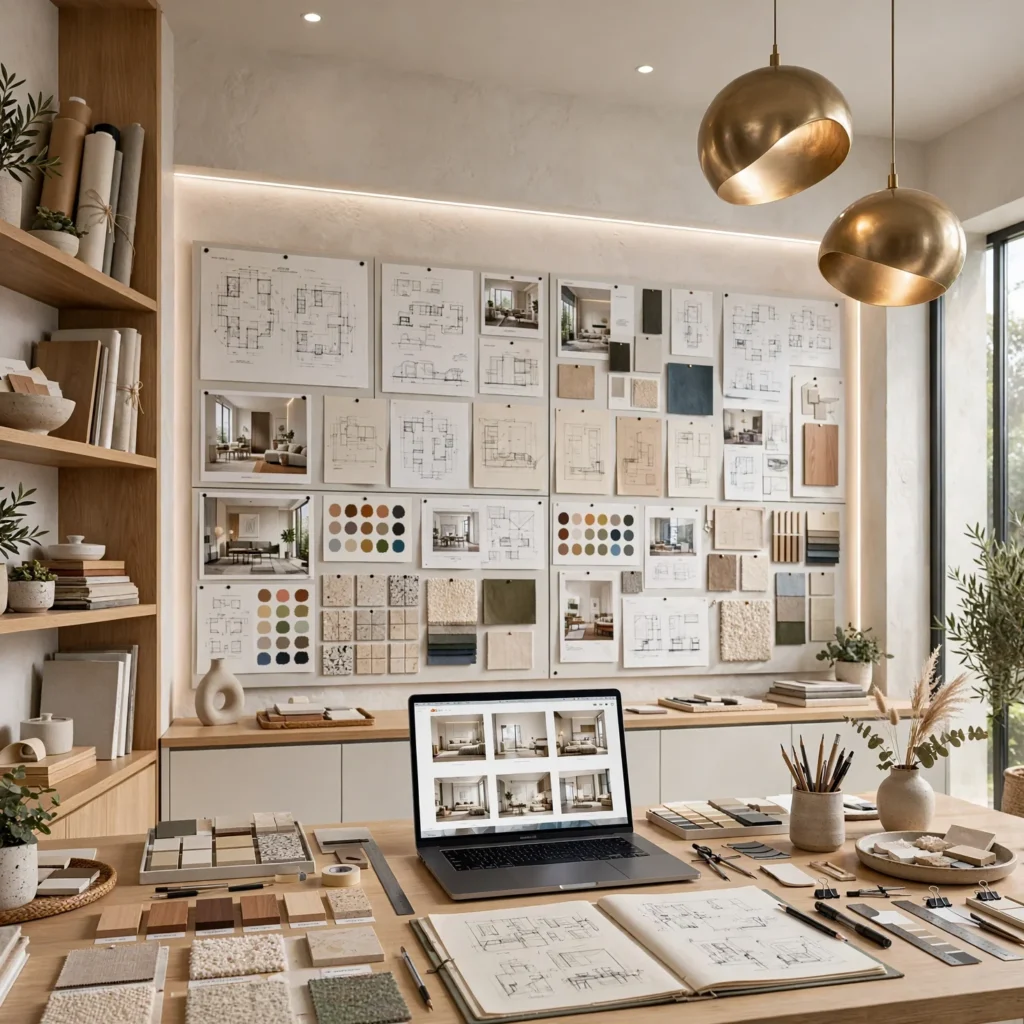
Among interior design portfolio ideas, newer designers without an extensive project history can still build a credible portfolio using well-documented personal projects, styled shoots created specifically for portfolio purposes, or smaller-scope client work like a single-room refresh, as long as each project is presented with the same level of process documentation and professional photography as larger projects would receive. This approach allows a newer designer to demonstrate genuine design capability and process thinking even without a long client history to draw from.
Shop the Look
For building a portfolio around these ideas, consider a platform like Squarespace or a dedicated design portfolio tool like Houzz Pro for hosting and organizing case studies, paired with professional photography booked through a local architectural photographer for your strongest completed projects. A simple video editing app on a smartphone is sufficient for basic walkthrough content, and a shared client feedback form sent after project completion helps collect specific, usable testimonial quotes for each case study.
Common Mistake to Avoid
The most common mistake is presenting a portfolio as a simple photo gallery without any accompanying context on budget, process, or specific challenges solved, which gives potential clients limited information to judge whether a designer’s approach and price point genuinely fit their own project. A stunning finished photo alone doesn’t tell a client how the designer handled a difficult client conversation, a budget constraint, or a structural challenge during the project, all of which matter significantly when a client is choosing between multiple designers for their own, often complicated, renovation or decorating project.
FAQs
How many projects should be included in an interior design portfolio?
There’s no fixed number, but quality and depth of presentation tend to matter more than sheer quantity, so featuring eight to twelve well-documented, strongly photographed projects generally makes a stronger impression than twenty projects with thin documentation or inconsistent photo quality. For newer designers with fewer completed projects, supplementing with well-executed personal or styled portfolio-specific projects can help reach a reasonable total count.
Is professional photography necessary for an interior design portfolio?
Professional photography significantly improves how a portfolio is perceived, since lighting, composition, and image quality directly affect a potential client’s impression of the design work itself, even when the underlying design is strong. For designers early in their career or working with a limited budget, investing in professional photography for at least a few standout projects, while using well-composed phone photos for others, offers a reasonable middle ground.
Should I include budget information in my portfolio?
Including a general budget range for each project, even in broad terms, helps potential clients self-select whether their own project budget aligns with your typical scope before reaching out, which tends to improve the quality and fit of inbound inquiries. Some designers prefer to keep budget discussions for the consultation phase instead, so this choice depends partly on personal comfort with transparency and the specific client base being targeted.
How should I organize my portfolio if I work across many different styles?
Organizing a portfolio into style-based categories, such as modern, traditional, or coastal, helps potential clients quickly find examples most relevant to their own aesthetic preferences without scrolling through an entire, more varied body of work. This approach demonstrates versatility while still letting clients self-select toward the specific look they’re seeking for their own project.
What should I do if I don’t have enough client projects for a full portfolio yet?
Newer designers can supplement a limited client project history with well-documented personal projects, styled shoots created specifically for portfolio purposes, or smaller-scope work like a single-room refresh, presented with the same level of process documentation and photography quality as larger projects. This approach demonstrates genuine design capability and process thinking even without an extensive client history to draw from yet.
Conclusion
These interior design portfolio ideas range from straightforward additions like client testimonials to bigger investments like professional photography, giving you a starting point no matter where you are in building or refreshing your presentation. If one of these stood out, save this post to Pinterest for later, or check out our related guide on interior design styles for help categorizing your own work.