12 Amazing Fairy Garden Ideas to Bring Magic to Any Yard
A patch of dirt near a tree stump or a forgotten flower pot can become something genuinely magical with the right fairy garden ideas. These miniature landscapes combine real plants with tiny structures, creating a scene that looks lived-in rather than staged. This post covers twelve buildable fairy garden ideas, from moss pathways to working miniature doors, with material suggestions and placement tips for yards, containers, and everything in between.
Trend & Background
Fairy gardens have grown well beyond a niche hobby, driven partly by interest in low-cost, screen-free activities for kids and partly by adults rediscovering miniature gardening as a relaxing creative outlet. Social media has accelerated the trend, with tiny door installations on tree trunks and dollhouse-scale furniture scenes becoming a recognizable style in their own right. The renewed popularity of cottagecore aesthetics has also pushed more gardeners toward whimsical, storybook-style outdoor spaces, making fairy gardens a natural fit for anyone already leaning into that look.
Key Takeaways
- These fairy garden ideas work in containers, garden beds, or tucked into existing landscaping.
- Miniature furniture, pathways, and tiny doors turn any corner into a believable fairy scene.
- Weather-resistant materials keep fairy garden pieces intact through rain and seasonal changes.
- Kids and adults alike can build these projects with basic supplies from a hardware or craft store.
1. Miniature Door on a Tree Trunk
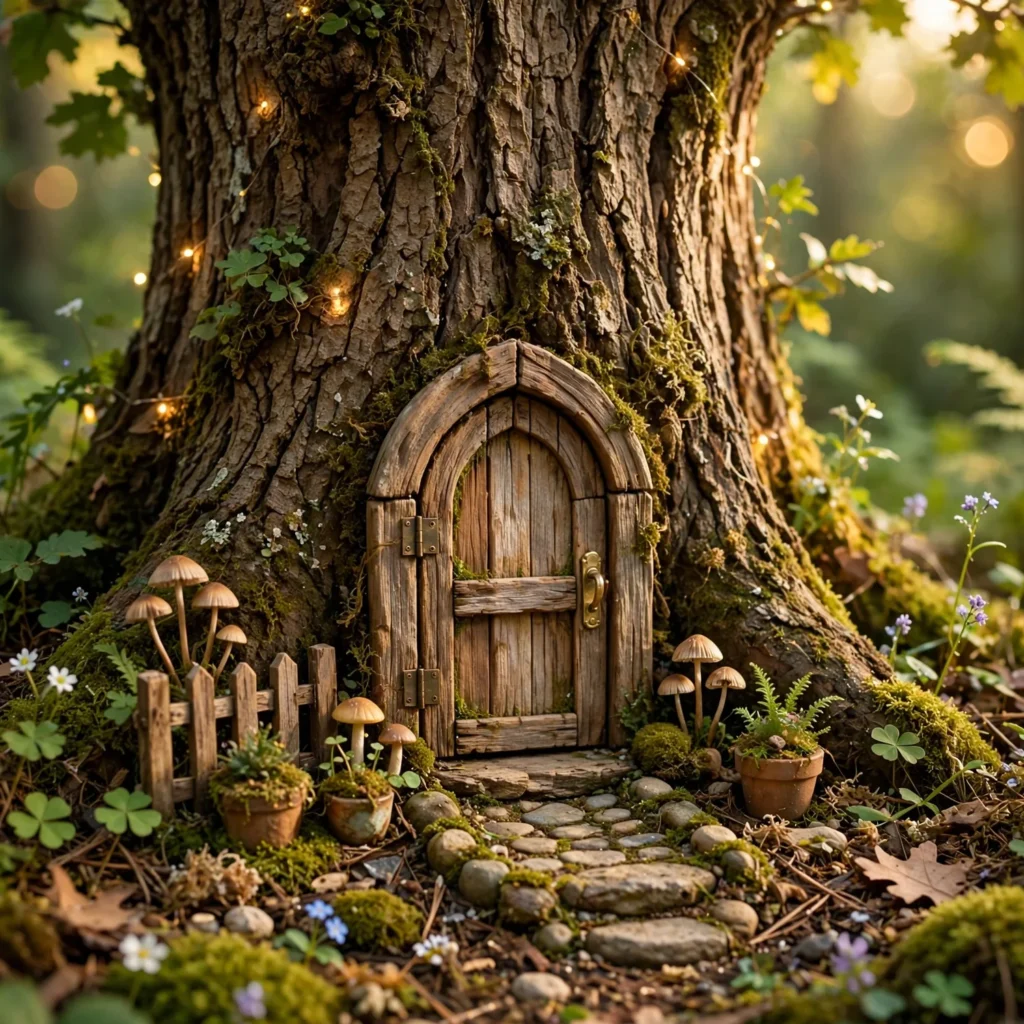
A miniature door mounted at the base of a tree trunk creates the illusion that fairies live inside the tree itself, which is often the single most eye-catching element in the whole scene. Resin or wood doors sold in garden centers typically measure 4 to 6 inches tall and can be attached with exterior-grade adhesive or small nails. Adding a tiny welcome mat or a pebble path leading up to the door makes the illusion far more convincing.
2. Moss-Covered Pathway

A moss-covered pathway gives a fairy garden scene a soft, storybook texture that plain dirt or mulch can’t match. Sheet moss can be pressed directly onto soil in shaded, moist areas, while reindeer moss works better in containers or drier spots since it holds its shape without needing constant watering. Laying the path in a gentle curve rather than a straight line makes the scene feel more natural and less staged.
3. Container Fairy Garden
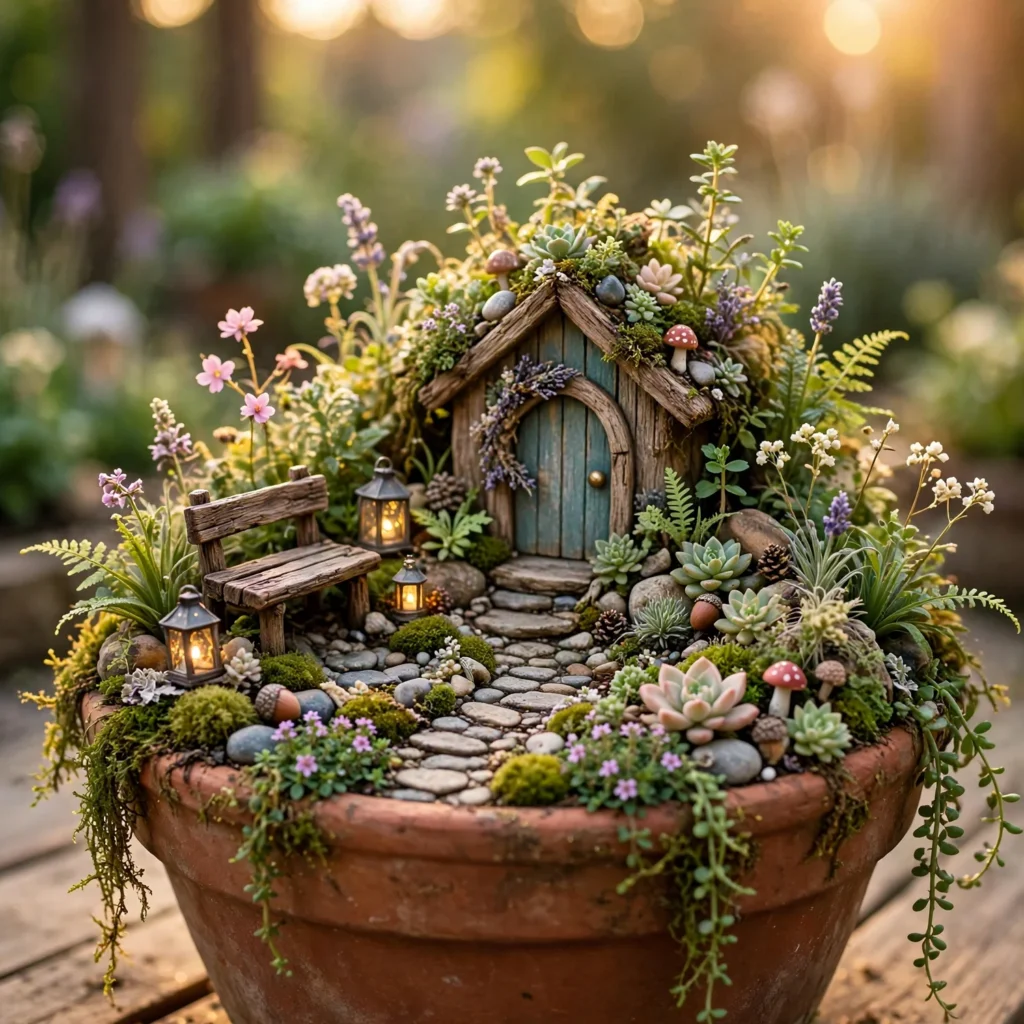
A container fairy garden works well for renters or anyone without in-ground space, since the entire scene lives in a single pot that can move indoors or out. Terra cotta bowls and wide, shallow ceramic planters both give enough surface area for a small house, path, and a few plants without overcrowding. Succulents and mosses are ideal choices for containers since they tolerate the shallower soil depth better than deeper-rooted plants.
| Container Size | Best For | Plant Suggestions |
| 8-10 inch bowl | Single scene, tabletop | Moss, mini succulents |
| 14-16 inch planter | Small yard with a few structures | Baby’s tears, thyme |
| 20+ inch trough | Full landscape with path and house | Dwarf mondo grass, sedum |
4. Fairy House Made From Repurposed Materials

Building a fairy house from repurposed materials like an old birdhouse, a hollowed log, or a broken clay pot gives the structure a weathered, authentic look right from the start. Bark shingles glued onto a birdhouse roof and twig accents around the doorway add texture without much cost. This approach also keeps the project budget-friendly, since most of the materials come from the yard or a recycling bin rather than a craft store.
Maximize a compact outdoor area with our Garden Ideas, featuring clever layouts, vertical gardening, and space-saving solutions.
5. Stepping Stone Trail
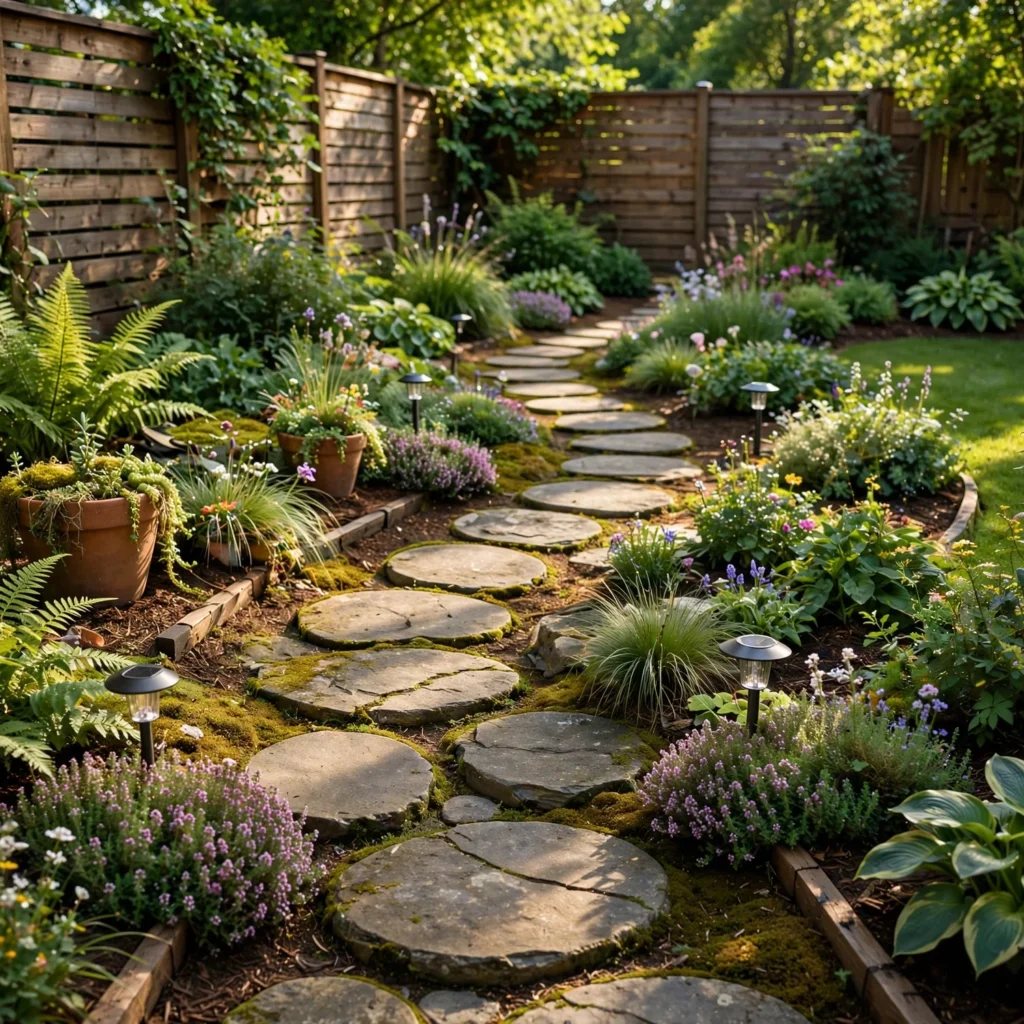
A stepping stone trail made from small flat pebbles or polymer clay discs gives visiting fairies a defined path through the garden bed. Spacing stones about an inch apart mimics the scale of a real garden path while staying proportional to miniature furniture and houses nearby. Painting a few stones with tiny details, like a swirl or leaf pattern, adds character without overwhelming the overall scene.
6. Miniature Furniture Set

A miniature furniture set, including a bench, table, and a few chairs, gives a fairy garden a sense that someone actually lives there. Weather-resistant resin holds up far better outdoors than painted wood, which tends to warp or fade within a season. Placing the furniture under a small structure like a mushroom cap or broad leaf protects it from direct rain and extends its lifespan considerably.
7. Succulent Fairy Garden Bed
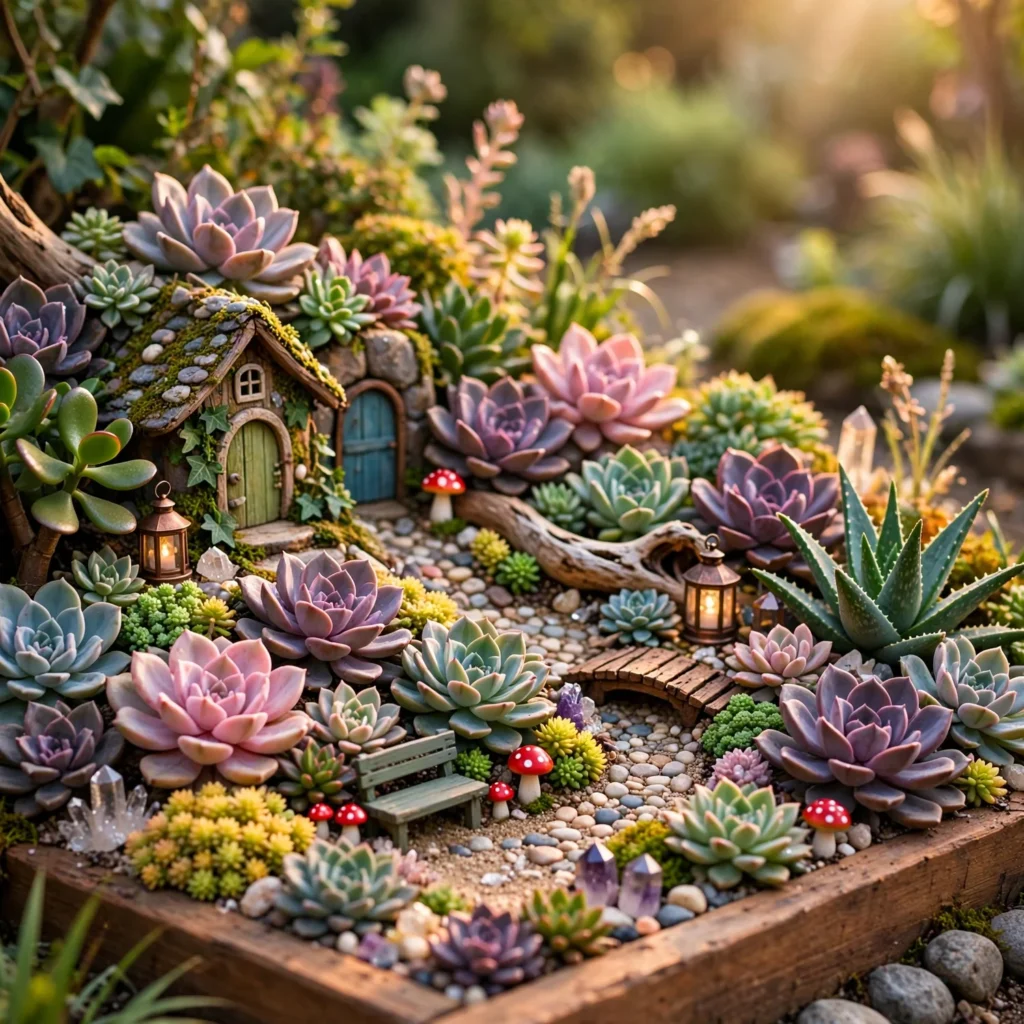
A succulent fairy garden bed pairs low-maintenance plants with miniature structures in a single raised or in-ground bed, which works especially well in dry or sunny yards. Hens and chicks, sedum, and echeveria all stay compact and tolerate the well-draining, sandy soil that fairy garden structures typically need anyway. This combination means the bed needs minimal watering once established, unlike moss-based designs that require consistent moisture.
8. Glow-in-the-Dark Path Markers
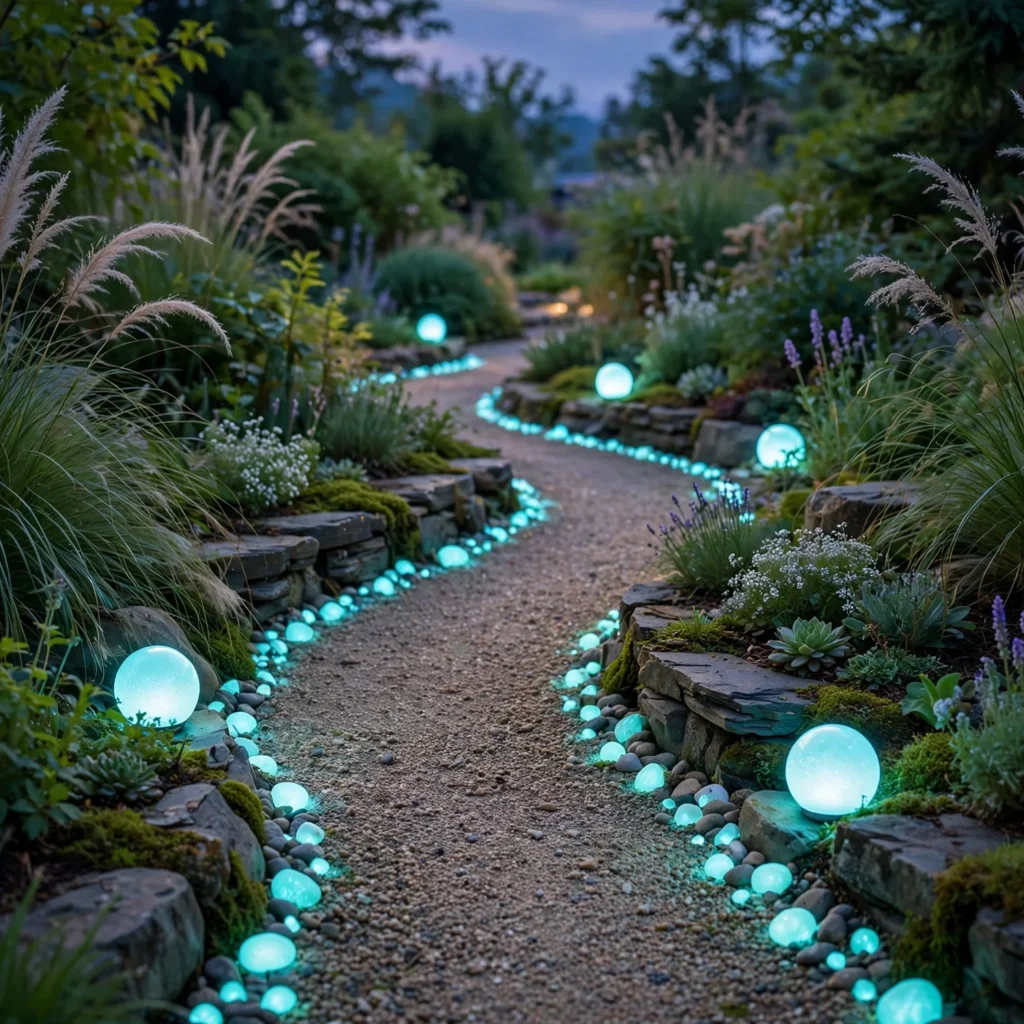
Glow-in-the-dark path markers, whether small stones, glass beads, or specialty solar lights, let the fairy garden come alive again after sunset. Photoluminescent pebbles charge during the day and release a soft glow for a few hours after dark, which works well lining a stepping stone trail or ringing the base of a fairy house. Solar-powered miniature lanterns offer a similar effect with less upkeep than swapping batteries.
9. Fairy Garden Bridge
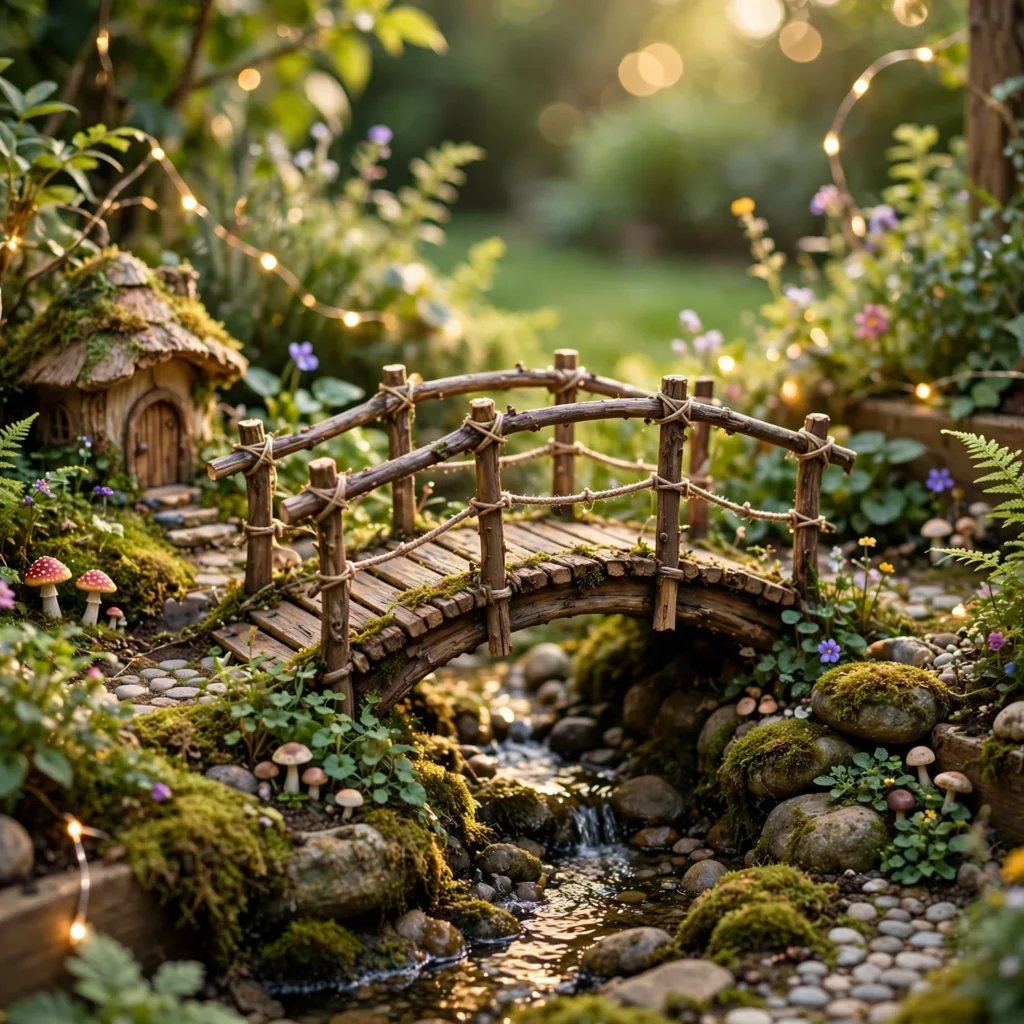
A small arched bridge gives a fairy garden a focal point and works especially well positioned over a dry creek bed made from river rock or blue glass beads to suggest running water. Wood or resin bridges in the 6 to 10-inch range scale well with most miniature houses and furniture. Anchoring the bridge with a bit of adhesive or a stake keeps it from shifting after heavy rain or wind.
10. Herb Spiral Fairy Garden
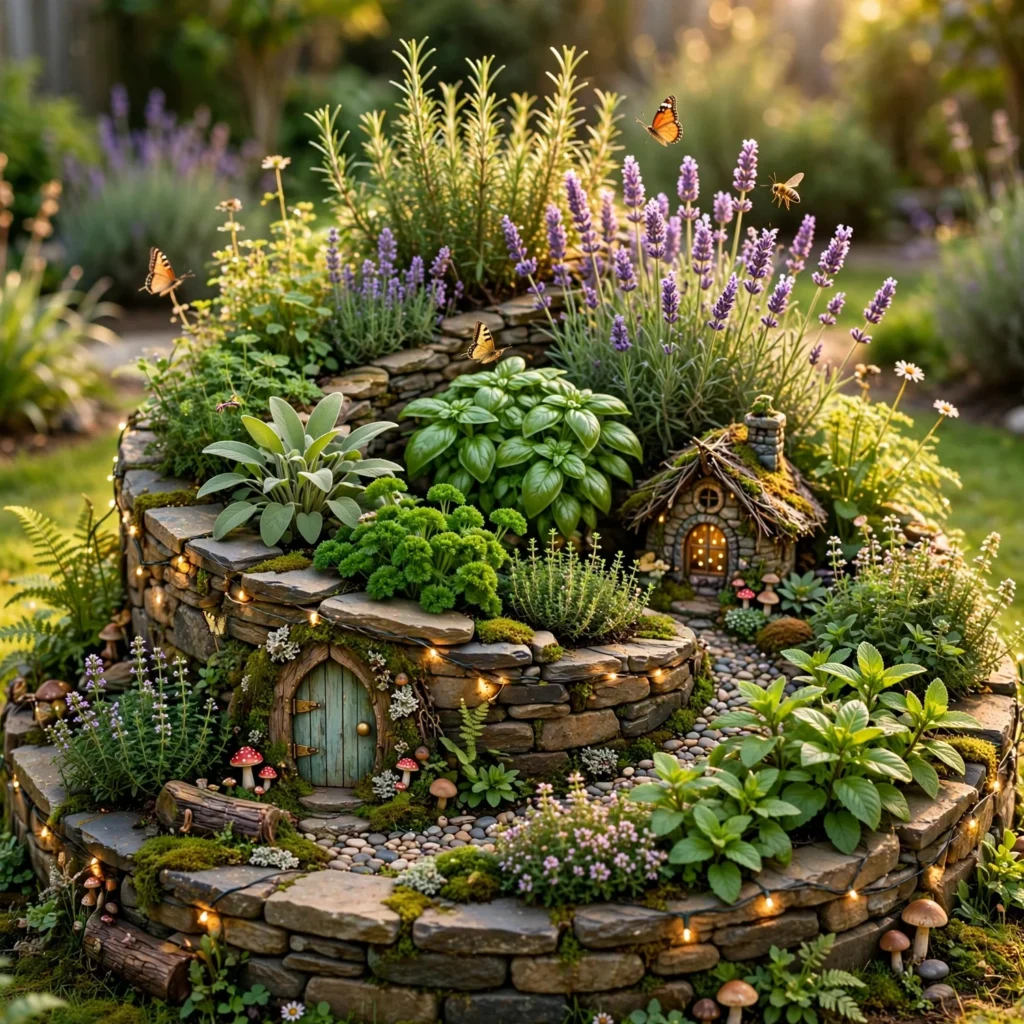
An herb spiral built from stacked stones creates natural tiers that double as a miniature landscape for fairy structures while also growing usable herbs like thyme and oregano. The spiral shape creates varied microclimates, with the top drier and sunnier than the base, which happens to suit the mix of moss and drought-tolerant plants fairy gardens typically combine. Tucking a tiny bench or door into one of the lower tiers finishes the scene without competing with the herbs.
11. Fairy Garden Ideas With a Water Feature
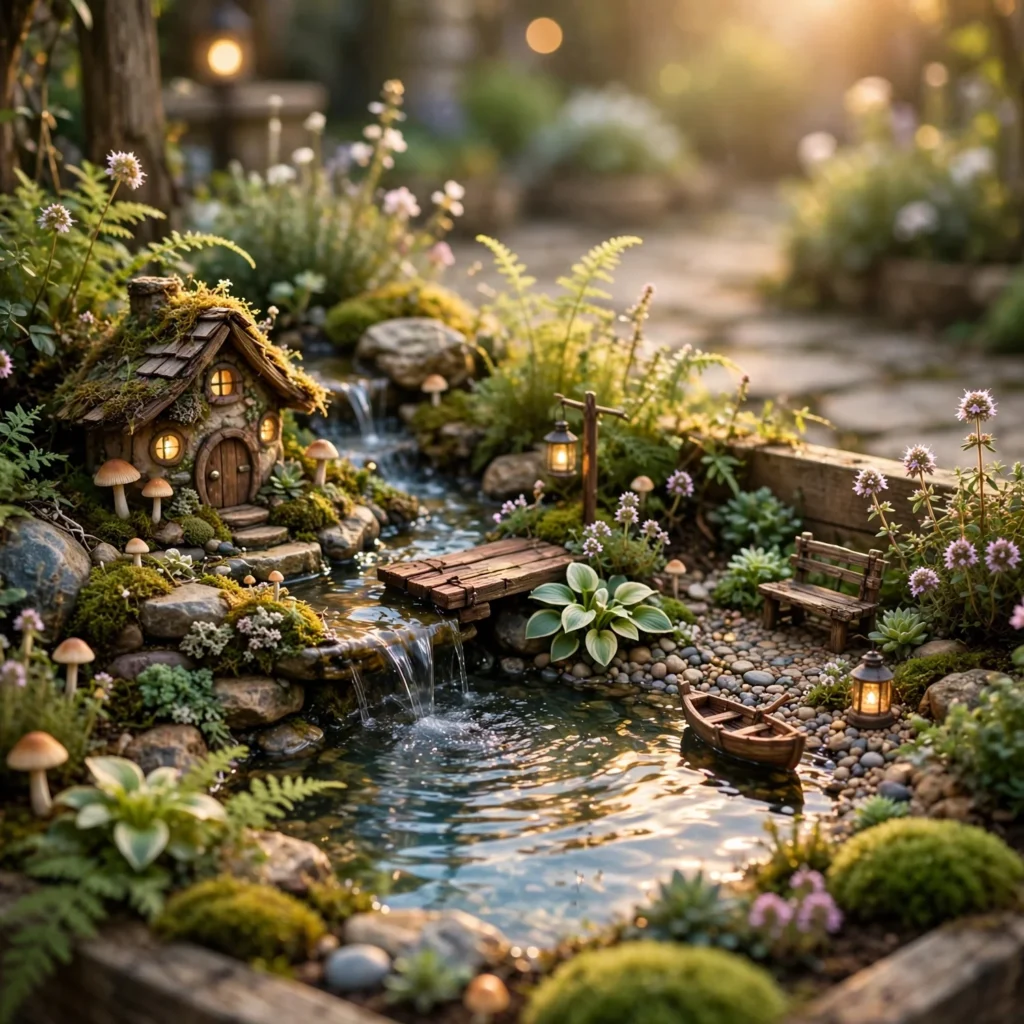
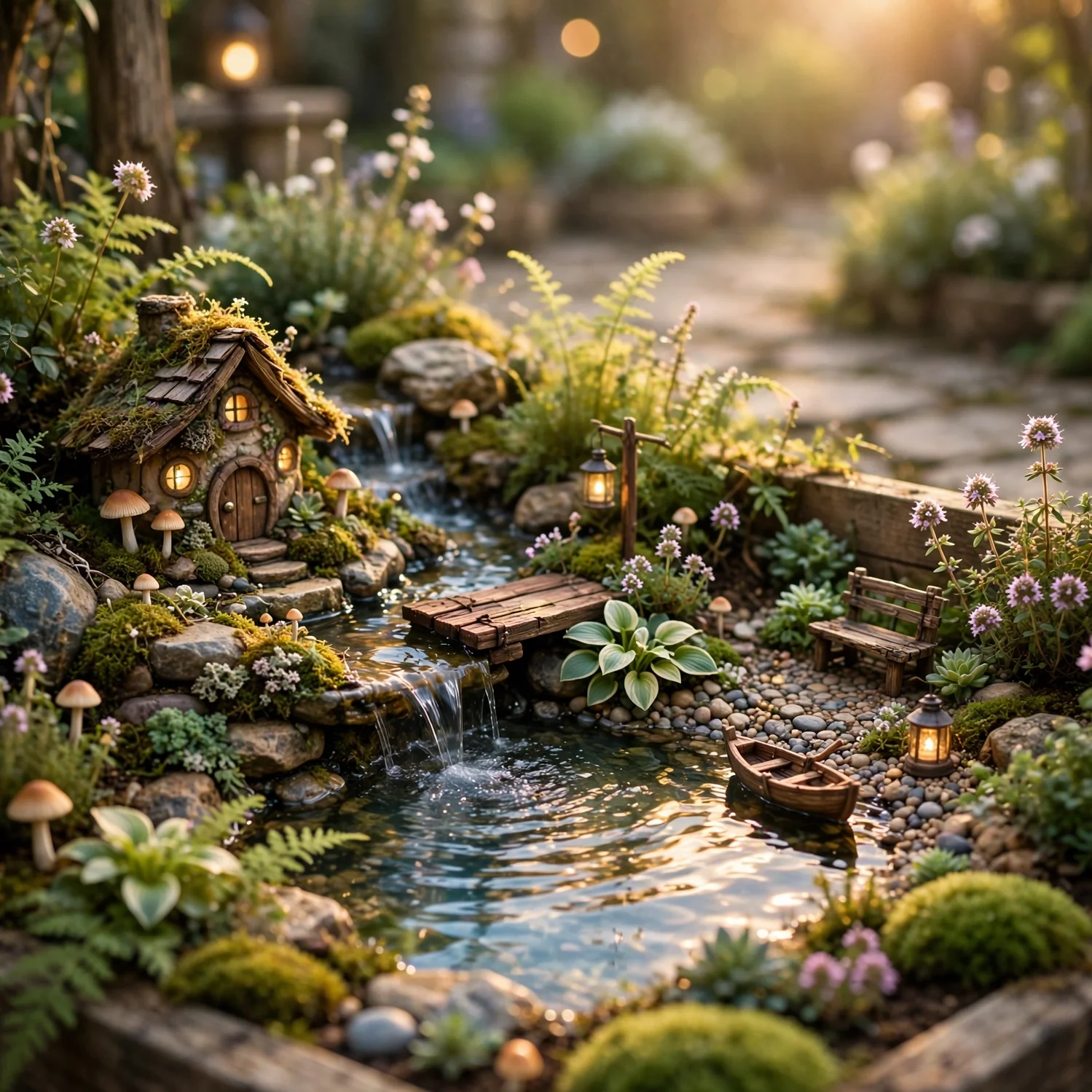
Among the more ambitious fairy garden ideas is a working miniature water feature, built from a small solar pump, a shallow basin, and enough river rock to disguise the mechanics. Even a basin as small as 6 inches across can support a gentle trickle, which adds movement and sound that static scenes lack entirely. Positioning the pump intake where it won’t clog with moss or debris keeps the feature running without constant maintenance.
12. Seasonal Fairy Garden Decor
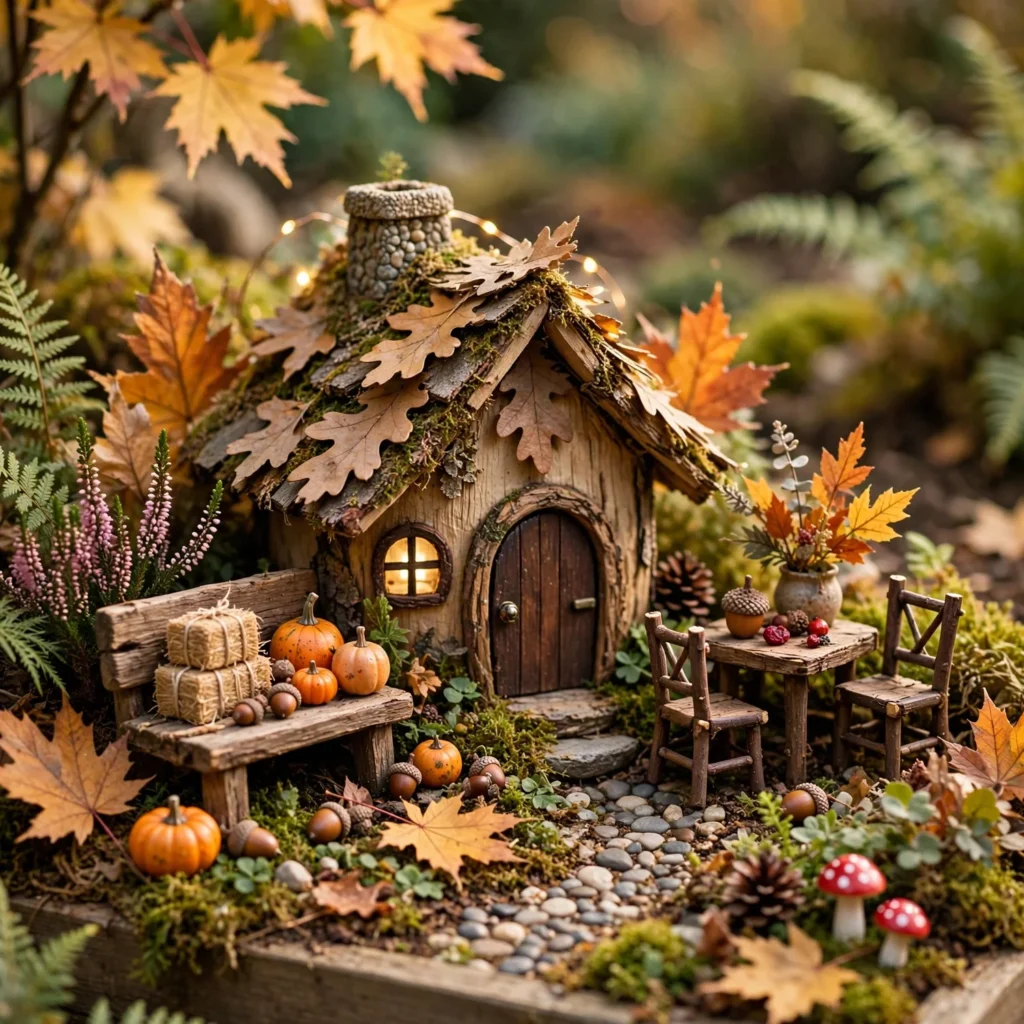
Swapping small seasonal accents, like miniature pumpkins in fall or tiny string lights in winter, keeps a fairy garden feeling current without rebuilding the whole scene. A handful of dried flowers or small gourds sized to match the furniture scale works well in autumn, while a few sprigs of artificial greenery hold up better than real branches through cold months. This rotation also gives kids a reason to revisit and rearrange the garden throughout the year.
Shop the Look
A resin miniature fairy door with a working hinge adds a playful detail that plain painted doors don’t offer. A bag of reindeer moss gives containers and shaded beds a soft, realistic ground cover without frequent watering. A set of weather-resistant miniature furniture in a natural wood-tone finish holds up better than painted alternatives left outdoors. Solar-powered miniature lanterns extend the scene into the evening without any wiring or battery changes.
Common Mistake to Avoid
The most common mistake is scaling the plants and structures inconsistently, pairing a large-leafed plant like hosta with a 4-inch fairy house, which breaks the illusion immediately. Every element in the scene should be chosen relative to the size of the main structure, so a small house calls for fine-textured plants like moss, thyme, or baby’s tears rather than anything with broad leaves or tall growth habits. Checking mature plant size before placing anything permanently avoids having to redo the layout later.
FAQs
What plants work best in a fairy garden?
Moss, thyme, baby’s tears, and dwarf mondo grass work best in a fairy garden because their small leaf size and low growth habit stay proportional to miniature houses and furniture. Succulents like sedum and hens and chicks are good choices for sunnier, drier spots since they tolerate neglect better than moss. Avoiding anything with large leaves or fast, tall growth keeps the scene looking balanced as the plants mature.
How do you make a fairy garden in a container?
A container fairy garden starts with a shallow pot at least 8 inches wide, filled with well-draining potting soil and a small amount of sand for structures like paths and furniture to sit into. Adding moss or low-growing plants first establishes the ground cover before placing a fairy house, path, and any furniture on top. Keeping the container in partial shade helps moss stay green longer without constant watering.
What can I use for a fairy garden if I don’t want to buy miniatures?
Repurposed materials work well for a budget fairy garden, including bottle caps as tiny bowls, twigs bundled into fencing, and acorn caps as miniature planters or hats for figurines. A hollowed-out log or an old teacup can become a fairy house with minimal alteration. This approach also gives the fairy garden a more natural, found-object look than an entirely store-bought scene.
Do fairy gardens need direct sunlight?
Whether a fairy garden needs direct sunlight depends entirely on the plants chosen, since moss and baby’s tears prefer shade while succulents and sedum need several hours of direct sun daily. Mixed designs work best when the moss and shade-tolerant plants are grouped together on one side of the scene, away from the succulents. Checking the light requirements of each plant before placing them prevents dieback within the first few weeks.
How much does it cost to start a fairy garden?
A basic fairy garden using a container, a miniature house, a few plants, and small accessories typically costs $30 to $60 depending on how many pieces are purchased versus repurposed from around the house. Adding features like a water pump, solar lights, or a larger stone path can push the budget toward $100 or more. Starting small with a single house and path, then adding pieces over time, keeps the initial cost low.
Conclusion
These fairy garden ideas range from a simple miniature door glued to a tree trunk to a full herb spiral with working water features, giving builders options at nearly any budget or skill level. Starting with one focal piece, like a fairy house or a mossy path, makes the project approachable before adding furniture, lighting, and seasonal details. Save this post to Pinterest for reference, and check the related post on container gardening for small spaces for pairing ideas.