12 Stylish Front Garden Ideas That Boost Curb Appeal
The front garden sets the tone for a home before anyone even reaches the door, and the right front garden ideas can turn a flat lawn strip into a genuine first impression. Unlike a backyard, this space gets seen daily by neighbors and passersby, which raises the stakes on layout and upkeep. This post covers twelve practical, buildable front garden ideas, from foundation planting to pathway lighting, with real plant and material suggestions for yards of nearly any size.
Trend & Background
Curb appeal has become a measurable factor in home resale value, with real estate data consistently showing that well-maintained front landscaping affects buyer perception before a single interior room is seen. At the same time, more homeowners are replacing thirsty front lawns with mixed plantings and hardscaping, driven by water restrictions in many regions and a general shift away from high-maintenance turf. Front-yard vegetable and pollinator gardens have also gained ground as homeowners look to make the most visible part of their property productive rather than purely decorative.
Key Takeaways
- These front garden ideas balance curb appeal with practical, low-maintenance plant choices.
- Layered planting and defined pathways create structure visible from the street or curb.
- Several ideas work for narrow front yards as easily as wide, open lots.
- Lighting and hardscaping choices matter as much as plant selection for a finished look.
1. Layered Foundation Planting
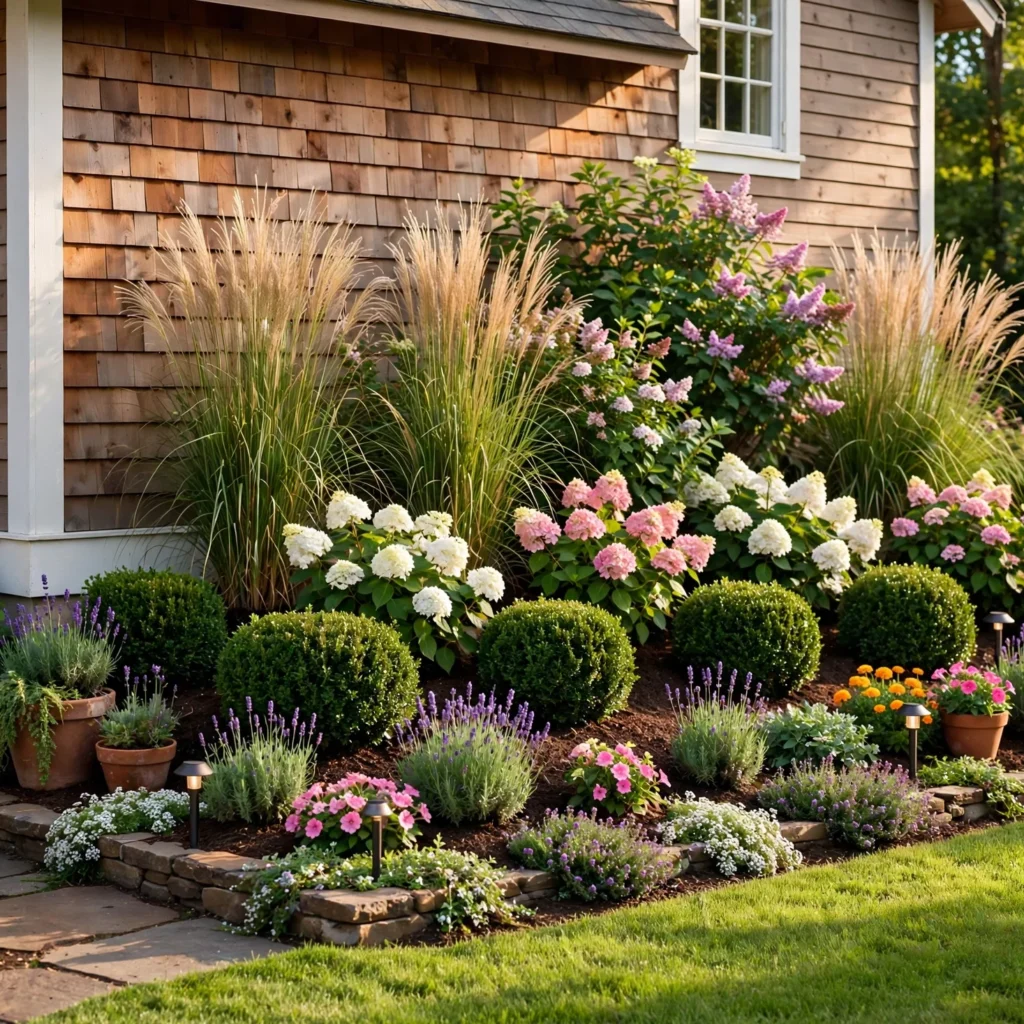
Layered foundation planting arranges shrubs, perennials, and groundcover in graduated heights along the base of the house, softening the transition between structure and lawn. Taller evergreens like boxwood or dwarf holly go closest to the wall, with mid-height perennials like coneflower in front and a low groundcover such as creeping thyme along the very edge. This tiered structure reads as intentional year-round, even after flowering perennials die back in winter.
2. Paver Walkway With Border Planting
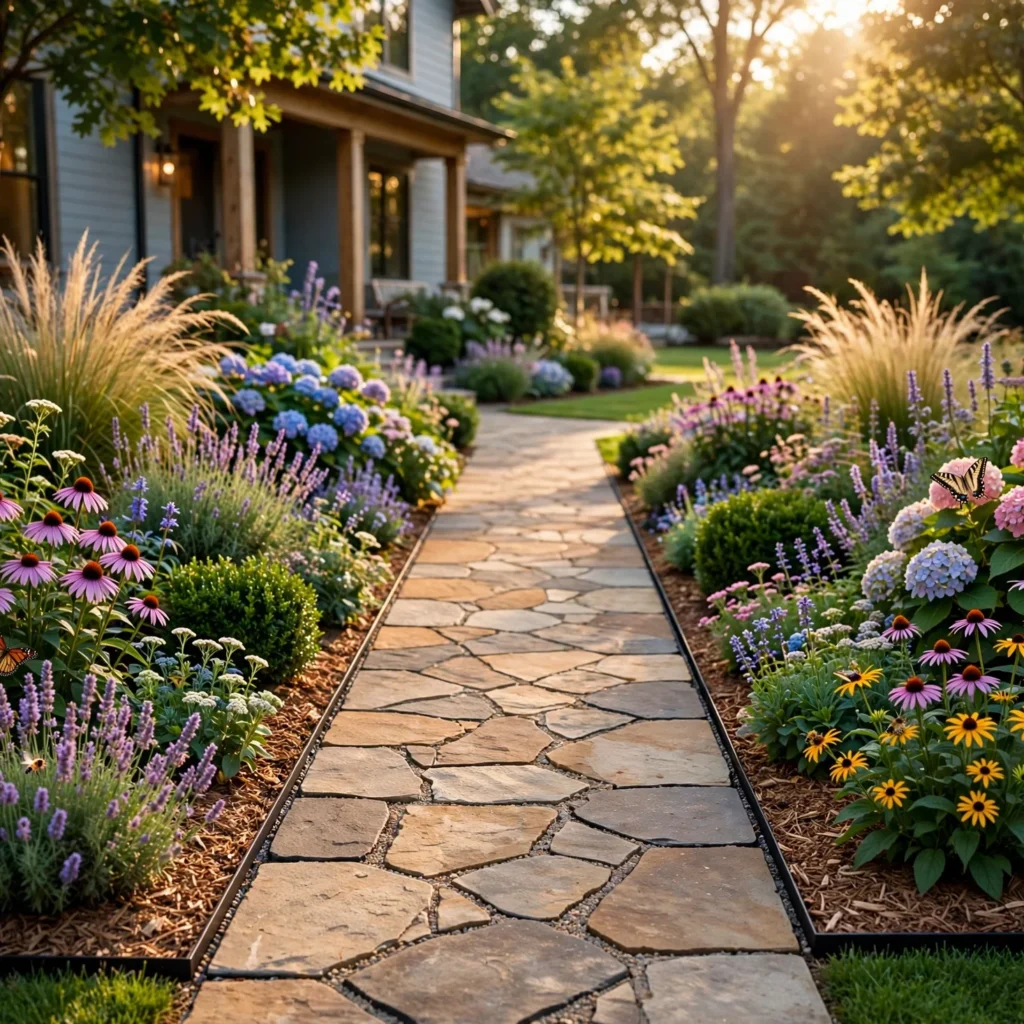
A paver walkway bordered by low plantings guides visitors from the sidewalk to the front door while adding structure to an otherwise flat lawn. Flagstone or concrete pavers set with a 3 to 4-inch gap for creeping ground cover soften the hard edges of the path considerably. A width of 36 to 48 inches comfortably fits two people walking side by side, which matters more at a front entry than in a garden path.
| Path Width | Feel | Material Options |
| 24-30 in | Single-file, cottage style | Flagstone, brick |
| 36-42 in | Standard entry walkway | Concrete pavers, bluestone |
| 48+ in | Formal, welcoming entry | Large-format pavers, poured concrete |
3. Mixed Perennial Border
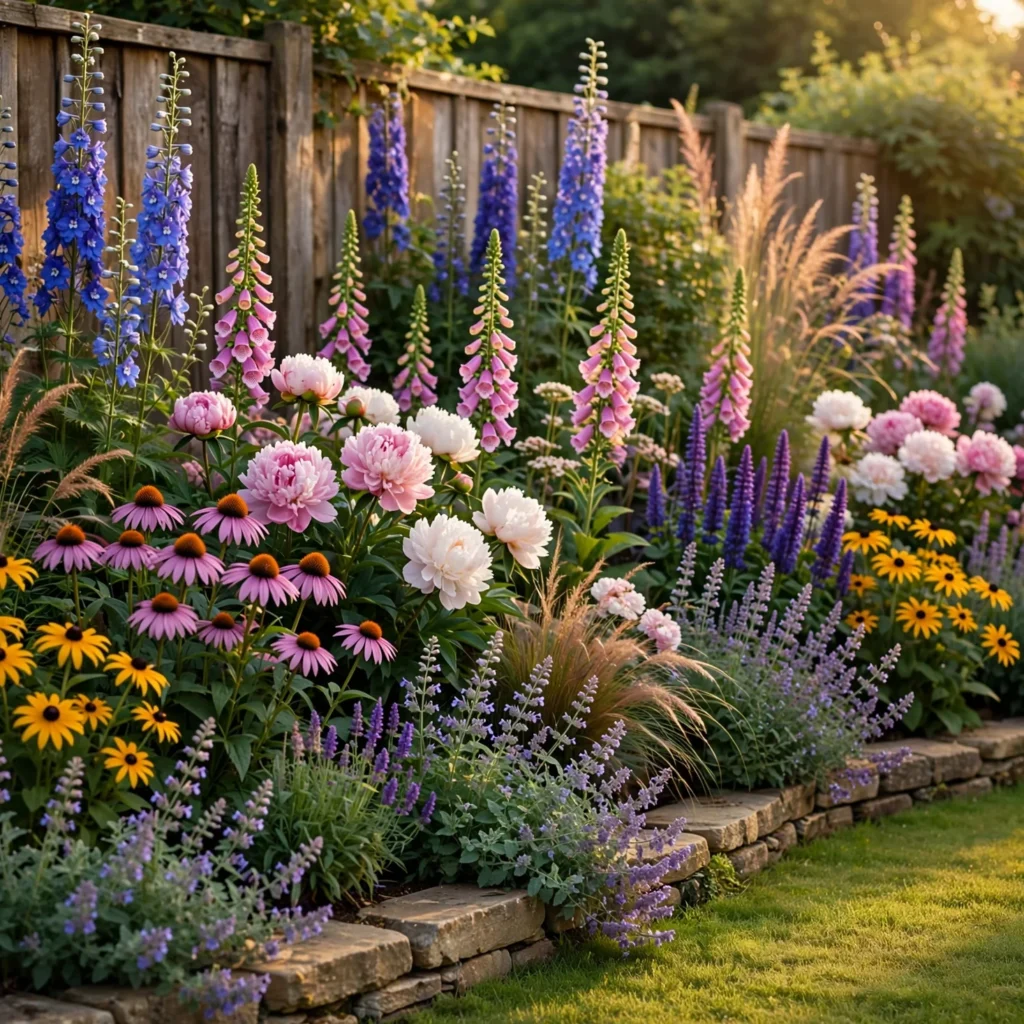
A mixed perennial border along the front walk or property line gives a front garden seasonal color without the yearly replanting annuals require. Combining bloom times, like early tulips, summer coneflower, and fall aster, keeps the border from going flat for months at a stretch. Grouping each species in clusters of three to five rather than single plants reads as more deliberate from street view.
4. Boxwood Hedge Border
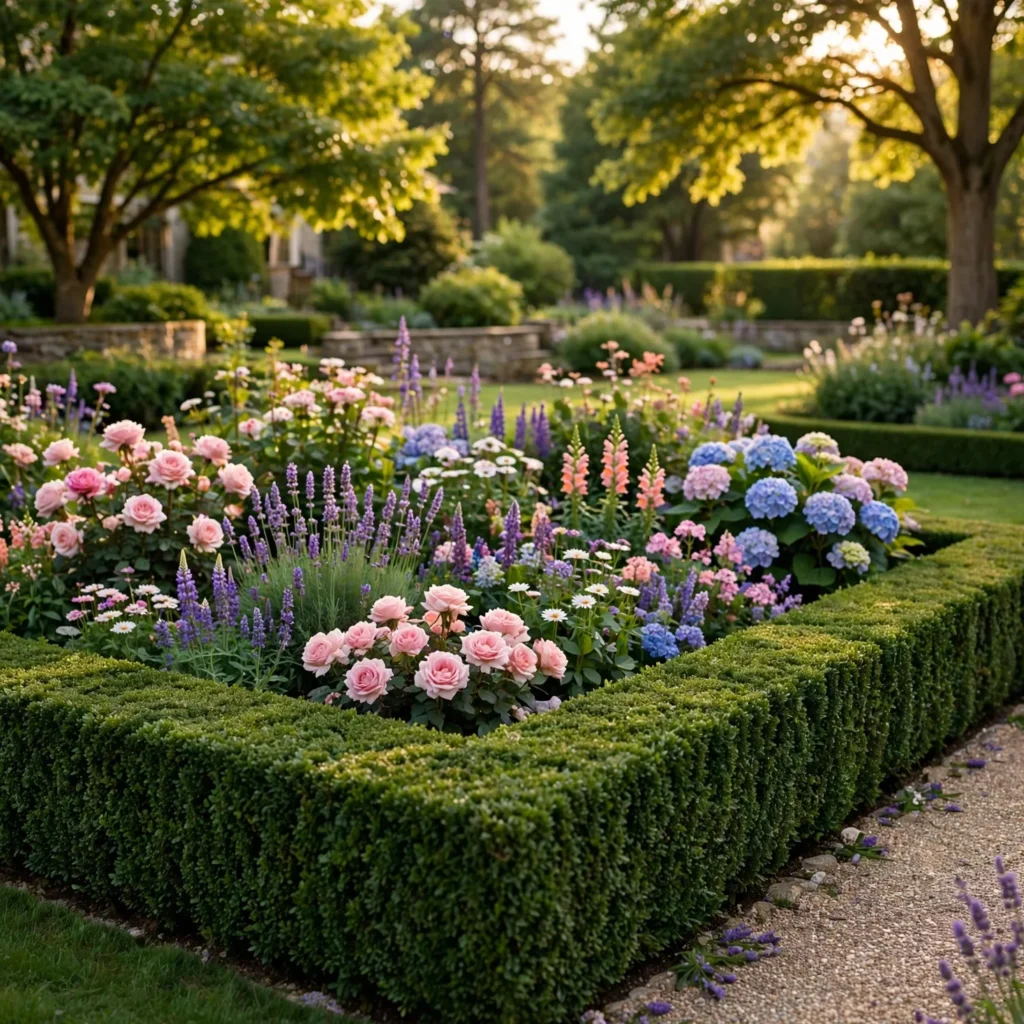
A clipped boxwood hedge along the front walk or foundation line gives a front garden a formal, structured edge that holds its shape through every season. Dwarf English boxwood stays compact and tolerates shearing into a clean rectangular or rounded form without much fuss. Spacing plants 18 to 24 inches apart allows the hedge to fill in solidly within two to three growing seasons without excessive early pruning.
5. Gravel Bed With Ornamental Grasses
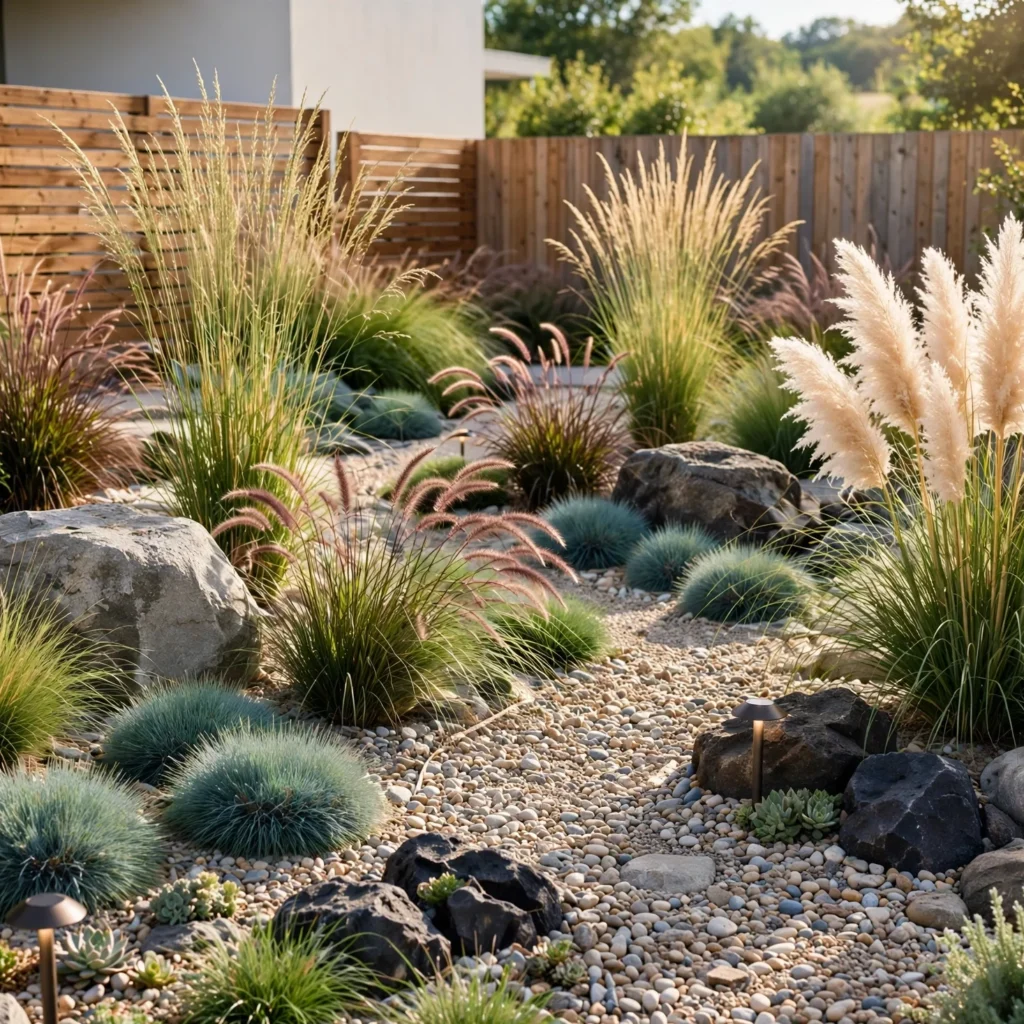
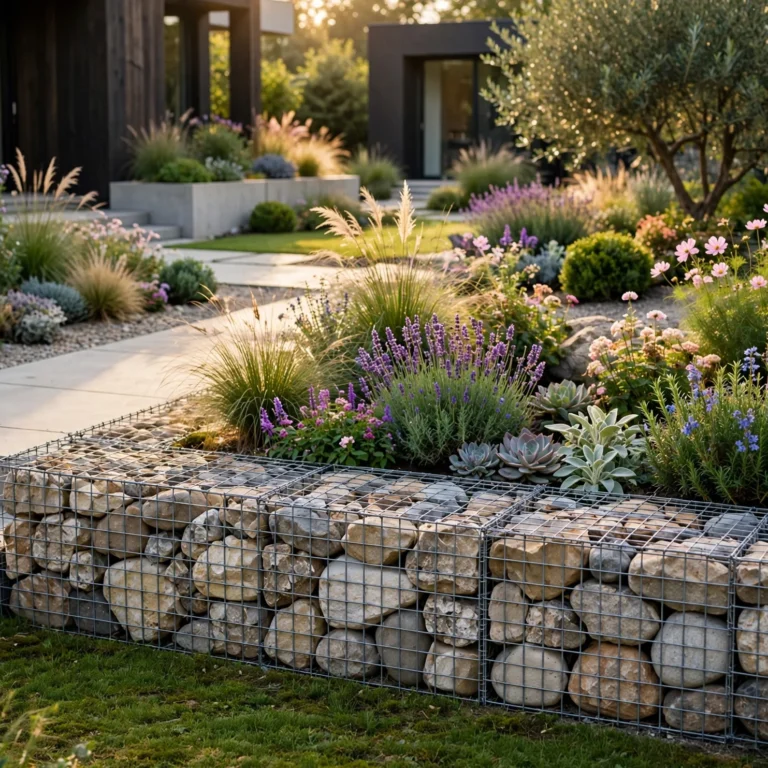
A gravel bed planted with ornamental grasses replaces a water-hungry lawn strip with a low-maintenance, drought-tolerant alternative that still reads as intentional landscaping rather than neglect. Feather reed grass and blue fescue both hold structure through fall and winter, giving the bed visual interest even when nothing is blooming. A steel edging strip between the gravel and any adjacent lawn keeps the two materials from migrating into each other over time.
Explore our full small garden ideas collection for landscaping inspiration, planting guides, seasonal gardening tips, and creative outdoor design ideas that help you create your dream garden.
6. Window Box Planters
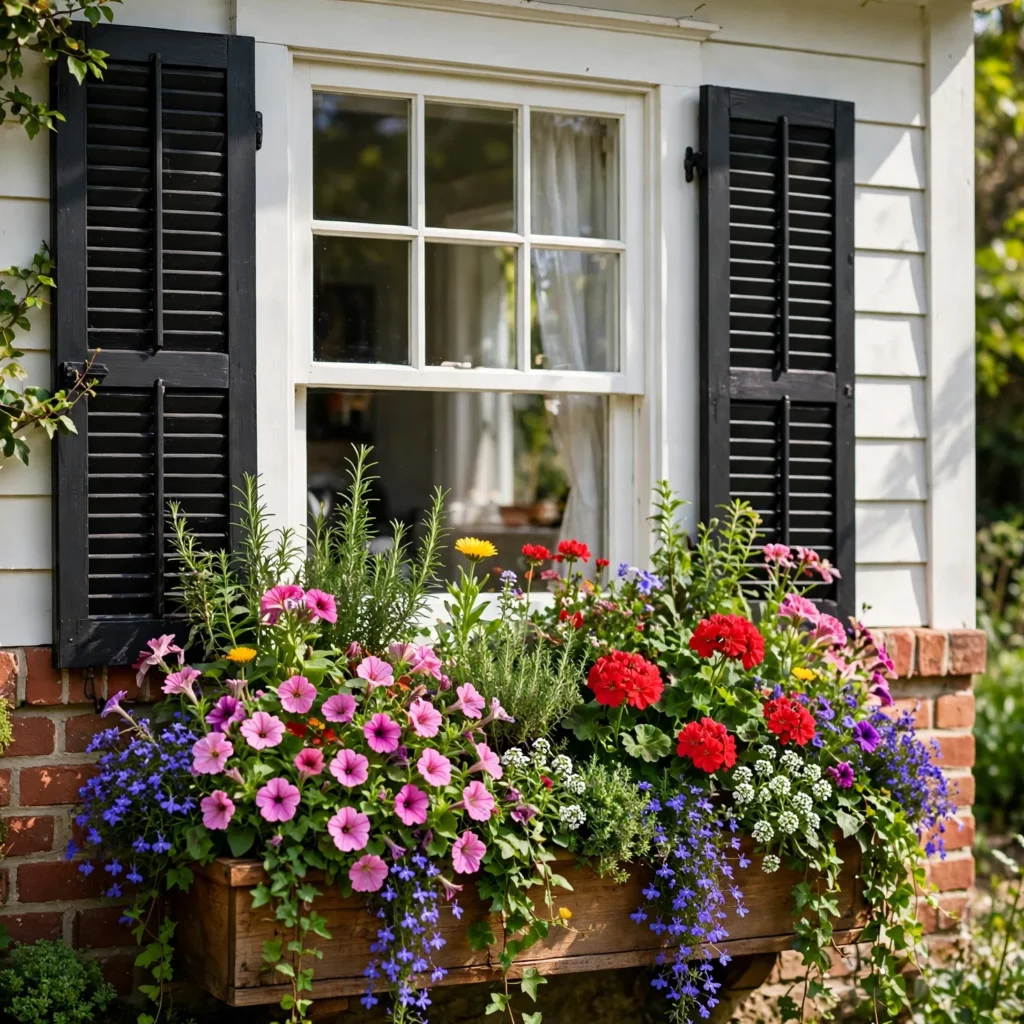
Window box planters mounted beneath front-facing windows add color and texture at eye level, which matters more for street-facing curb appeal than ground-level beds alone. Cedar or powder-coated metal boxes both hold up to weather, with a depth of at least 8 inches giving root systems enough room for a full growing season. Trailing plants like sweet potato vine paired with upright flowers like geraniums create the layered look most window boxes aim for.
7. Circular Driveway Island Bed
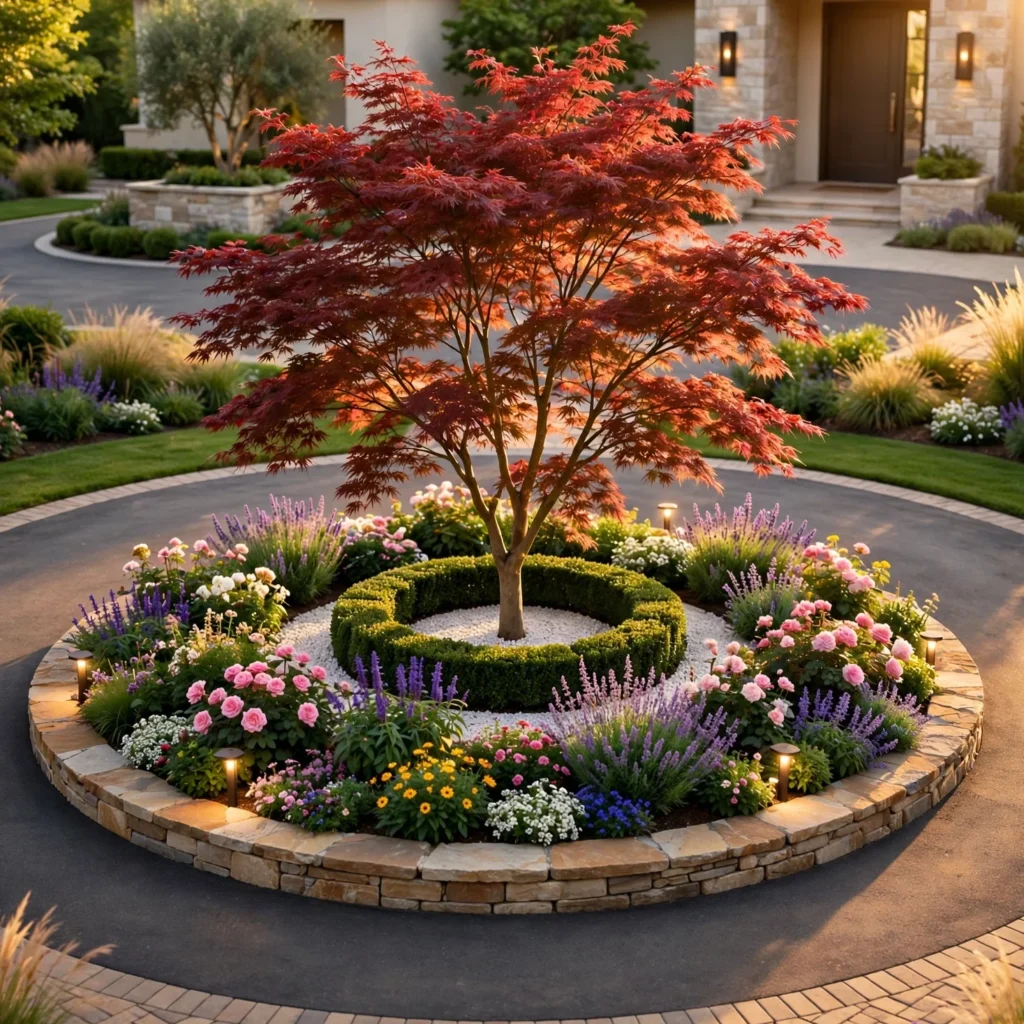
A planted island bed at the center of a circular driveway turns unused paved space into a focal point visible from the street and the front windows alike. A single specimen tree or a cluster of ornamental grasses works well at this scale, since the bed needs to read clearly from a distance rather than up close. Keeping the planting height under the sightline of drivers pulling in maintains visibility around the curve.
8. Stone Retaining Wall With Terraced Beds
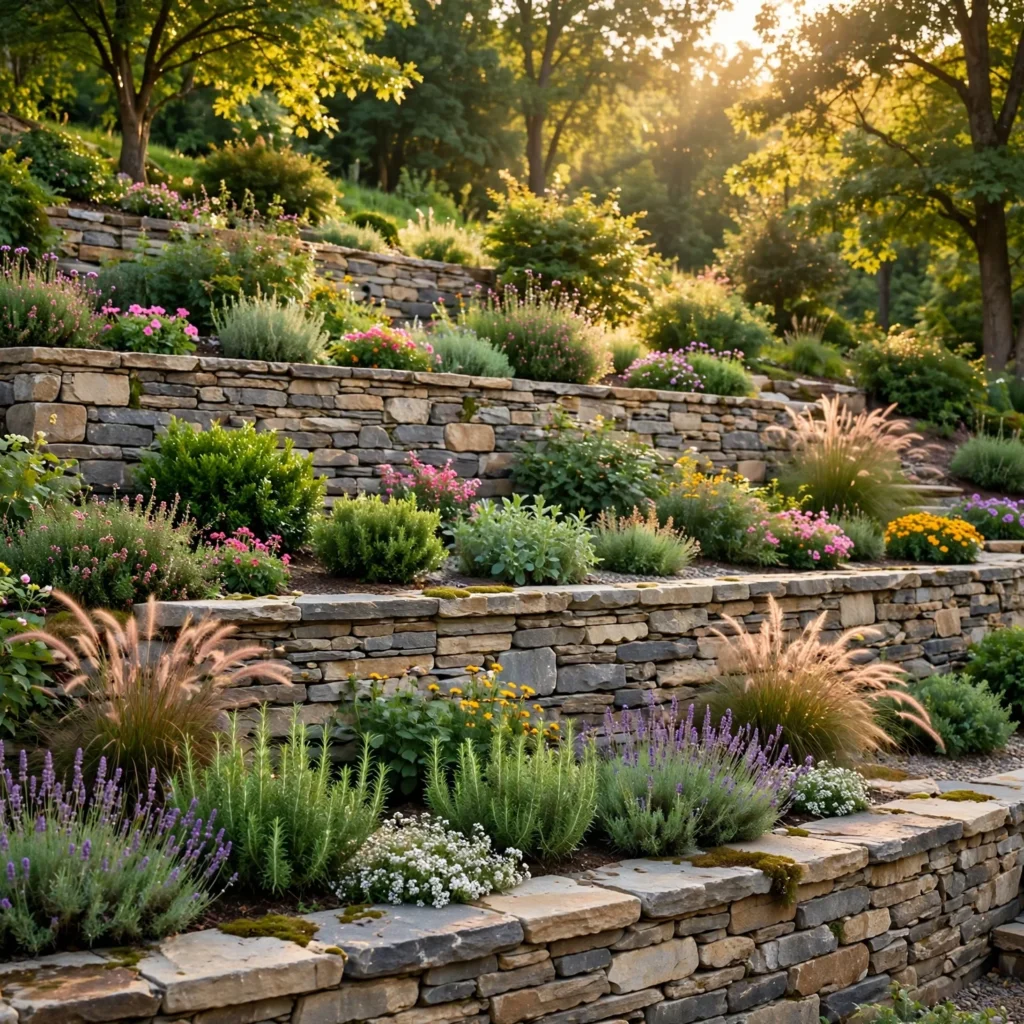
A stone retaining wall built into a sloped front yard creates terraced planting beds that turn an awkward grade change into usable, structured garden space. Dry-stacked fieldstone or manufactured block both work, with a rise of no more than 18 inches per tier keeping the wall stable without requiring engineering approval in most areas. Terracing also solves drainage issues common on sloped front yards, since water moves through each tier instead of washing straight down to the sidewalk.
9. Pollinator-Friendly Front Yard
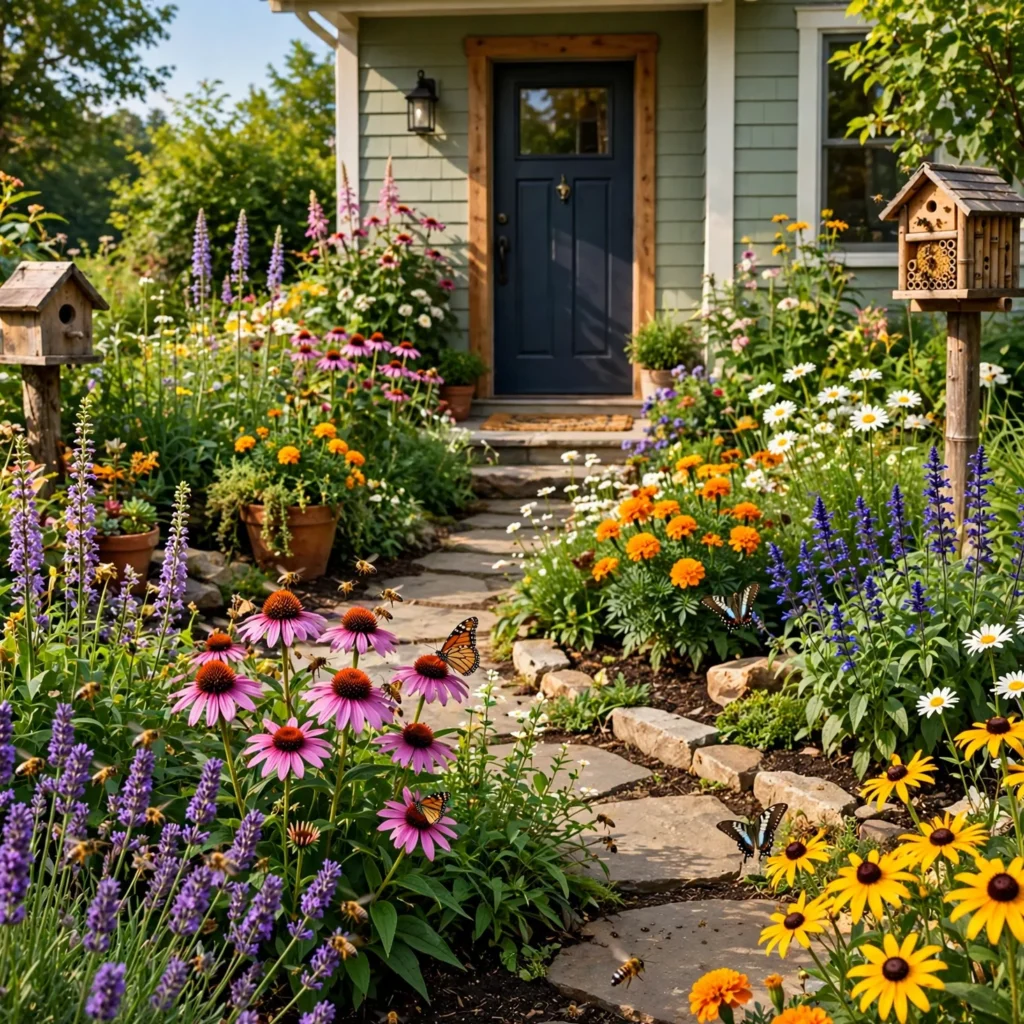
A pollinator-friendly front garden swaps traditional foundation shrubs for native flowering perennials like milkweed, bee balm, and black-eyed Susan, turning the most visible part of the property into functional habitat. Grouping plants by bloom time ensures something is flowering from spring through fall, which keeps the space looking cultivated rather than wild. A mowed edge strip along the sidewalk signals intentional design to neighbors who might otherwise mistake the planting for an unmaintained lawn.
10. Front Porch Container Grouping
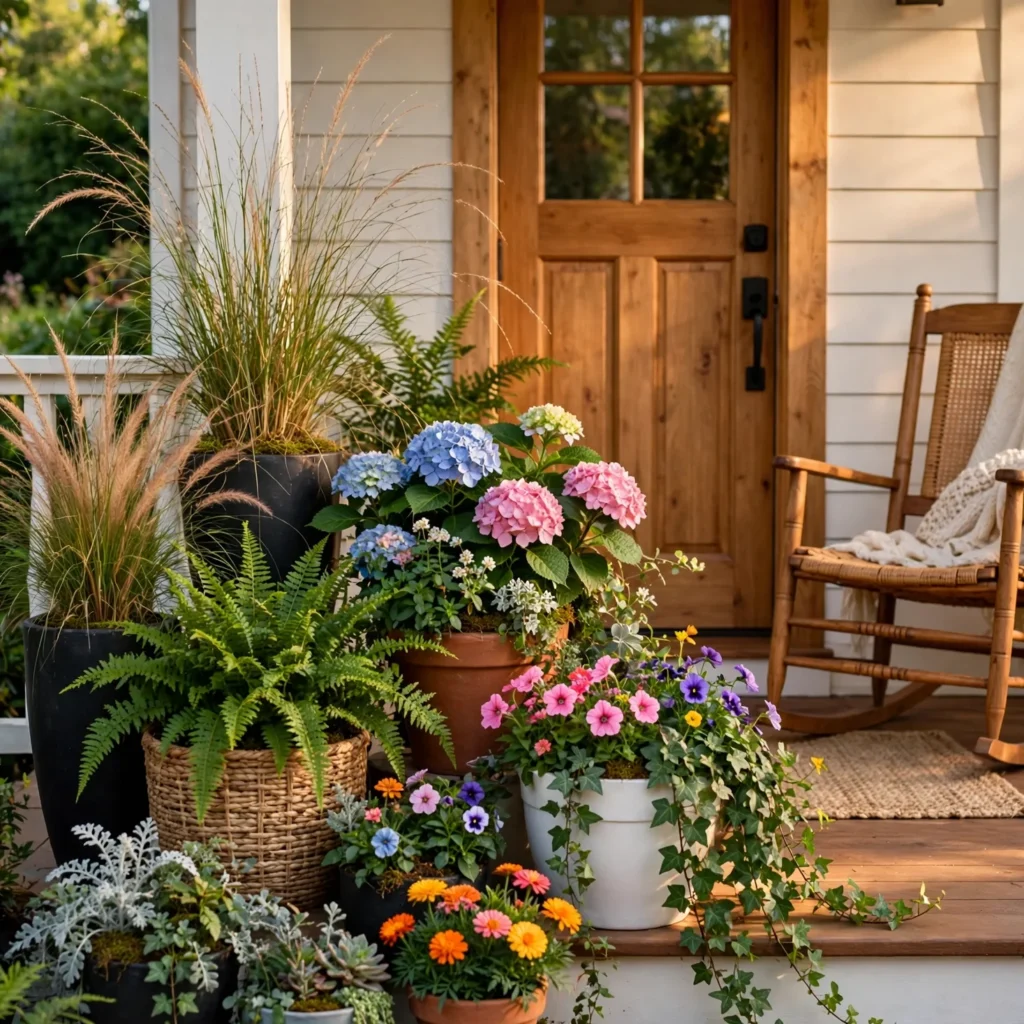
A grouping of large containers flanking the front steps or porch adds seasonal color without committing to permanent in-ground planting, which works especially well for renters or anyone wanting to change the look each year. Matching pairs of urns or planters on either side of the steps read as more formal than mismatched single pots. Filling containers with a thriller-filler-spiller combination, like a tall grass, mid-height flowers, and a trailing vine, keeps each pot visually balanced on its own.
11. Pathway and Landscape Lighting
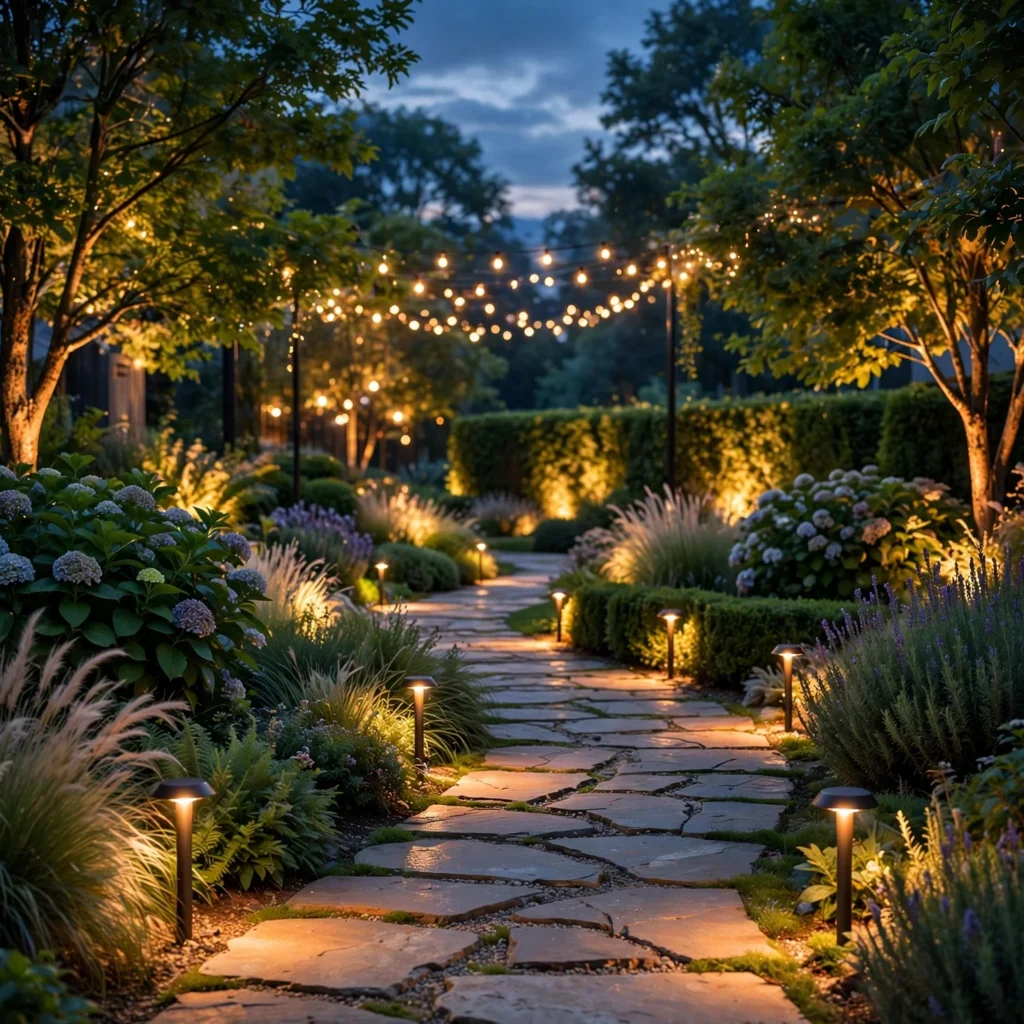
Low-voltage pathway and landscape lighting extends a front garden’s visibility well past sunset, which matters for both curb appeal and basic safety along walkways. Solar or wired path lights spaced 6 to 8 feet apart along a walkway provide even coverage without creating a runway effect, while uplighting on a single specimen tree adds depth after dark. Warm white bulbs in the 2700K range read as more welcoming than the bluish tone of cooler LED fixtures.
12. Front Garden Ideas With a Picket Fence Border
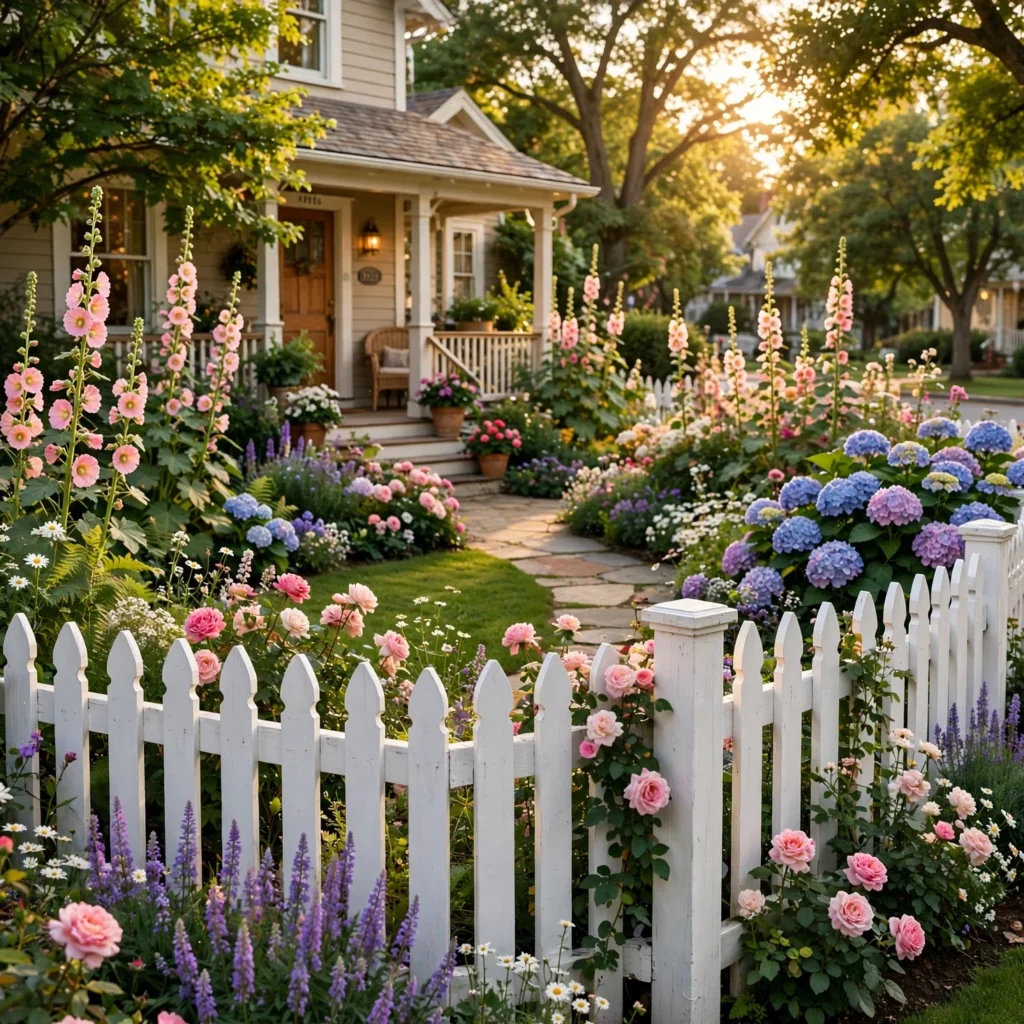
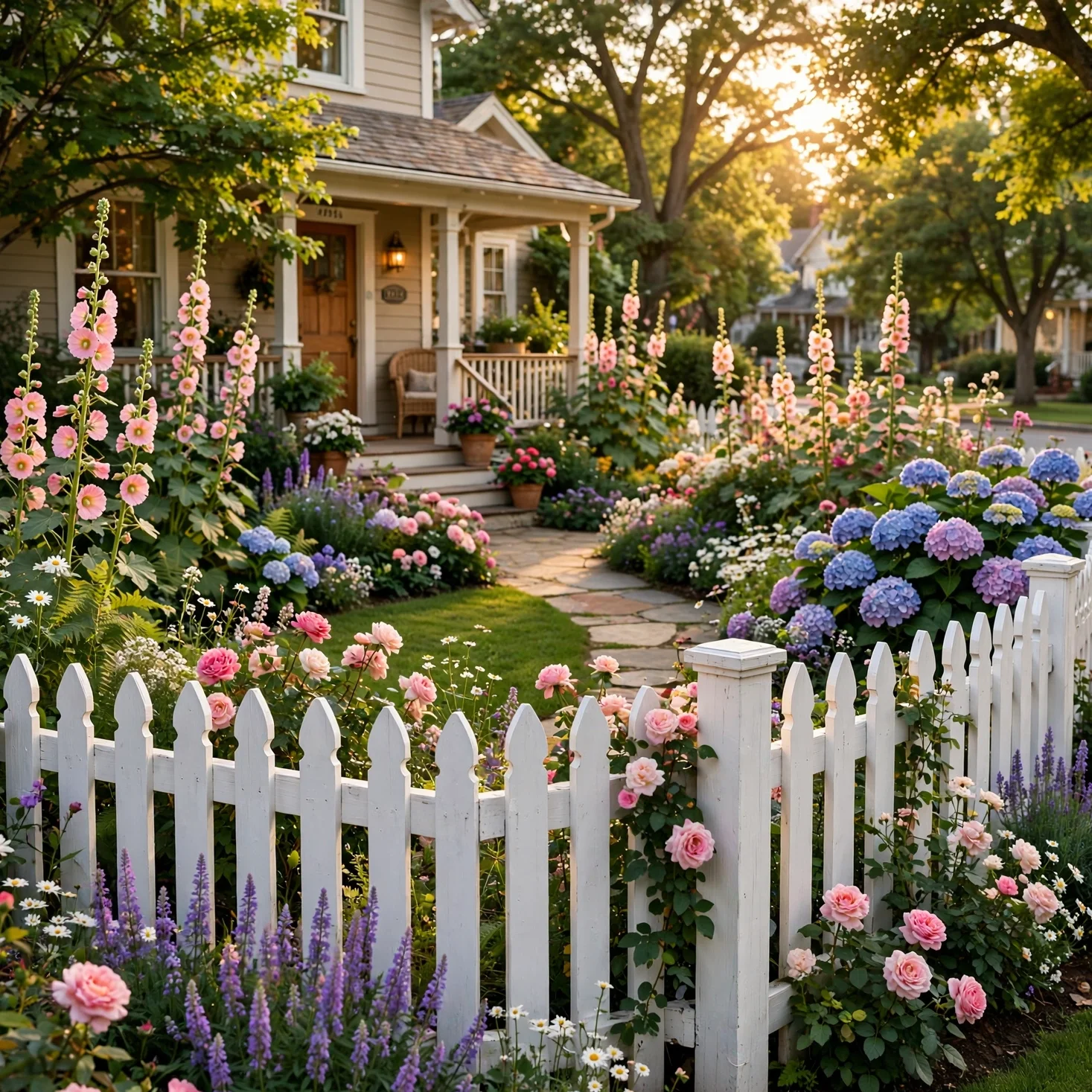
Among the most classic front garden ideas is a low picket fence bordering the front bed, which adds structure and a defined property edge without blocking the view of the plantings behind it. A 30 to 36-inch-tall painted wood or vinyl fence keeps the cottage-garden feel intact while still giving climbing roses or clematis something to grow against. Painting the fence white or a soft neutral keeps it from competing visually with whatever is planted along it.
Shop the Look
A pair of matching cedar porch planters gives the front entry a polished, symmetrical look without permanent installation. A set of low-voltage solar pathway lights extends the front garden’s visibility into the evening at minimal cost. A powder-coated steel window box adds color at eye level beneath front-facing windows. A roll of steel landscape edging keeps gravel beds and lawn cleanly separated along the front walk.
Common Mistake to Avoid
The most common mistake in front garden design is planting shrubs directly against the house without accounting for their mature width, which forces homeowners to hack plants back hard every year just to keep windows and walkways clear. A boxwood or holly planted 12 inches from the foundation might look fine at purchase but can reach 3 to 4 feet wide within a few seasons, crowding the walkway or blocking window views. Checking mature spread and spacing shrubs accordingly from the start avoids this ongoing maintenance headache.
FAQs
What are low-maintenance front garden ideas?
Low-maintenance front garden ideas center on drought-tolerant plants, gravel beds, and structured evergreens like boxwood that hold their shape without frequent pruning or watering. Ornamental grasses and native perennials also cut down on maintenance since they’re adapted to local rainfall and rarely need fertilizing. Replacing a lawn strip with gravel and a few well-placed shrubs reduces both watering and mowing time considerably compared to a traditional turf front yard.
How do I make my front garden look more welcoming?
A front garden feels more welcoming with a clearly defined path leading to the door, layered planting that softens the house’s foundation line, and warm-toned lighting that extends visibility into the evening. Matching container plantings on either side of the entry steps also signal a deliberate, cared-for space to anyone approaching. Keeping sightlines to the front door clear, rather than blocked by overgrown shrubs, reinforces that welcoming feel from the street.
What plants work best for front yard curb appeal?
Boxwood, hydrangea, and ornamental grasses work well for front yard curb appeal because they hold structure across multiple seasons rather than only looking good during a short bloom window. Mixing in a few flowering perennials like coneflower or salvia adds seasonal color without sacrificing the year-round backbone the evergreens and grasses provide. Choosing plants suited to the specific sun exposure of the front yard, rather than guessing, prevents dieback that undermines curb appeal within the first year.
Should I replace my front lawn with a garden?
Replacing a front lawn with a garden makes sense in regions facing water restrictions or for homeowners wanting a lower-maintenance alternative to regular mowing and fertilizing. A gravel bed with ornamental grasses or a mixed perennial border typically uses significantly less water than turf once established. Full replacement isn’t necessary, though, since even converting a portion of the lawn into planted beds along the walkway or foundation delivers much of the same curb appeal benefit.
How much does a front garden makeover cost?
A front garden makeover using foundation planting, a paver walkway, and basic lighting typically runs $1,500 to $4,000 depending on yard size and material choices. Adding structural elements like a retaining wall or a full hedge border pushes the budget toward $5,000 to $8,000. Phasing the project, starting with planting beds and a walkway before adding lighting and hardscaping, spreads the cost across more than one season without sacrificing the final result.
Conclusion
These front garden ideas range from a simple pair of porch planters to a full terraced retaining wall, giving homeowners options at nearly any budget or skill level. Starting with one focal element, like a defined walkway or a layered foundation bed, builds curb appeal without overwhelming the yard or the budget all at once. Save this post to Pinterest for reference, and check the related post on small garden ideas for pairing inspiration.