12 Stunning Patio Garden Ideas for Small-Space Outdoor Living
A patio garden lives entirely on top of pavement or decking, which changes almost every decision from soil depth to drainage compared to a traditional in-ground yard. The right patio garden ideas work within that constraint instead of fighting it, using containers, vertical structures, and careful plant selection to build a full garden on a surface that technically has no soil at all. This post covers twelve practical patio garden ideas, from tiered planters to shade structures, with real material and spacing guidance for a space that’s often smaller than a standard bedroom.
Trend & Background
Patio gardening has grown alongside the broader shift toward smaller homes, townhouses, and rental properties, where a paved patio is often the only outdoor space available at all. Container-friendly dwarf and patio varieties of vegetables and fruit trees, bred specifically for shallow root systems, have made food gardening realistic on a surface where digging isn’t an option. At the same time, rising interest in outdoor living has pushed patio design toward multi-purpose layouts that combine dining, lounging, and growing space within a footprint that might be as small as 100 square feet.
Key Takeaways
- These patio garden ideas work in containers and raised beds, since most patios have limited or no in-ground soil access.
- Vertical growing and multi-level layouts make the most of tight paved footprints.
- Weather-resistant materials matter more on a patio, where structures often sit directly on hard surfaces.
- Several ideas double as privacy or shade solutions along with their growing function.
1. Tiered Container Plant Stand
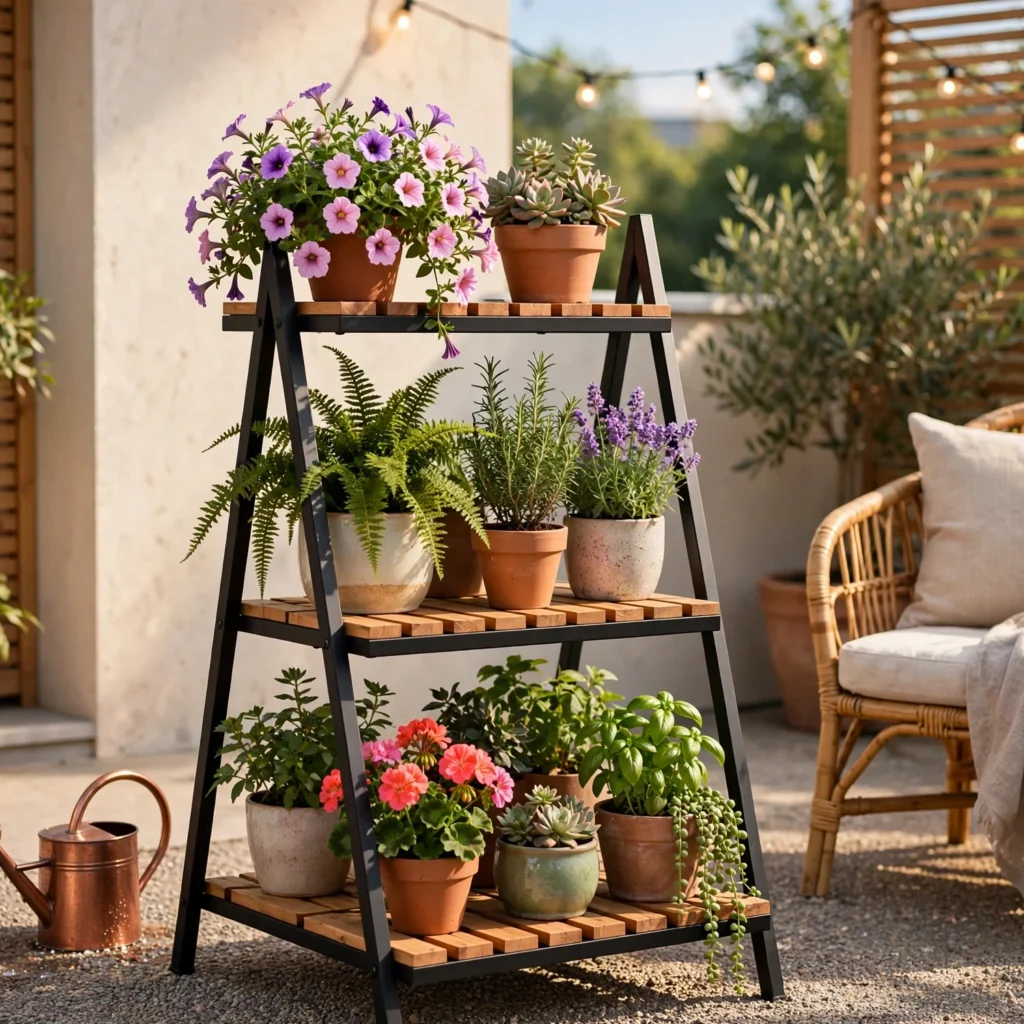
A tiered container plant stand stacks pots at graduated heights on a single ladder-style frame, multiplying growing space within a small footprint of actual floor area. Powder-coated steel and cedar both hold up well against direct weather exposure, though steel tends to handle repeated wetting from watering better over time. Placing sun-loving plants on the top tier and shade-tolerant trailing varieties like ivy on lower shelves takes advantage of the natural light gradient a stand creates.
2. Large-Format Container Grouping
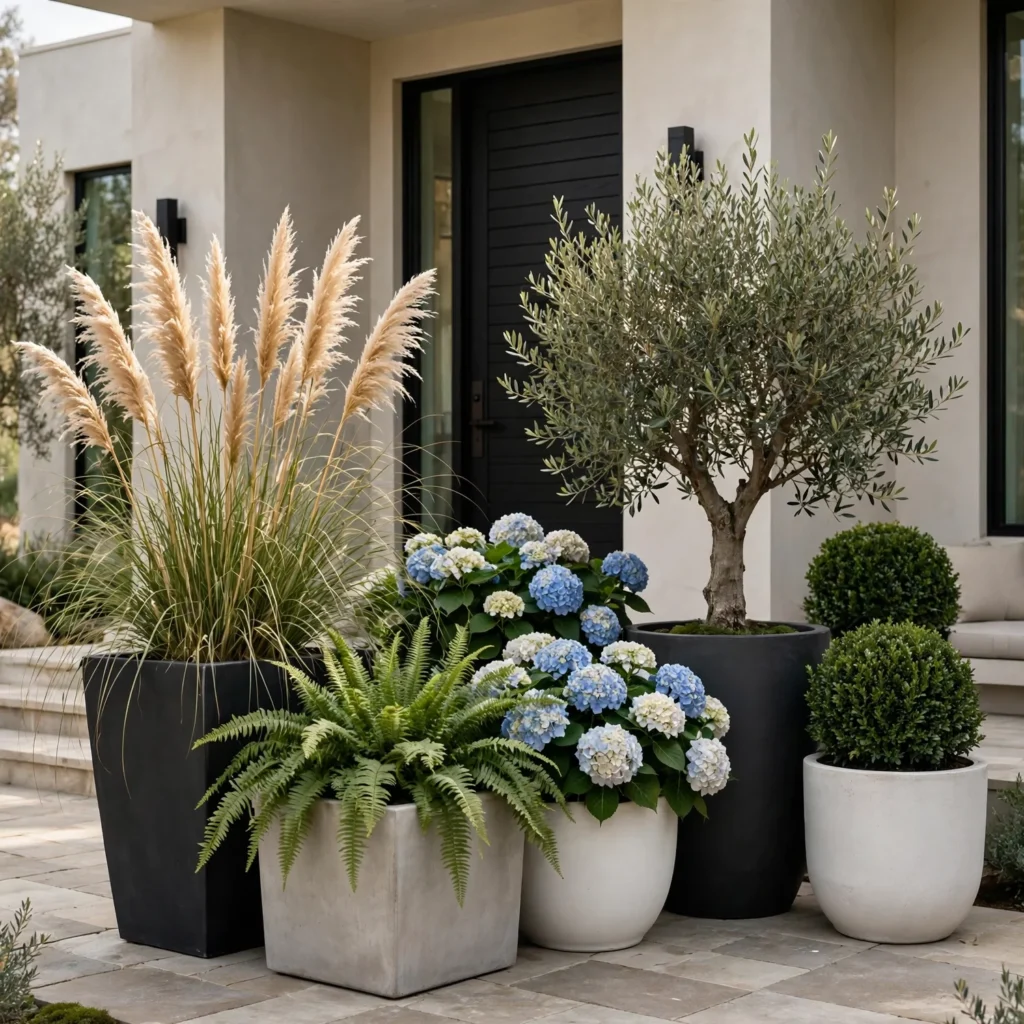
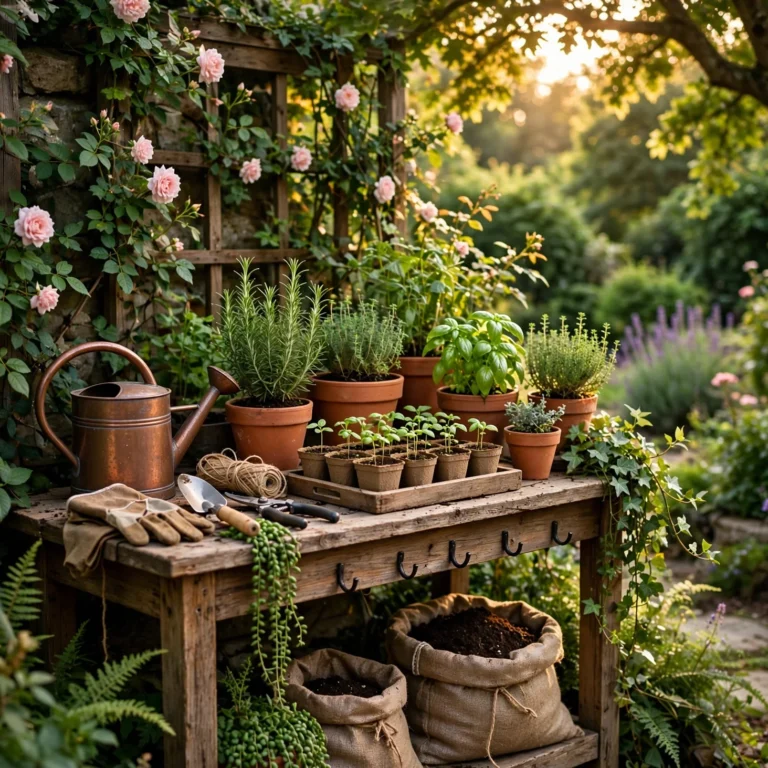
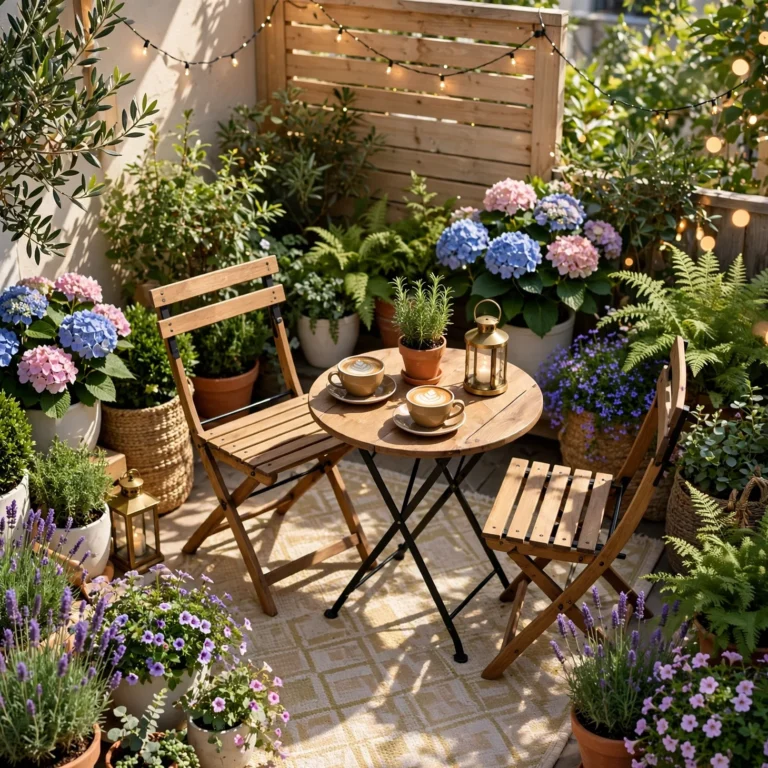
Grouping three to five large containers of varying heights in one corner of the patio reads as a designed garden feature rather than scattered pots placed wherever there was room. Mixing pot materials, like a large glazed ceramic urn next to a matte concrete planter, adds visual interest without needing different plants to do all the work. Filling each container with a thriller, filler, and spiller combination keeps every pot balanced individually while the grouping still reads as cohesive overall.
| Container Diameter | Best For | Soil Volume |
| 12-14 in | Herbs, small annuals | 3-5 gallons |
| 16-20 in | Small shrubs, dwarf tomatoes | 10-15 gallons |
| 24+ in | Dwarf trees, large perennials | 20-25 gallons |
3. Vertical Herb Wall
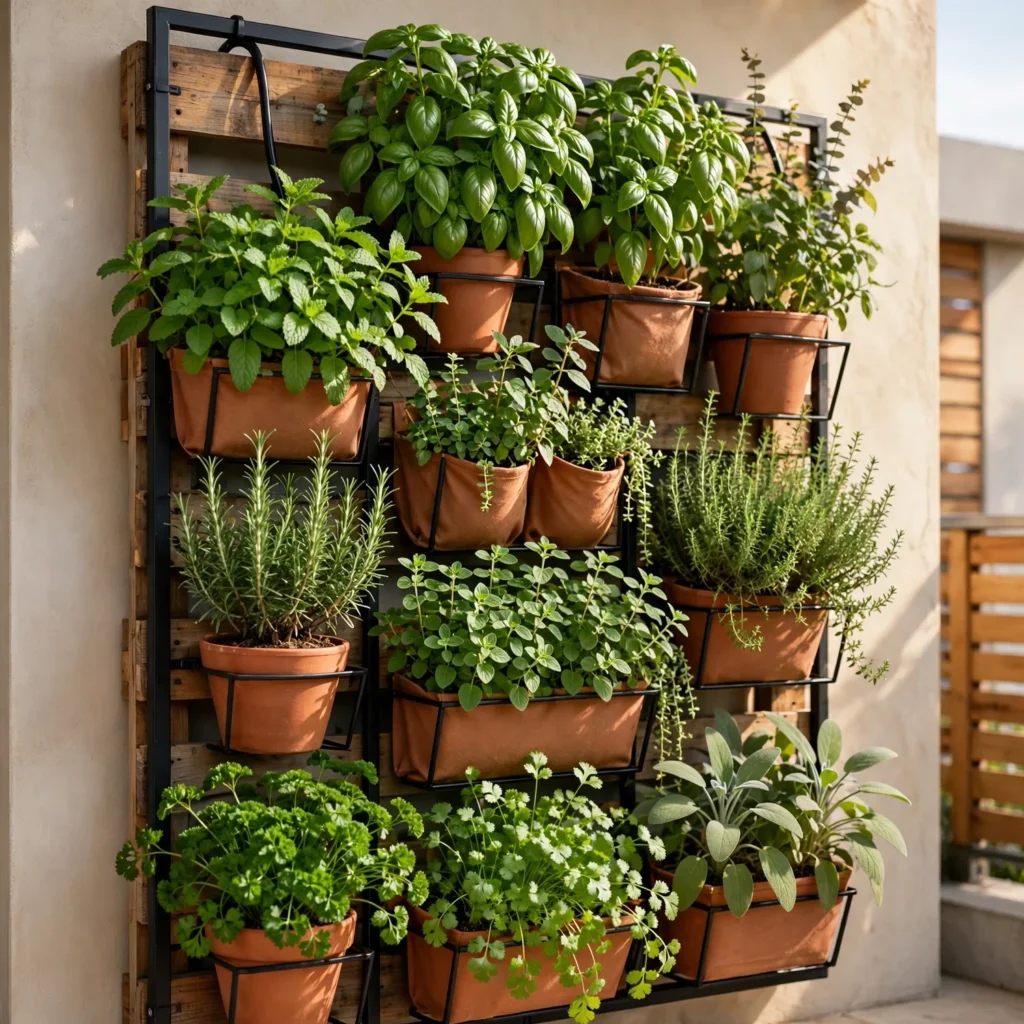
A vertical herb wall mounted to a patio fence or exterior house wall keeps kitchen herbs within arm’s reach of the grill or dining table while using zero floor space. Modular felt pocket planters or a repurposed wooden pallet both work, with basil, thyme, and chives tolerating the shallower soil depth these systems typically offer. Mounting the structure at counter height rather than ground level makes harvesting easier during meal prep and keeps the herbs visible year-round.
Add color and charm to your outdoor space with our Flower Garden Ideas, filled with seasonal blooms and easy planting tips.
4. Raised Planter Box Border
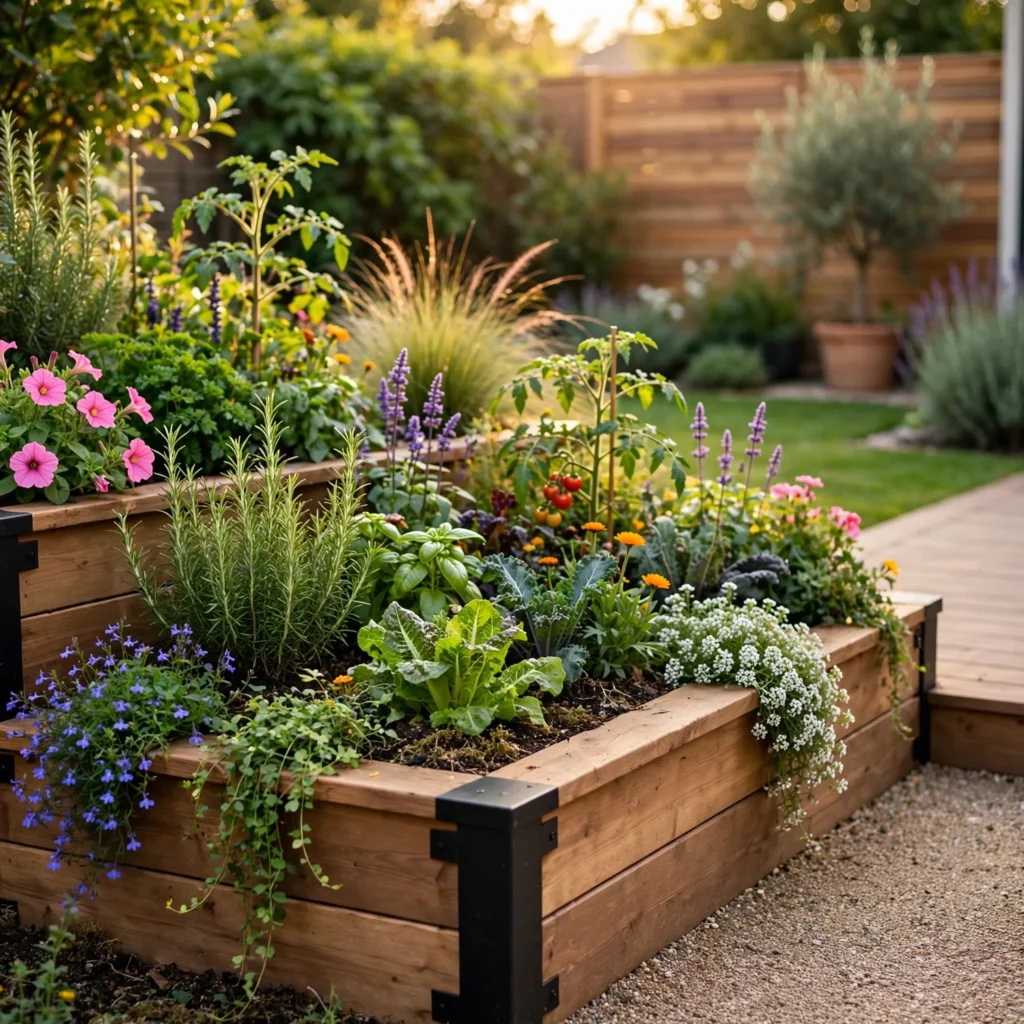
A raised planter box built along the edge of the patio creates a defined planting border without requiring any excavation into the pavement or deck below. Cedar boxes 12 to 18 inches deep give most annuals and shallow-rooted perennials enough room, while a landscape fabric liner protects wood from constant soil moisture. Running the boxes along one full side of the patio also doubles as a subtle boundary between the seating area and the rest of the yard.
5. Pergola With Container Climbing Vines
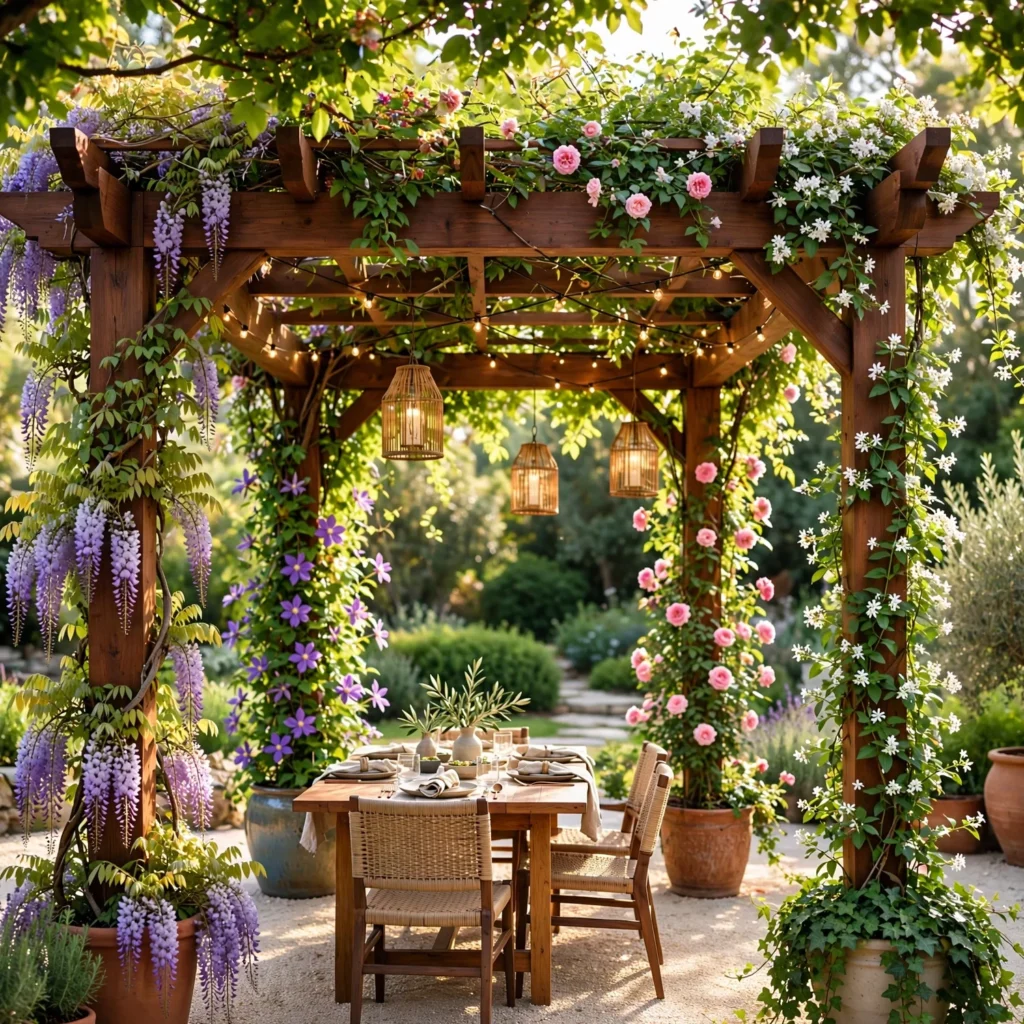
A pergola positioned over the main patio seating area adds shade and structure, and pairs naturally with large containers planted with climbing vines like clematis or star jasmine trained up the support posts. Cedar and powder-coated aluminum are both common frame materials, with an 8-by-10-foot footprint comfortably covering a small dining or lounge set. Positioning the structure to block afternoon sun makes the shade functional rather than purely decorative.
6. Dwarf Fruit Tree in a Large Pot
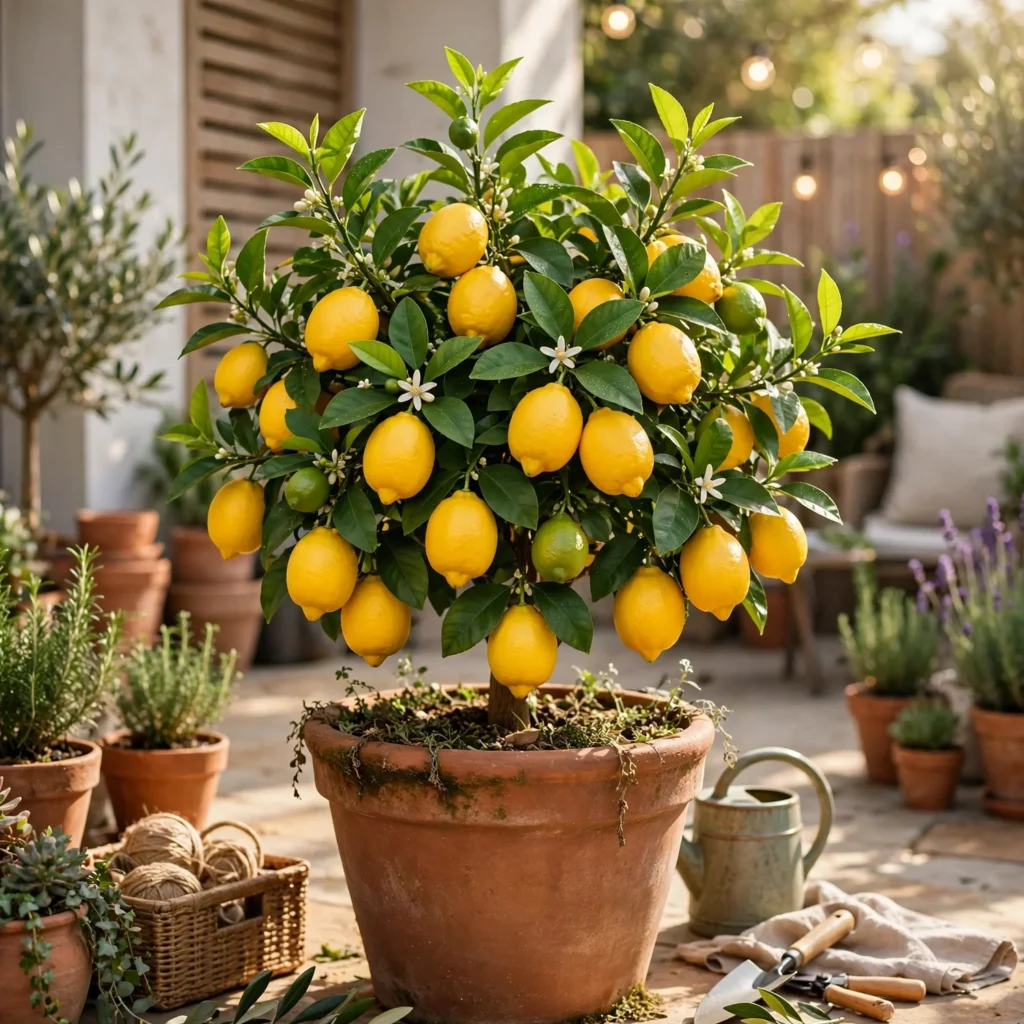
A dwarf fruit tree grown in a large container brings real fruit production to a patio without needing any in-ground planting space at all. Citrus, fig, and dwarf apple varieties all adapt well to container life, provided the pot holds at least 15 to 20 gallons of soil and has adequate drainage holes. Moving the container to follow seasonal sun angles, or bringing it indoors during hard freezes, gives patio gardeners flexibility a planted tree in the ground never offers.
7. Living Privacy Screen in Planters
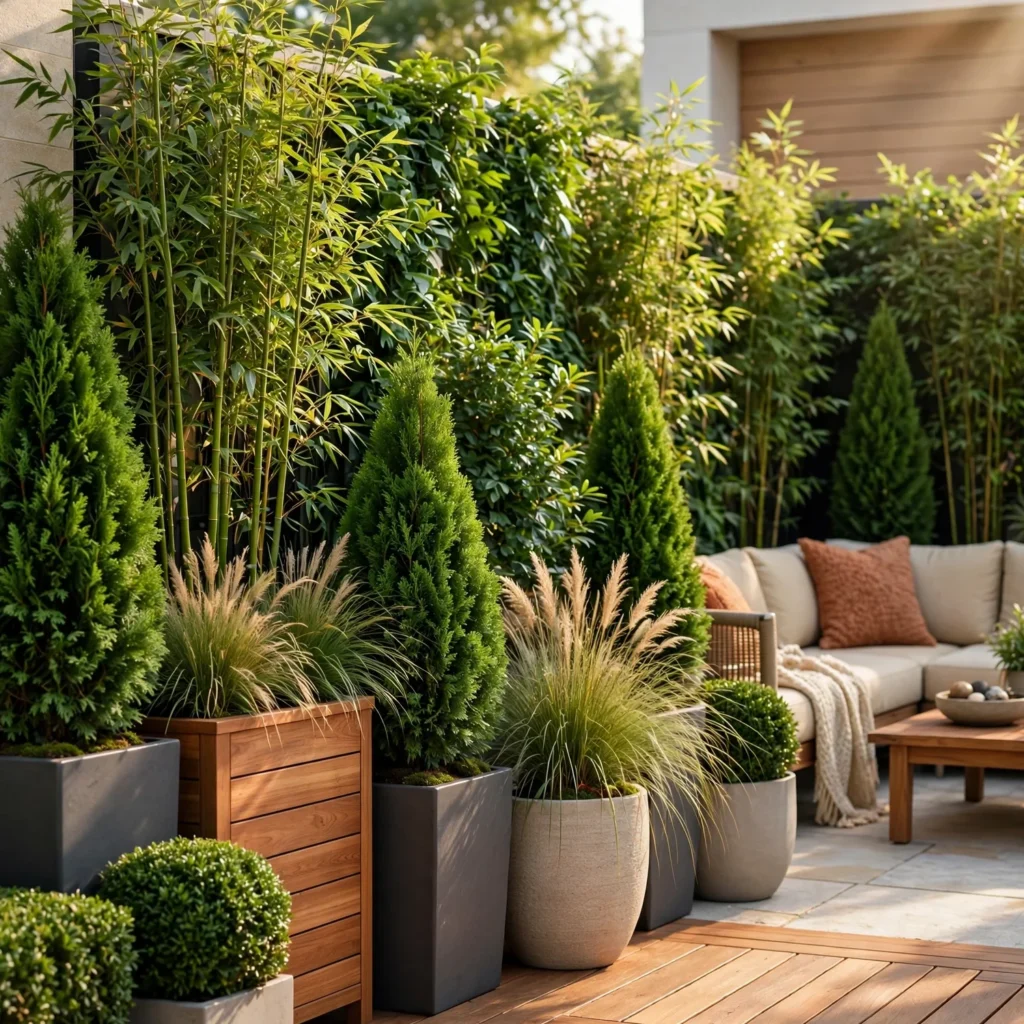
A row of tall, narrow planters filled with columnar evergreens or bamboo creates a living privacy screen along one edge of the patio without the permanence or cost of a built fence. Skip laurel and columnar arborvitae both stay narrow enough for container growing while still reaching 6 to 8 feet in height within a few seasons. This approach works especially well for patios facing a neighbor’s window or a busy sidewalk where a solid view block matters more than open sightlines.
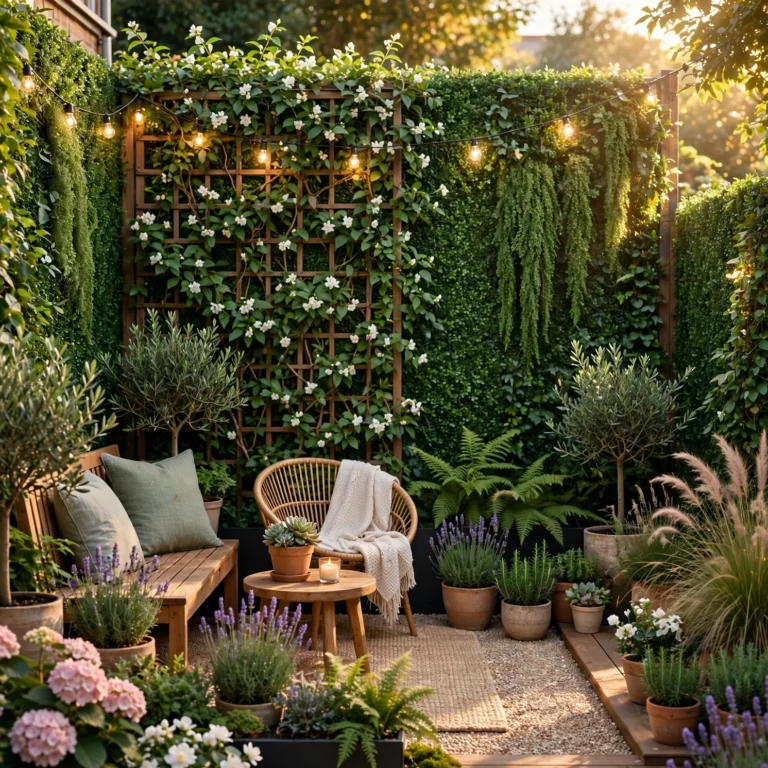
8. String Lighting and Lantern Accents
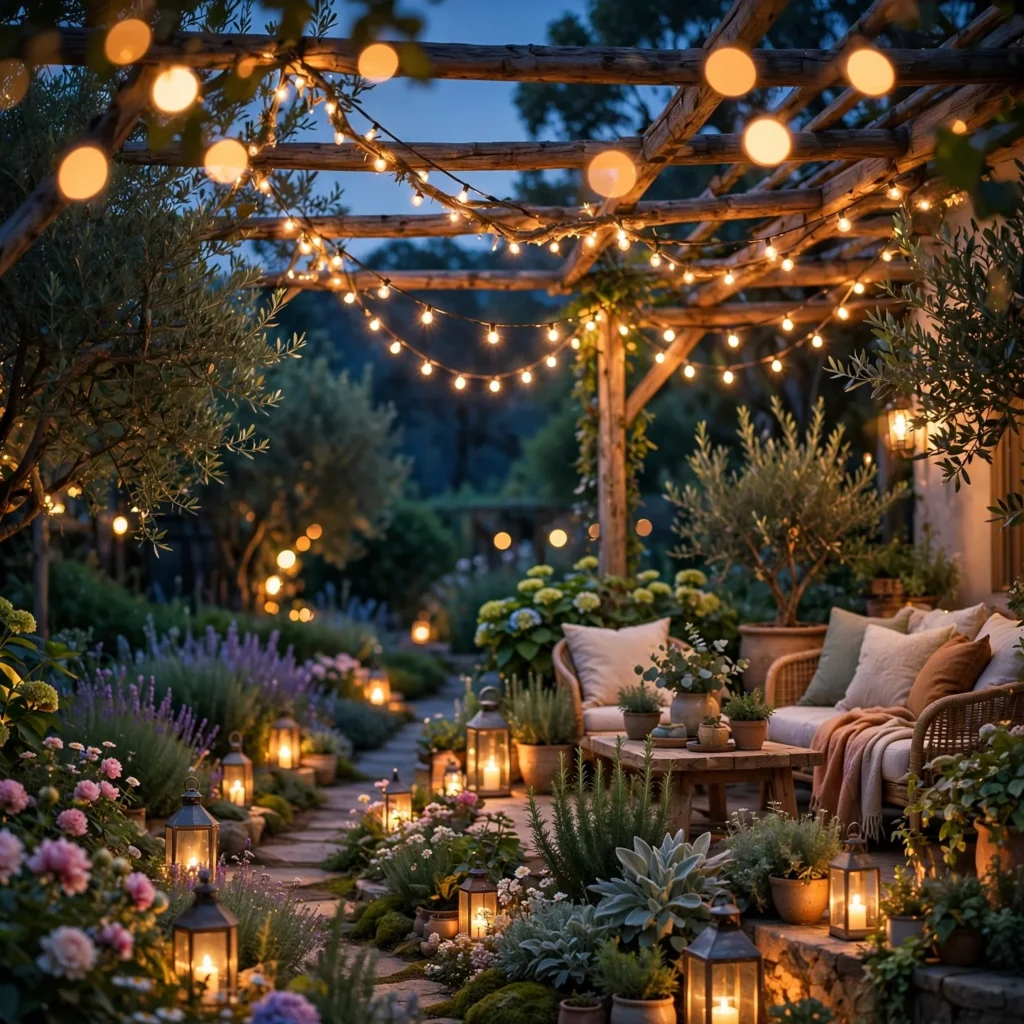
String lighting run along a pergola frame or fence line extends how late a patio garden feels usable, while battery or solar lanterns placed among the containers add softer, lower ambient light closer to seating height. Warm white bulbs in the 2700K range read as more inviting than the bluish tone of cooler LED strings. Running lights along a defined edge, rather than draping them randomly, keeps the patio looking finished rather than cluttered after dark.
9. Gravel or Paver Zone Divider
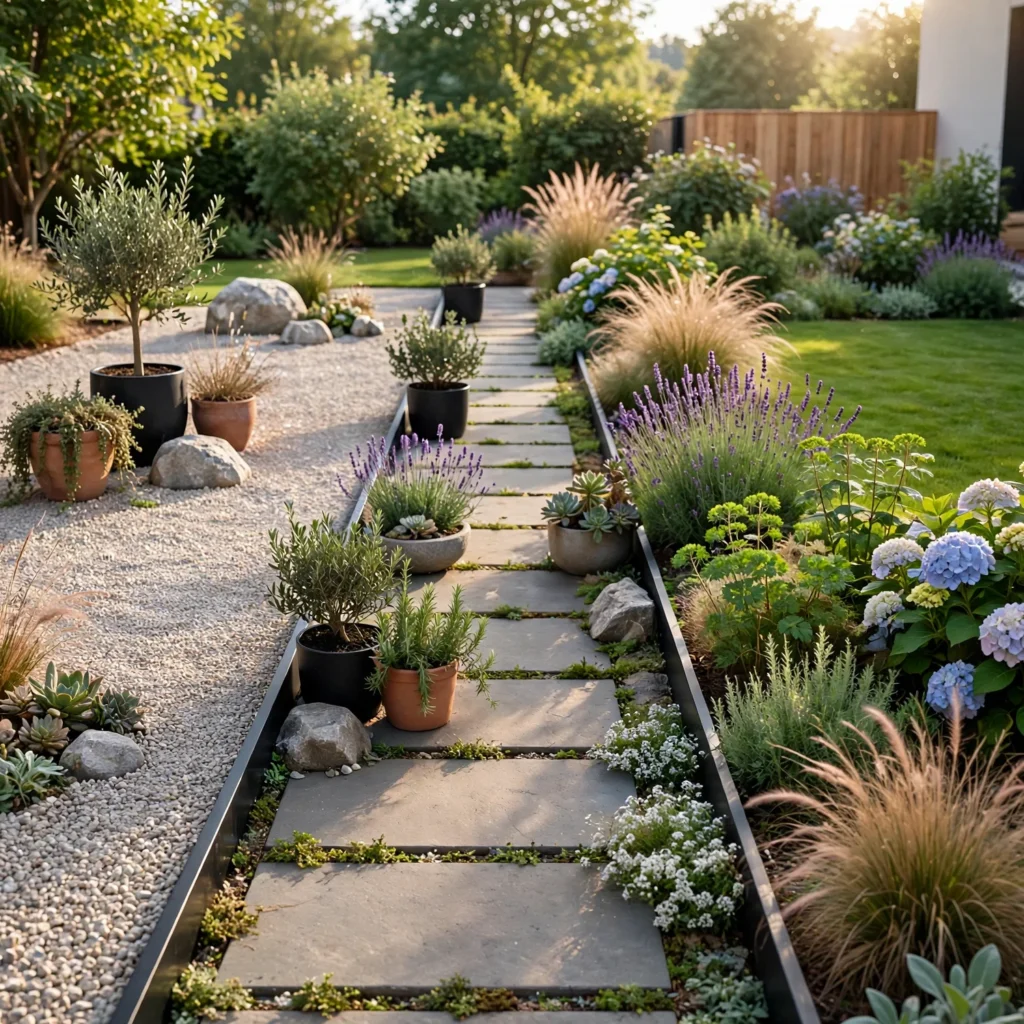
Using a strip of gravel or a change in paver pattern to separate the dining area from the planted section of the patio creates a visual zone divider without needing an actual wall or railing. A 12 to 18-inch-wide gravel strip planted with low groundcover on either side reads clearly as a boundary while still letting sightlines pass through. This technique works particularly well on larger patios trying to fit both a dining set and a lounge area into one continuous paved surface.
10. Trellis Panel for Vertical Screening
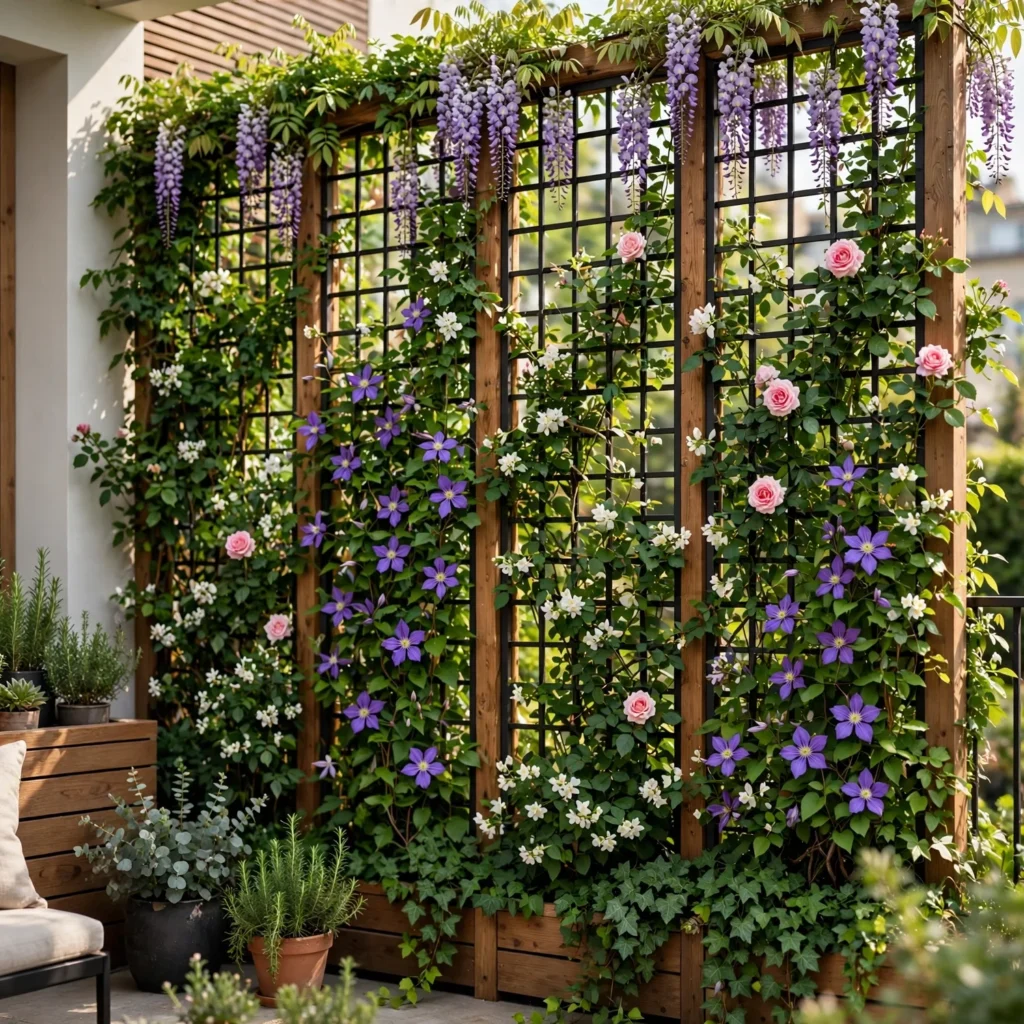
A freestanding trellis panel planted with a fast-growing vine like black-eyed Susan vine or morning glory blocks a specific sightline, such as a neighboring window, without the bulk of a full privacy hedge. A single 6-foot cedar or metal panel positioned in a large planter can be moved seasonally if the screening need changes. This approach also lets some light filter through in a way a solid screen or fence never does.
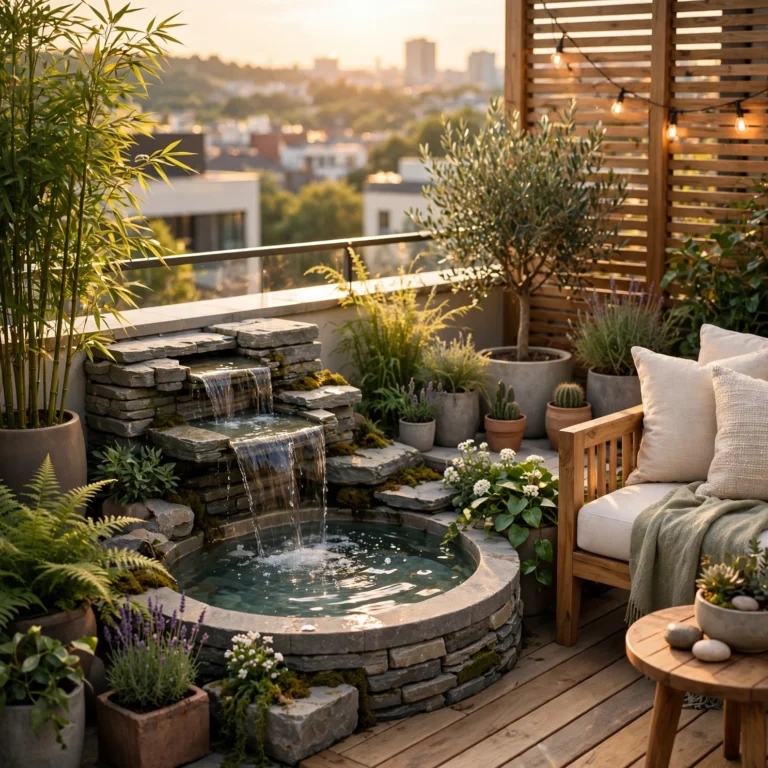
11. Water Feature in a Container
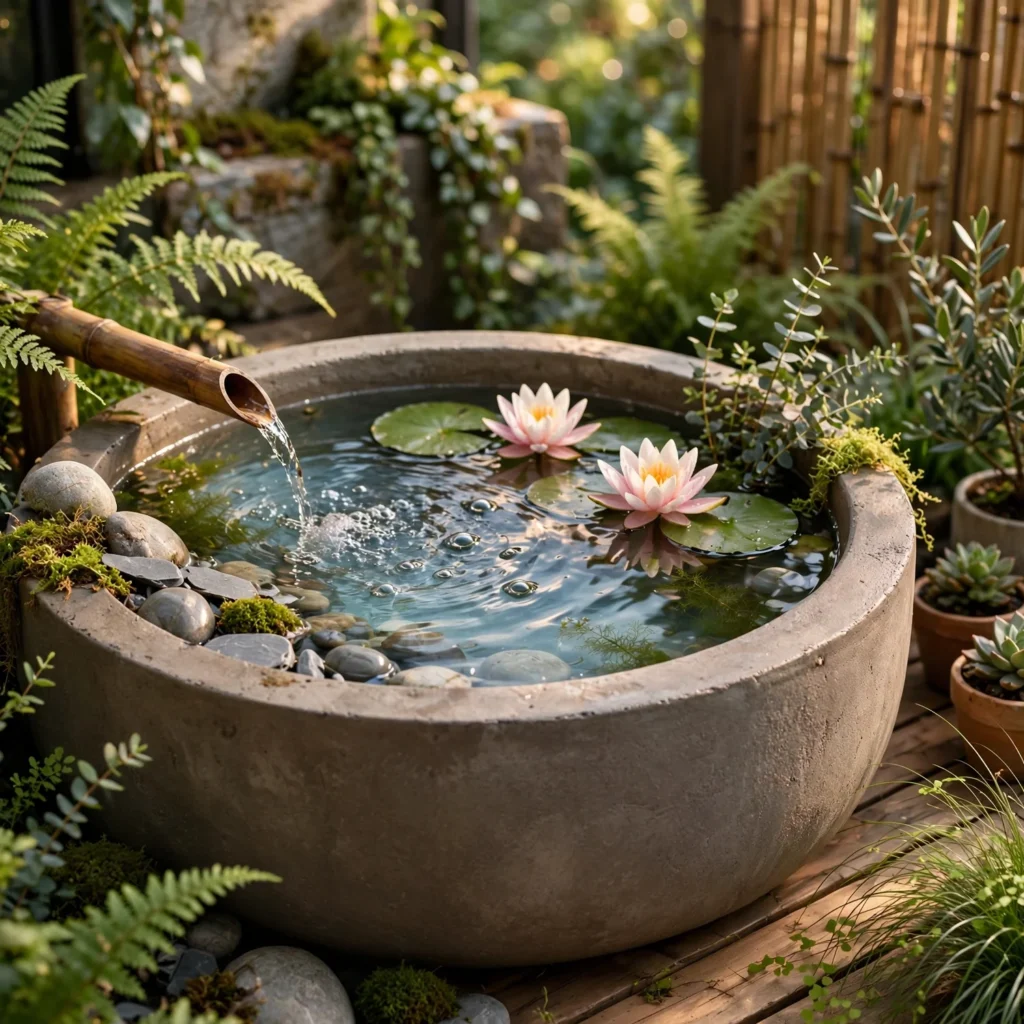
A small self-contained water feature, built from a large glazed pot, a submersible pump, and a few aquatic plants, adds movement and sound to a patio garden without the space commitment of an in-ground pond. Even a container 18 to 24 inches across can support a gentle bubbler effect strong enough to mask nearby street noise. Positioning the pump intake where it won’t clog with debris from surrounding plants keeps the feature running with minimal maintenance.
12. Patio Garden Ideas With a Built-In Bench Planter
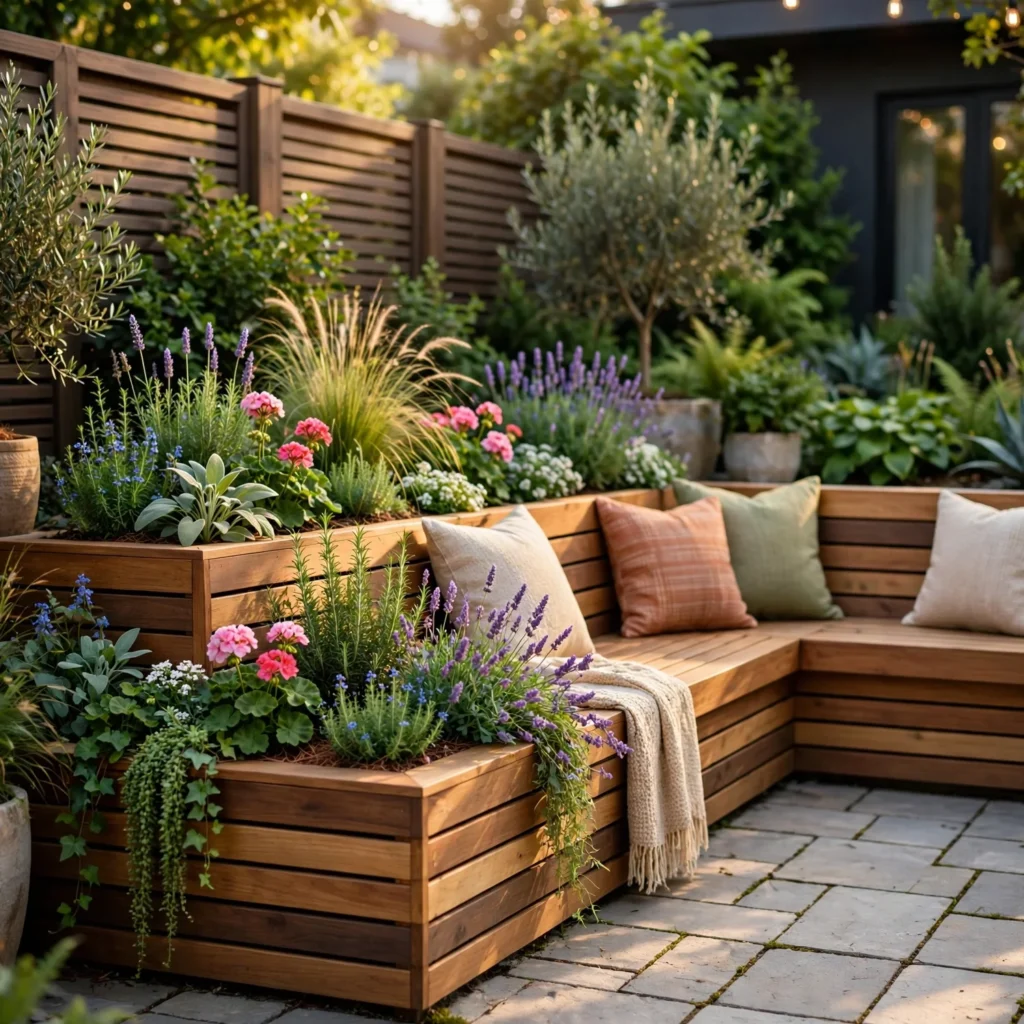
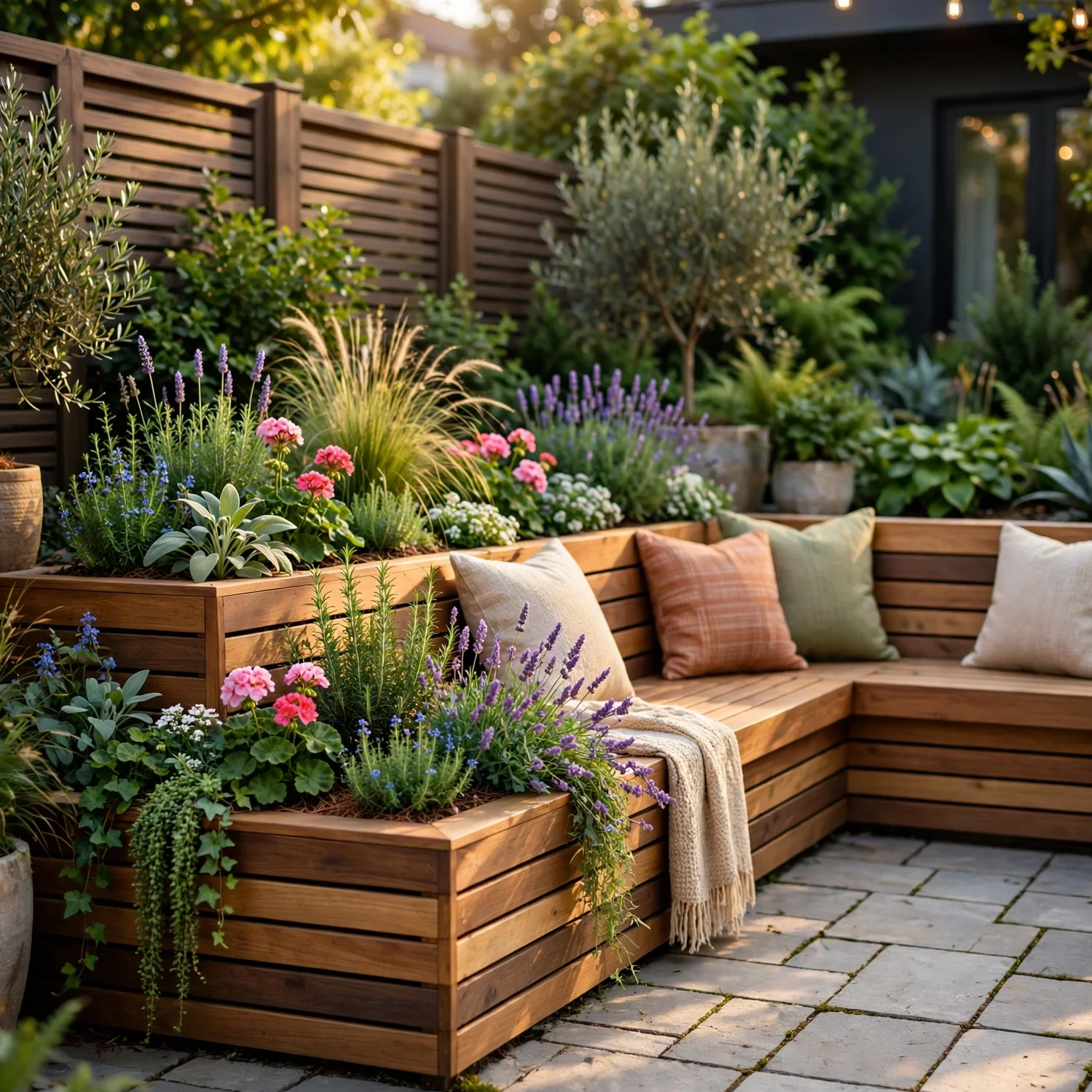
Among the most space-efficient patio garden ideas is a built-in bench with an integrated planter box along one side, combining seating and growing space into a single structure rather than two separate pieces of furniture. Cedar construction with a planter depth of at least 12 inches supports most shallow-rooted perennials or trailing annuals along the bench’s edge. This combination works especially well on smaller patios where fitting both seating and planting beds separately isn’t realistic.
Shop the Look
A set of large glazed ceramic planters gives a patio corner a cohesive, upscale look without needing matching plants inside each one. A cedar tiered plant stand maximizes vertical growing space without taking up additional floor area. A string of warm white outdoor lights extends patio use into the evening with minimal installation effort. A modular felt herb wall panel turns a bare patio fence into usable growing space in an afternoon.
Common Mistake to Avoid
The most common mistake in patio garden design is underestimating how quickly containers dry out compared to in-ground beds, especially in pots under 12 inches in diameter during summer heat. A small terra cotta pot in full sun can need watering daily, and skipping even one day during a heat wave is often enough to stress or kill sensitive plants. Choosing larger containers where possible, adding a layer of mulch on top of the soil, and installing a simple drip irrigation timer all reduce how often this becomes a problem.
FAQs
What plants grow best in a patio garden?
Compact and container-friendly varieties grow best in a patio garden, including dwarf tomatoes, herbs like basil and thyme, and ornamental grasses that don’t need deep root runs to thrive. Trailing plants such as sweet potato vine or bacopa work well in hanging baskets and rail planters where floor space isn’t available. Choosing varieties specifically bred for containers, often labeled “patio” or “dwarf” on the plant tag, generally outperforms full-sized varieties squeezed into a pot.
How do I add privacy to a patio garden without a fence?
Adding privacy to a patio garden without a fence typically involves tall container plantings, like columnar evergreens or bamboo in large pots, positioned along the specific sightline that needs blocking. A trellis panel with a fast-growing vine offers a lighter-weight alternative that still filters views while letting some light through. Positioning these elements to block a single problem angle, such as a neighbor’s window, works better than trying to screen the entire patio perimeter at once.
Can you grow vegetables on a patio?
Vegetables grow well on a patio using large containers of at least 15 to 20 gallons for anything beyond herbs and leafy greens, since root systems need more room than a small pot provides. Dwarf and patio-bred tomato, pepper, and cucumber varieties are specifically developed to produce a full harvest within a compact container footprint. Positioning containers to get at least six hours of direct sun daily matters as much as container size for a productive patio vegetable garden.
How do I make a small patio garden feel bigger?
A small patio garden feels bigger through vertical growing elements that draw the eye upward, a limited plant color palette that reads as more cohesive than a mix of many species, and a mirror or reflective surface positioned to double a sightline. Keeping furniture and containers proportional to the space, rather than oversized, also prevents a small patio from feeling cramped. Defining separate zones with a change in material, like a gravel strip, can paradoxically make a small space feel more spacious by suggesting distinct areas rather than one crowded one.
What’s the best flooring for a patio garden?
The best flooring for a patio garden depends on drainage needs and existing structure, but pavers, natural stone, and composite decking all handle repeated watering and potential soil spillage better than bare concrete, which can stain over time. Gravel works well for zones with heavy container groupings, since it drains instantly and hides minor spills or soil runoff. Whatever material is chosen, ensuring it slopes slightly away from the house prevents water pooling near containers from becoming a drainage problem against the foundation.
Conclusion
These patio garden ideas prove that a fully paved space can still function as a real garden, whether that means a tiered plant stand packed with herbs or a full pergola draped in climbing vines. Starting with one grouping of large containers and a single vertical element, then building outward, keeps a patio garden project manageable rather than overwhelming the space all at once. Save this post to Pinterest for reference, and check the related post on small garden ideas for pairing inspiration.