12 Brilliant Rock Garden Ideas for Low-Maintenance Landscaping
A rock garden solves problems most traditional planting beds can’t, from steep slopes to bone-dry soil that turns any lawn brown by midsummer. The right rock garden ideas turn these tough conditions into a design advantage, pairing stone with drought-tolerant plants for a look that holds up through neglect and dry spells alike. This post covers twelve practical rock garden ideas, from alpine-style beds to dry creek features, with real stone and plant guidance for building a landscape that thrives on very little water.
Trend & Background
Rock gardening has grown alongside broader drought-tolerant landscaping trends, as water restrictions in many regions push homeowners away from thirsty lawns and toward xeriscape-influenced designs. The style traces back to alpine garden traditions in Europe, where gardeners recreated mountain scree conditions to grow high-altitude plants, but it has since adapted into a much broader category covering everything from Japanese-inspired stone gardens to casual Southwestern rock beds. Rising interest in low-maintenance landscaping has also made rock gardens appealing to homeowners simply looking to reduce mowing and watering time rather than chase any particular aesthetic tradition.
Key Takeaways
- These rock garden ideas work in sloped, dry, or low-water yards where traditional lawn struggles.
- Layering stone size and plant texture creates depth without relying on flowers alone.
- Several ideas solve drainage or erosion problems while still looking intentional.
- Most designs need minimal upkeep once established, making them practical for busy or drought-prone areas.
1. Alpine Scree Bed
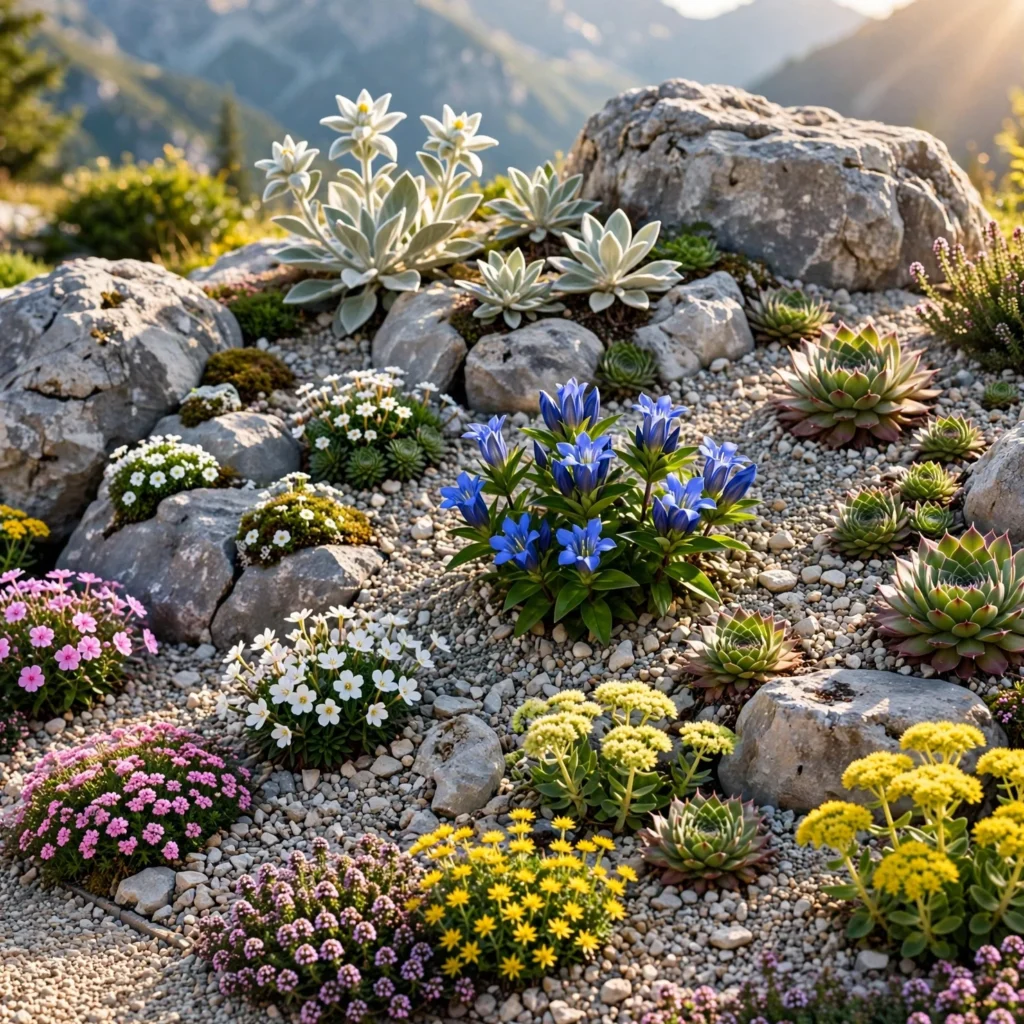
An alpine scree bed recreates the fast-draining, gravelly conditions found on mountain slopes, giving specialized alpine plants like saxifrage and dianthus the exact soil structure they need to thrive. A mix of coarse sand and small gravel, roughly 1 to 2 inches deep over well-draining soil, prevents the root rot these plants are prone to in standard garden beds. This style suits gardeners specifically interested in growing true alpine species rather than general drought-tolerant plants.
2. Dry Creek Bed
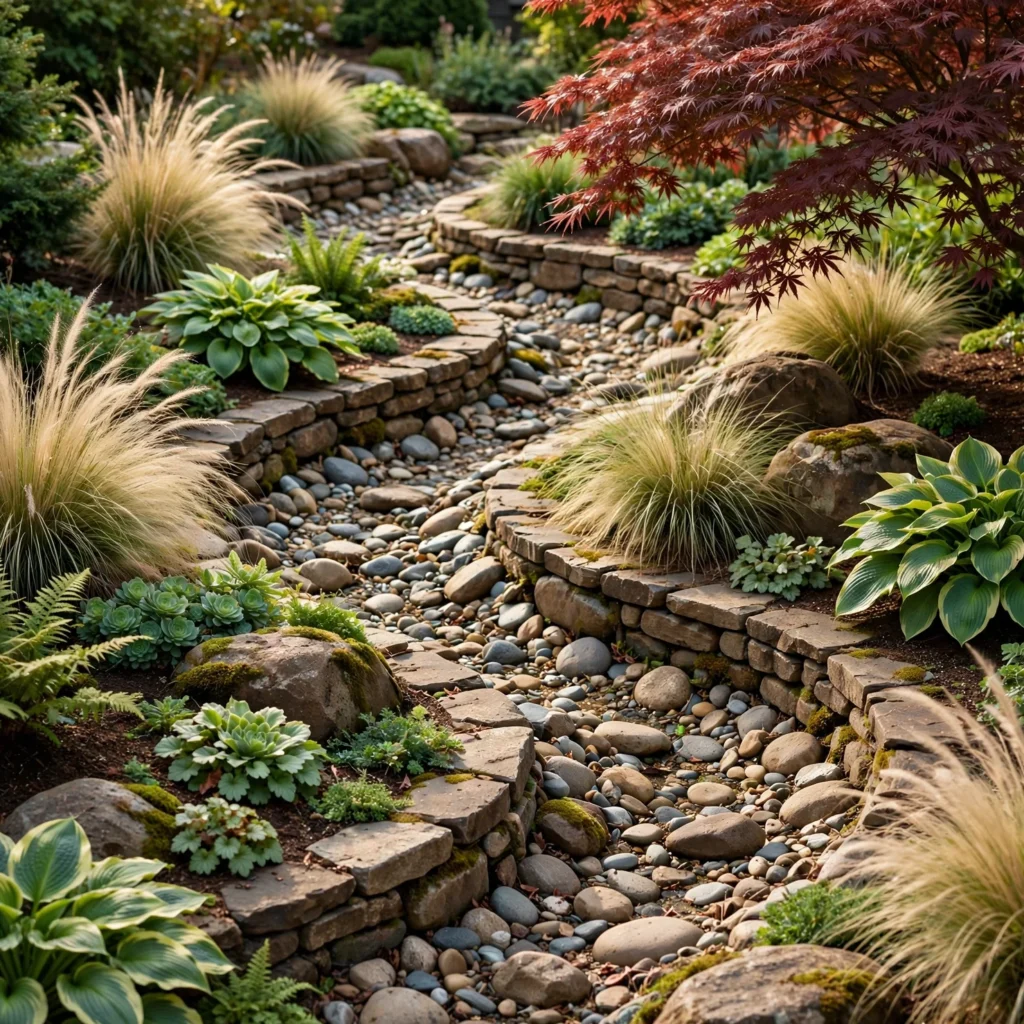
A dry creek bed uses rounded river rock arranged in a winding, natural-looking channel to manage stormwater runoff while adding visual interest to a yard that might otherwise have a soggy or eroding low spot. Varying stone size within the channel, larger rocks along the edges and smaller rock in the center, mimics how a real streambed naturally sorts material by water flow. This feature works especially well positioned to catch runoff from a downspout or a sloped section of yard prone to erosion.
| Stone Size | Placement | Typical Use |
| 1-3 in | Creek bed center | Water flow simulation |
| 4-8 in | Creek bed edges | Bank definition |
| 10+ in (boulders) | Focal accents | Visual anchors |
3. Terraced Slope Rock Garden
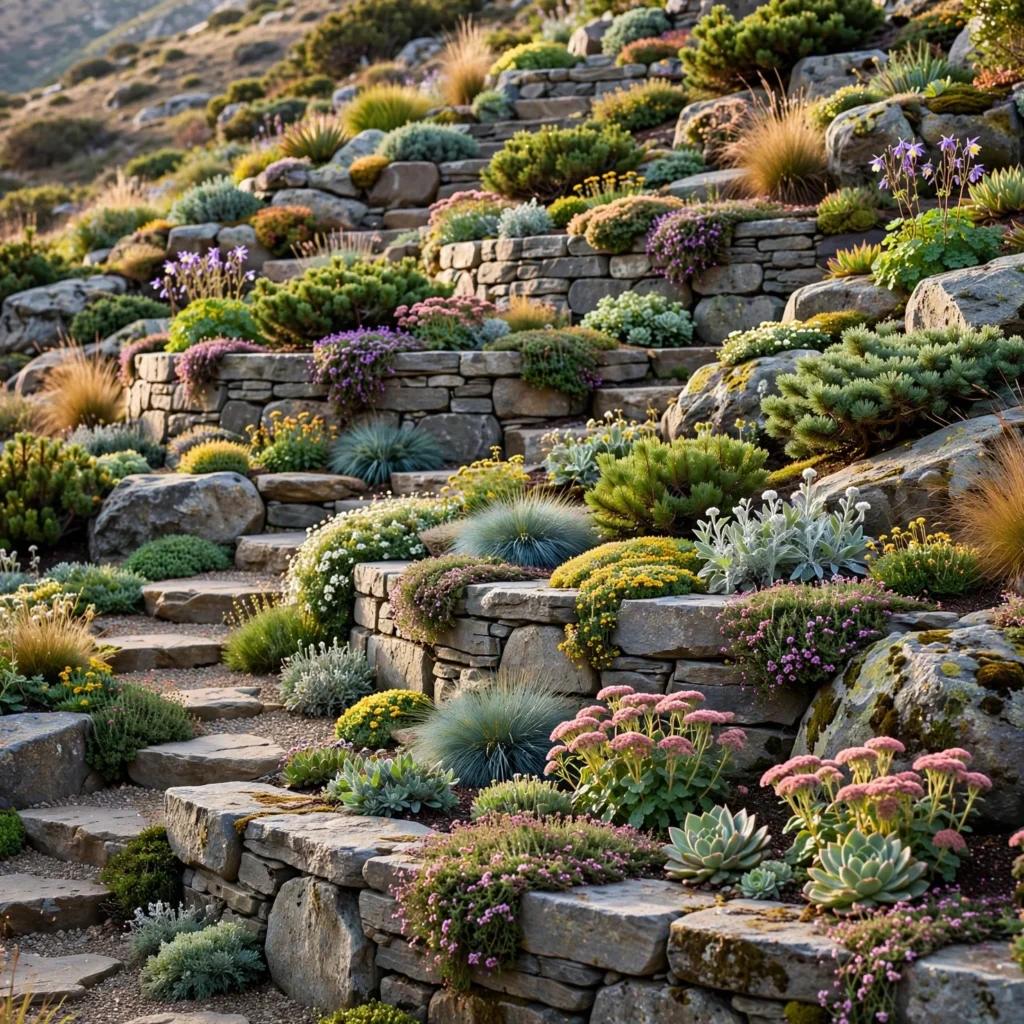
A terraced slope rock garden uses stacked stone walls to break a steep grade into a series of level planting pockets, turning unusable sloped ground into functional garden space. Dry-stacked fieldstone works well for walls under 3 feet, with each tier planted with drought-tolerant species like sedum and creeping thyme that also help hold soil in place. This approach solves erosion problems that plague steep slopes while creating far more planting opportunity than a single continuous incline ever could.
Maximize a compact outdoor area with our terrace garden ideas, featuring clever layouts, vertical gardening, and space-saving solutions.
4. Boulder Focal Point Grouping
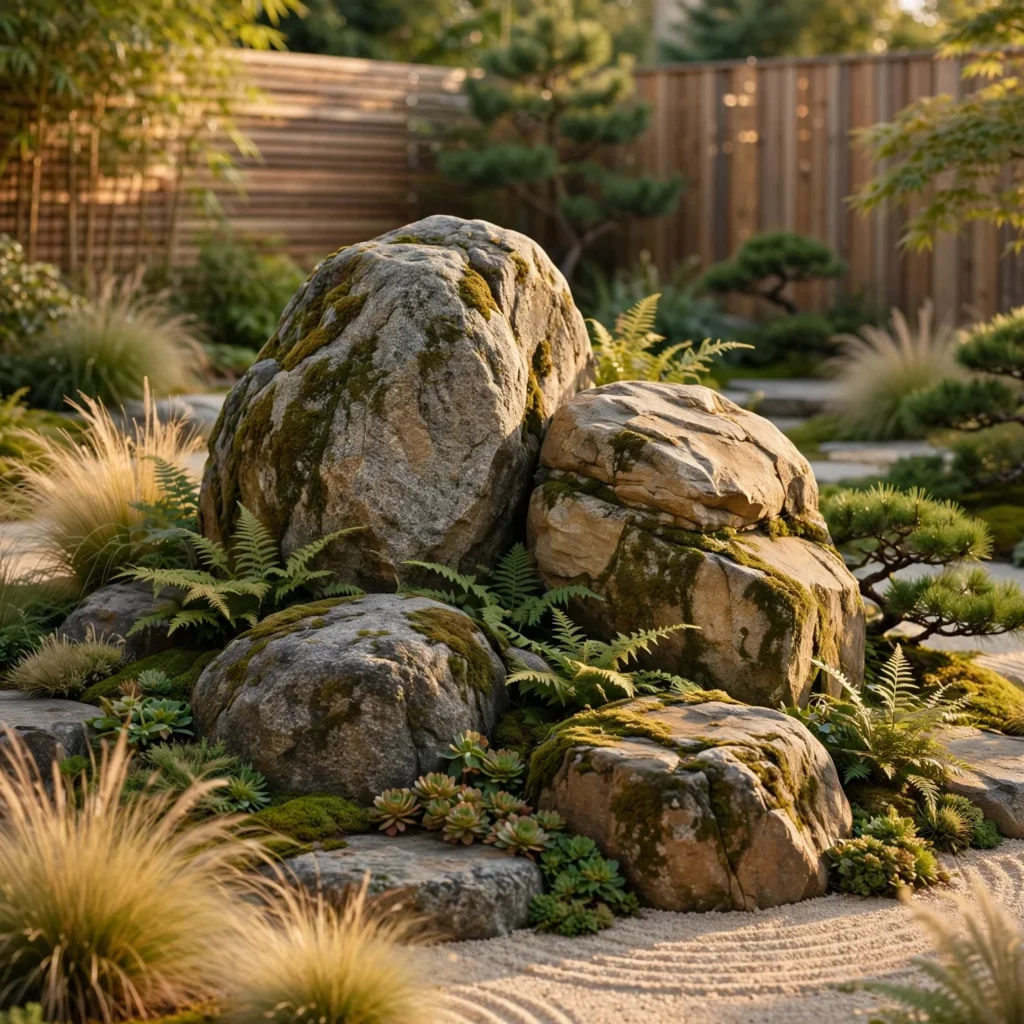
Grouping three to five boulders of varying size, rather than scattering single rocks evenly across a bed, creates a focal point that reads as a natural rock outcropping instead of randomly placed stone. Partially burying each boulder so roughly a third sits below grade makes the grouping look like it emerged from the ground naturally rather than being dropped on top of it. Positioning low, spreading plants like creeping juniper around the base ties the boulders into the surrounding planting rather than leaving them isolated.
5. Succulent Rock Garden
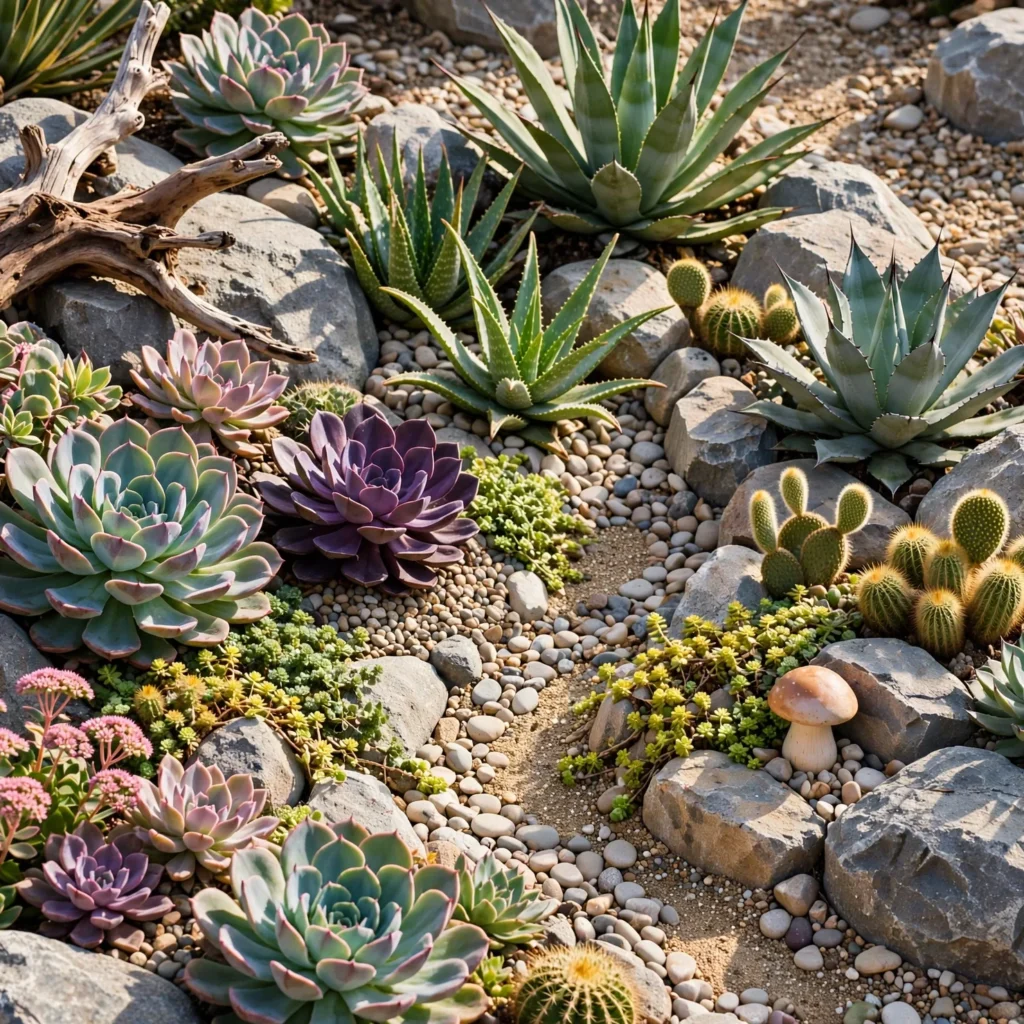
A succulent rock garden pairs drought-tolerant succulents like hens and chicks, sedum, and echeveria with gravel mulch and accent stones, creating a textural display that needs almost no supplemental water once established. Well-draining soil matters more here than in almost any other planting style, since succulents rot quickly in soil that holds moisture. Grouping succulents by rosette size and color creates visual rhythm across the bed even without relying on flowers for interest.
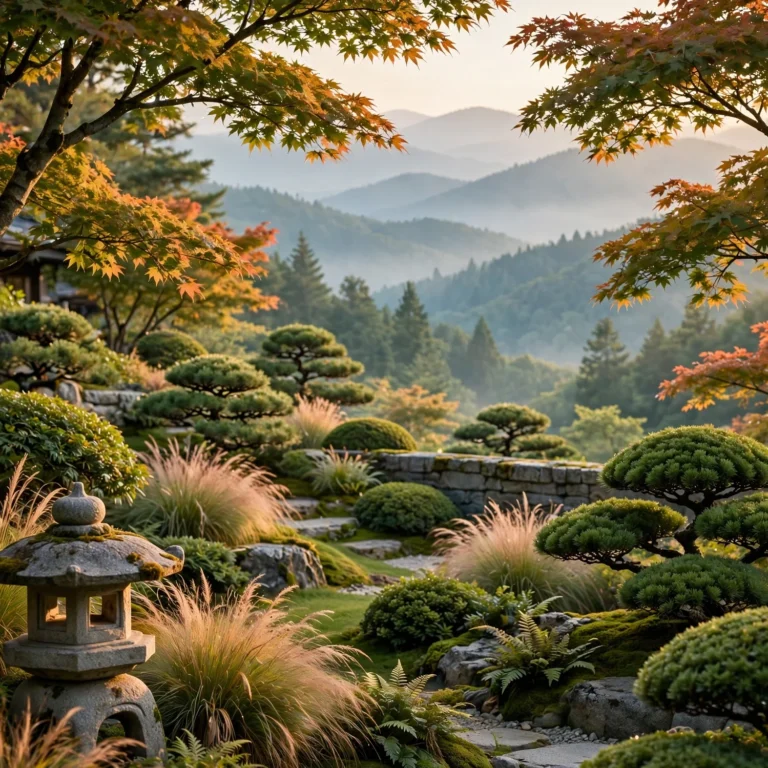
6. Japanese-Inspired Zen Rock Garden
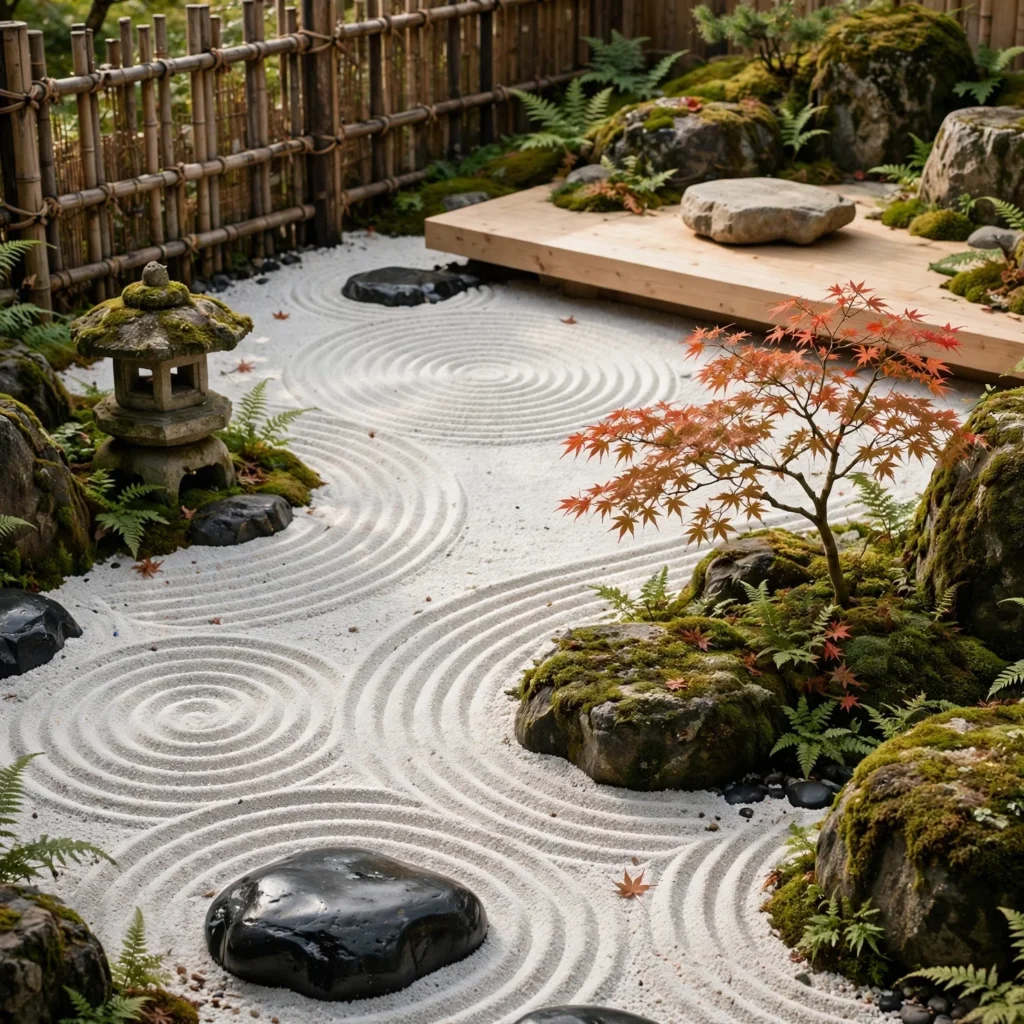
A Japanese-inspired rock garden, sometimes called karesansui, uses raked gravel and carefully placed stone groupings to represent water and mountains symbolically rather than through literal planting. Fine gravel raked into wave patterns around larger anchor stones creates the meditative visual effect this style is known for, with the raking pattern itself considered part of the ongoing maintenance rather than a one-time installation step. This style works well in small, enclosed courtyard spaces where its contemplative character can be appreciated up close.
7. Xeriscape Rock and Grass Combination
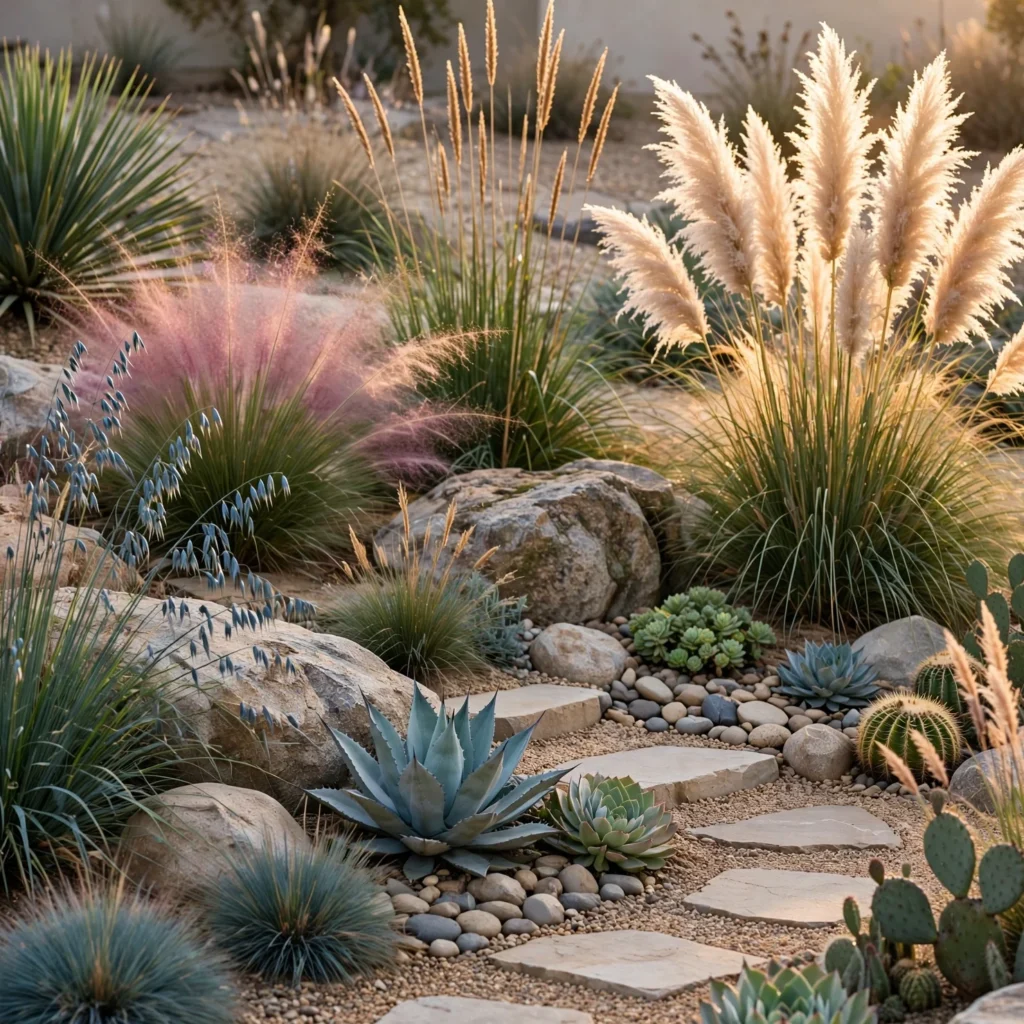
Combining ornamental grasses with a rock mulch base creates a xeriscape planting that moves and adds sound in the wind while still requiring minimal water once roots establish. Feather reed grass and blue fescue both hold structure through fall and winter, giving the bed visual interest even in dormant months when flowering plants have nothing to offer. Spacing grass clumps to allow gravel to remain visible between them keeps the low-water character of the design intact rather than letting the planting fully close the bed.
8. Rock Border Edging
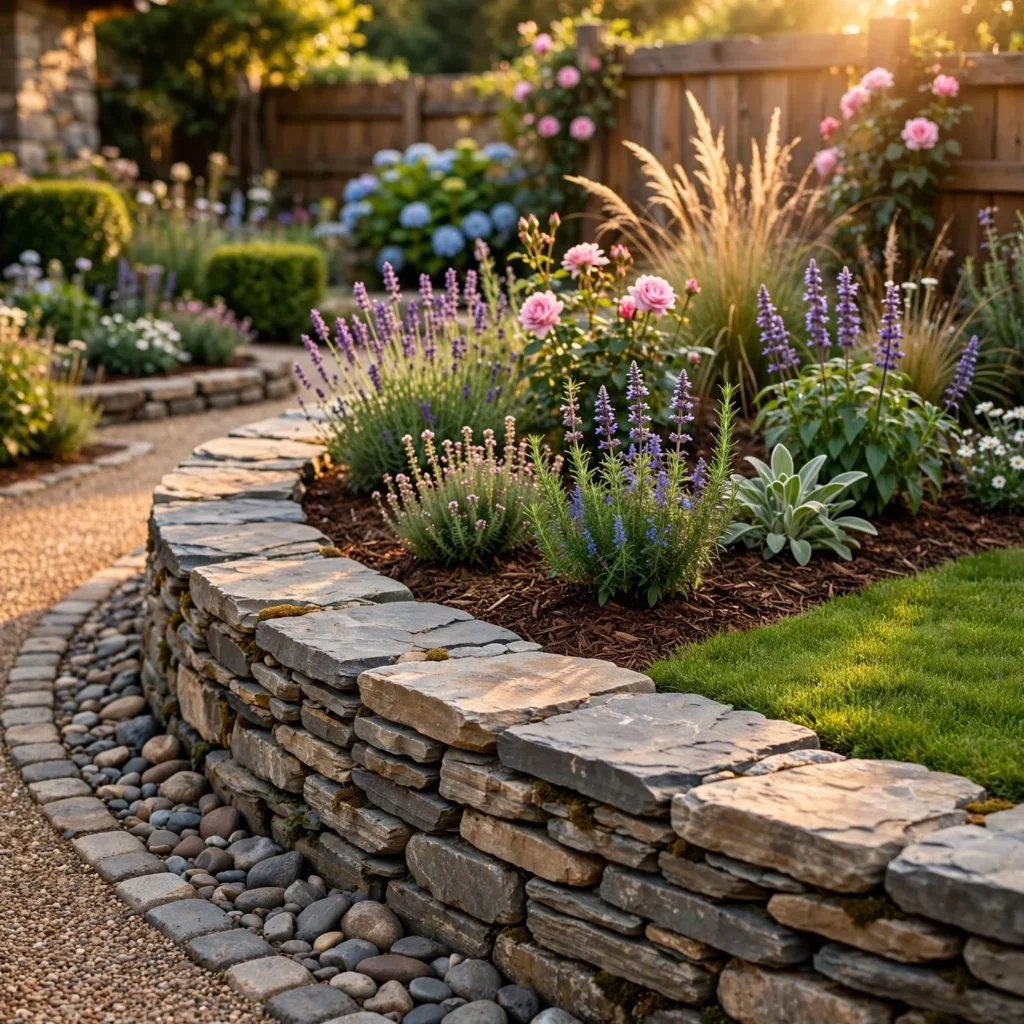
Using flat or rounded stones to edge a garden bed or lawn line gives a clean, defined boundary that holds its shape far longer than plastic or metal edging strips typically manage. Fieldstone set with roughly a third of each stone buried below grade stays more stable underfoot and through freeze-thaw cycles than stone simply laid on the surface. This approach works as a subtle finishing detail as much as a standalone rock garden feature on its own.
9. Retaining Wall Rock Garden
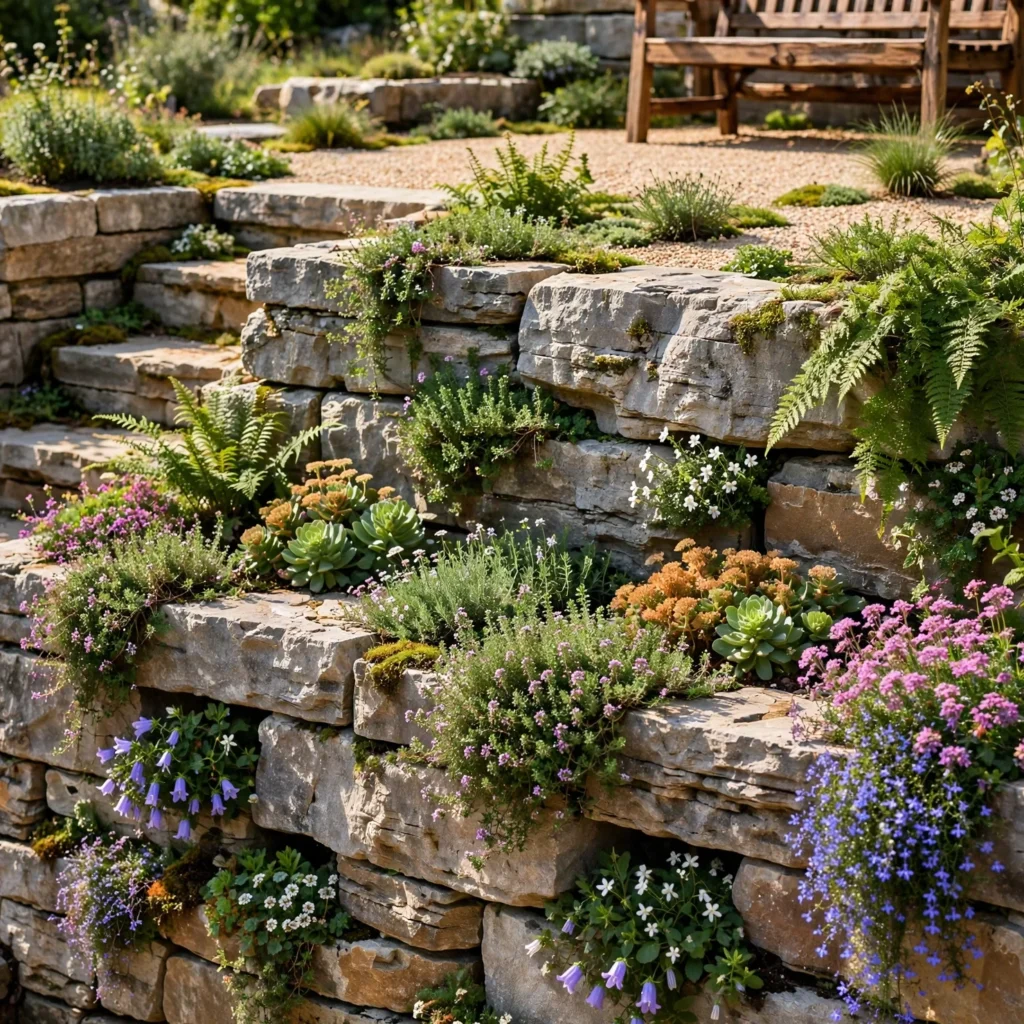
A retaining wall built from stacked natural stone doubles as both a structural solution for a grade change and a planting surface, with drought-tolerant species tucked into gaps between the stones themselves. Sedum, hens and chicks, and creeping phlox all root well directly into wall crevices packed with a small amount of soil, softening the hard edges of the stone over a season or two. This combination makes efficient use of a slope that would otherwise need separate solutions for erosion control and planting.
10. Gravel Path Through Rock Garden
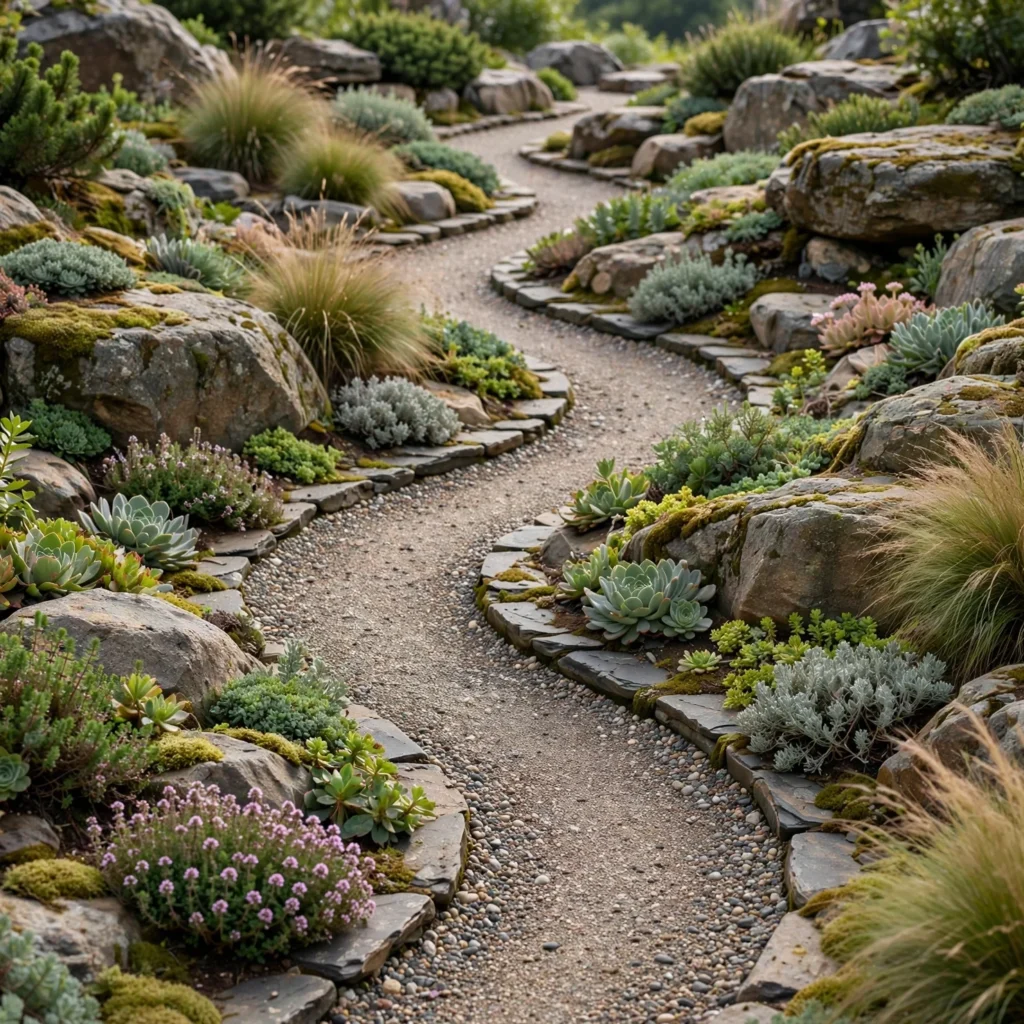
A gravel path winding through a rock garden bed gives visitors a defined route for viewing and maintaining the space without stepping directly on planted areas. Crushed granite compacts harder than pea gravel and holds up better to regular foot traffic, making it the more practical choice for an actual walking surface rather than purely decorative gravel. Curving the path rather than running it straight through the bed makes the garden feel larger and encourages a slower pace while walking through it.
11. Container Rock Garden
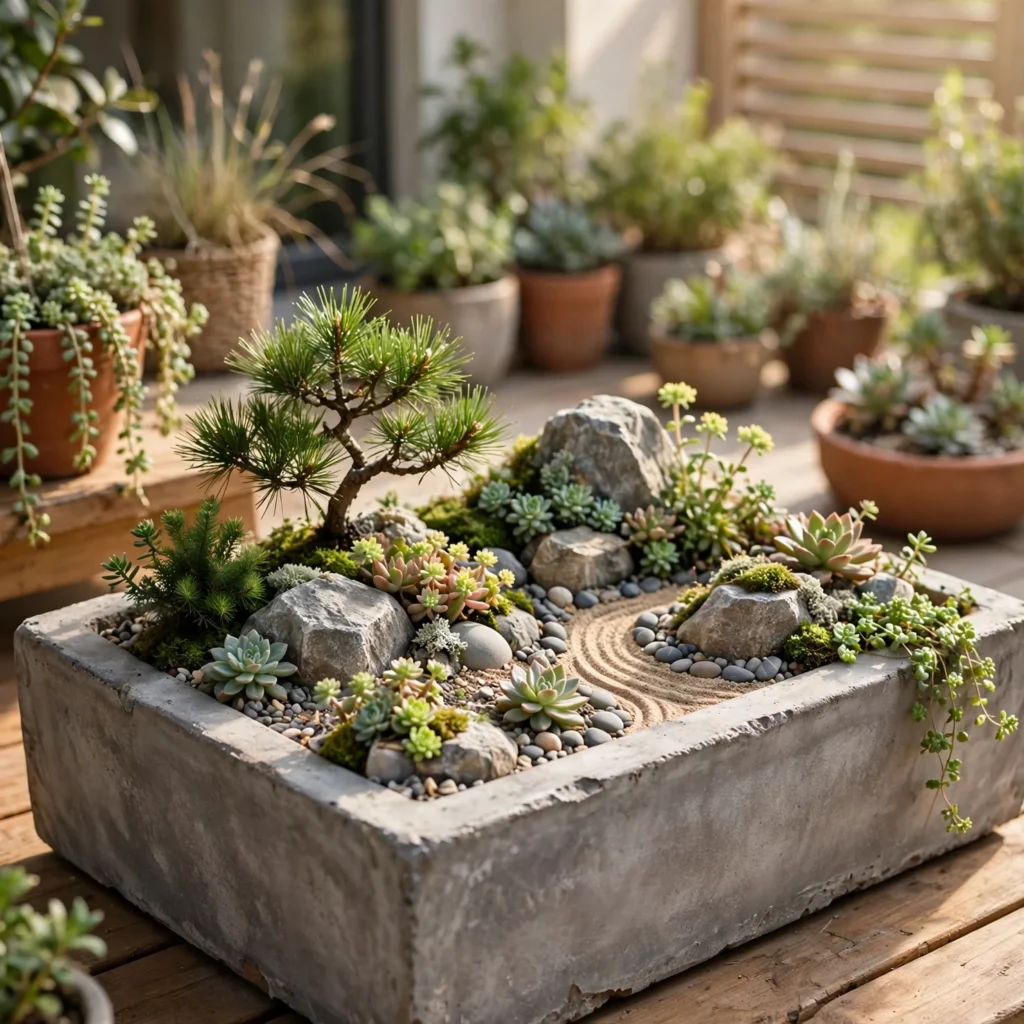
A container rock garden fits the entire aesthetic into a single large, shallow pot or trough, making the style accessible to anyone without in-ground planting space at all. A hypertufa trough, a lightweight concrete-like mix cast in a mold, gives an authentic stone look at a fraction of the weight of real carved stone. Miniature succulents and alpine plants scaled to the container size keep the proportions believable within such a compact space.
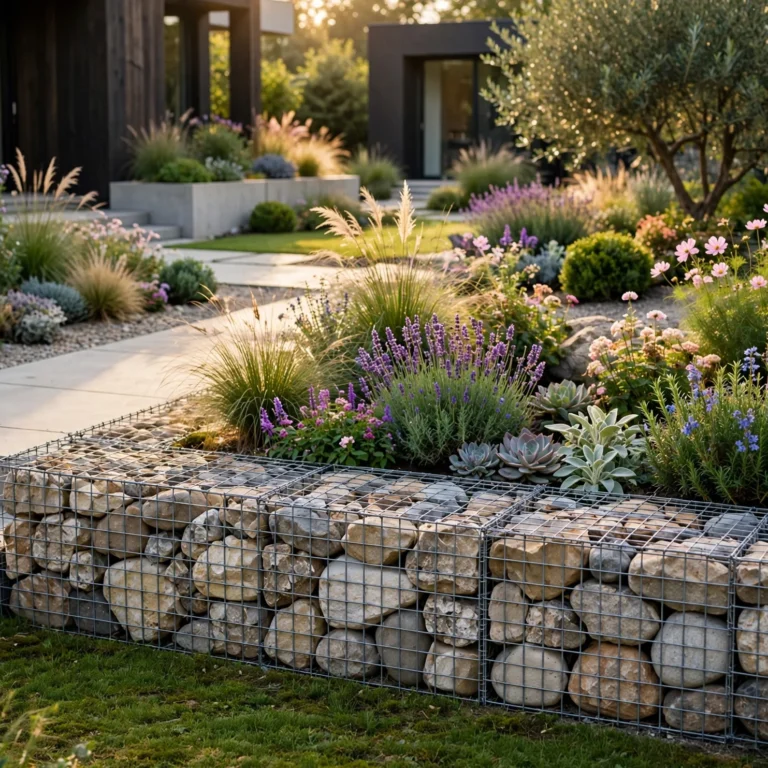
12. Rock Garden Ideas With a Gabion Wall
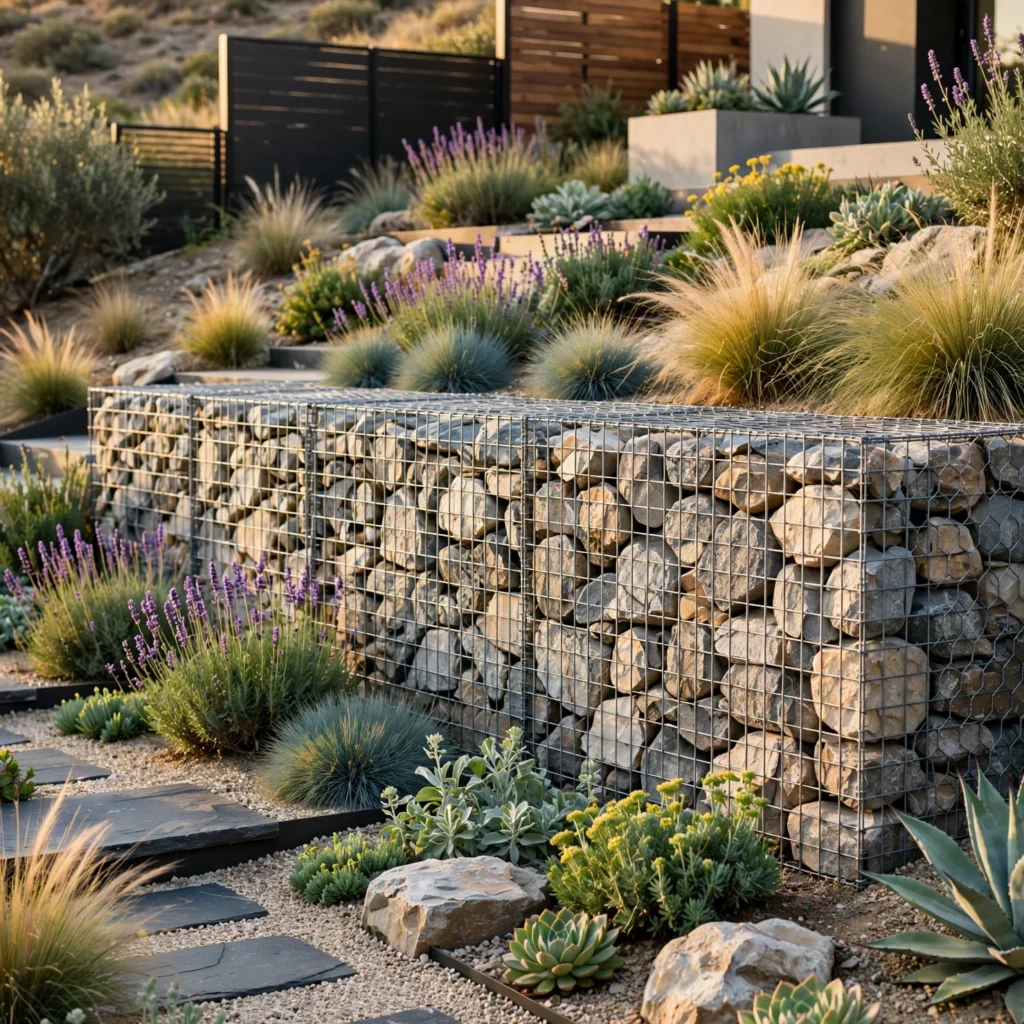
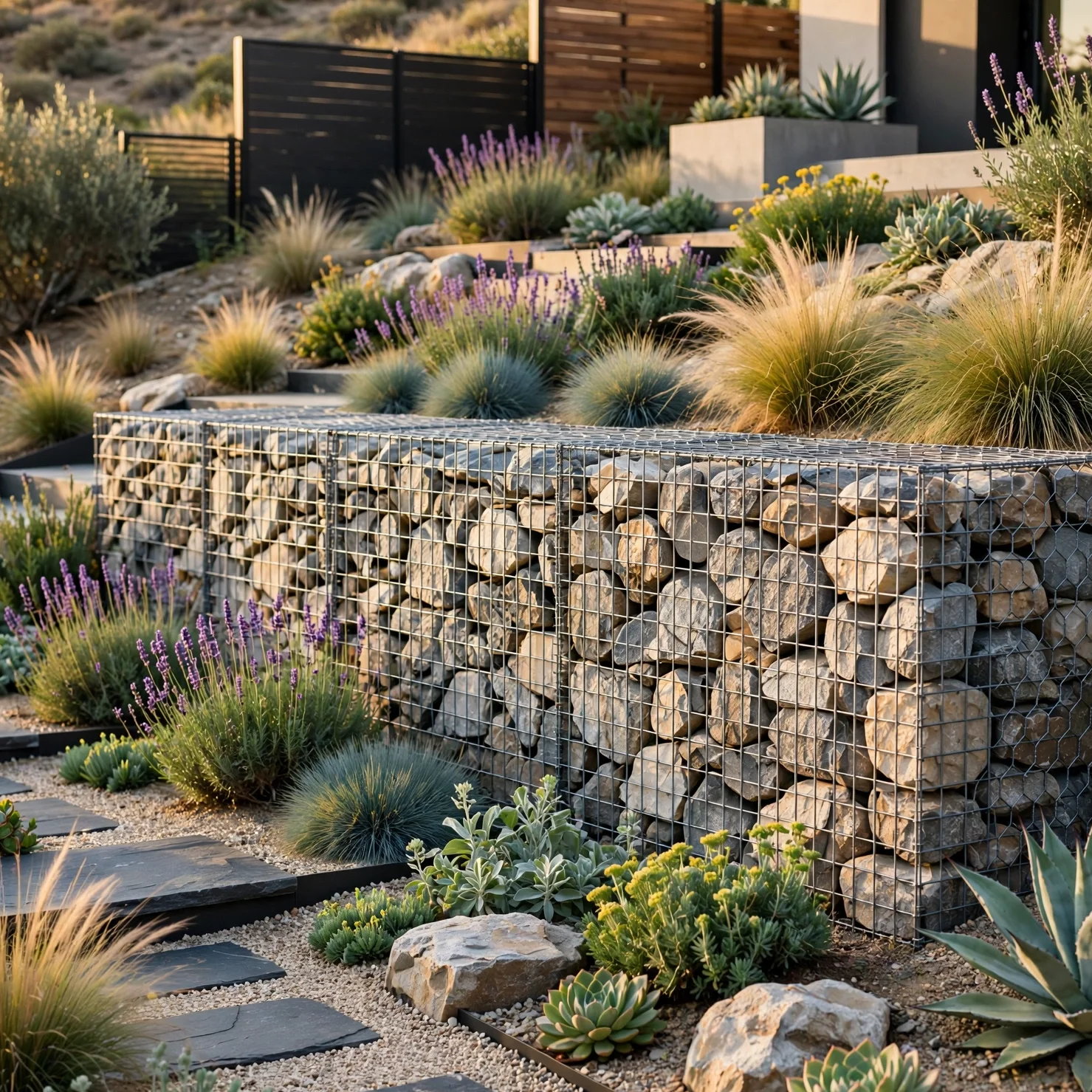
Among the more modern rock garden ideas is a gabion wall, a wire cage structure filled with loose stone that creates a contemporary retaining or accent wall without the labor of dry-stacking individual pieces by hand. Galvanized wire cages filled with mixed river rock or crushed stone hold up to weather with essentially no maintenance once installed. Planting trailing succulents or grasses along the top edge softens the industrial look of the cage structure while keeping the low-maintenance character of the overall design intact.
Shop the Look
A hypertufa trough planter brings the rock garden aesthetic to a patio or balcony without any in-ground space required. A set of natural fieldstone boulders in varying sizes creates a believable focal point grouping for a larger bed. A roll of steel landscape edging keeps gravel paths and planted areas cleanly separated over time. A galvanized gabion cage kit simplifies building a modern accent wall without hand-stacking individual stones.
Common Mistake to Avoid
The most common mistake in rock garden design is using uniform, same-sized gravel or stone throughout the entire bed, which reads as flat and artificial compared to the varied stone sizes found in natural rock formations. Real rocky landscapes mix fine gravel, medium stones, and larger boulders together, and replicating that variation matters more for a convincing look than the specific stone type chosen. Mixing at least two or three stone sizes, with larger pieces used sparingly as focal points, avoids the flat, uniform look that undermines an otherwise well-planned design.
FAQs
What plants grow best in a rock garden?
Drought-tolerant plants with shallow, fibrous root systems grow best in a rock garden, including sedum, hens and chicks, creeping thyme, and alpine species like saxifrage and dianthus. Ornamental grasses such as blue fescue also perform well since their narrow leaf structure tolerates the reflected heat rock gardens often generate. Avoiding moisture-loving plants like hosta or fern is important, since the fast-draining conditions a rock garden creates will stress these species regardless of how much they’re watered.
How do I build a rock garden on a slope?
Building a rock garden on a slope typically starts with terracing the grade using stacked stone retaining walls, which breaks a continuous incline into level planting pockets that are far easier to work with and less prone to erosion. Working from the bottom of the slope upward keeps the structure stable as each tier is completed. Choosing plants with spreading root systems, like creeping juniper or sedum, for the terrace edges helps hold soil in place as the planting establishes.
Do rock gardens need irrigation?
Established rock gardens generally need very little supplemental irrigation, since the plants chosen for this style are specifically selected for drought tolerance and the gravel or stone mulch reduces moisture evaporation from the soil beneath. New plantings do need regular watering for the first one to two growing seasons while root systems develop enough depth to access moisture on their own. A basic drip system on a timer can help during this establishment period without requiring daily manual watering.
What is the difference between a rock garden and a xeriscape?
A rock garden specifically emphasizes stone as a primary design and structural element, often featuring boulder groupings or alpine-style plantings, while xeriscape is a broader landscaping approach focused on water conservation that may or may not include significant rock features. Many xeriscape designs do incorporate rock mulch and drought-tolerant plants similar to a rock garden, which is why the two styles overlap so often in practice. The distinction matters mainly in emphasis, since a rock garden prioritizes the stone itself as a visual feature rather than just a practical mulch layer.
How much does it cost to build a rock garden?
A basic rock garden using gravel mulch, a handful of accent boulders, and drought-tolerant plants typically costs $500 to $2,000 for a modest bed, depending on stone type and how much is purchased versus sourced locally. Adding structural elements like a terraced retaining wall or a gabion feature can push the budget toward $3,000 to $8,000 depending on wall height and length. Sourcing boulders and larger stone locally rather than through a garden center often reduces cost significantly, since delivery and handling typically account for a large share of stone pricing.
Conclusion
These rock garden ideas range from a simple container trough to a full terraced slope with retaining walls, giving homeowners options across nearly any yard condition and budget. Starting with the specific problem the space presents, whether that’s a steep slope, poor drainage, or simply wanting to cut down on water use, narrows the right approach considerably before any stone gets placed. Save this post to Pinterest for reference, and check the related post on small garden ideas for pairing inspiration.