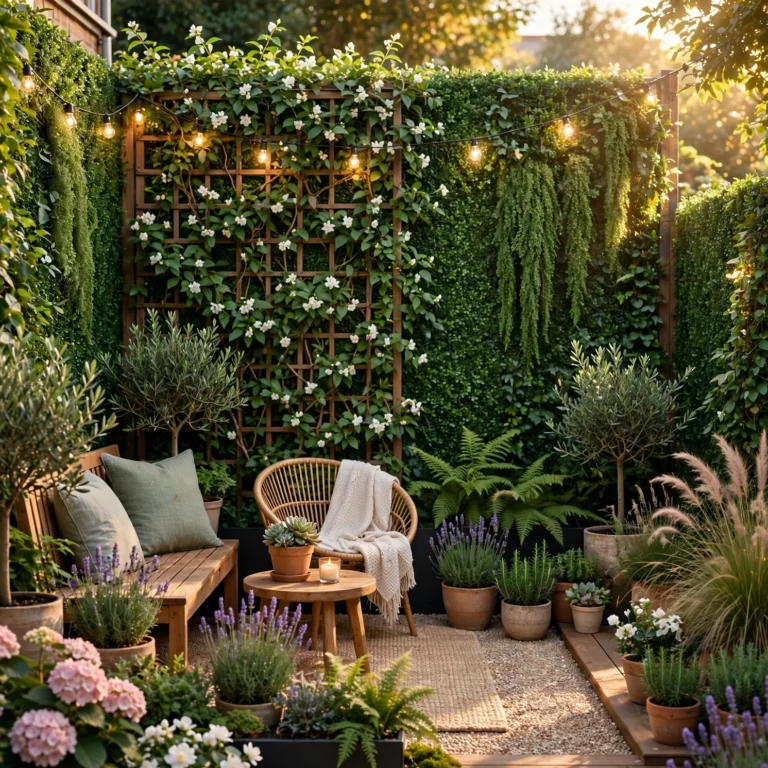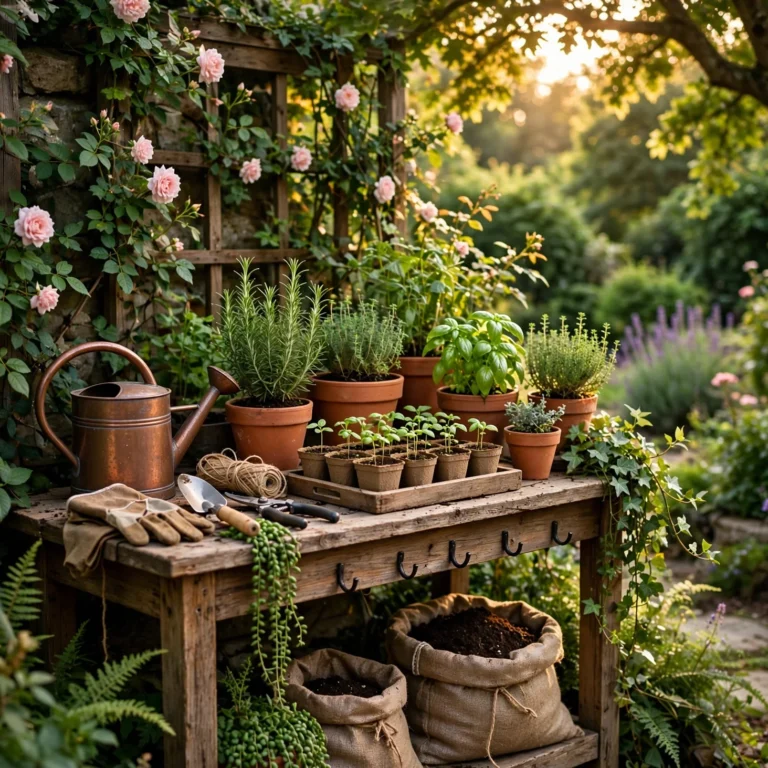
12 Beautiful Flower Garden Ideas for Color That Lasts All Season
A flower garden that blooms hard for three weeks in June and sits flat the rest of the year isn’t making the most of the space it takes up in the yard. The right flower garden ideas plan for bloom succession, structure, and purpose from the start, rather than just picking whatever looks good at the nursery in a single visit. This post covers twelve practical flower garden ideas, from cutting beds to pollinator borders, with real plant suggestions and layout guidance for building color that actually lasts.
Trend & Background
Interest in flower gardening has grown alongside the broader cut-flower movement, with more home gardeners growing their own bouquets instead of buying from a florist, partly driven by the rising cost of store-bought arrangements. Pollinator decline has also pushed flower garden design toward native and near-native species that support bees and butterflies rather than purely ornamental hybrids bred for looks alone. At the same time, cottage-style and naturalistic planting has overtaken the tightly clipped, single-species flower bed as the dominant aesthetic, favoring dense, layered plantings that mimic how flowers grow in the wild.
Key Takeaways
- These flower garden ideas combine bloom-time planning with layout techniques for continuous color.
- Cutting gardens, pollinator beds, and cottage-style borders each solve a different design goal.
- Perennial and annual mixes reduce yearly replanting while still keeping color fresh.
- Several ideas work in narrow borders as easily as full dedicated flower beds.
1. Dedicated Cutting Garden Row
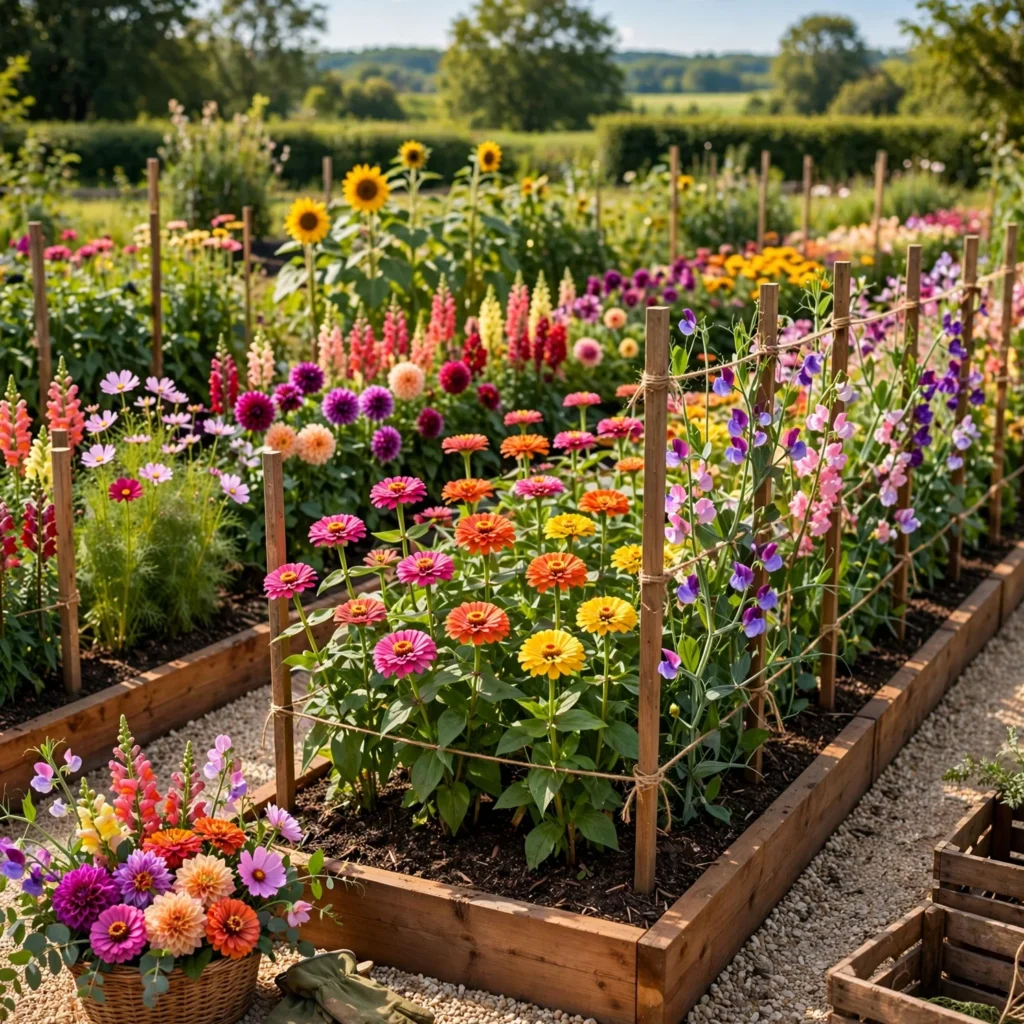
A dedicated cutting garden row set apart from ornamental beds lets flowers be harvested freely for indoor arrangements without leaving gaps in the yard’s main display areas. Zinnias, dahlias, and cosmos are reliable, fast-blooming choices that respond well to regular cutting, which actually encourages more blooms rather than fewer. Rows spaced 12 inches apart with support netting for taller varieties keep stems straight and make harvesting considerably faster.
2. Perennial Border With Bloom Succession
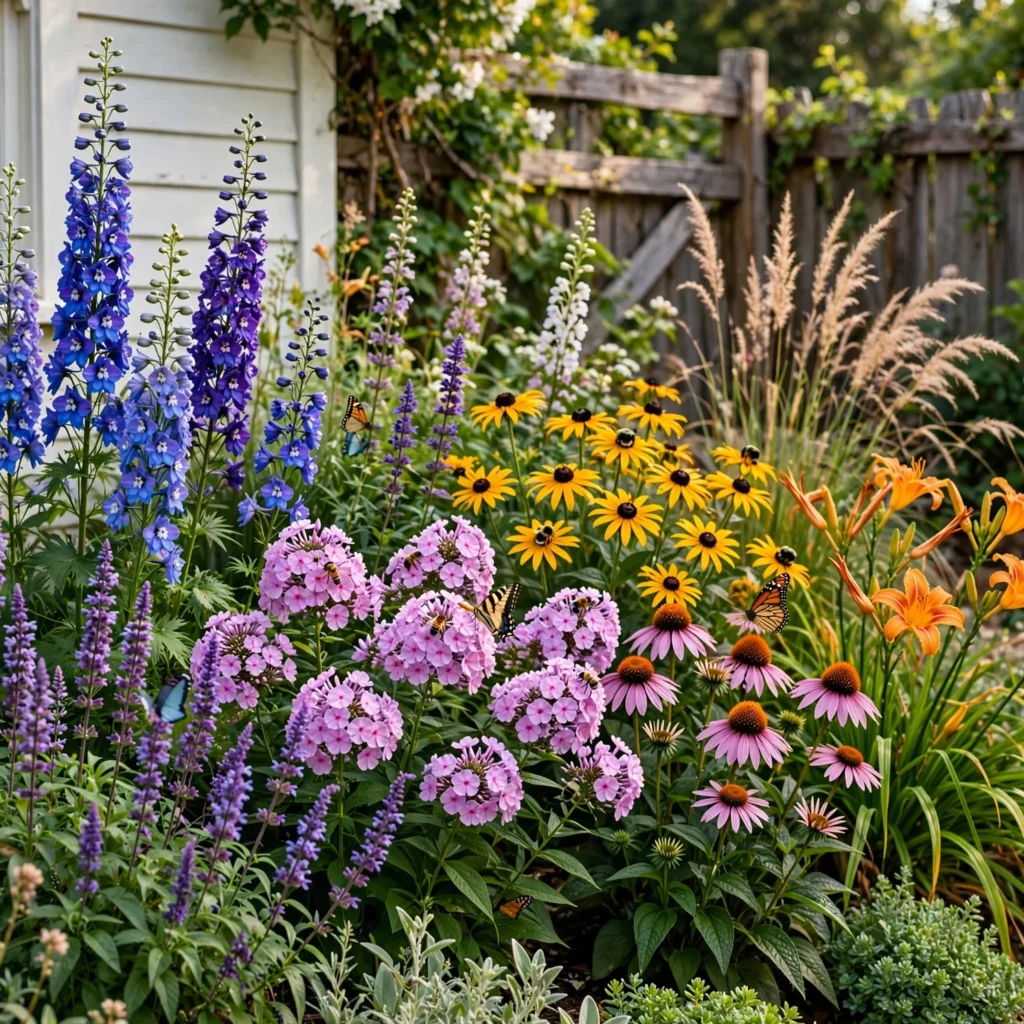
A perennial border planned around bloom succession keeps color moving through the bed from early spring through fall instead of peaking once and going flat. Pairing early tulips and peonies with summer coneflower and black-eyed Susan, then finishing with fall aster, avoids the common gap that hits most borders in late summer. Mapping bloom times on paper before planting prevents accidentally clustering everything into a single narrow window.
| Bloom Season | Plant Examples | Height Range |
| Spring | Tulip, peony, iris | 12-30 in |
| Summer | Coneflower, black-eyed Susan, salvia | 18-36 in |
| Fall | Aster, sedum, goldenrod | 12-24 in |
3. Cottage-Style Mixed Border
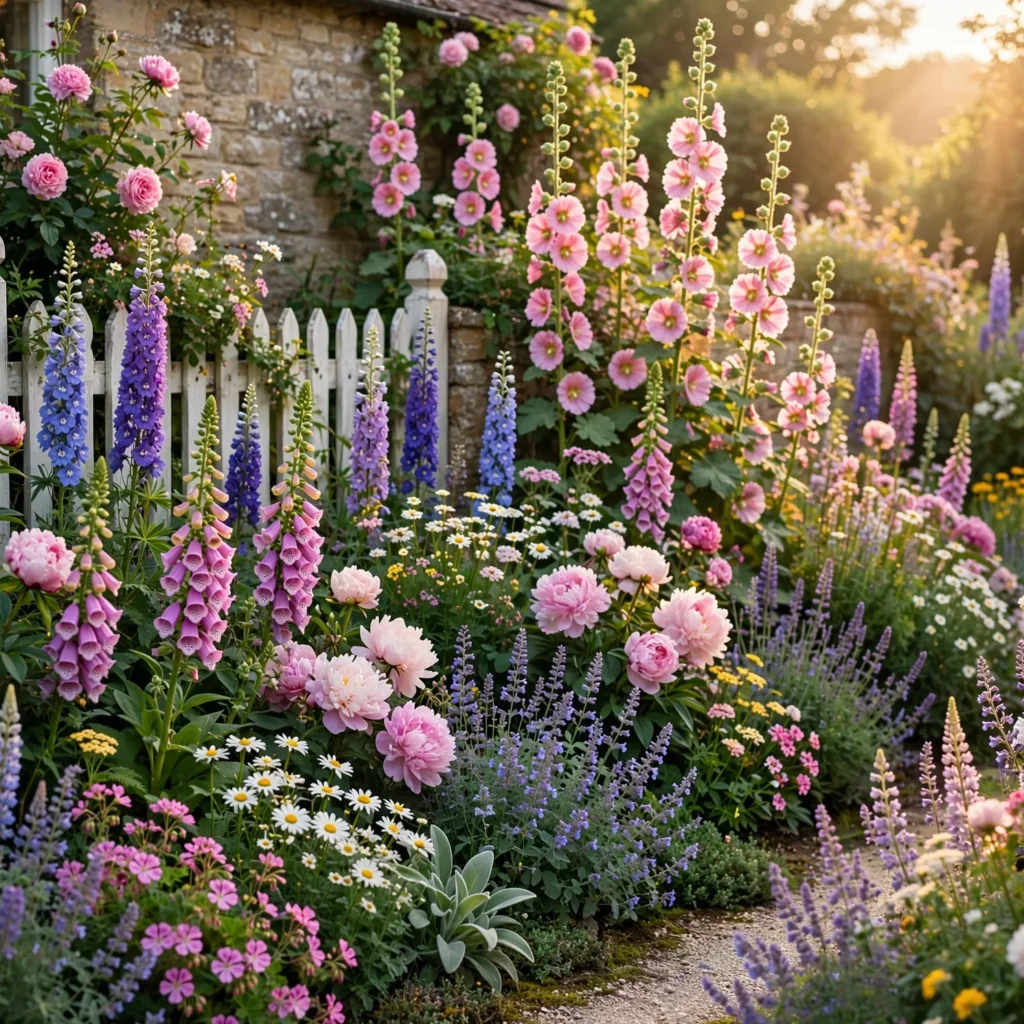
A cottage-style mixed border packs flowers densely together with minimal bare soil visible, creating the layered, slightly informal look associated with traditional English gardens. Foxglove, delphinium, and hollyhock provide height at the back, while lady’s mantle and catmint fill in lower and looser toward the front edge. Letting plants lean and mingle slightly, rather than staking everything rigidly upright, is part of what gives this style its relaxed character.
4. Pollinator-Friendly Flower Bed
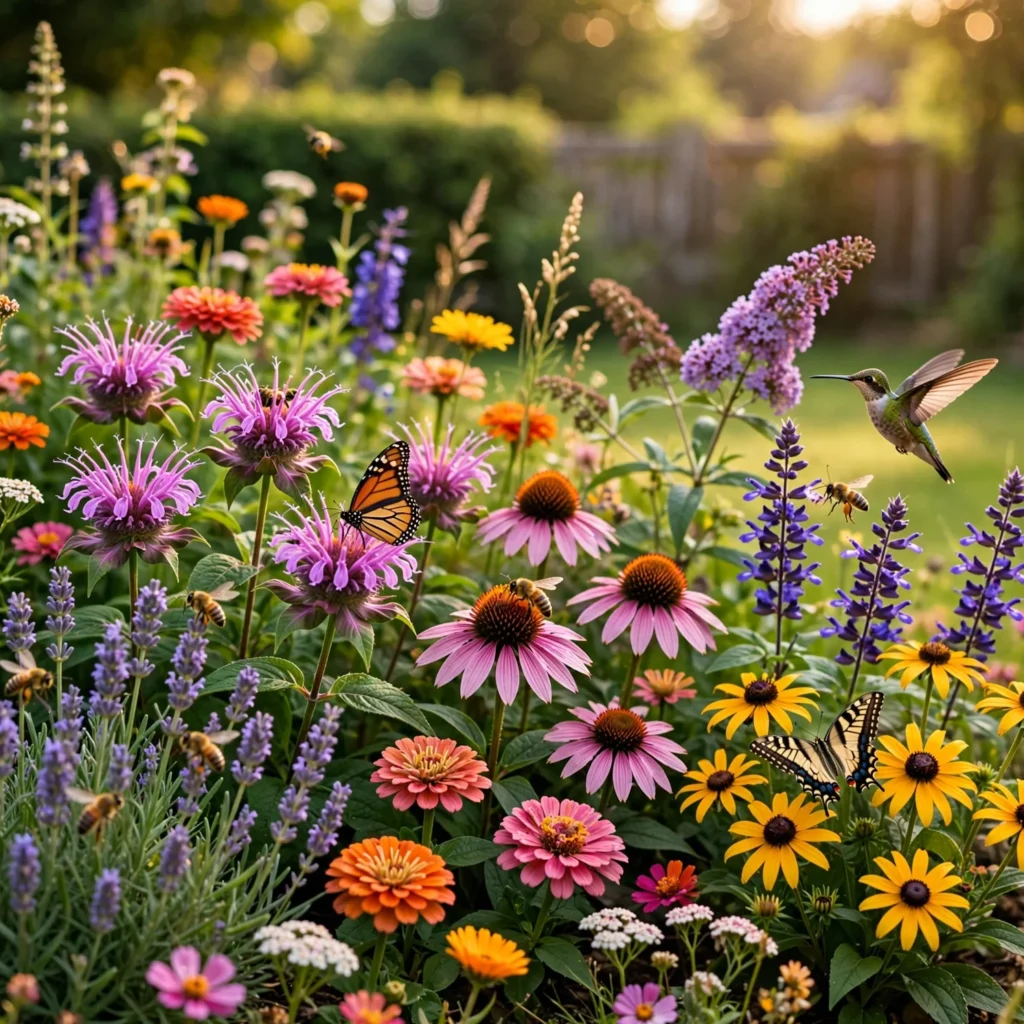
A pollinator-friendly flower bed built around native species like milkweed, bee balm, and purple coneflower supports bees and butterflies while still delivering strong seasonal color. Grouping plants by bloom time ensures something is flowering from spring through fall, which keeps pollinators fed continuously rather than only during a short peak. Avoiding pesticides in and around this bed matters as much as the plant selection itself for actually attracting pollinators.
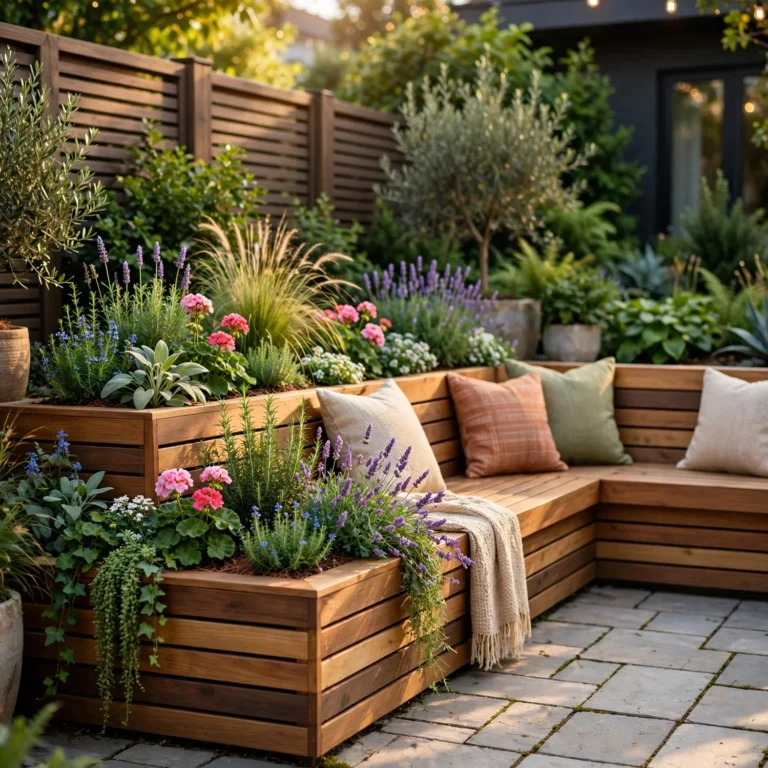
5. Raised Flower Bed With Drainage Gravel
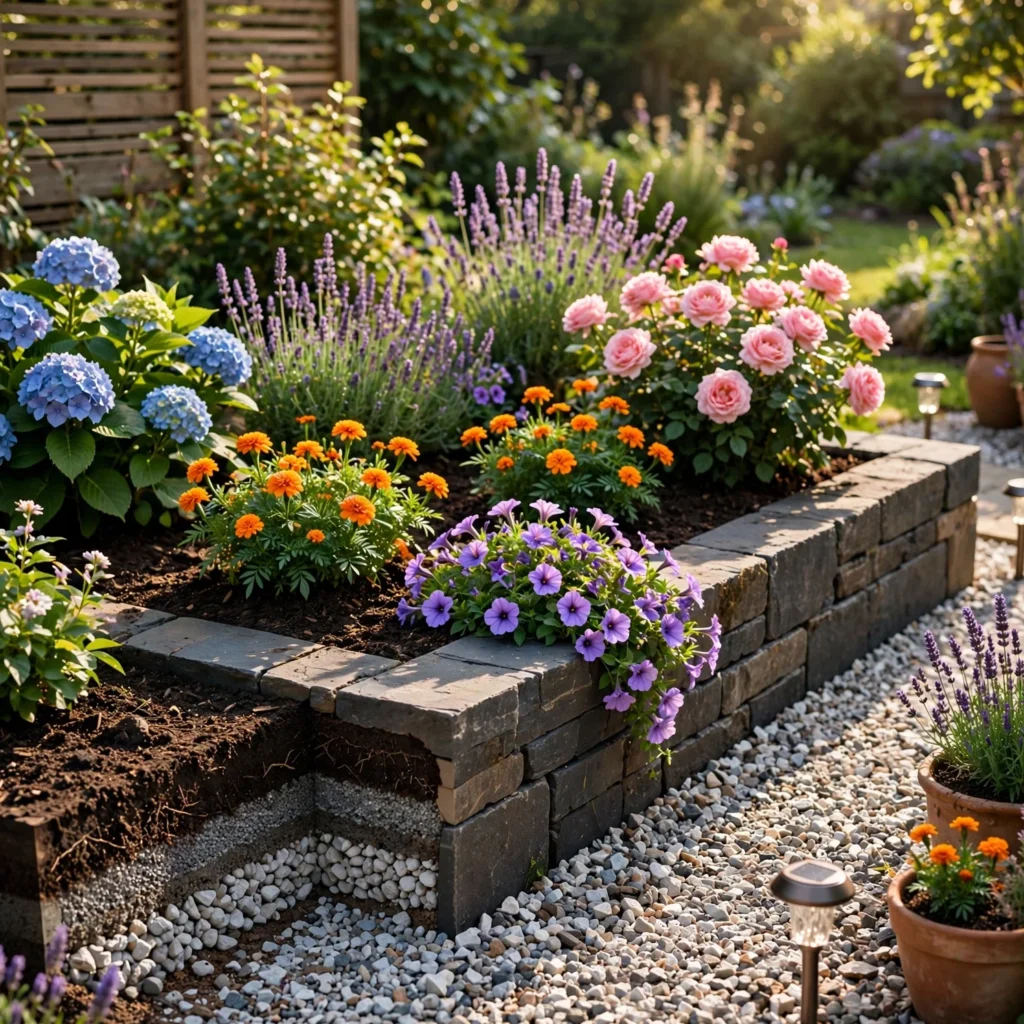
A raised flower bed built with a gravel drainage layer at the base solves the soggy soil problems that cause many flowering perennials to rot over winter. Cedar or composite lumber frames both hold up well, with a bed depth of 12 to 18 inches giving most perennials enough room for healthy root development. This approach works especially well in yards with heavy clay soil where in-ground beds struggle to drain adequately after rain.
Add personality to your landscape with our garden design ideas, including fountains, planters, sculptures, and DIY accents.
6. Annual Container Flower Display
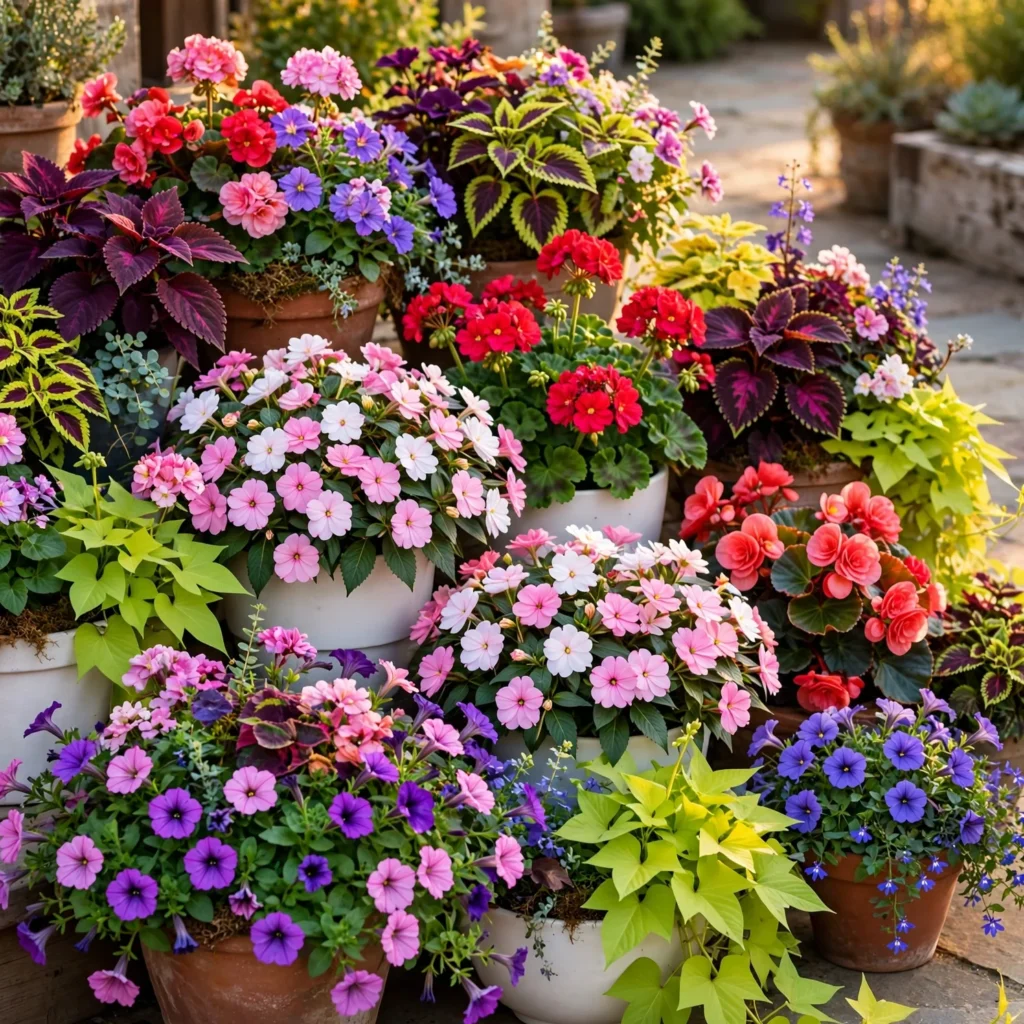
An annual container flower display near an entrance or patio delivers reliable, nonstop color for an entire growing season without the wait that perennials often require to establish. Combining a thriller, filler, and spiller, such as a tall salvia, mounding petunia, and trailing bacopa, keeps each pot visually balanced on its own. Deadheading spent blooms every week or two keeps annual containers flowering continuously rather than slowing down mid-season.
7. Flower Meadow Patch
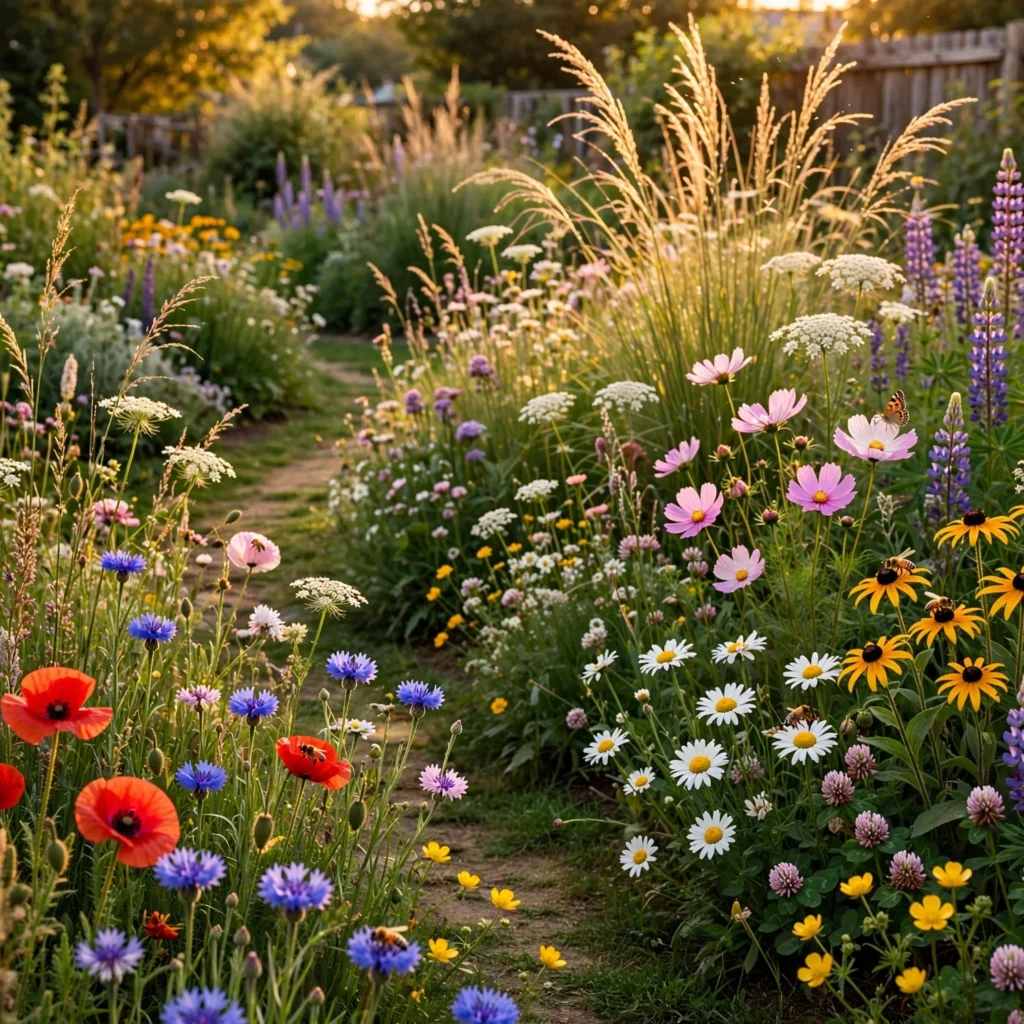
A flower meadow patch planted with a wildflower seed mix replaces a section of traditional lawn with a low-maintenance, naturalistic swath of color that changes character throughout the season. Regionally adapted seed mixes perform far better than generic blends, since they include species already suited to local rainfall and soil conditions. Mowing the patch once in late fall, after seed heads have dropped, keeps the meadow reseeding itself year after year without replanting.
8. Vertical Flower Trellis
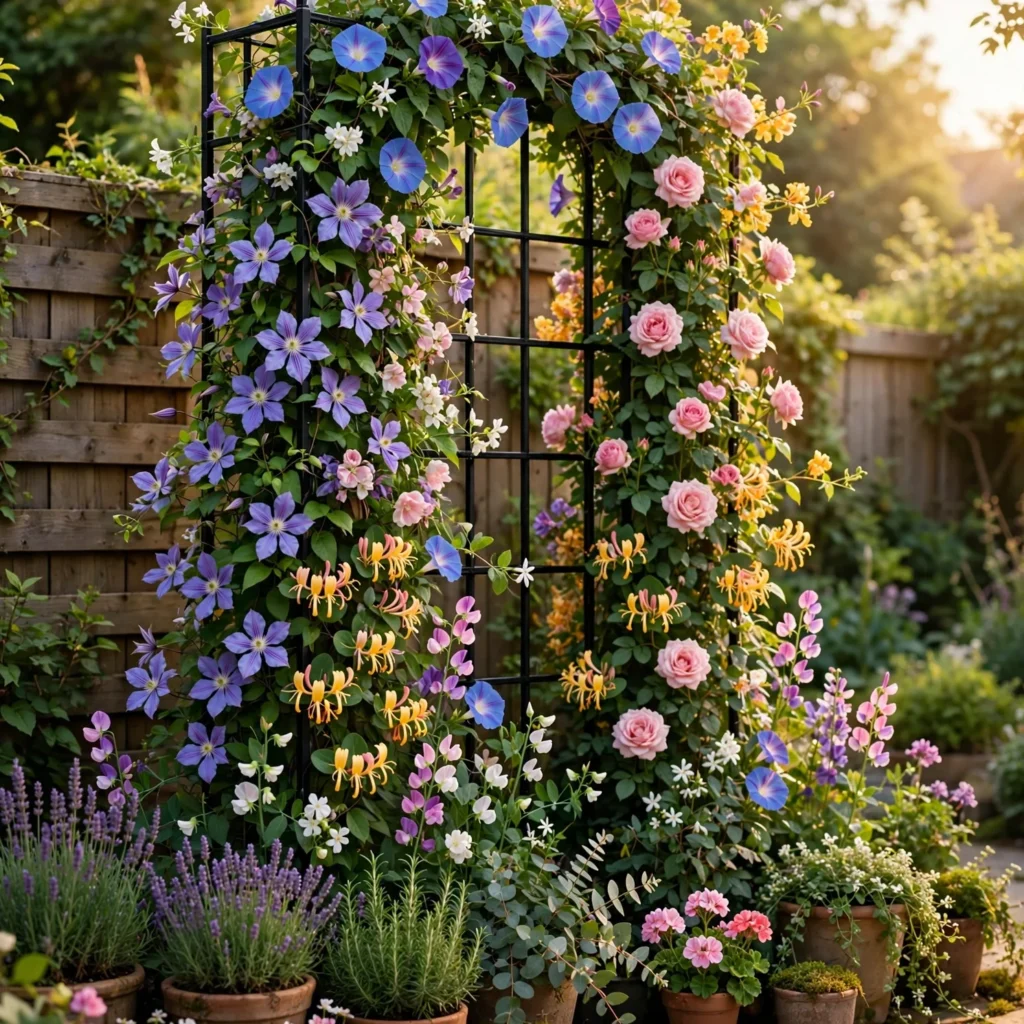
A vertical flower trellis trains climbing varieties like sweet pea, clematis, or climbing rose upward, adding height and color to a garden without expanding its ground footprint. A 6 to 8-foot wood or metal trellis positioned against a fence or freestanding in a bed gives most climbing flowers enough vertical room for a full season of growth. This approach works particularly well in narrow borders where horizontal space for additional plants is limited.
9. Monochromatic Color Scheme Bed
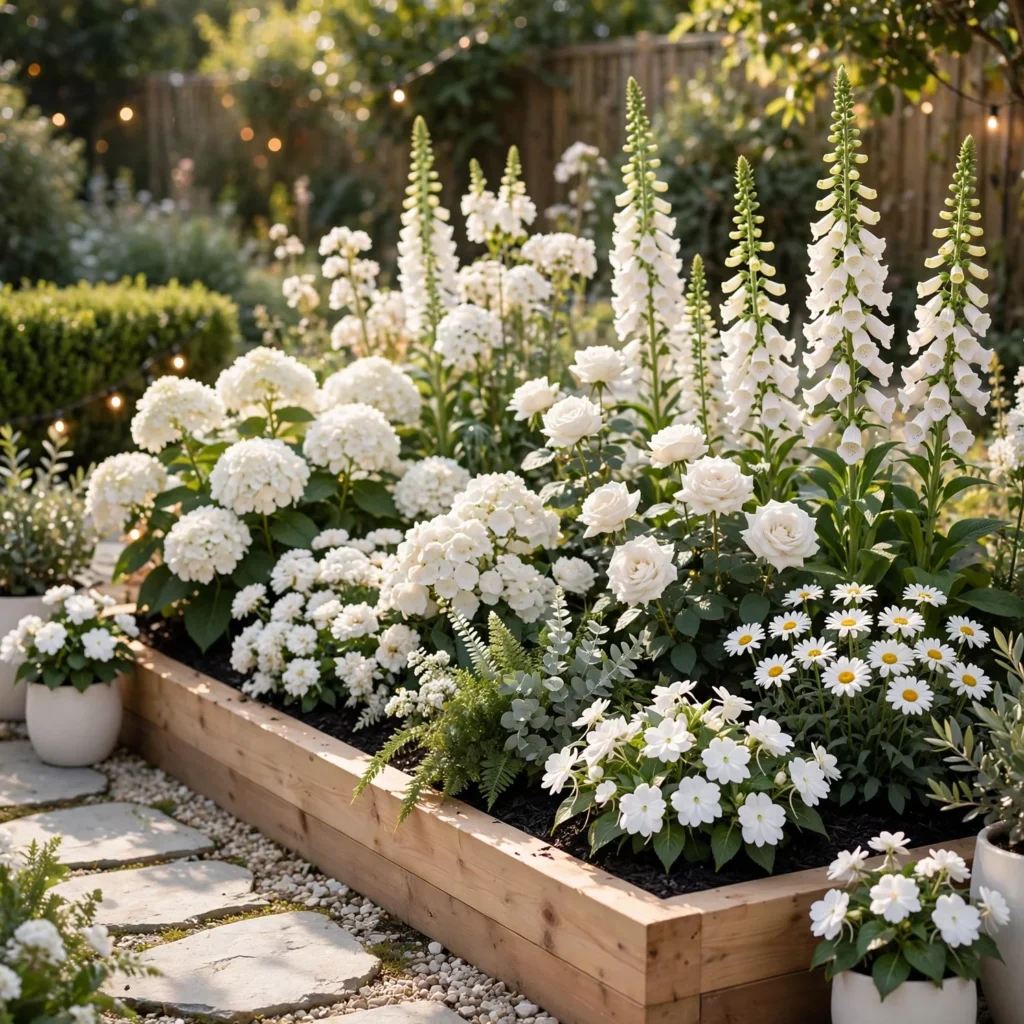
A flower bed built around a single color family, like a white garden or an all-purple border, creates a striking, cohesive look that reads clearly even from a distance. White gardens in particular tend to glow at dusk and into early evening, making them a strong choice near a patio used for evening entertaining. Varying texture and bloom shape within the limited color palette keeps a monochromatic bed from feeling flat despite the narrow range.
10. Fragrant Flower Path Border
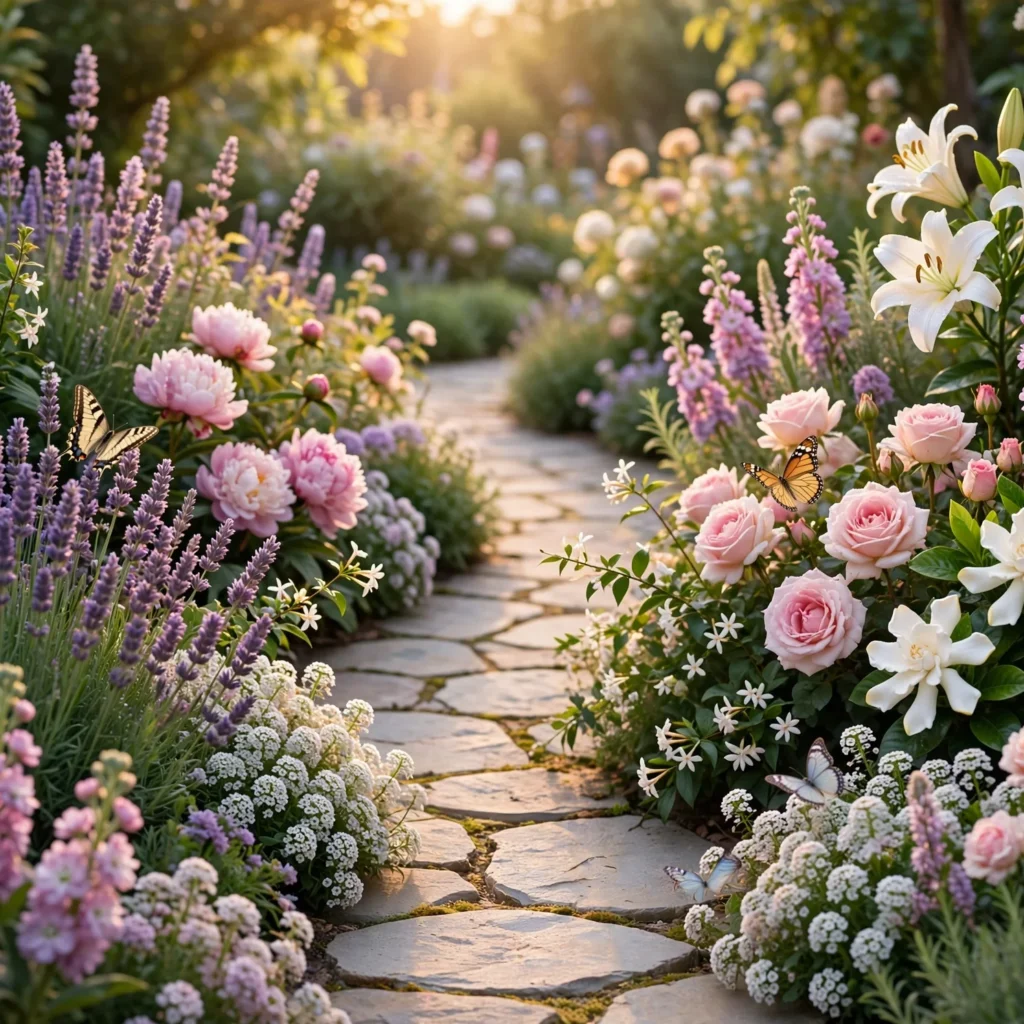
Lining a walkway with fragrant flowering plants like lavender, peony, or sweet alyssum turns an everyday path into a sensory experience rather than just a functional route to the door. Planting fragrant species close enough to the path edge that brushing against them releases scent makes the effect noticeable without needing to stop and bend down. Lavender in particular tolerates the reflected heat and drier soil common along stone or paver paths better than many other fragrant options.
11. Bulb Layering for Extended Bloom
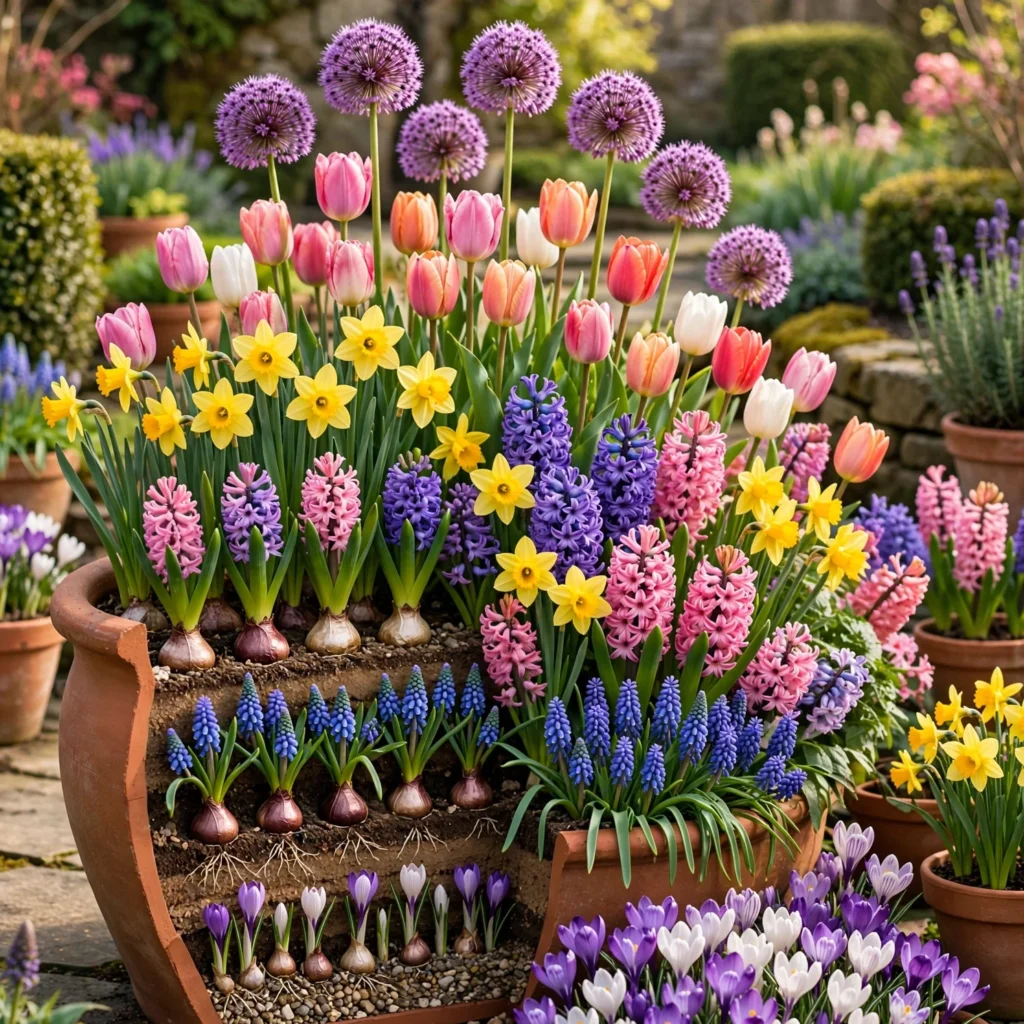
Bulb layering, sometimes called lasagna planting, stacks different bulb types at varying depths in the same planting hole so that blooms emerge in sequence from a single spot over several weeks. Larger bulbs like daffodils go deepest, tulips in the middle layer, and smaller bulbs like crocus near the surface, all covered with soil between each layer. This technique makes efficient use of limited bed space while still delivering weeks of continuous spring color from what looks like one planting area.
12. Flower Garden Ideas With a Rose Arbor
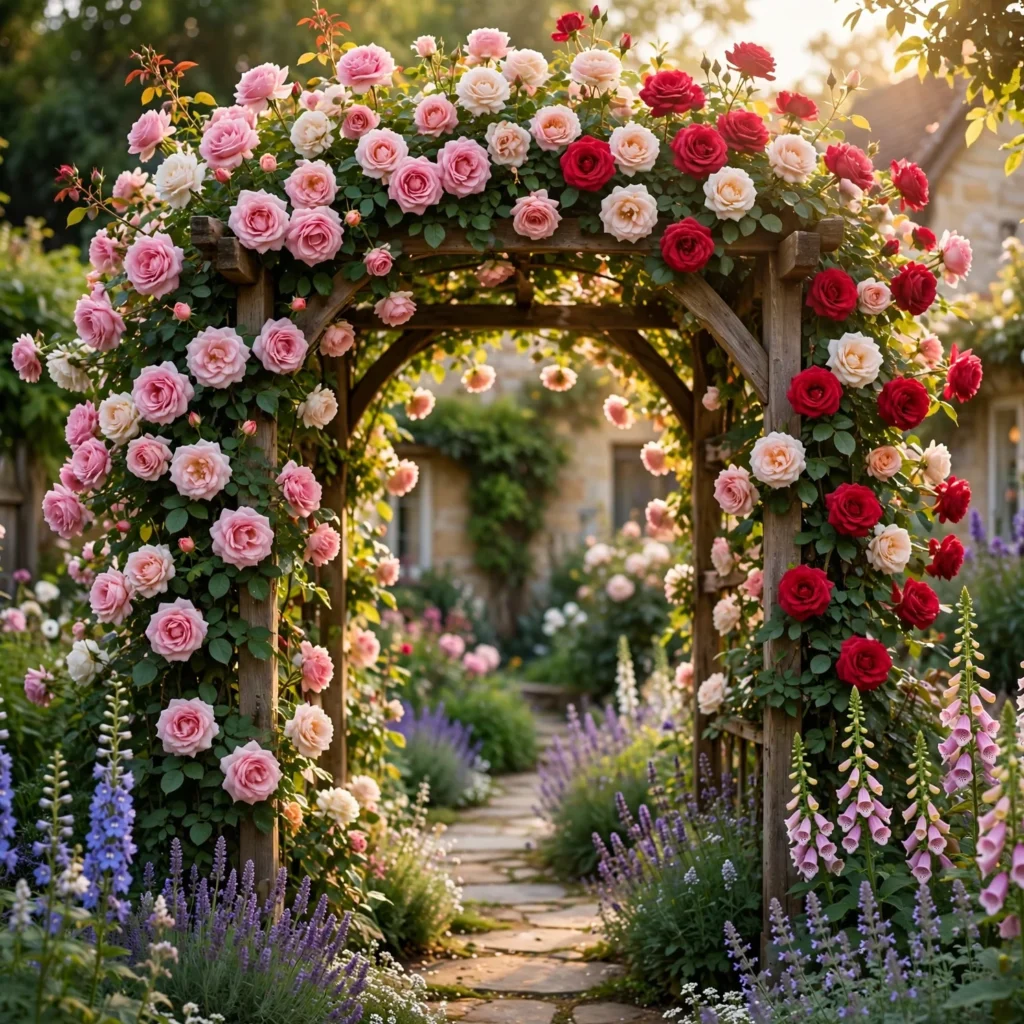
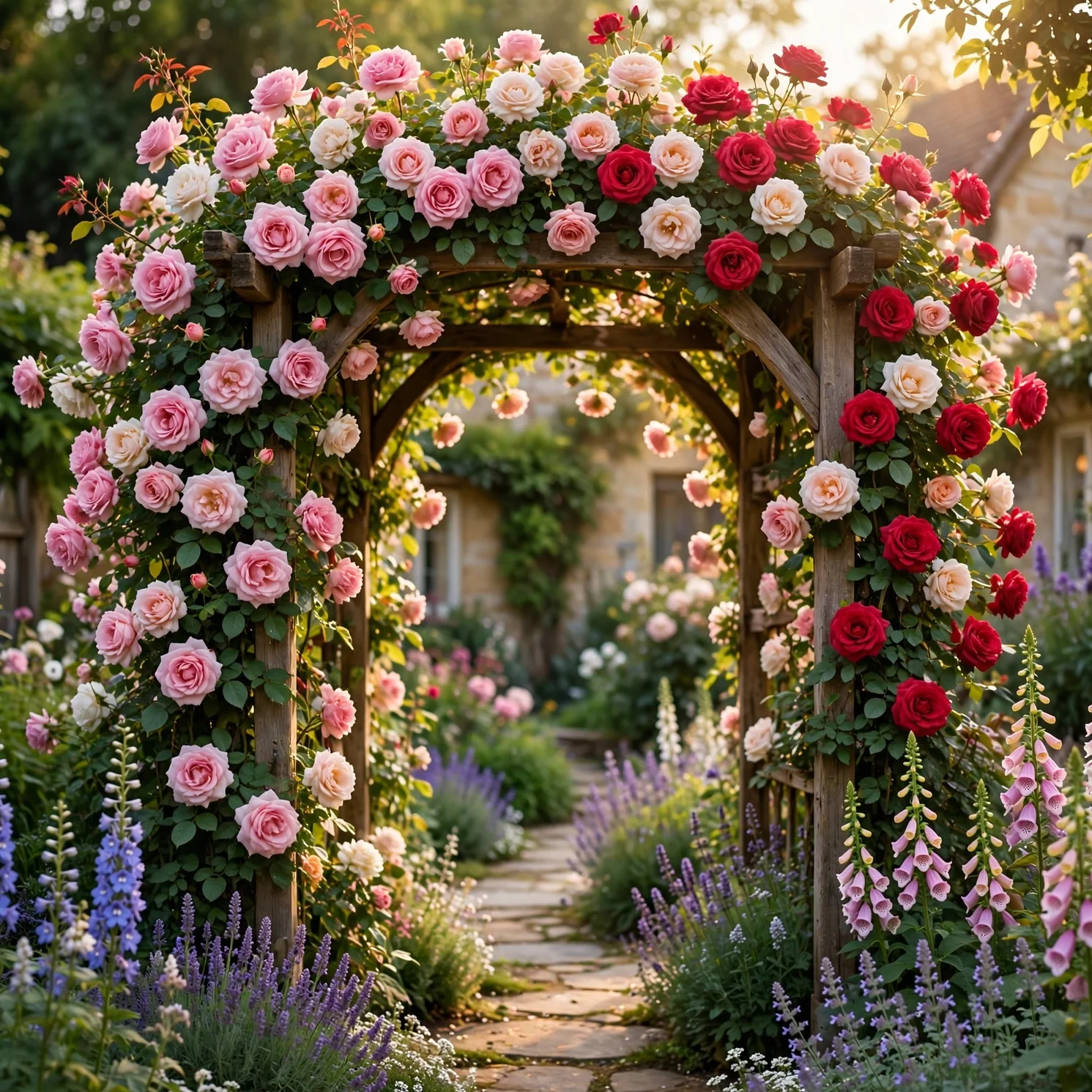
Among the most classic flower garden ideas is a rose arbor positioned over a garden entrance or path, combining a climbing rose variety with a wood or metal arch structure for a dramatic focal point. Climbing varieties like New Dawn or Zephirine Drouhin train well onto a standard 7-foot arbor and typically reach full coverage within two to three growing seasons. Positioning the arbor at the entrance to a garden room or along the main sightline gives it the visual weight the structure deserves.
Shop the Look
A cedar garden trellis kit gives climbing sweet peas or clematis a sturdy structure without a custom build. A set of matching terra cotta containers works well for an annual flower display near an entryway or patio. A metal rose arbor with a powder-coated finish holds up to weather better than untreated wood while framing a garden entrance. A regionally adapted wildflower seed mix takes the guesswork out of starting a low-maintenance meadow patch.
Common Mistake to Avoid
The most common mistake in flower garden planning is buying plants based on what’s blooming at the nursery during a single spring visit, which results in a bed that peaks in May and offers little color for the rest of the year. This happens because summer and fall bloomers are rarely in flower, and therefore rarely purchased, during an early-season shopping trip. Mapping out a bloom calendar before buying anything, and deliberately seeking out mid and late-season varieties, avoids this lopsided result.
FAQs
What flowers bloom all summer in a garden?
Coneflower, black-eyed Susan, salvia, and zinnia all reliably bloom through the full summer season with regular deadheading to encourage continued flowering. Coreopsis and gaillardia also hold up well through summer heat without the wilting some more delicate annuals experience. Mixing several of these together in one bed avoids the single-species monoculture look while still guaranteeing color from June through September.
How do I plan a flower garden for continuous bloom?
Planning a flower garden for continuous bloom starts with mapping out when each candidate plant flowers, then deliberately choosing species that cover spring, summer, and fall rather than clustering everything into one season. A simple bloom calendar, even a rough sketch, reveals gaps before they become a problem in the actual garden. Layering in a few reliable long-bloomers like coneflower or salvia alongside shorter-window specialists like tulips or peonies smooths out the transitions between seasons.
What is the easiest flower garden to maintain?
A native perennial bed built around species like coneflower, black-eyed Susan, and switchgrass is generally the easiest flower garden to maintain, since these plants are already adapted to local rainfall and soil without needing regular fertilizing. Choosing a limited plant palette also reduces the range of different care requirements a gardener needs to track. Mulching the bed each spring cuts down on weeding, which is usually the most time-consuming part of flower garden upkeep.
Can I grow a flower garden in partial shade?
A flower garden in partial shade can still deliver strong color using species like astilbe, bleeding heart, columbine, and hosta, several of which actually prefer some protection from direct afternoon sun. Fewer flowering species tolerate deep shade compared to full sun, so partial shade, meaning three to six hours of sun daily, gives considerably more options than a fully shaded site. Choosing plants matched specifically to the site’s actual light levels, rather than guessing, prevents the leggy, sparse growth that happens when shade-tolerant plants don’t get enough light.
How far apart should flowers be planted in a garden bed?
Flower spacing depends heavily on the mature width of each species, but most perennials do well spaced 12 to 18 inches apart, while larger shrub-like perennials such as peonies need closer to 24 to 36 inches. Planting too closely results in overcrowding and increased disease risk within two or three seasons as plants mature into each other. Checking the mature spread listed on a plant tag before installation, rather than spacing based on how small the plant looks at purchase, prevents this common problem.
Conclusion
These flower garden ideas range from a simple annual container display to a full bulb-layered bed with months of sequential bloom, giving gardeners options at nearly any level of commitment. Starting with one or two techniques, like bloom succession planning and a dedicated cutting row, builds a stronger flower garden without requiring a complete overhaul in a single season. Save this post to Pinterest for reference, and check the related post on garden design ideas for layout inspiration.