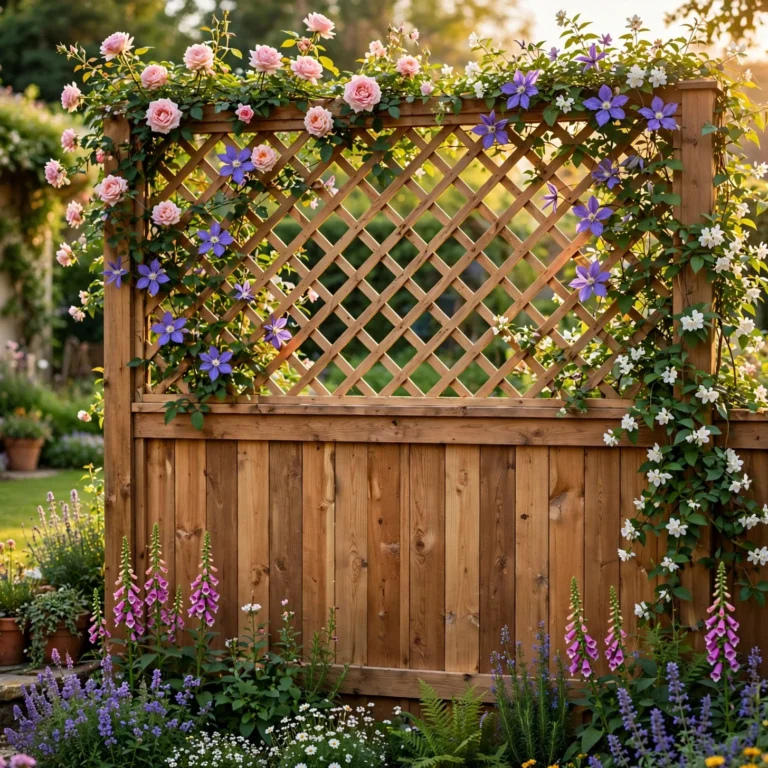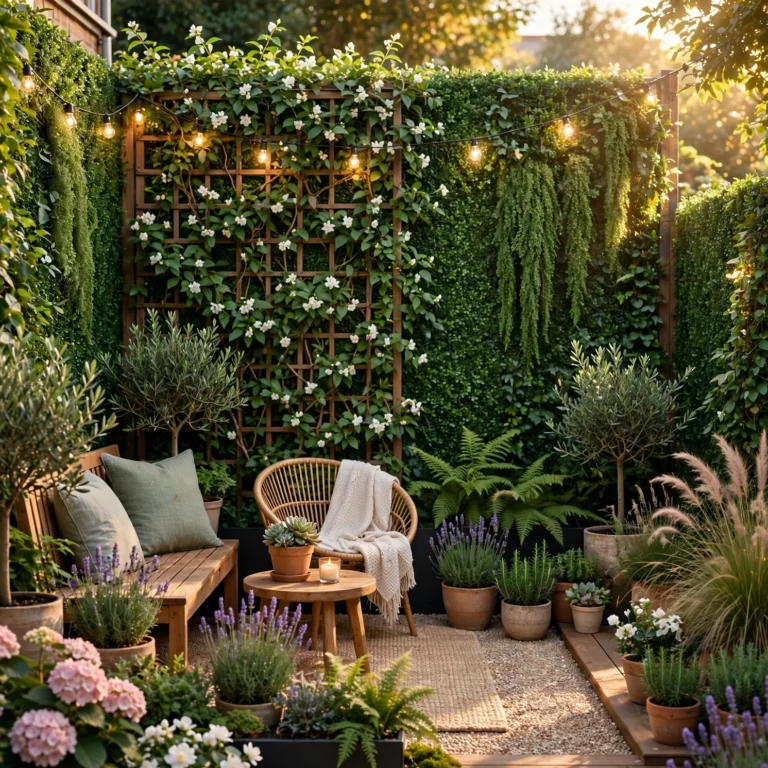

12 Gorgeous Garden Design Ideas That Balance Form and Function
A garden that actually feels designed, rather than just planted, comes down to a handful of layout principles most homeowners never learn until they’ve already made the mistakes. The right garden design ideas turn a collection of individual plants and features into a space that reads as intentional from the moment someone steps into it. This post covers twelve practical design approaches, from axis lines to material repetition, with real guidance for applying each one to an actual yard.
Trend & Background
Garden design has shifted noticeably away from the manicured, high-maintenance layouts popular a decade ago toward looser, structure-driven designs that still hold together visually with far less upkeep. Naturalistic planting styles, popularized by designers working in matrix and prairie-style layouts, have pushed homeowners to think in terms of plant communities rather than isolated specimens. At the same time, rising interest in outdoor living has made garden design inseparable from broader landscape architecture, with paths, seating, and lighting now planned alongside plant selection rather than added as an afterthought.
Key Takeaways
- These garden design ideas cover layout principles, structural elements, and planting strategies that work together.
- Repetition, focal points, and defined zones give a garden a cohesive look rather than a scattered one.
- Several ideas apply to yards of any size, from compact courtyards to sprawling lots.
- Material choices for paths, edging, and structures matter as much as the plants themselves.
1. Axis and Sightline Planning
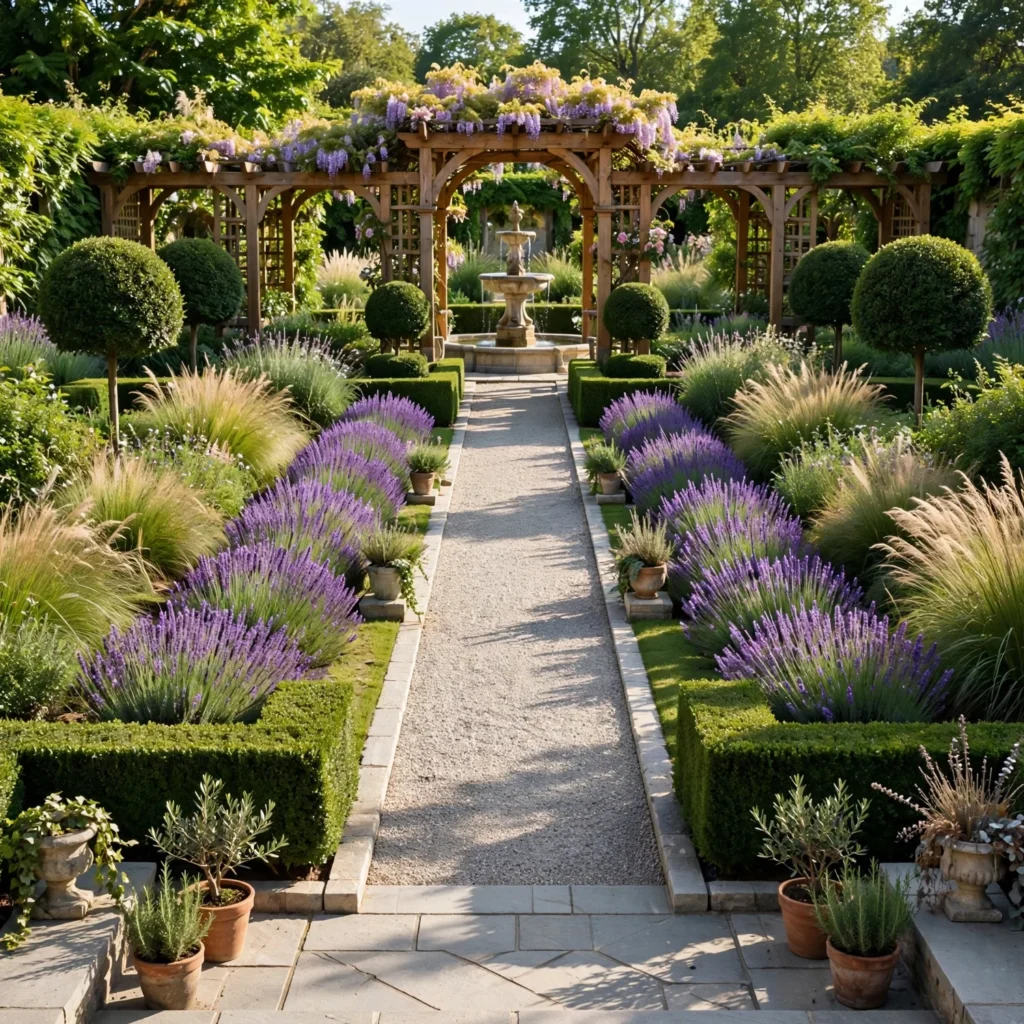
Axis and sightline planning establishes a clear visual line, often from a back door or patio toward a specific focal point, that organizes everything else in the garden around it. Drawing this line first, before placing a single plant, prevents the common problem of a yard that feels directionless once everything is in the ground. A specimen tree, an urn, or a piece of garden art positioned at the end of the sightline gives the eye somewhere to land and anchors the whole layout.
2. Repetition of Plant Groupings
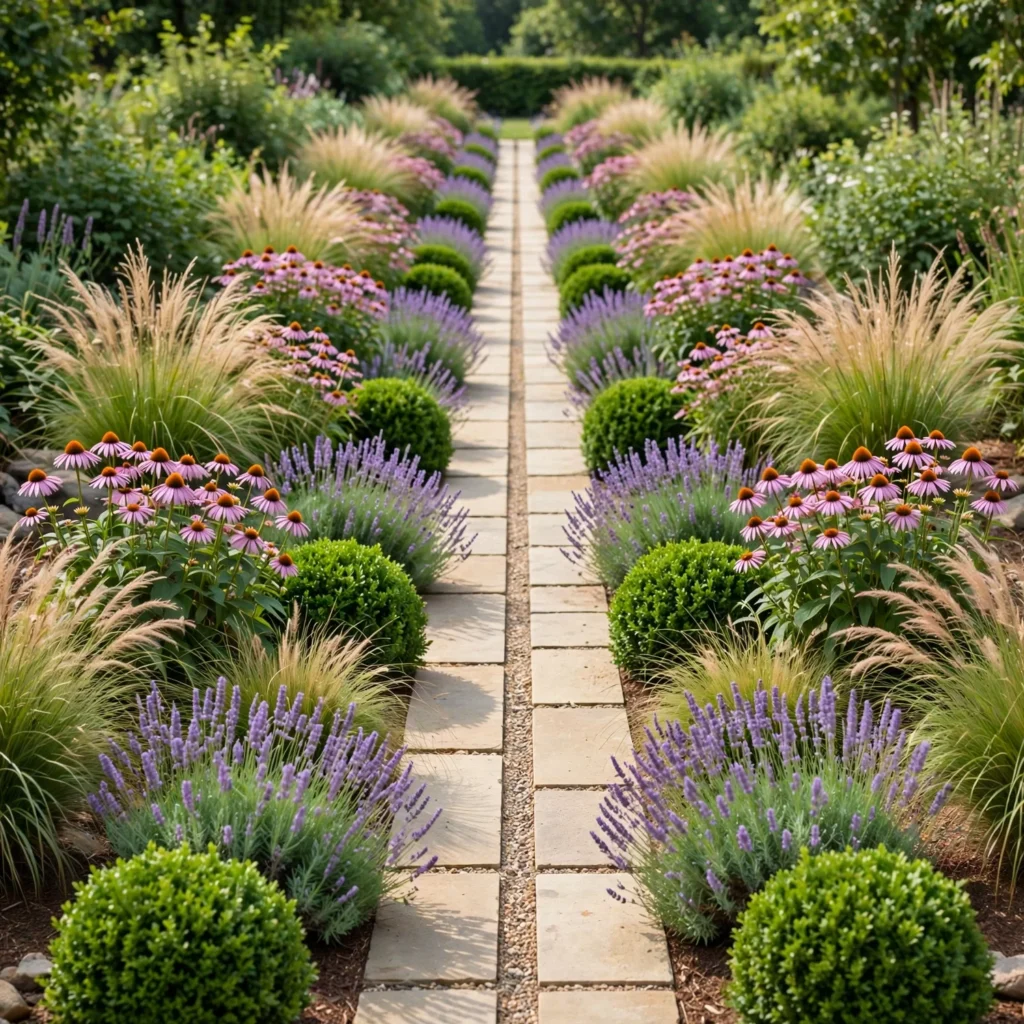
Repeating the same plant or plant combination at intervals throughout a garden creates a sense of rhythm that ties separate beds together into a single cohesive design. A boxwood ball repeated every eight to ten feet along a border, for instance, reads as a deliberate pattern even when the plants between repetitions vary considerably. This technique works especially well in larger gardens where distinct zones might otherwise feel disconnected from each other.
3. Defined Garden Rooms
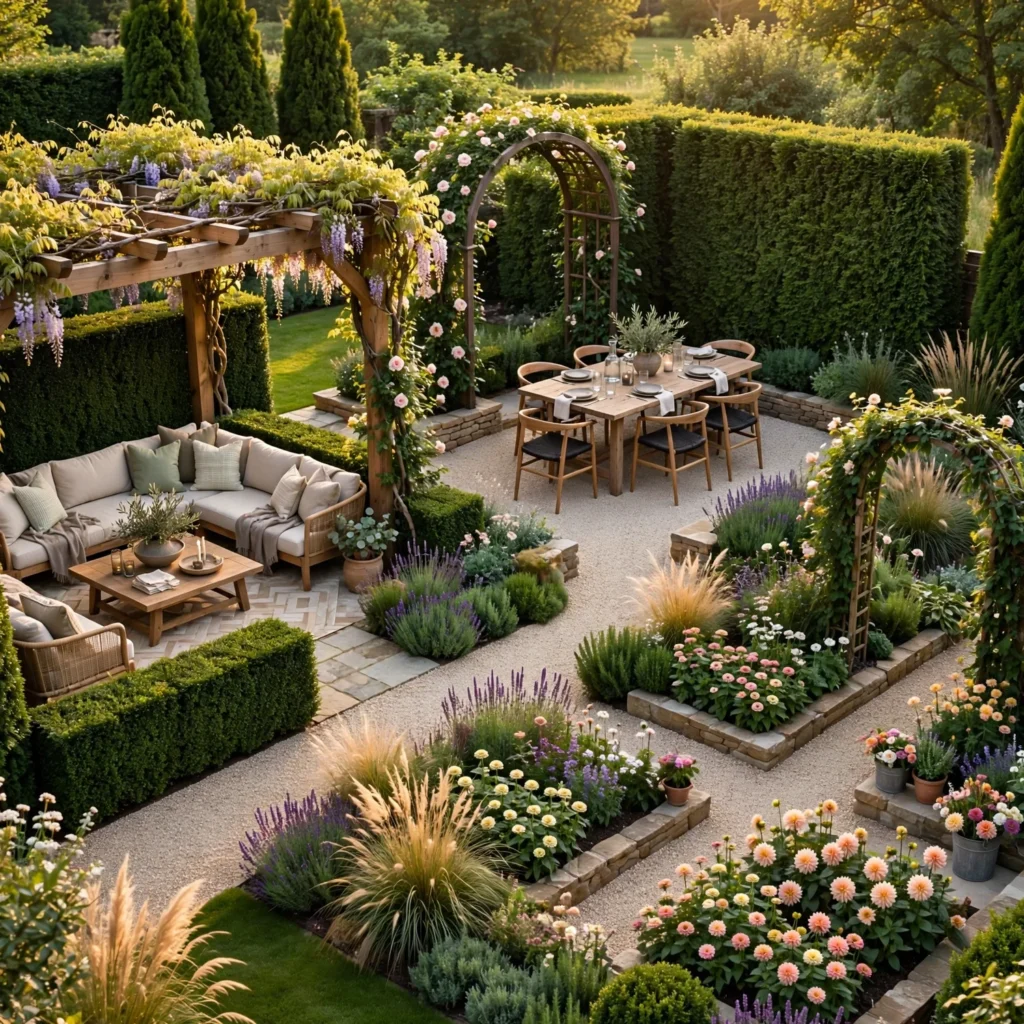
Dividing a large yard into distinct garden rooms, each with its own purpose and character, gives a sprawling space the same sense of scale and intimacy as a series of smaller gardens. Hedging, low walls, or simply a change in paving material can signal the transition from one room to the next without needing solid walls or fencing. A dining room near the house, a quiet reading nook further back, and a working vegetable area toward the rear are common divisions in this approach.
| Yard Size | Suggested Rooms | Dividers |
| Under 1,000 sq ft | 1-2 zones | Planting bed, material change |
| 1,000-3,000 sq ft | 2-3 zones | Low hedge, pergola, path |
| 3,000+ sq ft | 3-5 zones | Hedging, walls, level changes |
4. Curved Bed Lines
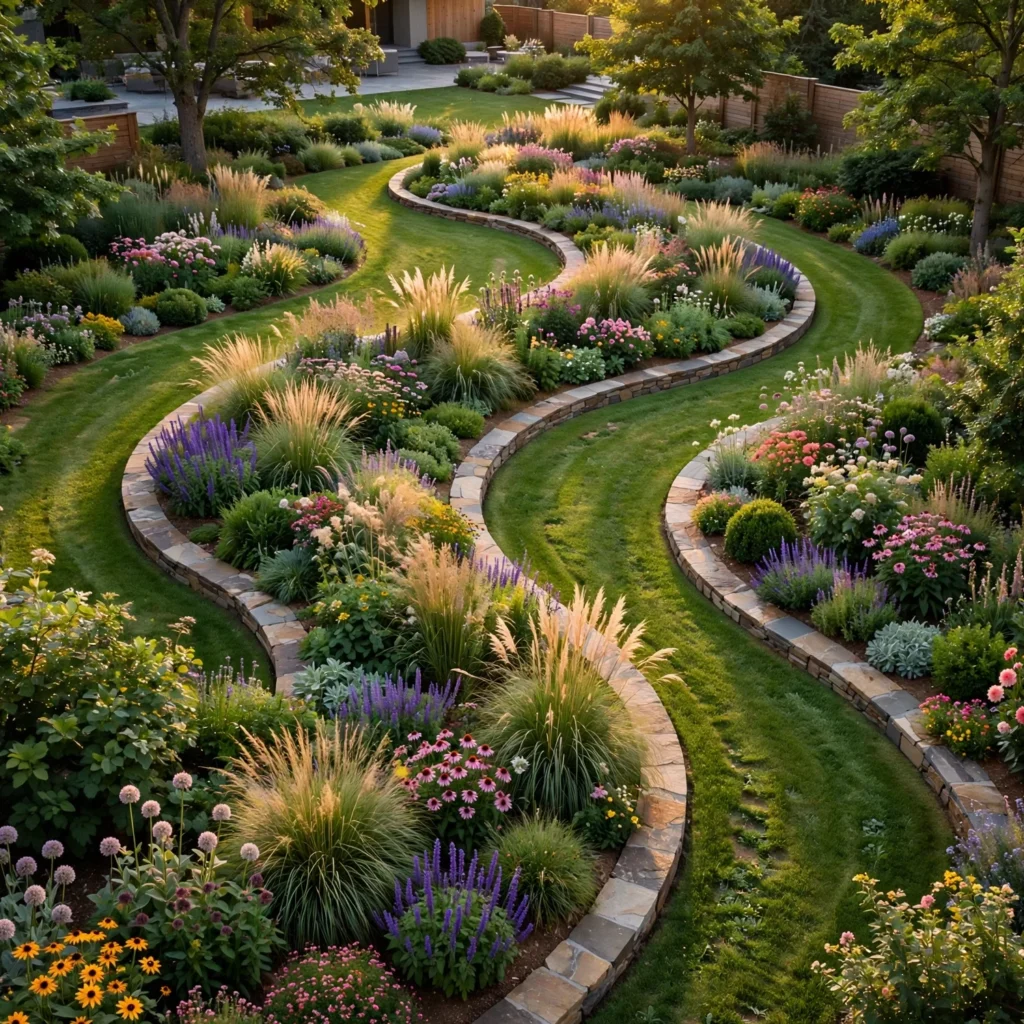
Curved bed lines, rather than straight rectangular edges, soften a garden’s overall geometry and tend to read as more natural even in an otherwise formal layout. Using a garden hose laid on the ground to trace the curve before cutting the bed edge lets a designer adjust the line before committing to it. Gentle, sweeping curves generally look more intentional than tight, wiggly ones, which can end up looking indecisive rather than designed.
5. Material Repetition
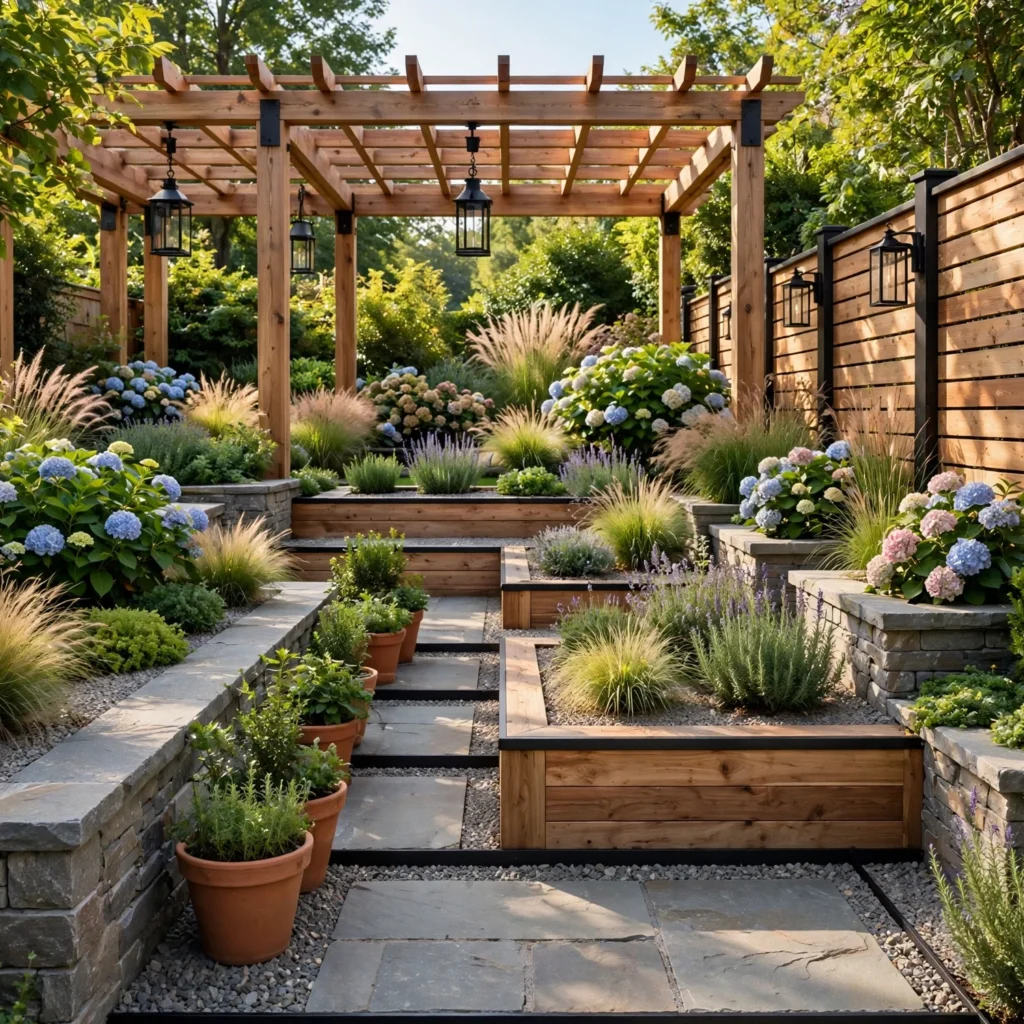
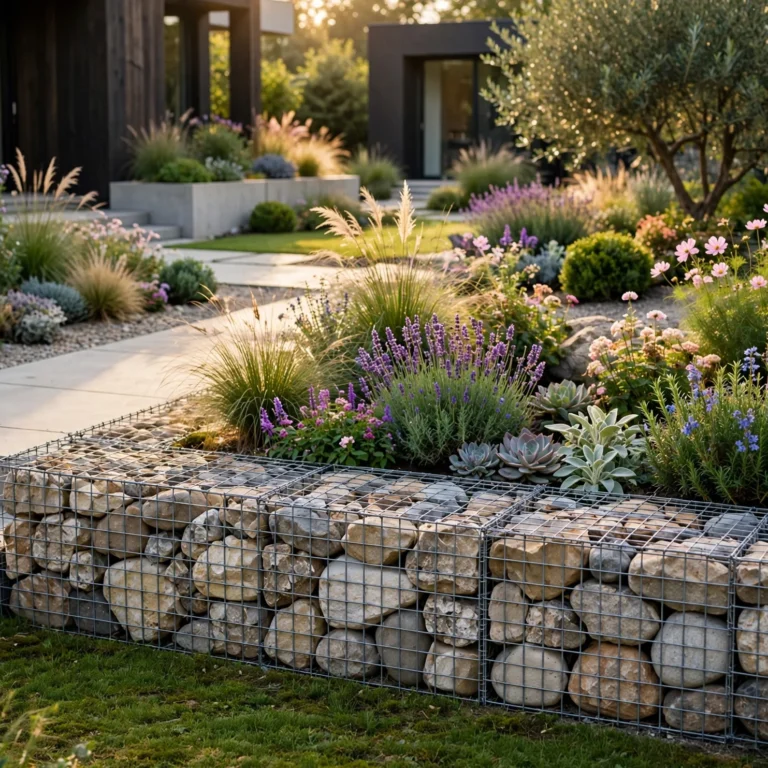
Using the same paving material, stone type, or edging detail consistently throughout a garden ties separate areas together even when the planting in each zone differs significantly. A bluestone path that continues from the front walkway through to a back patio, for example, creates continuity a visitor registers even without consciously noticing it. Limiting a garden to two or three hard materials total, rather than a different one for every feature, keeps the overall design from feeling fragmented.
6. Layered Planting Depth
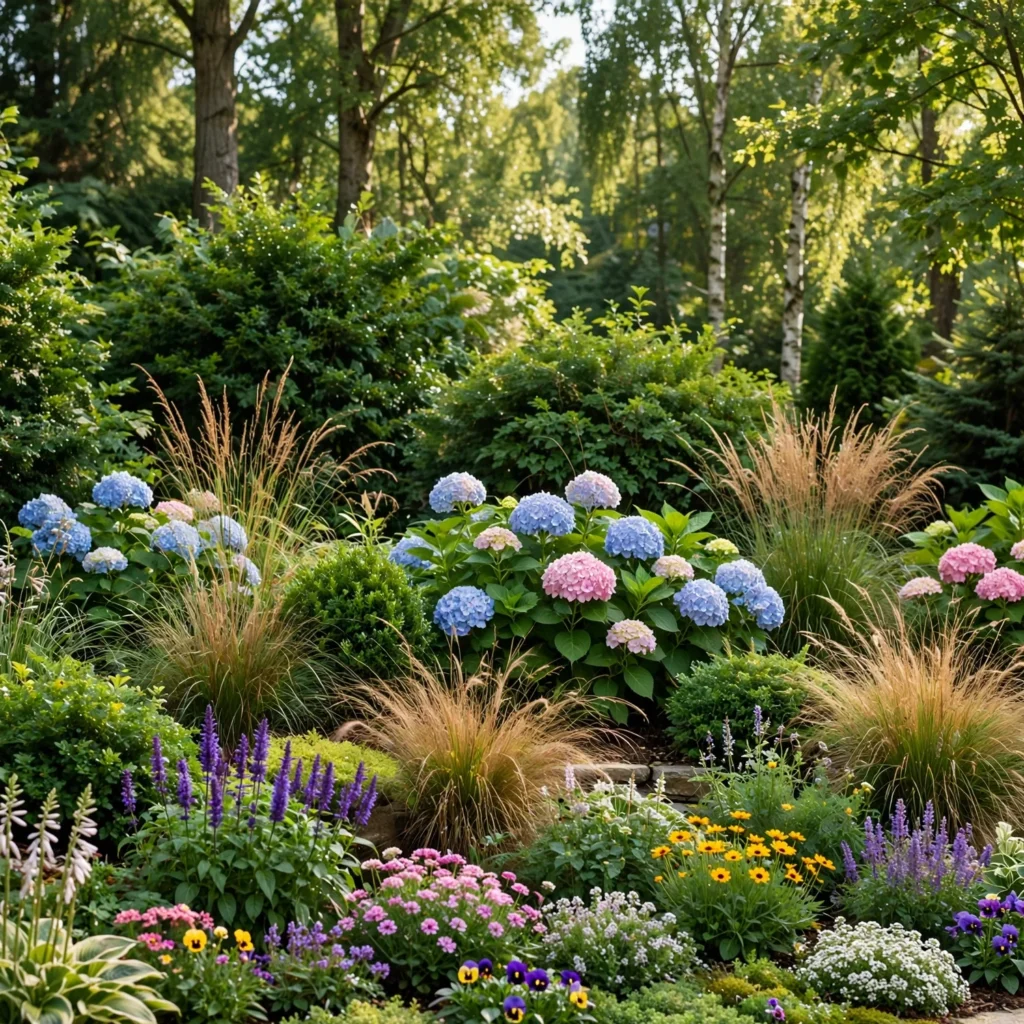
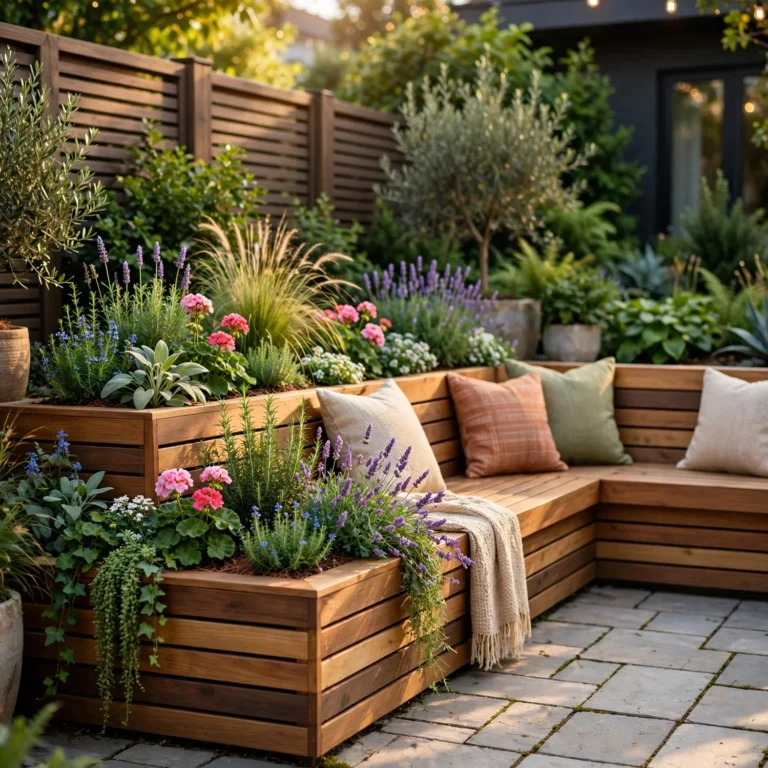
Layered planting depth arranges tall, mid-height, and low plants in graduated bands from the back of a bed to the front, giving even a narrow border a sense of fullness and dimension. This structure mirrors how plants grow in a natural woodland edge, with canopy trees, understory shrubs, and groundcover each occupying their own tier. Applying this layering to a straight border against a fence turns a flat planting into something with actual depth when viewed from the lawn or patio.
Maximize a compact outdoor area with our front garden ideas, featuring clever layouts, vertical gardening, and space-saving solutions.
7. Structural Evergreen Backbone
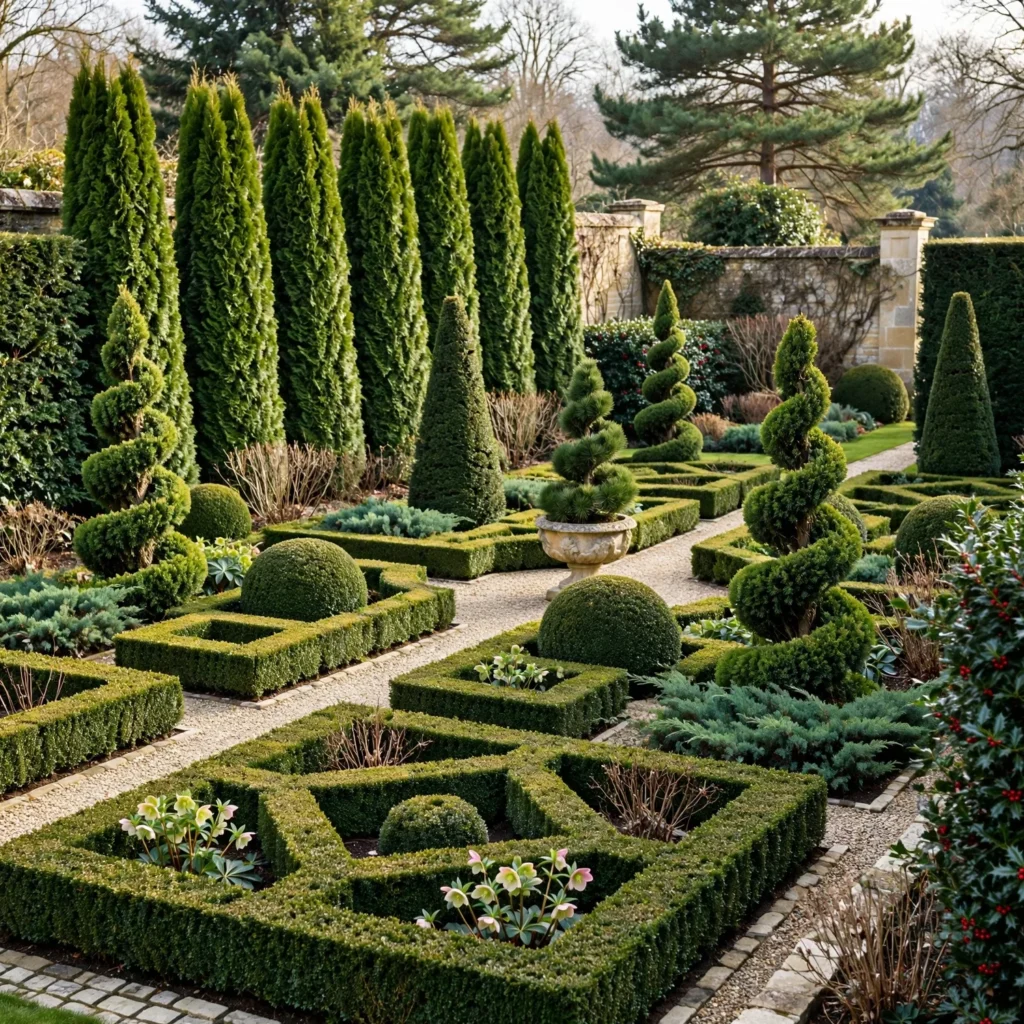
Placing evergreen shrubs and trees at key structural points throughout a garden gives the design a backbone that holds its shape through winter, when perennials and deciduous plants have died back or dropped their leaves. Boxwood, yew, and holly are common choices for this role, since all three tolerate shaping and stay dense year-round. Roughly a third of a garden’s total planting given over to evergreen structure keeps the design from disappearing entirely during the colder months.
8. Water Feature as Focal Point
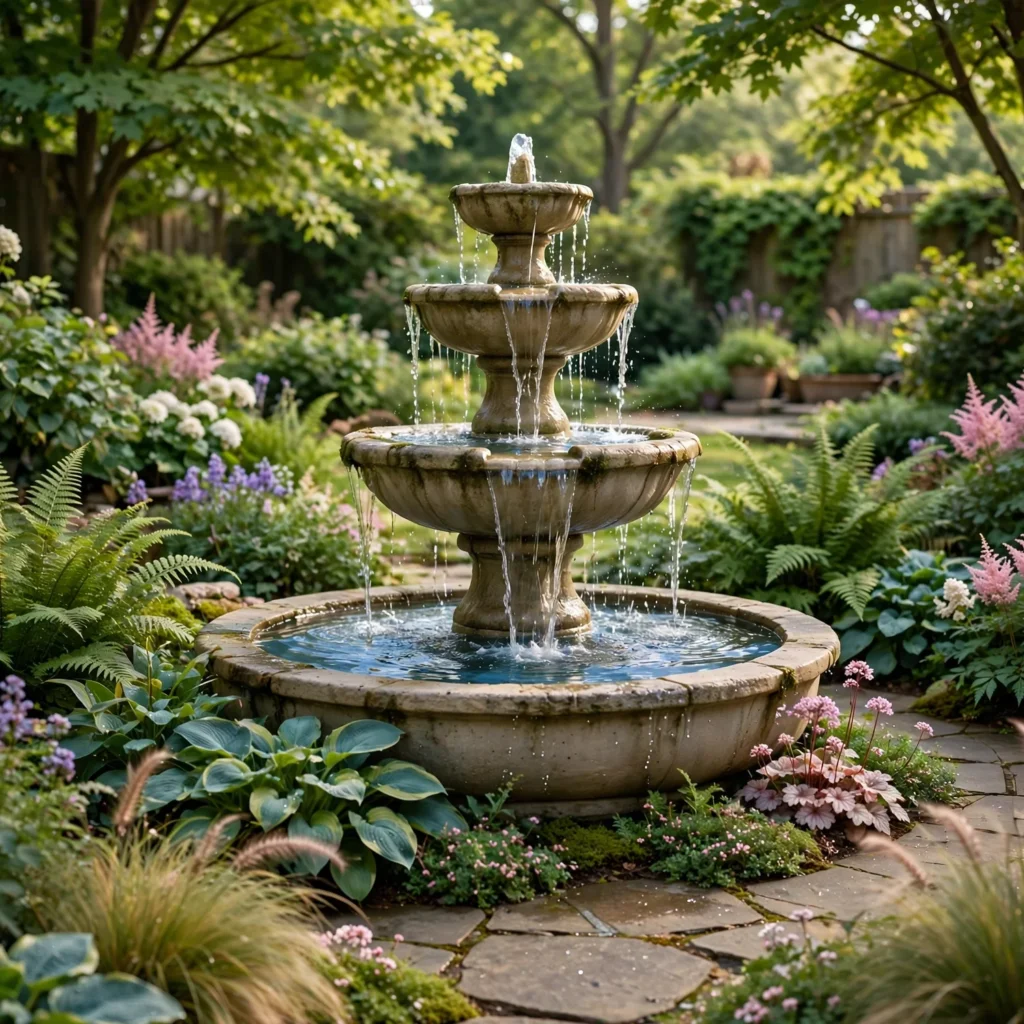
A water feature, whether a simple bubbling urn or a full reflecting pool, gives a garden a sensory focal point that plants alone can’t replicate, adding both movement and sound to the space. Positioning it at the end of a sightline or at the center of a garden room makes it function as an anchor rather than an isolated add-on. A recirculating pump system with a basin at least 18 inches deep prevents the water from evaporating too quickly during warm months and reduces how often it needs refilling.
9. Pergola or Arbor Transition Point
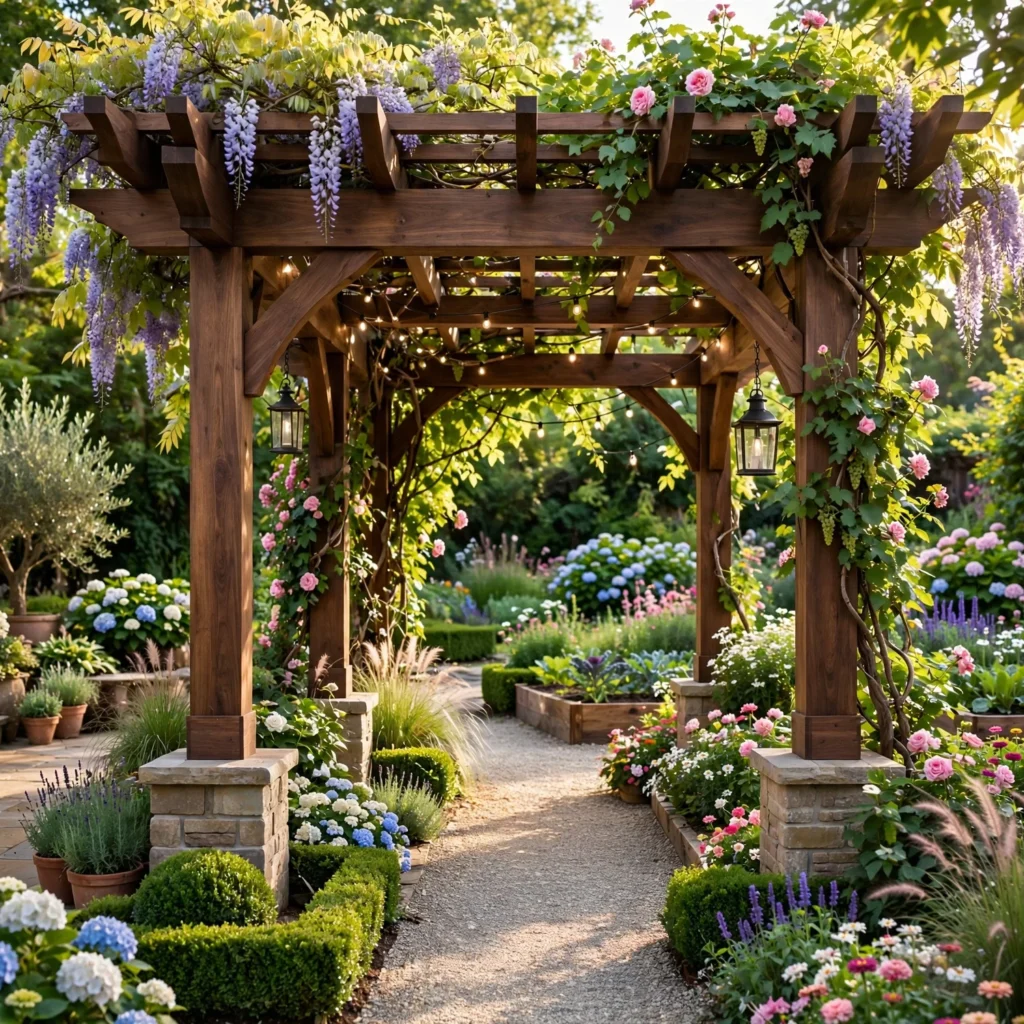
A pergola or arbor placed at the transition between two garden rooms signals a change in space without needing a solid wall, and doubles as a support structure for climbing plants like wisteria or clematis. Positioning the structure directly on the main sightline reinforces the axis running through the garden rather than competing with it. A cedar or powder-coated steel frame both hold up well outdoors, with steel requiring less ongoing maintenance over time.
10. Color Palette Restraint
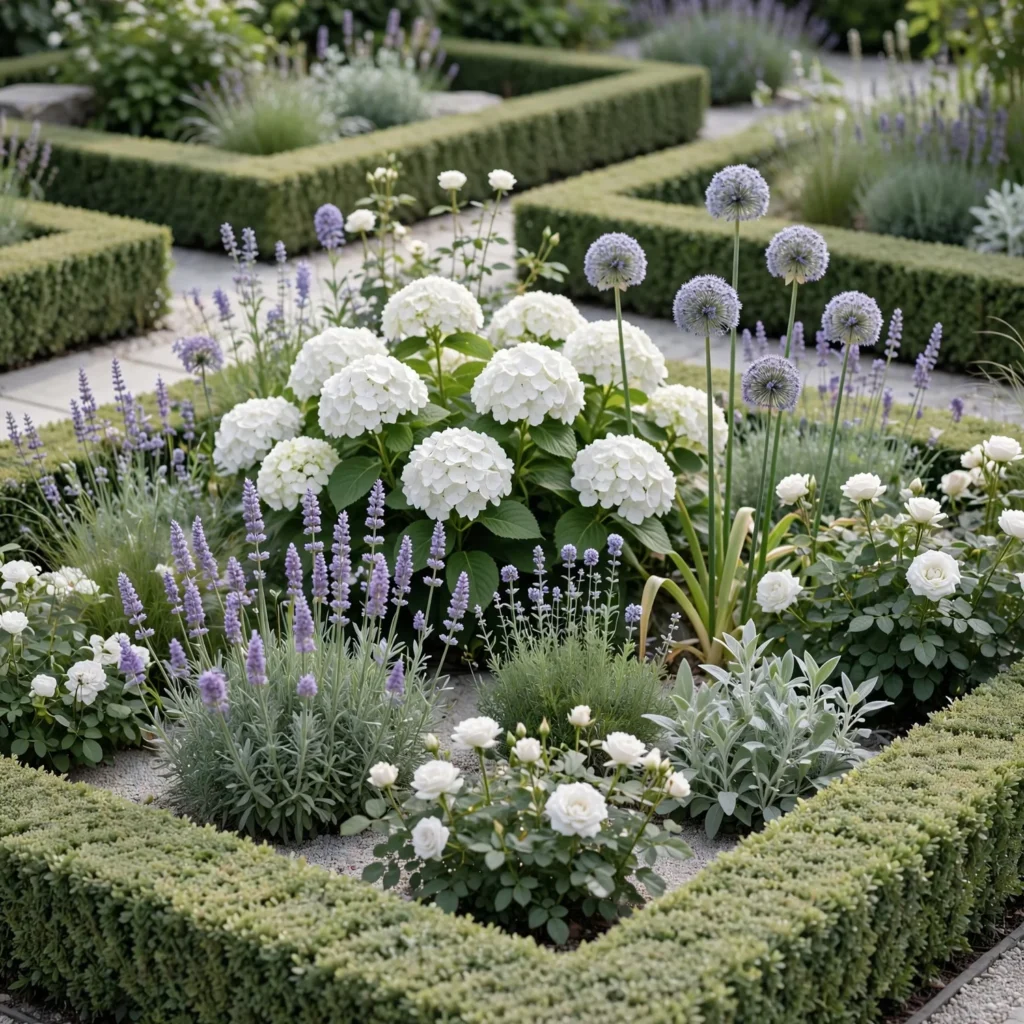
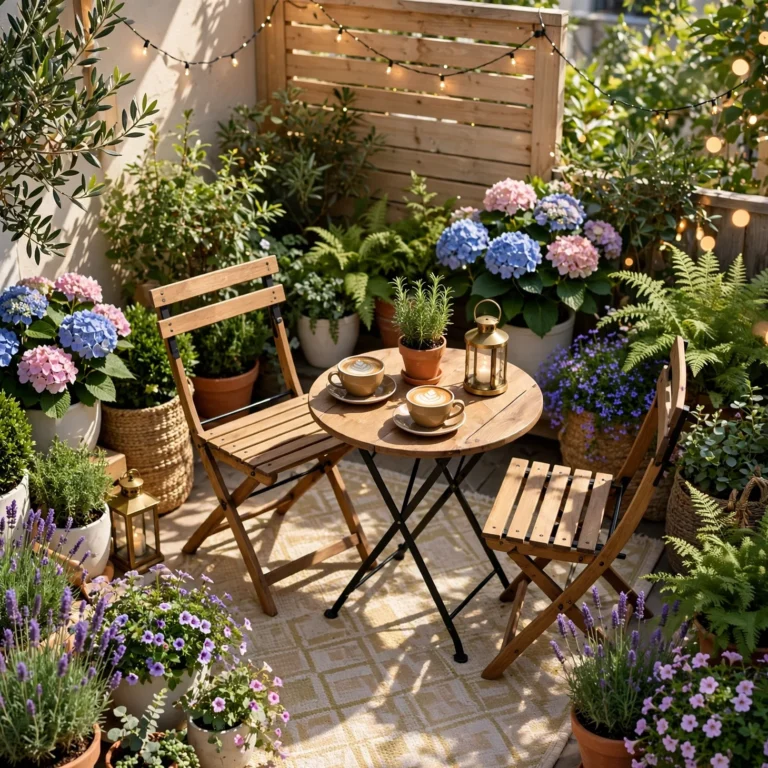
Limiting a garden’s flowering plant palette to two or three main colors, repeated throughout the space, creates a far more cohesive look than a garden planted with one of everything available at the nursery. A palette built around purple, white, and chartreuse foliage, for instance, reads as considered rather than accidental, even with considerable variety in plant species. Foliage color and texture matter as much as flower color in this approach, since foliage holds its look far longer than most blooms.
11. Level Changes and Terracing
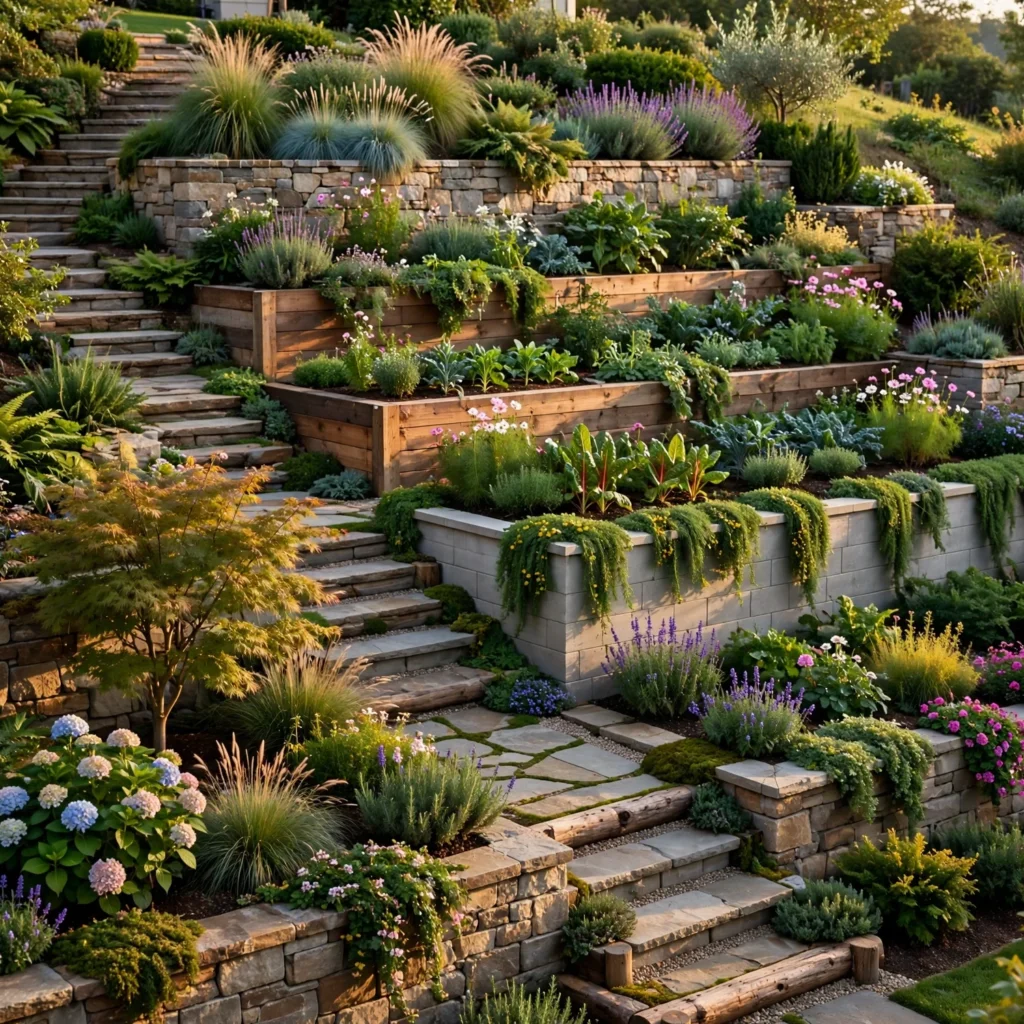
Introducing level changes, whether through a sunken patio, a raised bed, or a full terraced slope, adds dimension to a garden that a single flat plane can’t achieve on its own. Even a modest 6 to 12-inch step between two zones registers as a meaningful spatial shift when approached on foot. On sloped lots, terracing turns what would otherwise be an unusable grade change into a series of distinct, functional garden rooms stacked vertically.
12. Garden Design Ideas With Borrowed Scenery

Among the more advanced garden design ideas is borrowed scenery, a technique where a view beyond the property line, like a distant tree line or a neighbor’s mature planting, gets incorporated into the sightlines of the garden itself rather than screened off. Leaving a gap in a hedge or fence line at a strategic point extends the perceived size of the garden well past its actual boundary. This approach works especially well in smaller yards backing onto open space, parks, or well-maintained neighboring landscapes.
Shop the Look
A pair of matching cast stone urns works well as a focal point at the end of a sightline or flanking a garden room entrance. A cedar pergola kit with pre-cut posts gives a garden room transition a finished structural element without a full custom build. A recirculating bubbling urn fountain adds movement and sound to a smaller garden without the space or cost of a full pond. A roll of steel bed edging keeps curved lines crisp between lawn and planting beds over time.
Common Mistake to Avoid
The most common mistake in garden design is adding features and plants one at a time as ideas come up, rather than working from an overall plan, which usually results in a yard that feels like a collection of unrelated parts. A water feature added on impulse one year and a pergola built the next, with no shared material or sightline connecting them, rarely reads as a cohesive design no matter how nice each piece is individually. Sketching a full layout first, even a rough one, and building toward it in stages avoids this patchwork outcome.
FAQs
What are the basic principles of garden design?
The basic principles of garden design include establishing a clear sightline or axis, repeating plant groupings and materials for cohesion, and layering plant heights from back to front within each bed. Balancing evergreen structure with seasonal color ensures the garden holds together visually through every part of the year, not just during peak bloom. Dividing larger spaces into distinct garden rooms also helps organize a yard that would otherwise feel like one undifferentiated area.
How do I design a garden layout from scratch?
Designing a garden layout from scratch starts with identifying the main sightline from the house or primary viewing point, then working outward from there to place focal points, paths, and planting beds. Sketching the yard’s existing conditions, including sun exposure, drainage, and any slope, before adding a single plant prevents costly mistakes later. Most designers recommend planning hardscaping and structural elements first, since plants can be adjusted far more easily than a path or wall once installed.
What makes a garden design look cohesive?
A garden design looks cohesive when the same materials, plant groupings, and color palette repeat across different areas of the yard rather than each zone using entirely different choices. Limiting hard materials to two or three total, and repeating a handful of key plants at intervals, ties separate beds together even in a fairly large garden. A single dominant sightline running through the space also reinforces cohesion by giving every zone a shared reference point.
Should I hire a garden designer or do it myself?
Hiring a garden designer makes the most sense for larger properties, significant grade changes, or projects involving structural elements like retaining walls, where mistakes are costly and difficult to undo. A DIY approach works well for smaller yards or projects focused mainly on planting design, especially when following established principles like layering and color restraint. Many homeowners land on a middle path, hiring a designer for an initial layout plan and then executing the planting themselves over time.
How much does professional garden design cost?
Professional garden design typically costs $500 to $3,000 for a consultation and planting plan on an average residential lot, depending on the designer’s experience and the property’s complexity. Full design-build services that include installation of hardscaping and structural elements can run $10,000 to $50,000 or more depending on scope. Many designers also offer hourly consulting rates for homeowners who want professional input on a specific problem without committing to a full design package.
Conclusion
These garden design ideas work best in combination rather than isolation, whether that means pairing a clear sightline with layered planting or using material repetition to tie together several garden rooms. Starting with the underlying structure, sightlines, materials, and evergreen backbone, before focusing on individual plant choices keeps a garden design cohesive as it grows and changes over the years. Save this post to Pinterest for reference, and check the related post on front garden ideas for pairing inspiration.