15 Trending Modern House Interior Ideas for a Sleek, Wonderful Current Look
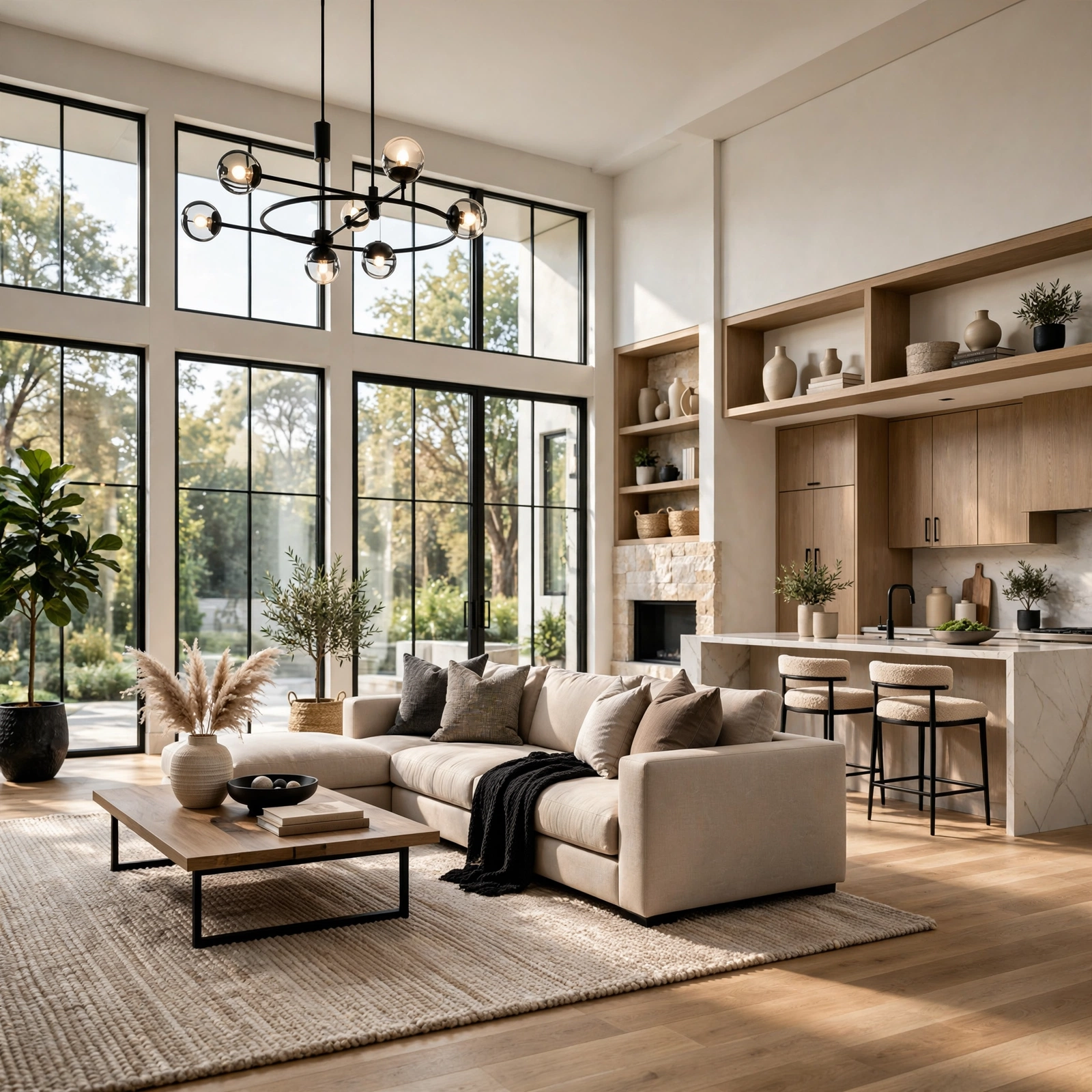
Modern house interior design favors clean lines, a restrained color palette, and an emphasis on function over ornamentation, creating a sleek, current look that has remained popular across a range of home styles and sizes. This list breaks down the specific elements that define this look, from floor-to-ceiling glass to sculptural statement furniture, along with notes on how to keep the style feeling warm and livable rather than cold or sterile. Whether you’re renovating an existing home or building new, these ideas should help you translate the broad idea of modern design into specific, actionable choices.
Trend & Background
Modern house interior design traces its roots to early twentieth century architecture and furniture design, which prioritized function and simplicity as a deliberate reaction against the more ornate, heavily decorated styles that came before it. This foundational design language has continued evolving, with today’s modern interiors incorporating updated materials and technology while still holding onto the core principles of clean lines and intentional restraint. A more recent development within this style has been an increased focus on warmth, using natural wood tones and textured materials to soften what earlier iterations of modern design sometimes rendered as overly stark or clinical.
Key Takeaways
- Modern house interior design relies on clean lines, a restrained color palette, and a mix of natural and industrial materials rather than heavy ornamentation.
- Large windows and open floor plans play as big a role in a modern home’s overall feel as any single furniture or finish choice.
- Because modern design favors fewer, more considered objects, each remaining piece needs to be chosen carefully rather than filling space for its own sake.
- Warmer materials, like wood tones and textured textiles, help keep a modern interior from feeling too cold or clinical.
1. Clean-Lined Furniture Silhouettes
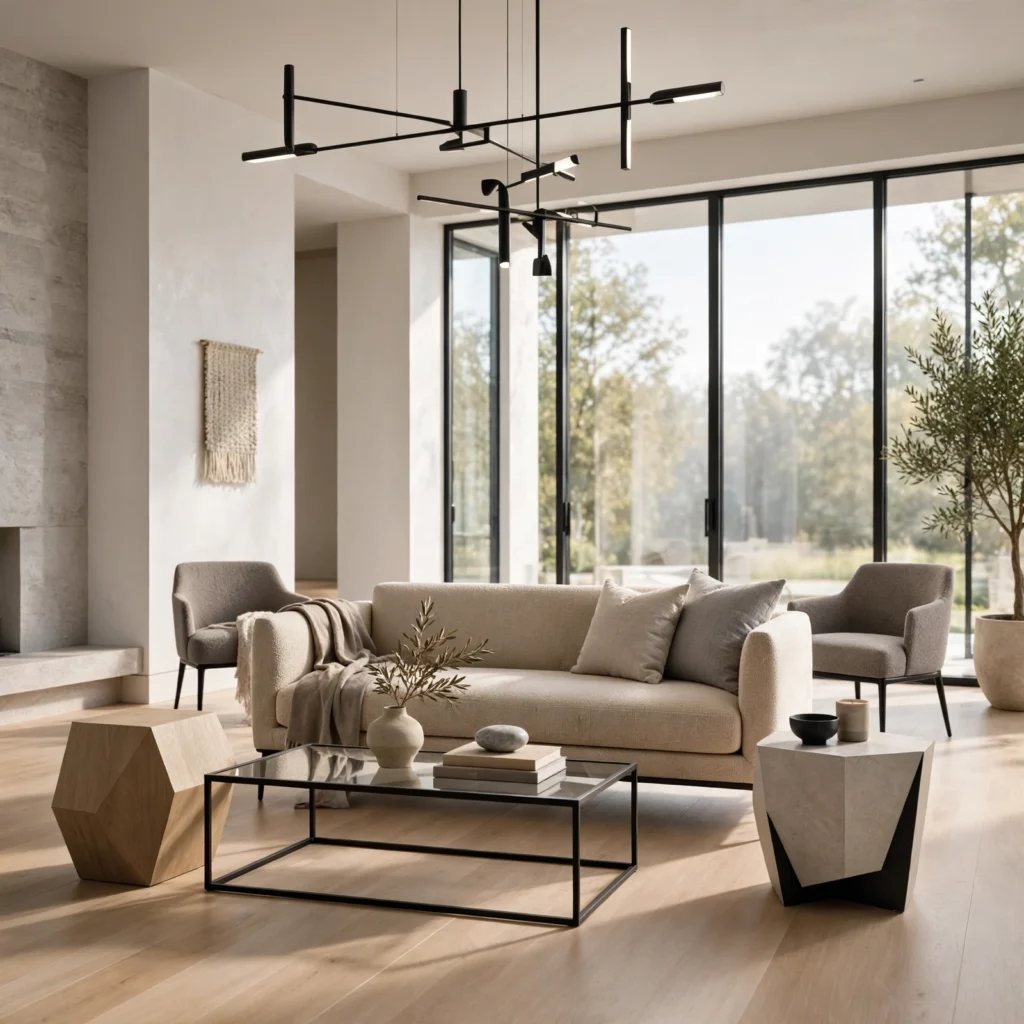
Clean-lined furniture silhouettes favor simple, geometric shapes over ornate carving, tufting, or elaborate trim work, creating pieces that read as sculptural in their own right rather than requiring additional decoration to feel complete. This furniture style typically features exposed, tapered legs rather than a fully upholstered base, allowing more visual space to show through beneath each piece. Choosing furniture with these simpler silhouettes throughout the home creates a cohesive sense of restraint that ties different rooms together under the same overall design language.
| Modern Element | Visual Effect | Common Application |
| Clean-Lined Furniture | Sculptural, uncluttered | Living room, bedroom |
| Monochromatic Palette | Calm, cohesive | Whole-home base |
| Floor-to-Ceiling Glass | Open, connected to outdoors | Living areas, primary suite |
2. Monochromatic Color Scheme
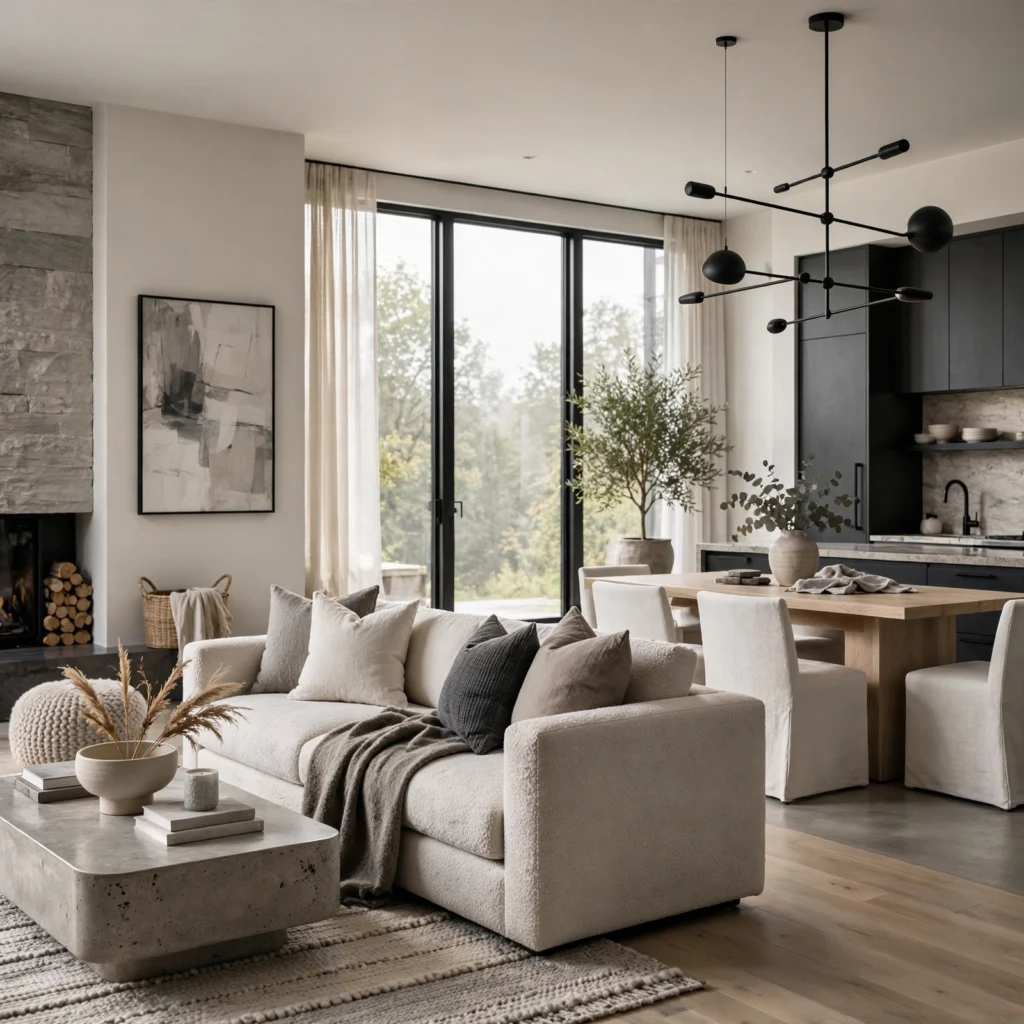
A monochromatic color scheme uses varying shades and textures of a single color family throughout a room or an entire home, relying on material and textural contrast rather than multiple competing hues to create visual interest. This approach suits modern design’s overall restraint, since a limited palette keeps the focus on form and line rather than color variation. Layering in different finishes, like a matte wall paired with a glossy countertop, within the same color family prevents this approach from feeling flat despite its limited hue range.
3. Floor-to-Ceiling Glass Windows
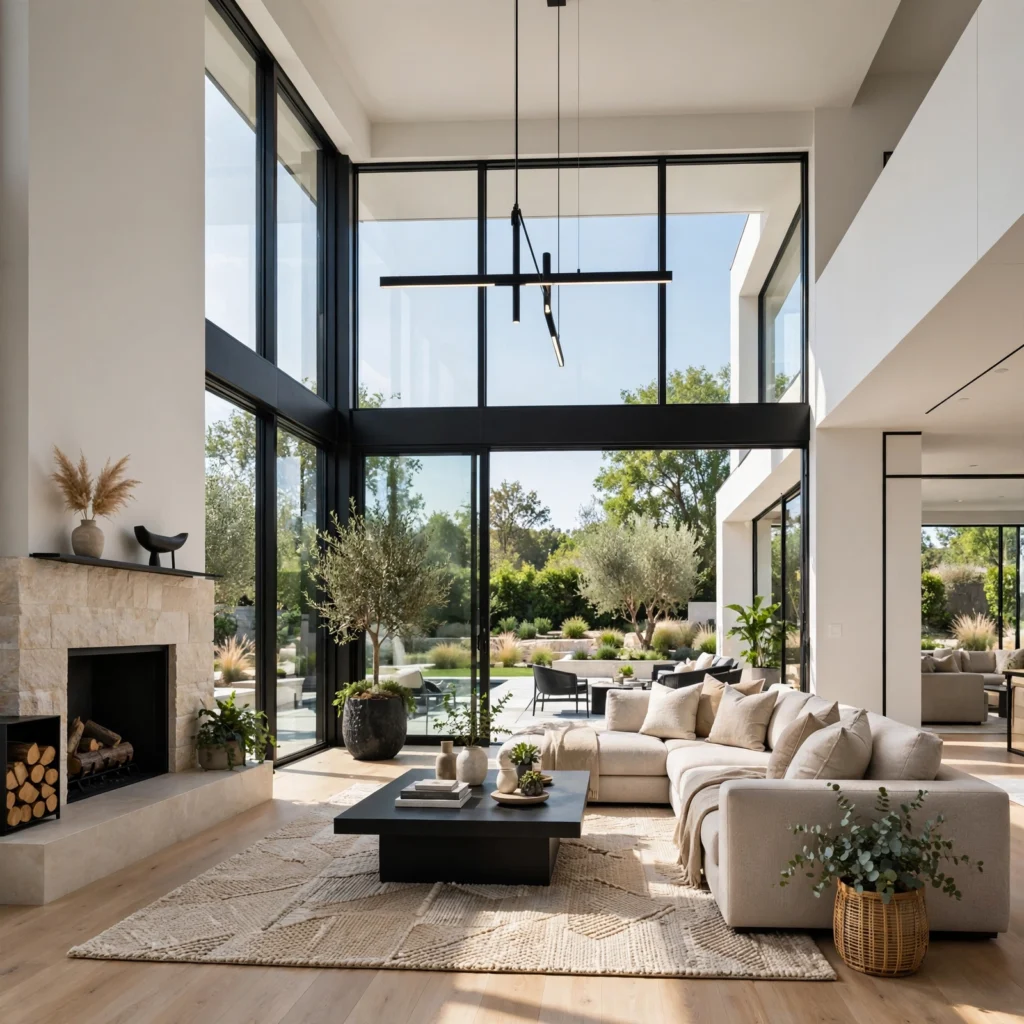
Floor-to-ceiling glass windows extend a room’s glazing from the floor all the way to the ceiling, maximizing natural light and creating a strong visual connection to the outdoors that’s become a signature element of modern residential architecture. This detail works particularly well in a home with an attractive natural setting or a private outdoor space, since the expanded glass essentially brings that view directly into the interior living space. Choosing minimal, slim-profile window framing keeps the focus on the view itself rather than a bulky, visually distracting frame.
In order to see more options for dream house interior CLICK HERE
4. Open Concept Layout
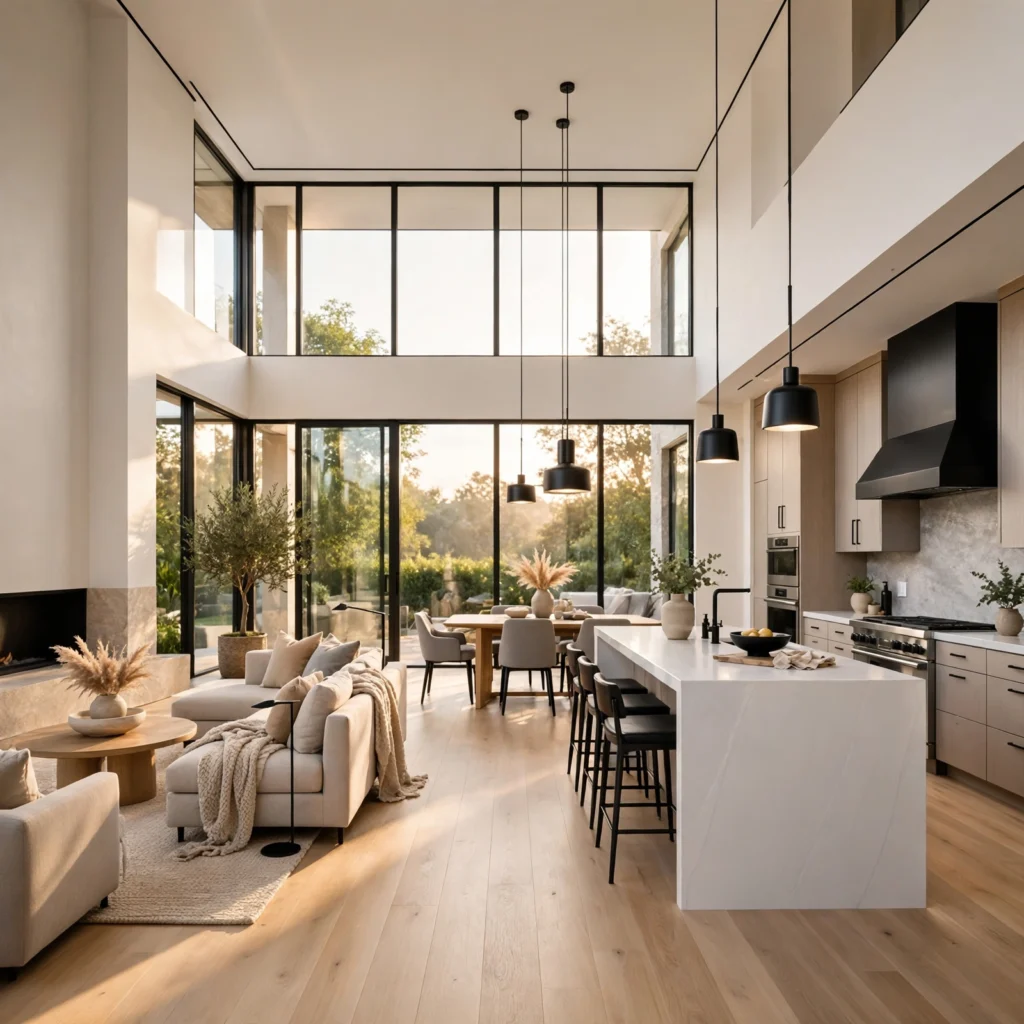
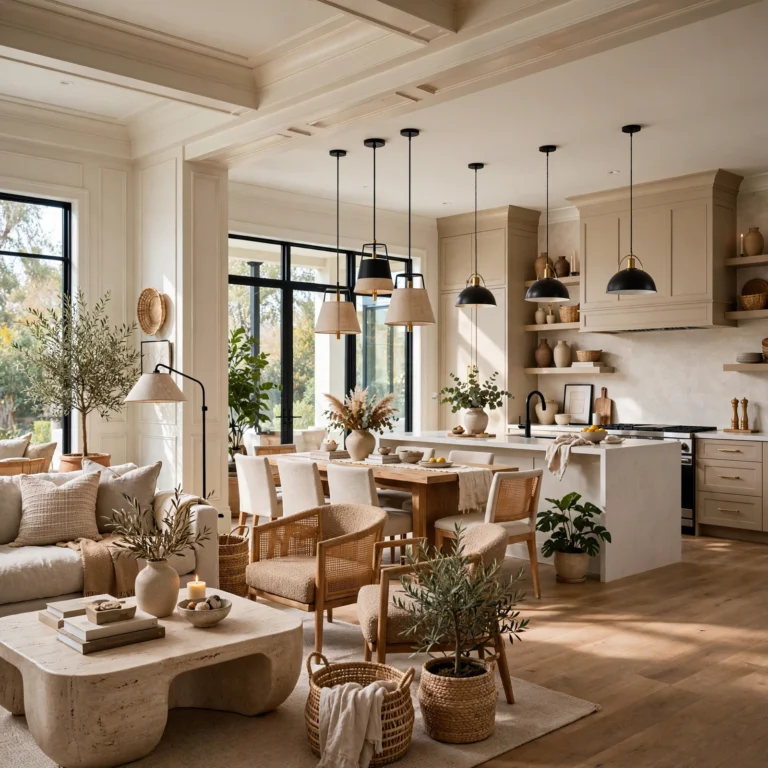
An open concept layout removes or minimizes walls between the kitchen, dining, and living areas, a hallmark of modern residential design that prioritizes flow and connection over the more segmented room layouts common in earlier architectural styles. This layout works particularly well paired with modern design’s overall emphasis on clean lines, since fewer walls mean fewer opportunities for visual clutter to accumulate throughout the home. Defining separate functional zones within this open layout through furniture placement and area rugs, rather than walls, maintains organization without sacrificing the connected feel.
5. Matte Black Fixture Accents
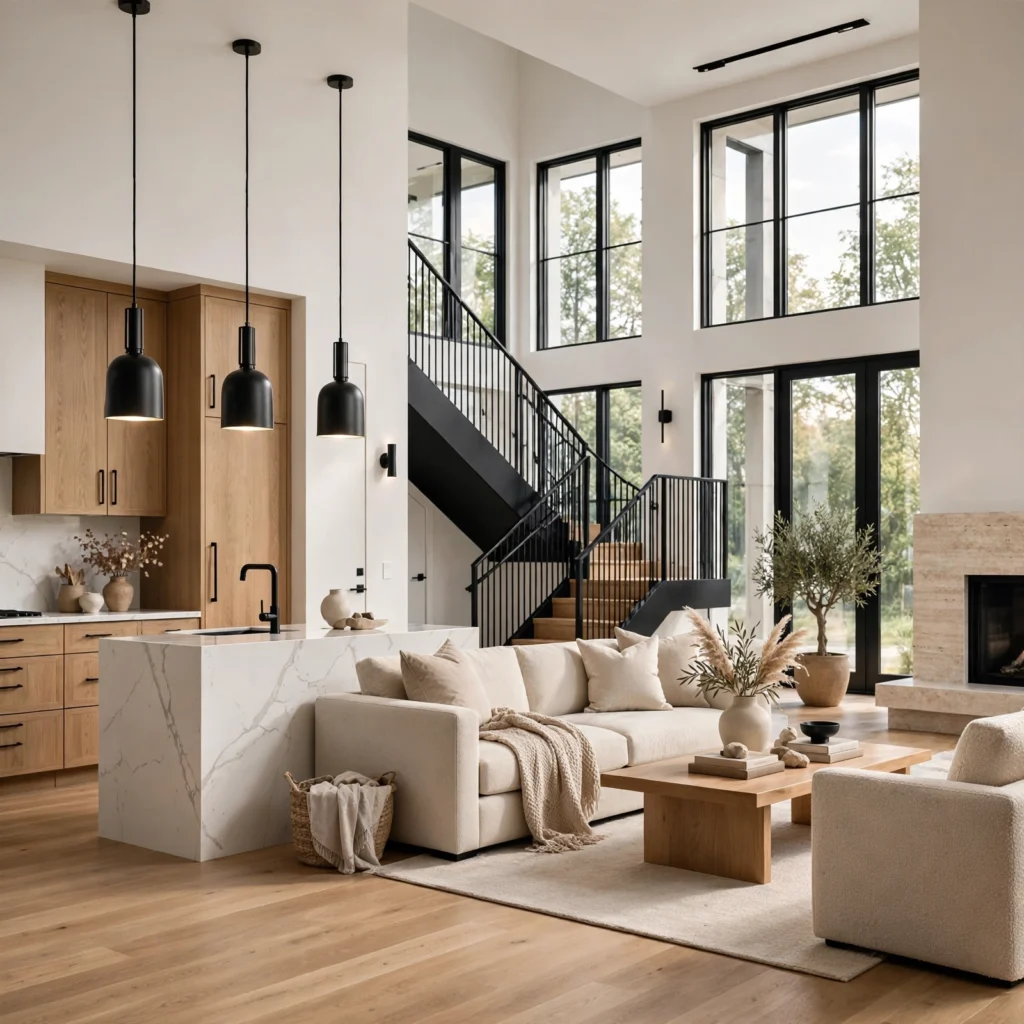
Matte black fixture accents apply a consistent black finish to faucets, door hardware, and light fixtures throughout the home, creating a subtle, graphic thread of contrast against modern design’s typically lighter wall and furniture colors. This finish reads as more current and less severe than a high-gloss black alternative, working well against both warm wood tones and cooler stone or concrete surfaces. Applying this finish consistently across different rooms, rather than mixing in several other metal finishes, reinforces the overall sense of restraint central to modern design.
6. Minimalist Kitchen Cabinetry
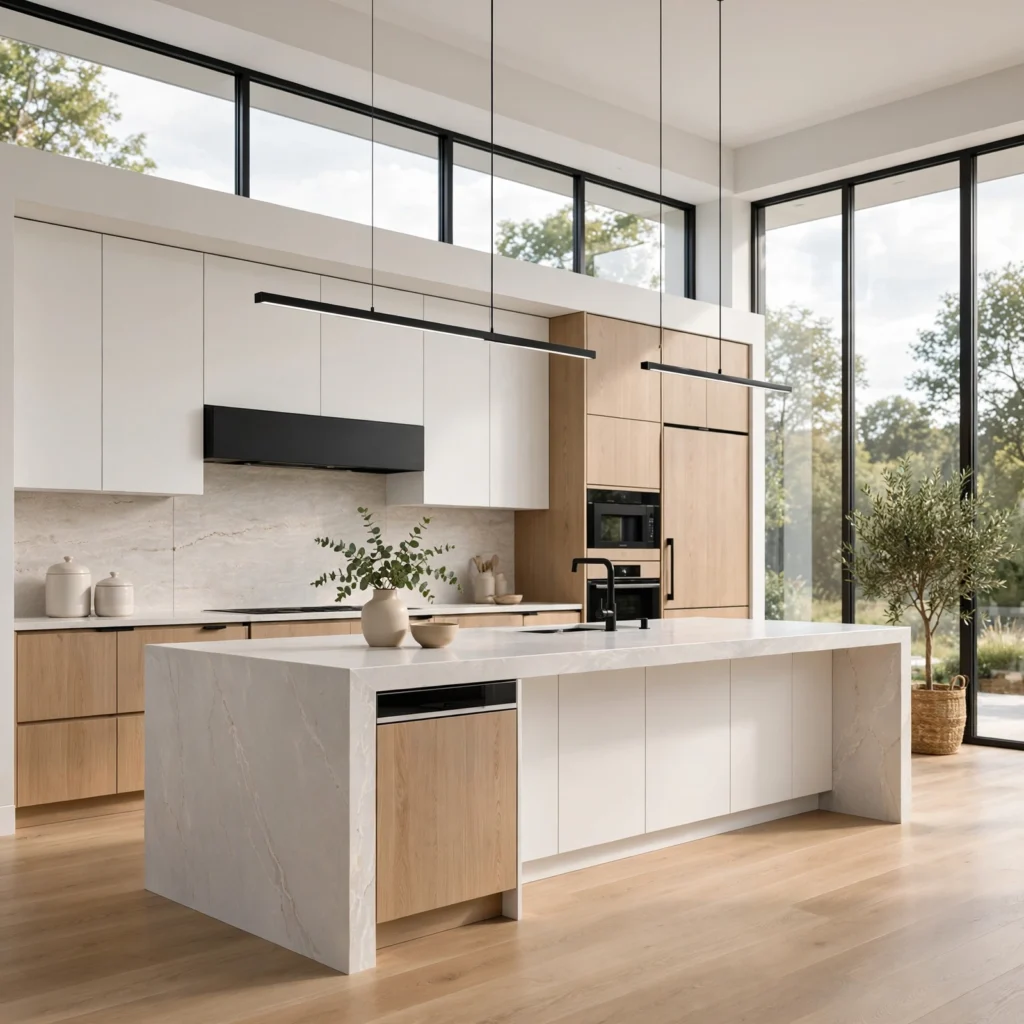
Minimalist kitchen cabinetry uses flat-front, handleless doors, often opened via a push-to-open mechanism or a discreet integrated pull, creating an exceptionally clean, uninterrupted visual line across the entire kitchen. This detail removes even the small visual interruption that standard cabinet hardware creates, reinforcing modern design’s overall preference for simplicity. Choosing a single, consistent cabinet color or a subtle two-tone approach, rather than several competing finishes, keeps this streamlined kitchen look feeling intentional rather than sparse.
7. Statement Concrete Elements
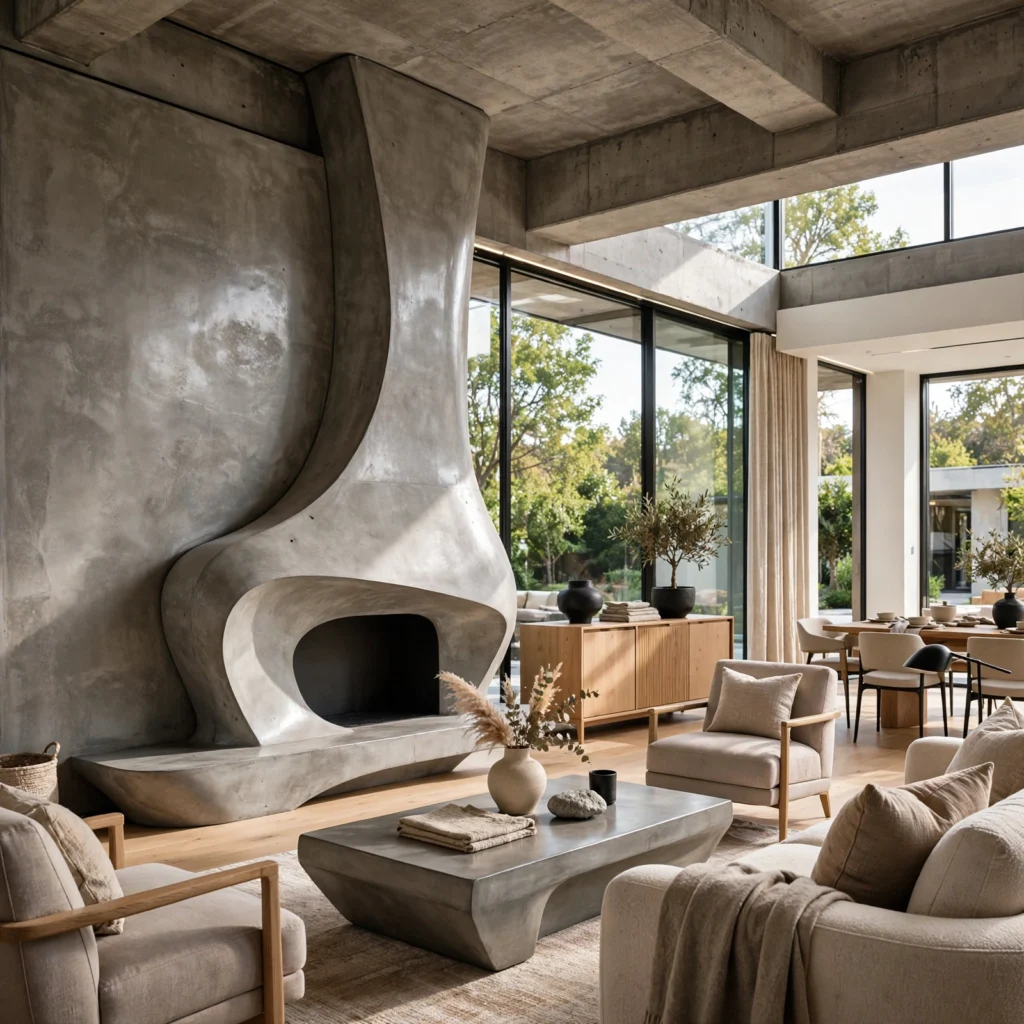
Statement concrete elements incorporate polished concrete flooring, a concrete kitchen island, or an exposed concrete accent wall, bringing an industrial-adjacent material into the home that reinforces modern design’s connection to architecture over decoration. This material choice works particularly well in a newer build where concrete can be planned into the structural design from the start, though concrete countertops and smaller accent pieces can be added to an existing home as well. Pairing concrete with warmer materials like wood elsewhere in the room prevents this cooler, harder material from making the space feel overly cold.
8. Geometric Light Fixtures
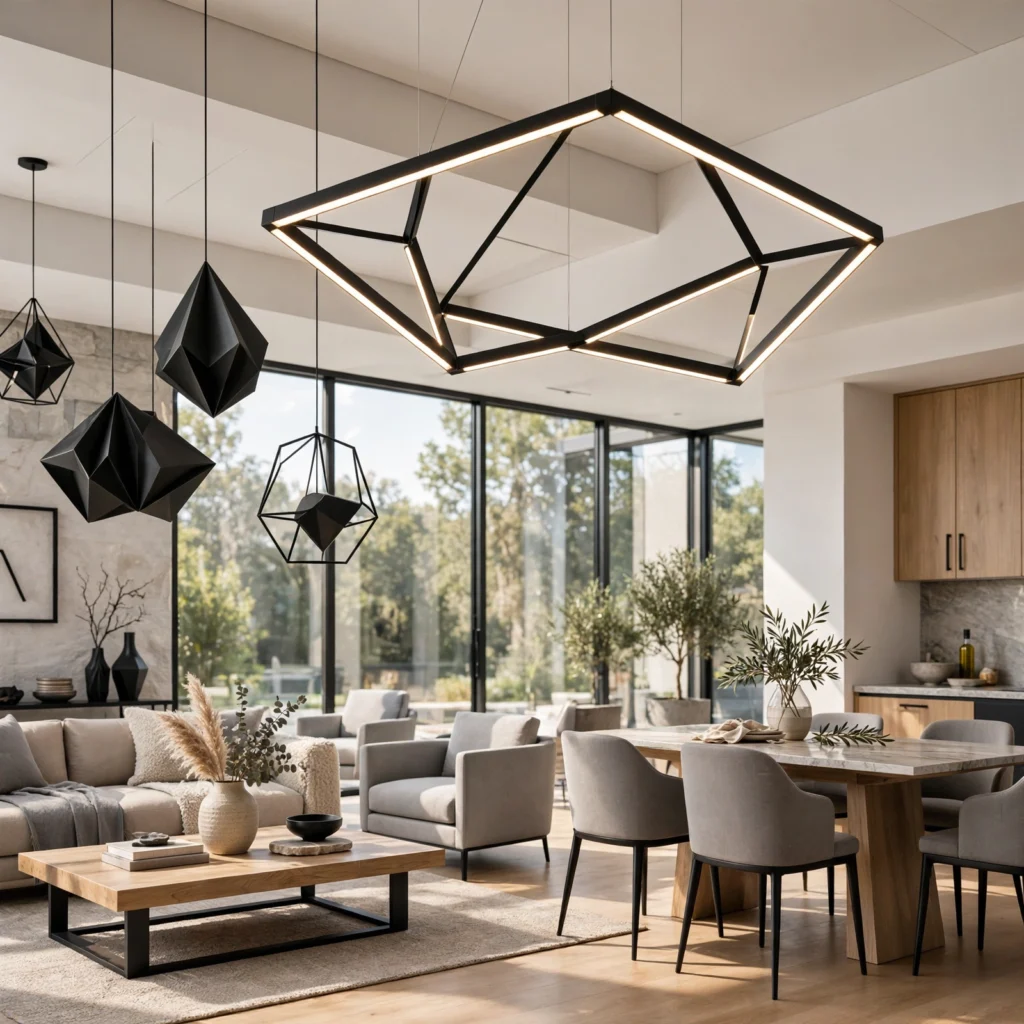
Geometric light fixtures use simple, defined shapes, like a sphere, cylinder, or angular linear design, as statement lighting throughout a modern home, avoiding the more ornate, layered fixtures common in traditional design. This detail works particularly well positioned above a kitchen island, dining table, or in an entryway, where the fixture’s clean geometry becomes a genuine architectural feature rather than purely functional lighting. Choosing fixtures in a matte black or brushed metal finish, consistent with other hardware choices throughout the home, ties this detail into the broader material palette.
| Fixture Shape | Common Placement | Material Pairing |
| Sphere Pendant | Dining table, entry | Brass, black metal |
| Linear Fixture | Kitchen island, hallway | Matte black |
| Cylinder Sconce | Bedroom, living room | Brushed nickel |
9. Floating Staircase Design
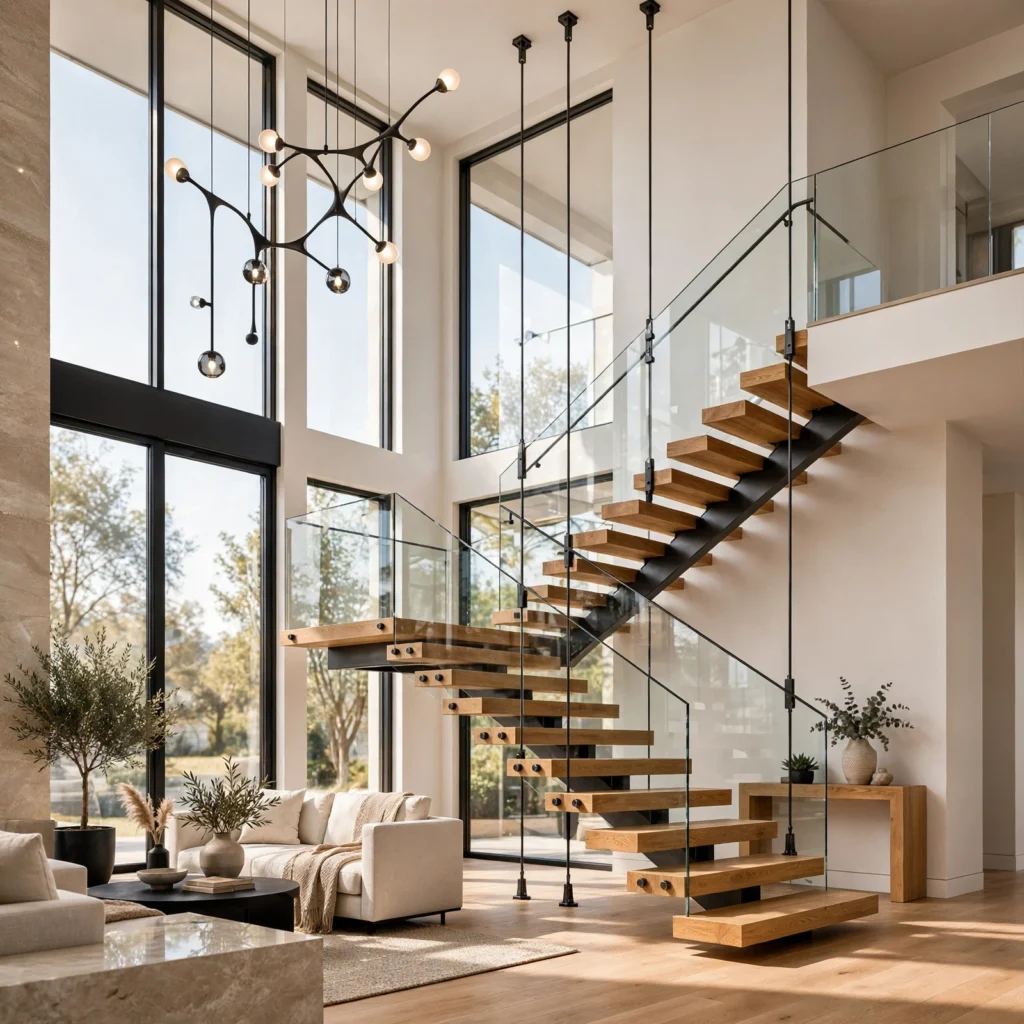
A floating staircase design uses open risers and often a minimal or glass railing system, creating the visual effect of individual treads floating in space rather than a solid, enclosed staircase structure. This detail requires more structural engineering than a standard staircase, since each tread typically needs to be independently anchored into the surrounding wall or a supporting stringer. A floating staircase works particularly well as a genuine architectural focal point in an entryway or open living space, letting light and sightlines pass through in a way a solid staircase blocks.
10. Neutral Palette with One Bold Accent Wall
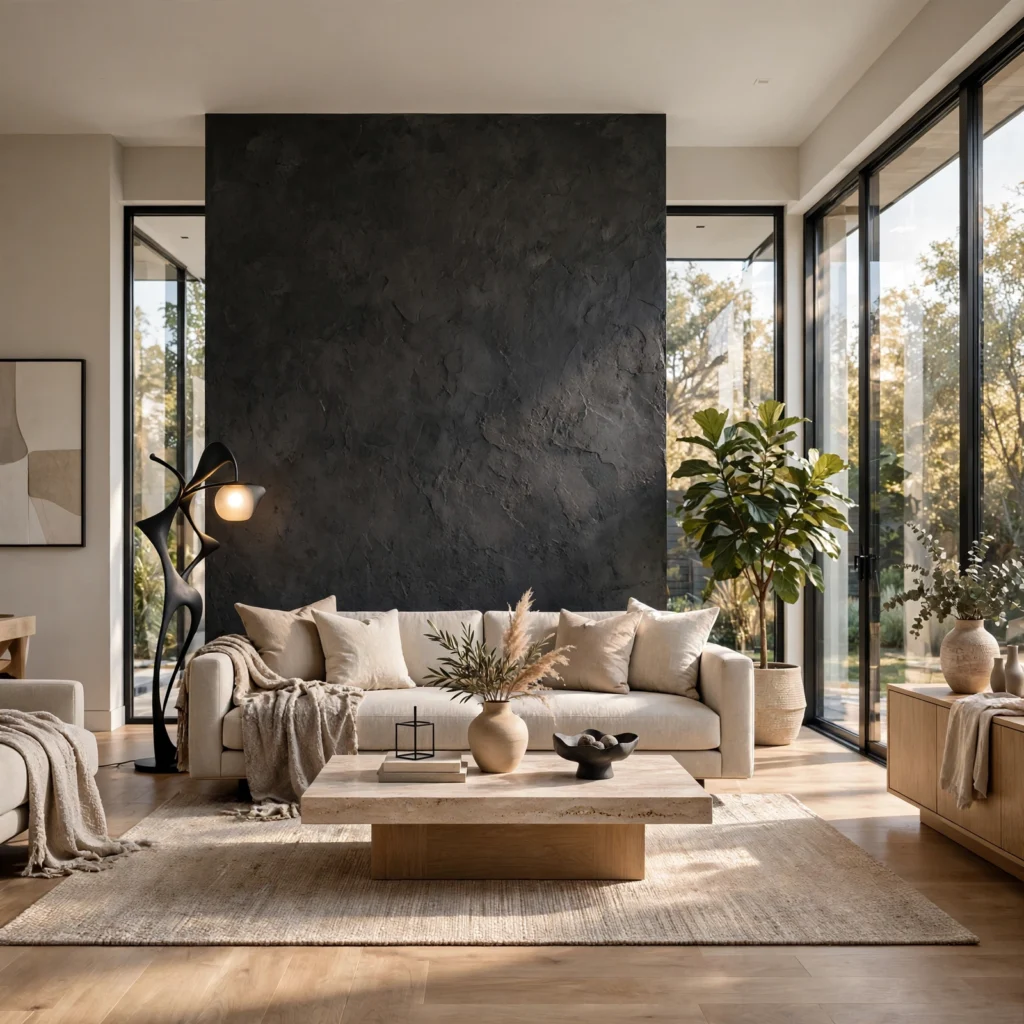
A neutral palette with one bold accent wall keeps the majority of a room in modern design’s typically restrained color range, while introducing a single, more saturated or textured wall as a deliberate, contained focal point. This approach allows for a bolder design choice without abandoning modern design’s overall preference for restraint throughout the rest of the space. Choosing the accent wall’s placement carefully, such as behind a bed or a sofa, ensures it reads as an intentional design decision rather than an arbitrary color change.
11. Integrated Smart Technology
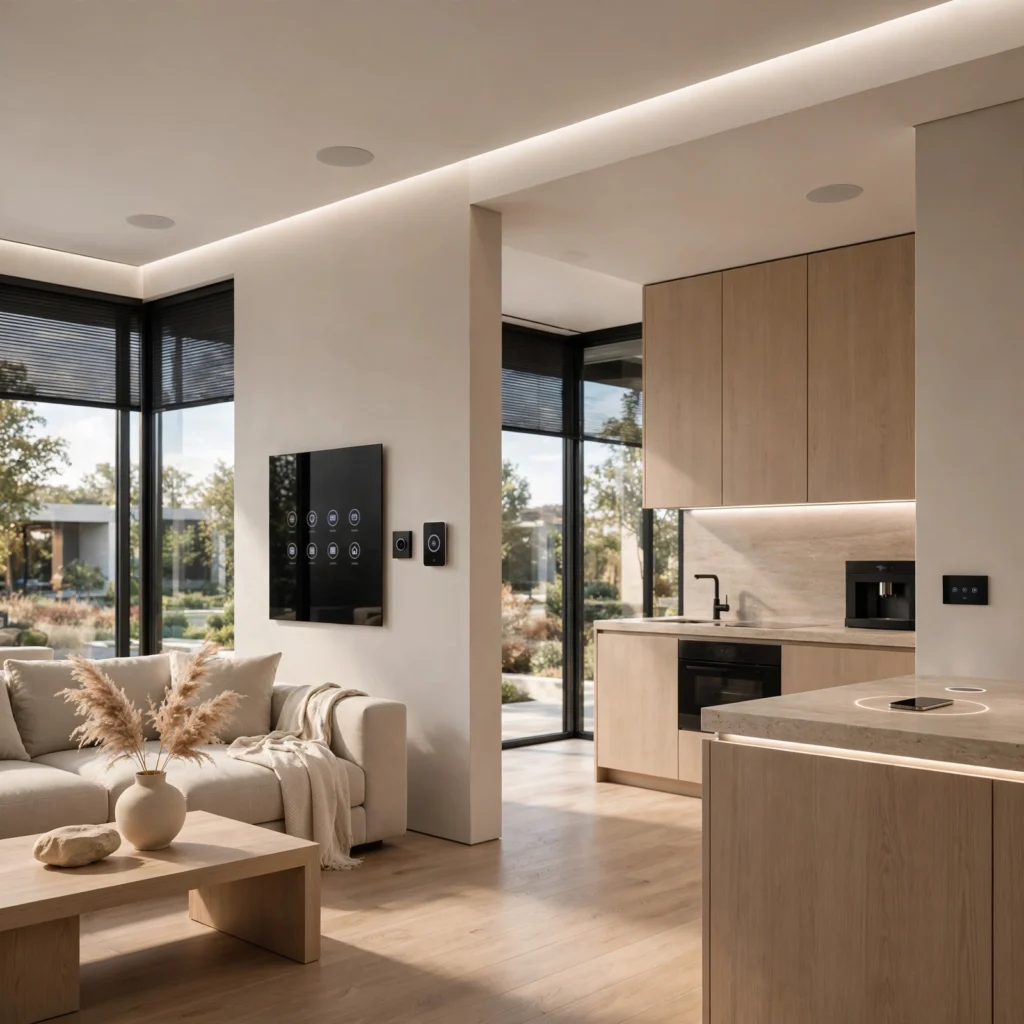
Integrated smart technology builds lighting, climate, and entertainment controls directly into a home’s architecture, often through recessed panels or voice-activated systems rather than visible switches and remotes cluttering surfaces throughout the house. This detail aligns naturally with modern design’s emphasis on clean, uninterrupted lines, since well-integrated technology disappears into the architecture rather than adding visual clutter. Planning for this integration during a new build or major renovation, when the necessary wiring can be run before walls are finished, produces a more seamless result than retrofitting the technology later.
12. Sleek Handleless Cabinetry
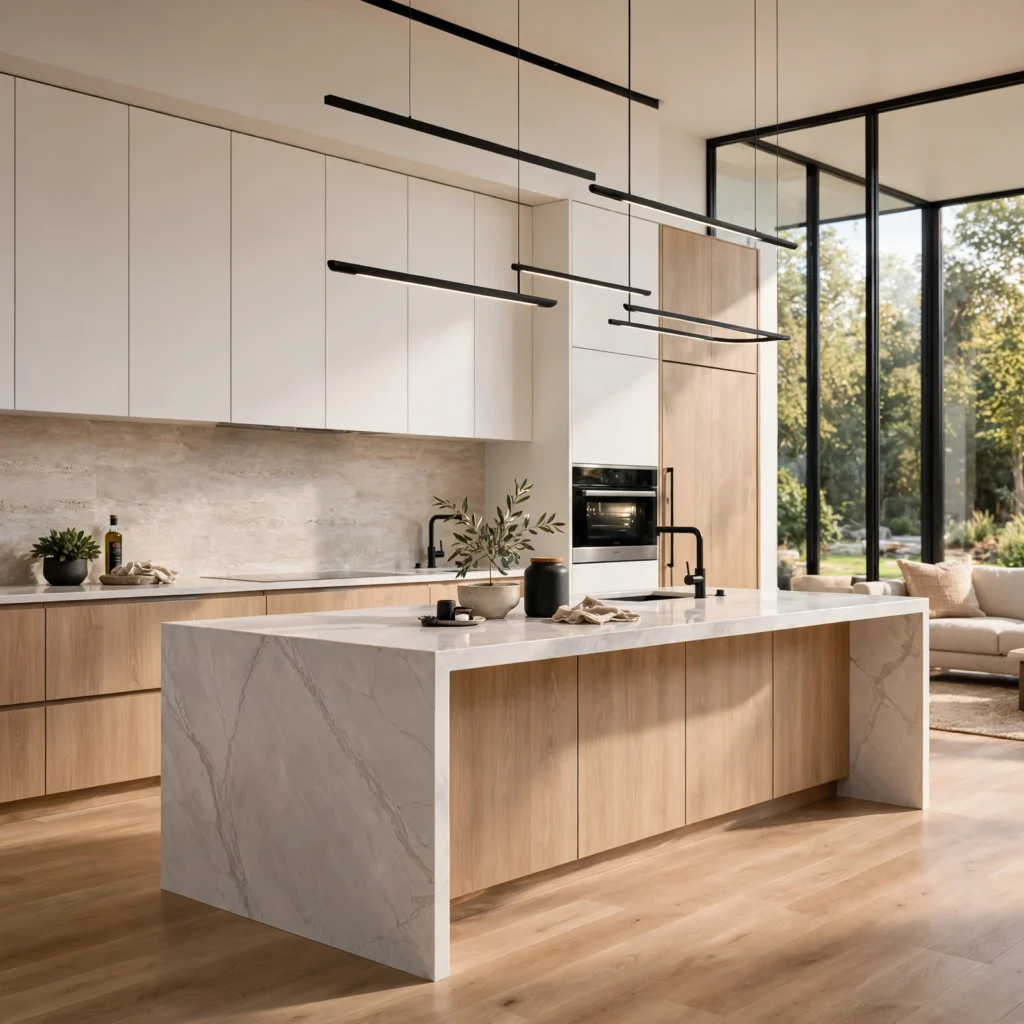
Sleek handleless cabinetry extends beyond the kitchen into bathroom vanities and built-in storage throughout the home, maintaining the same clean, uninterrupted visual line found in minimalist kitchen cabinetry across every room that includes cabinetry. This consistency reinforces modern design’s overall cohesion from room to room, rather than allowing the kitchen’s streamlined look to feel disconnected from a more traditionally detailed bathroom vanity elsewhere in the house. Choosing the same push-to-open or integrated pull mechanism throughout the home also maintains a consistent tactile experience alongside the visual one.
13. Large-Format Tile Flooring
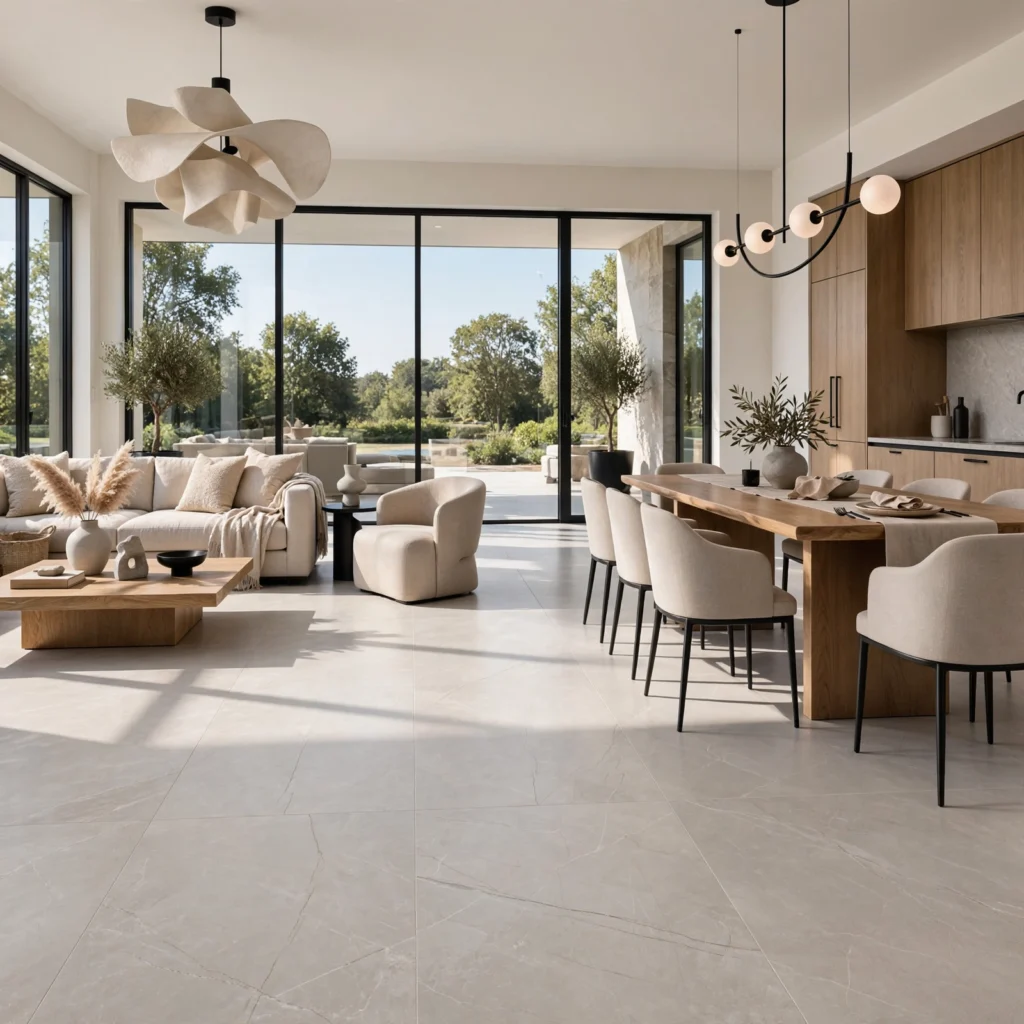
Large-format tile flooring uses oversized porcelain tiles, often twenty-four inches or larger per side, minimizing the number of visible grout lines across a floor and creating a more seamless, expansive surface that suits modern design’s overall preference for clean, uninterrupted lines. This flooring choice works particularly well in an open concept layout, where fewer grout lines help the floor read as one continuous surface flowing between connected rooms. Choosing a large format tile in a light, neutral tone reinforces both the monochromatic color approach and the sense of visual expansiveness this material choice is meant to create.
14. Indoor Living Wall
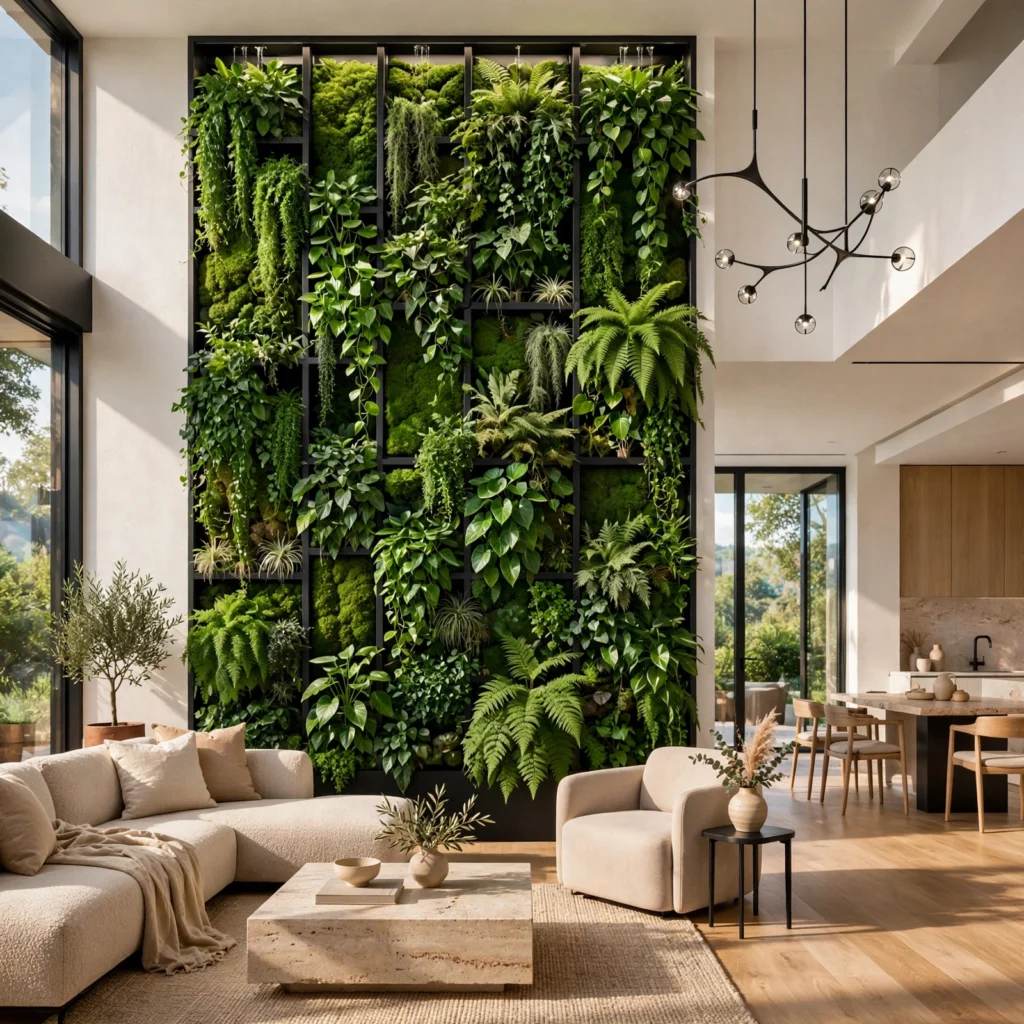
An indoor living wall incorporates a vertical garden feature, either a small dedicated section or a larger dramatic installation, bringing organic, natural texture into a style that otherwise favors hard, clean surfaces and restrained color. This detail works as an effective counterbalance to modern design’s cooler materials, softening the overall look with genuine, living greenery rather than relying entirely on furniture and textiles for warmth. Choosing a self-watering or low-maintenance living wall system reduces the ongoing care burden this more elaborate botanical feature would otherwise require.
15. Sculptural Furniture Pieces
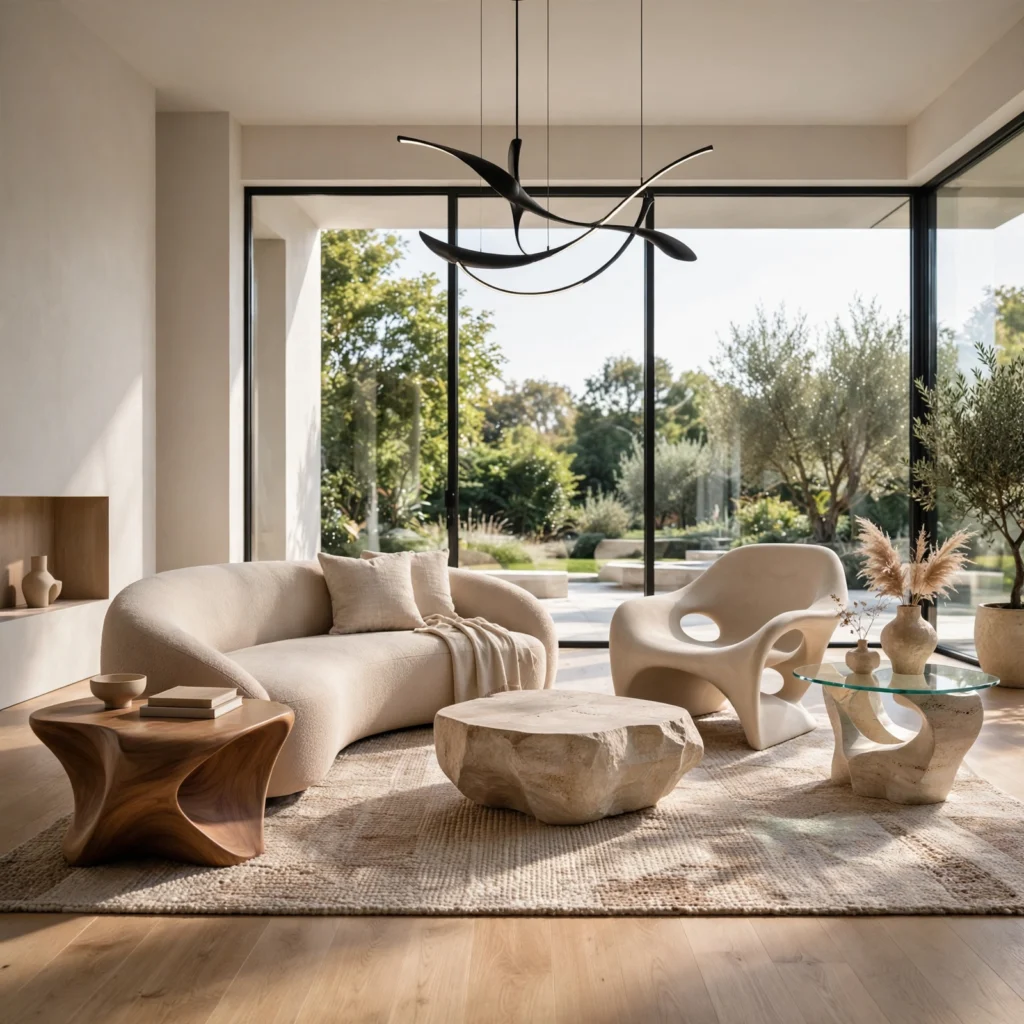
Sculptural furniture pieces treat individual chairs, tables, or lighting fixtures as functional art, choosing forms with a strong, distinctive silhouette that could stand alone as a design object even without its practical function. This detail works particularly well as a single statement piece within an otherwise more restrained room, since modern design’s overall simplicity gives a genuinely sculptural piece room to stand out rather than competing with surrounding clutter. Positioning this kind of piece where it can be viewed from multiple angles, such as in the center of an open living space, maximizes its impact as a genuine focal point.
Shop the Look
A well-executed modern house interior typically combines a restrained color and material palette with a few genuinely sculptural or statement pieces rather than filling every room with visual competition. Clean-lined furniture in a monochromatic palette, paired with matte black hardware and geometric lighting, establishes the foundation throughout the main living spaces. Large-format tile flooring and handleless cabinetry maintain that same clean line into the kitchen and bathrooms. A single sculptural furniture piece or a living wall adds warmth and a genuine focal point without disrupting the overall sense of restraint.
Common Modern House Interior Mistake to Avoid
The most common mistake is pursuing modern design’s restraint so aggressively that a home ends up feeling cold, sterile, and uninviting rather than genuinely calm and considered. Relying entirely on hard materials like concrete, glass, and polished metal without introducing any warmer textures, like wood tones or natural textiles, tends to produce this overly clinical result. Balancing modern design’s clean lines and restrained color palette with at least a few warmer, more tactile materials throughout the home prevents this common pitfall while still maintaining the style’s overall current, sleek character.
FAQs
How is modern design different from contemporary design?
Modern design refers to a specific historical style rooted in early twentieth century design principles, characterized by clean lines and function-driven simplicity, while contemporary design reflects whatever is currently popular and continues evolving over time rather than staying fixed to one particular era’s aesthetic. Though the two terms are sometimes used interchangeably in casual conversation, modern design specifically references that established historical foundation.
How do I keep a modern interior from feeling cold?
Incorporating warmer materials, like natural wood tones, textured wool or linen textiles, and living plants, throughout an otherwise restrained modern color and material palette is the most effective way to prevent the space from feeling cold or overly clinical. Layered, warmer lighting throughout the evening hours also significantly affects how inviting a modern interior feels, compared to relying on cooler, brighter light sources alone.
Is modern design more expensive than other interior styles?
Modern design isn’t inherently more expensive than other styles, though certain signature elements, like a floating staircase or extensive floor-to-ceiling glass, do require a larger investment due to their structural and engineering demands. A more modest modern interior, focused on clean-lined furniture and a restrained color palette rather than these more elaborate architectural features, can be achieved at a range of budget levels.
Can modern design work in an older, traditional home?
Modern design can work in an older home, though it typically requires more intentional effort to bridge the gap between the home’s existing traditional architectural details, like ornate trim or moldings, and modern design’s preference for clean, simple lines. Choosing modern furniture and finishes while allowing some of the home’s existing architectural character to remain visible often produces a more successful transitional result than attempting to fully strip away all traditional details.
What flooring works best for a modern house interior?
Large-format porcelain tile, polished concrete, and wide-plank engineered wood flooring all work well for a modern house interior, each supporting the style’s preference for clean, minimally interrupted surfaces. Choosing a consistent flooring material throughout connected open-concept spaces reinforces modern design’s emphasis on flow and visual continuity from room to room.
Conclusion
These modern house interior ideas rely on clean lines, a restrained color palette, and a thoughtful mix of hard and warm materials to create a look that feels both current and genuinely livable. Balance the style’s characteristic simplicity with at least a few warmer, tactile elements to avoid the overly cold, sterile result modern design sometimes risks. Save this post to Pinterest for your next home project, and check out our related post on house interior design for a broader comparison of styles if modern doesn’t turn out to be the right fit.
This list draws on years of helping homeowners translate the broad idea of modern design into specific, livable choices that hold up to daily life rather than just looking sharp in photos.