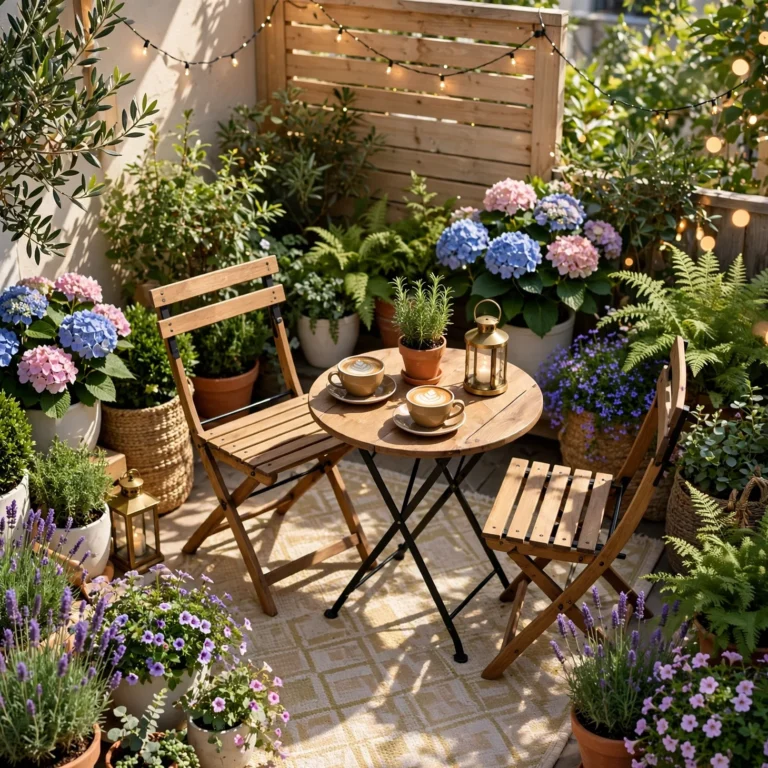
12 Smart Terrace Garden Ideas for Rooftop and Balcony Spaces
A terrace garden deals with challenges a ground-level yard never has to consider, from weight restrictions to relentless wind exposure several stories up. The right terrace garden ideas account for these constraints from the start, using lightweight materials, wind-tolerant plants, and smart drainage solutions to build a genuine garden on a surface never designed to hold soil. This post covers twelve practical terrace garden ideas, from raised planter systems to windbreak screens, with real weight and material guidance for building a rooftop or balcony space that actually holds up.
Trend & Background
Terrace gardening has expanded rapidly alongside urban density, with more people living in apartments and condos where a rooftop or balcony terrace is the only outdoor space available at all. Structural engineers and building codes increasingly factor terrace garden weight loads into renovation planning, which has pushed lightweight growing media and modular container systems from a niche product into a standard offering at most garden centers. At the same time, urban heat island effects have made rooftop greening a genuine environmental strategy in many cities, with some municipalities now offering incentives for green roof and terrace installations that reduce building cooling costs.
Key Takeaways
- These terrace garden ideas address weight limits, wind exposure, and drainage challenges unique to elevated spaces.
- Lightweight containers and modular planters reduce structural load on rooftops and balconies.
- Windbreaks and hardy plant choices protect against exposure most ground-level gardens never face.
- Several ideas combine growing space with seating or dining areas for full outdoor living.
1. Lightweight Raised Planter System
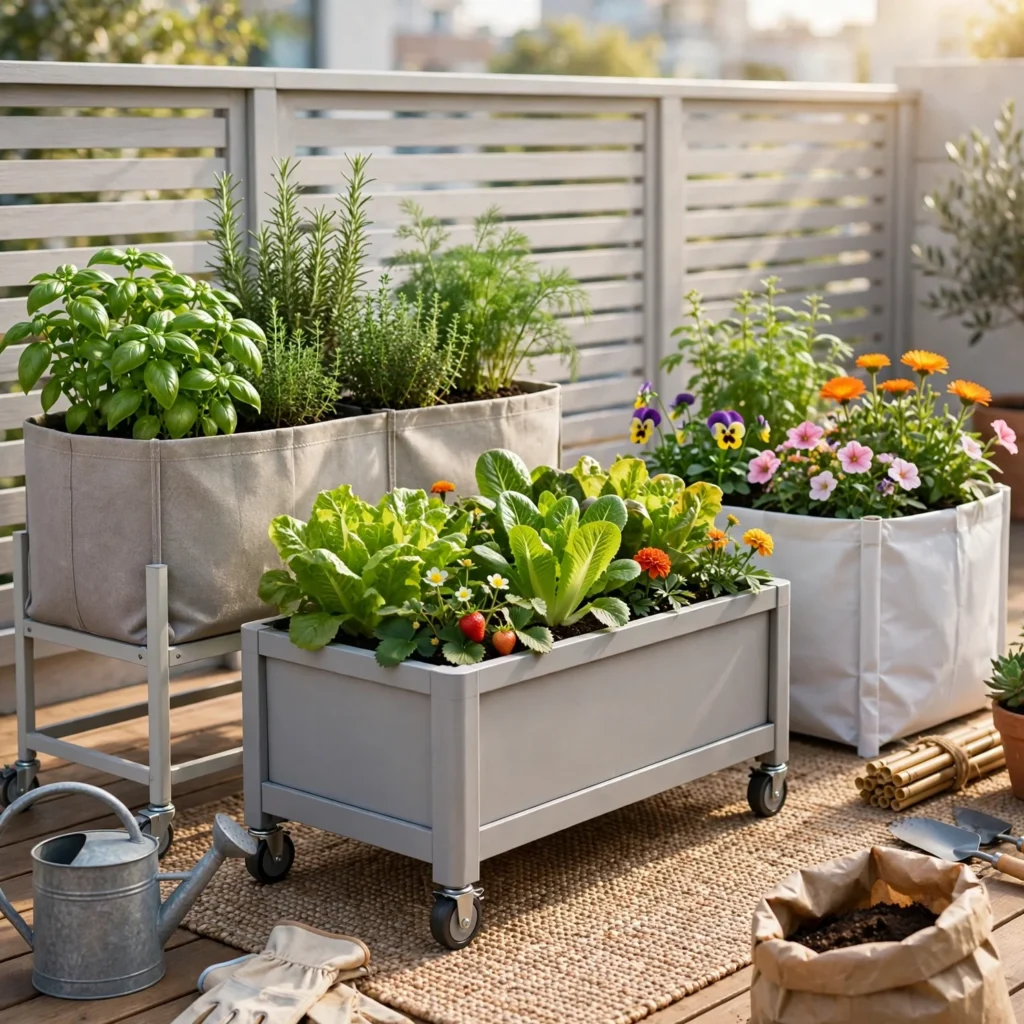
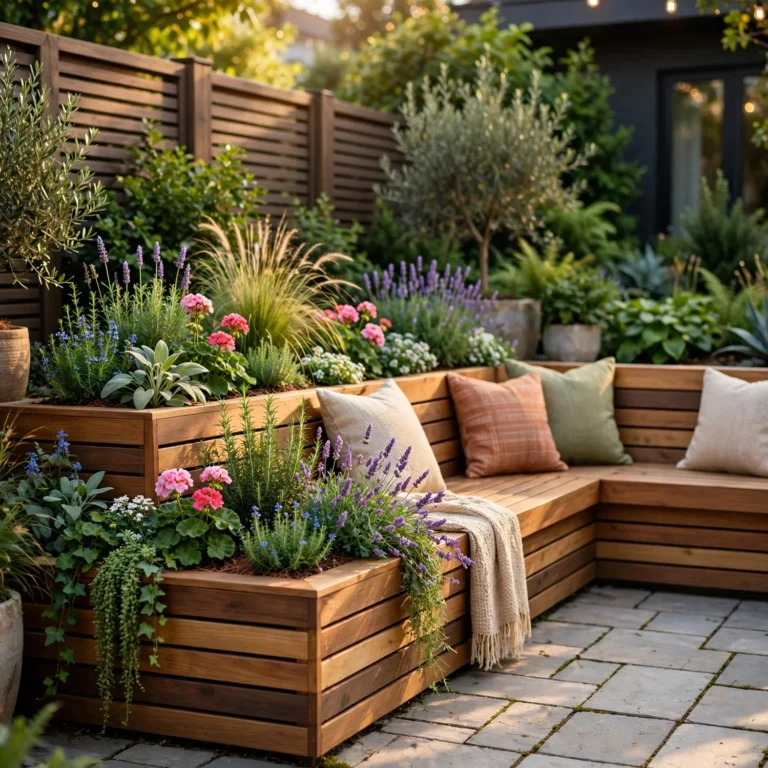
A lightweight raised planter system built from fiberglass or high-density foam core materials delivers the visual bulk of a traditional raised bed without the structural weight, which matters significantly on a terrace with load limits. These planters typically weigh a fraction of what an equivalent wood or concrete bed would, even before soil is added, making them far more terrace-friendly. Filling them with a lightweight soilless mix rather than standard garden soil cuts the total weight further while still supporting healthy root growth.
2. Windbreak Trellis Screen
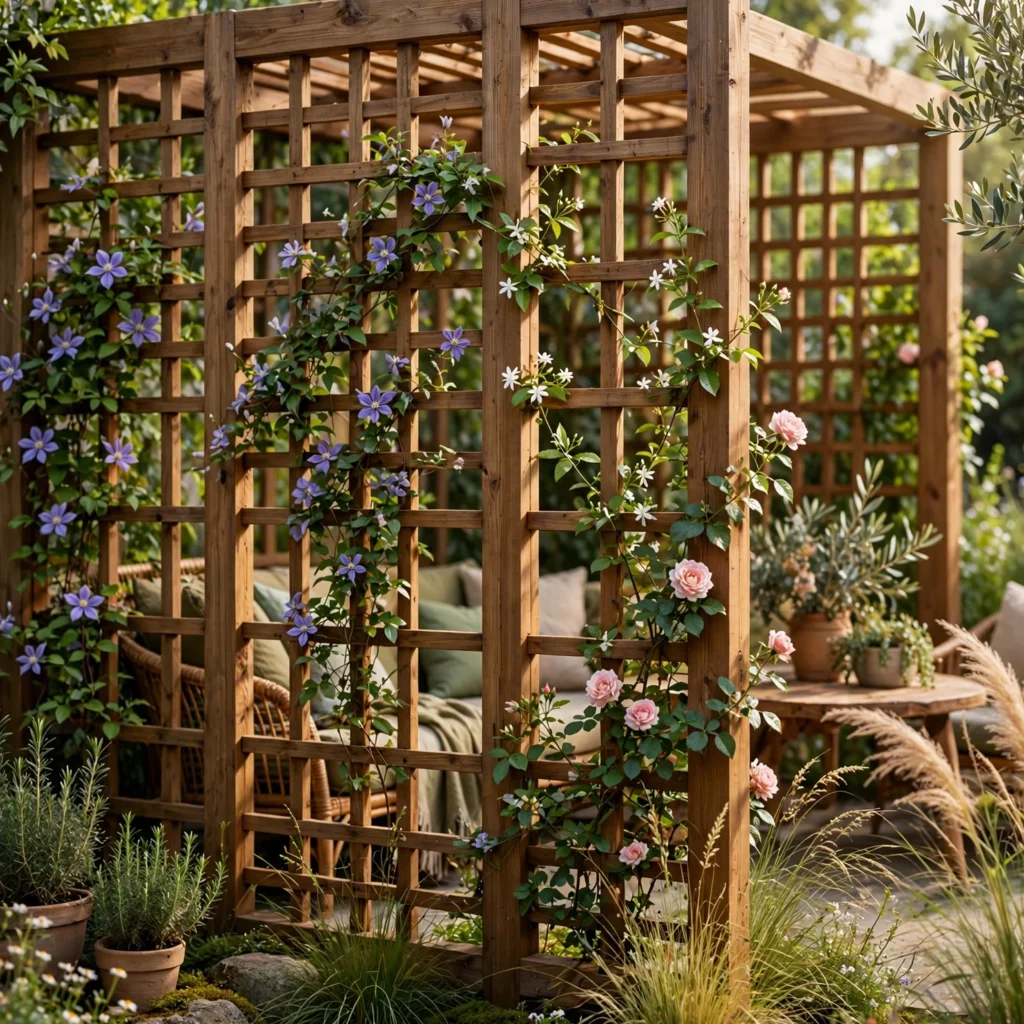
A windbreak trellis screen positioned along the exposed edge of a terrace reduces the constant wind stress that damages plants and dries out soil far faster than at ground level. A slatted wood or metal panel with roughly 30 to 50 percent openness cuts wind speed effectively without creating the pressure buildup a fully solid barrier would face in strong gusts. Training a hardy vine like Boston ivy or Virginia creeper onto the trellis adds a living element to the windbreak over time.
| Terrace Exposure | Recommended Solution | Openness Level |
| Moderate wind | Slatted trellis panel | 40-50% open |
| High wind, upper floors | Solid glass or acrylic panel | 0% open, engineered |
| Corner or edge units | Layered planting + screen | 30-40% open |
3. Modular Deck Tile Flooring
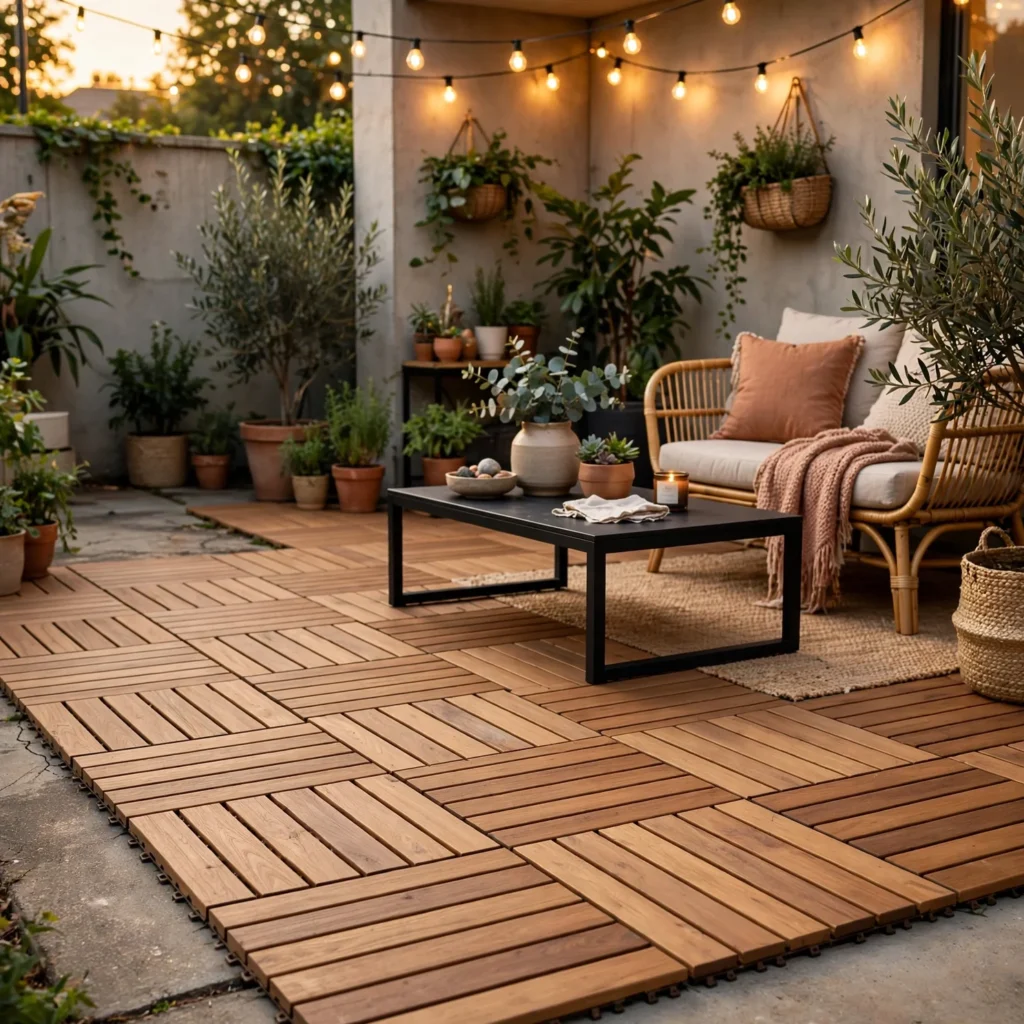
Modular deck tiles installed directly over an existing concrete or membrane rooftop surface create a finished floor without any permanent alteration to the underlying structure. Interlocking composite or wood tiles snap together over a drainage grid base, which protects the waterproofing membrane below from standing water damage. This flooring approach also allows the entire terrace to be reconfigured or removed easily if the building’s roof needs maintenance access.
4. Wind-Tolerant Container Planting
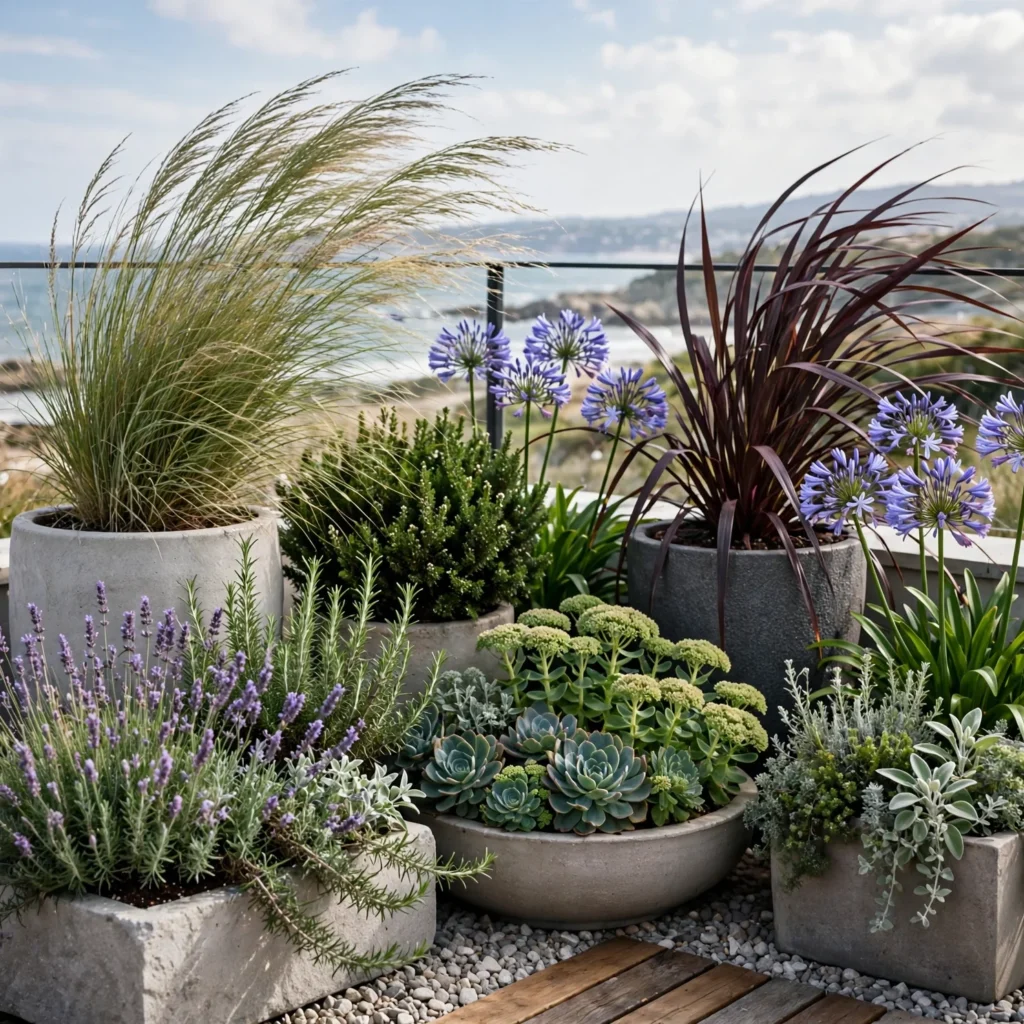
Choosing wind-tolerant plants like ornamental grasses, sedum, and dwarf conifers for terrace containers avoids the constant breakage and stress that delicate, broad-leafed plants experience at elevated, exposed heights. Feather reed grass and blue fescue both flex in wind rather than snapping, while their narrow leaf structure loses less moisture to wind desiccation than broad-leafed alternatives. Grouping these hardier plants along the most exposed edge of the terrace, with less wind-tolerant plants positioned behind them, extends what can successfully grow in a tough location.
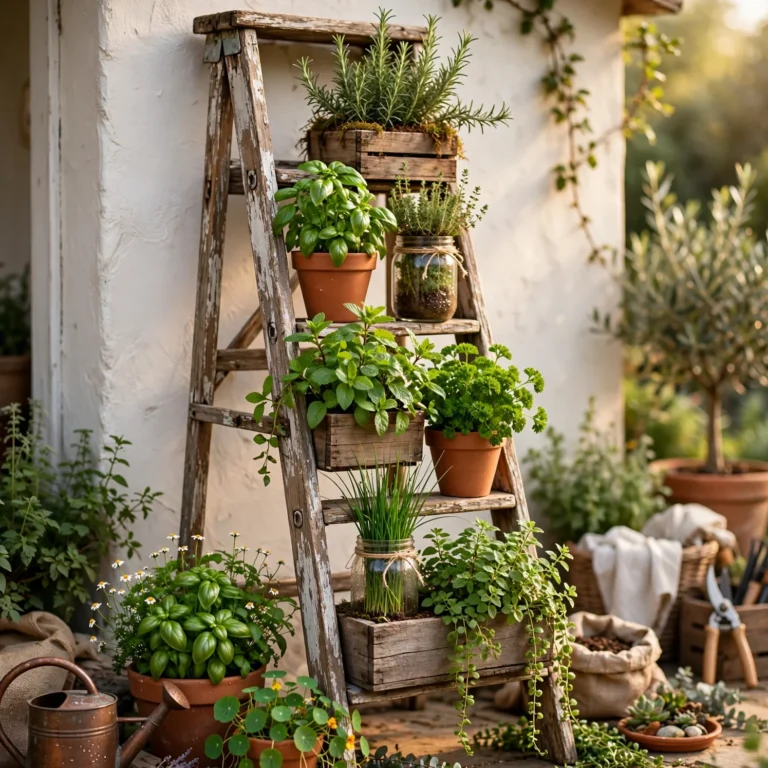
Add color and charm to your outdoor space with our herb garden ideas, filled with seasonal blooms and easy planting tips.
5. Terrace Vegetable Container Garden
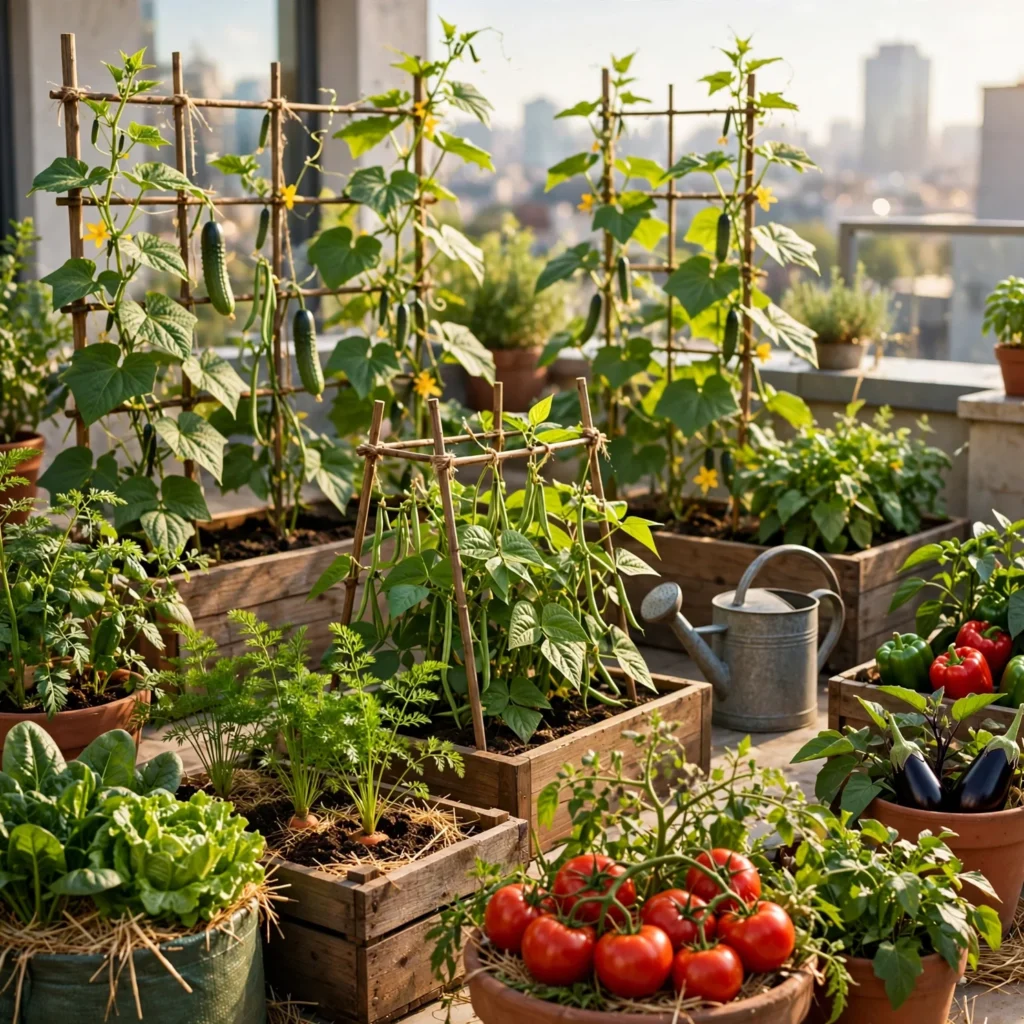
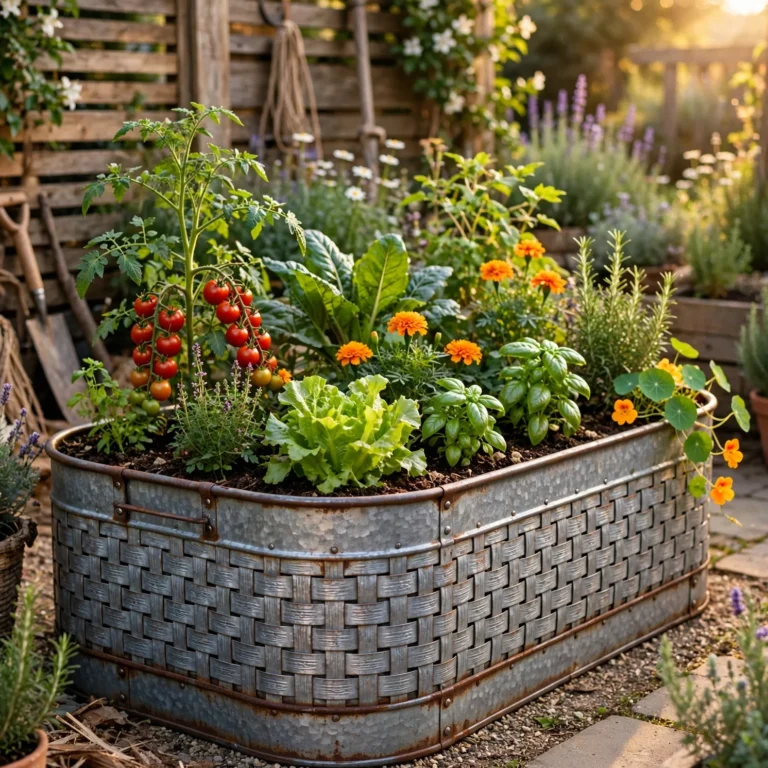
A terrace vegetable garden built entirely from large containers brings real food production to a rooftop or balcony without needing any in-ground soil access. Dwarf tomato, pepper, and bush bean varieties, all bred for container life, perform well in pots of 15 to 20 gallons positioned to catch at least six hours of direct sun. Grouping vegetable containers together on the terrace’s most sheltered side protects developing fruit from the wind damage more common on an exposed rooftop.
6. Green Roof Sedum Mat
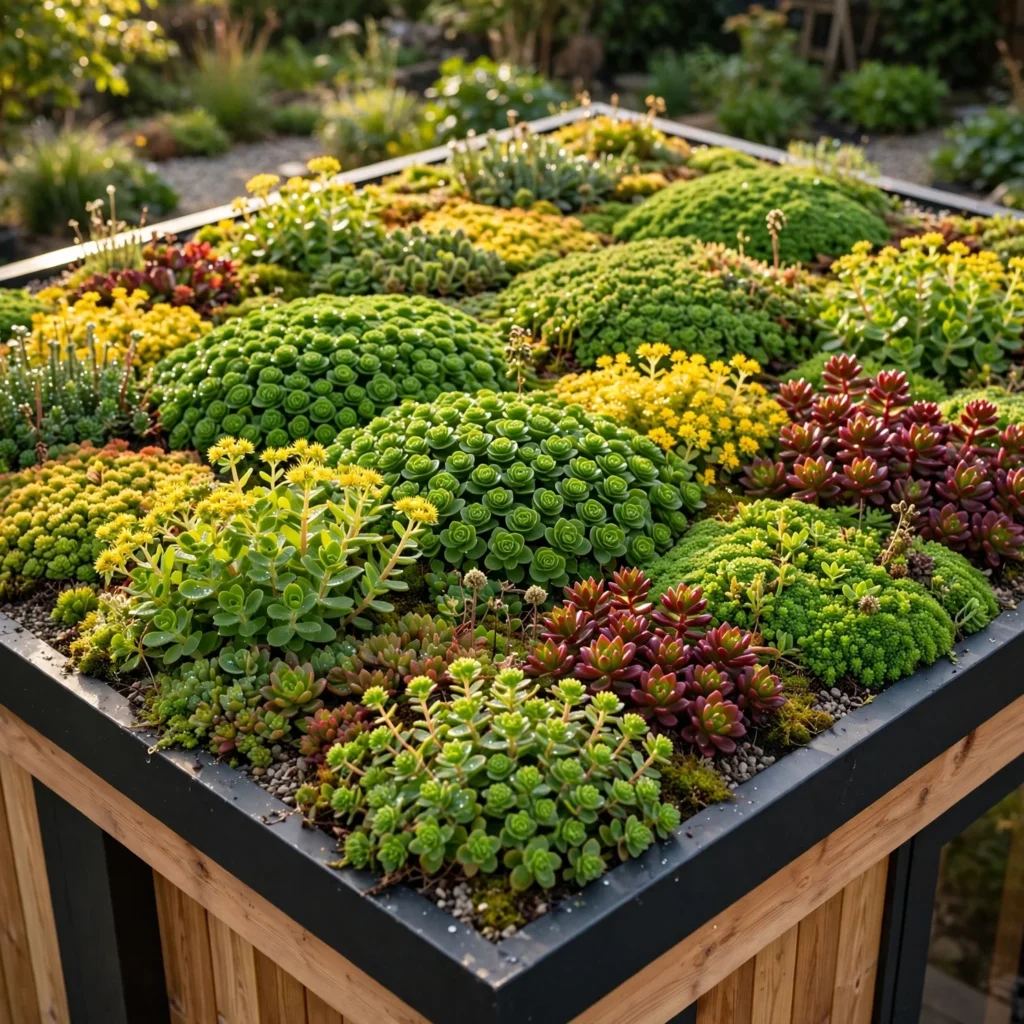
A sedum mat, pre-grown on a thin, lightweight growing medium and rolled out like turf, creates a low-maintenance green surface across a terrace or rooftop area without the weight of traditional soil-based planting. Sedum’s shallow root system and drought tolerance make it one of the few plants capable of thriving in the thin growing medium these systems typically use. This approach works particularly well for terraces prioritizing environmental benefit and visual green coverage over active gardening or harvest.
7. Terrace Dining Nook With Surrounding Planters
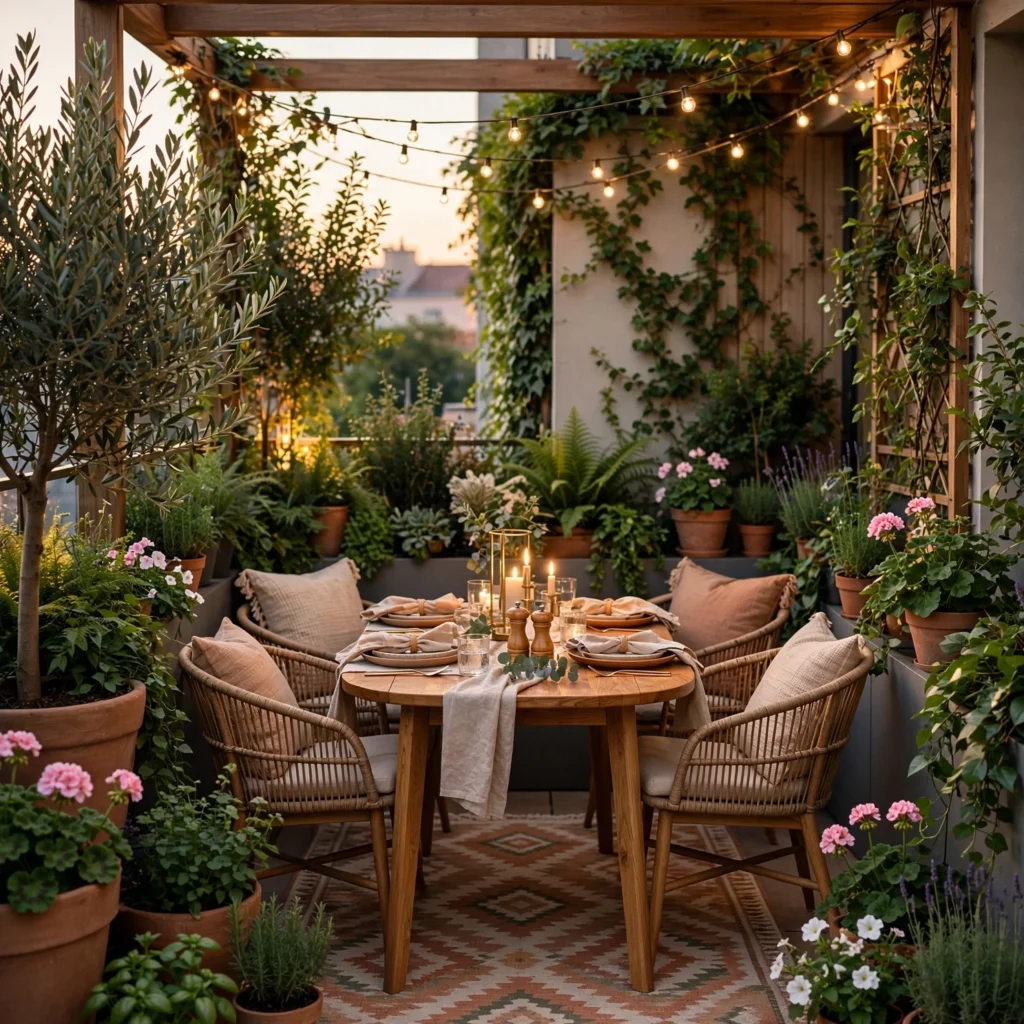
A terrace dining nook framed by tall planters on two or three sides creates an enclosed, sheltered feeling on an otherwise open and exposed rooftop. Positioning the planters to block the prevailing wind direction while leaving the view side open balances shelter with the reason most people want a terrace in the first place. Bamboo or ornamental grass in the surrounding planters adds movement and sound that further softens the exposed feeling of dining several stories up.
8. Drip Irrigation With Automatic Timer
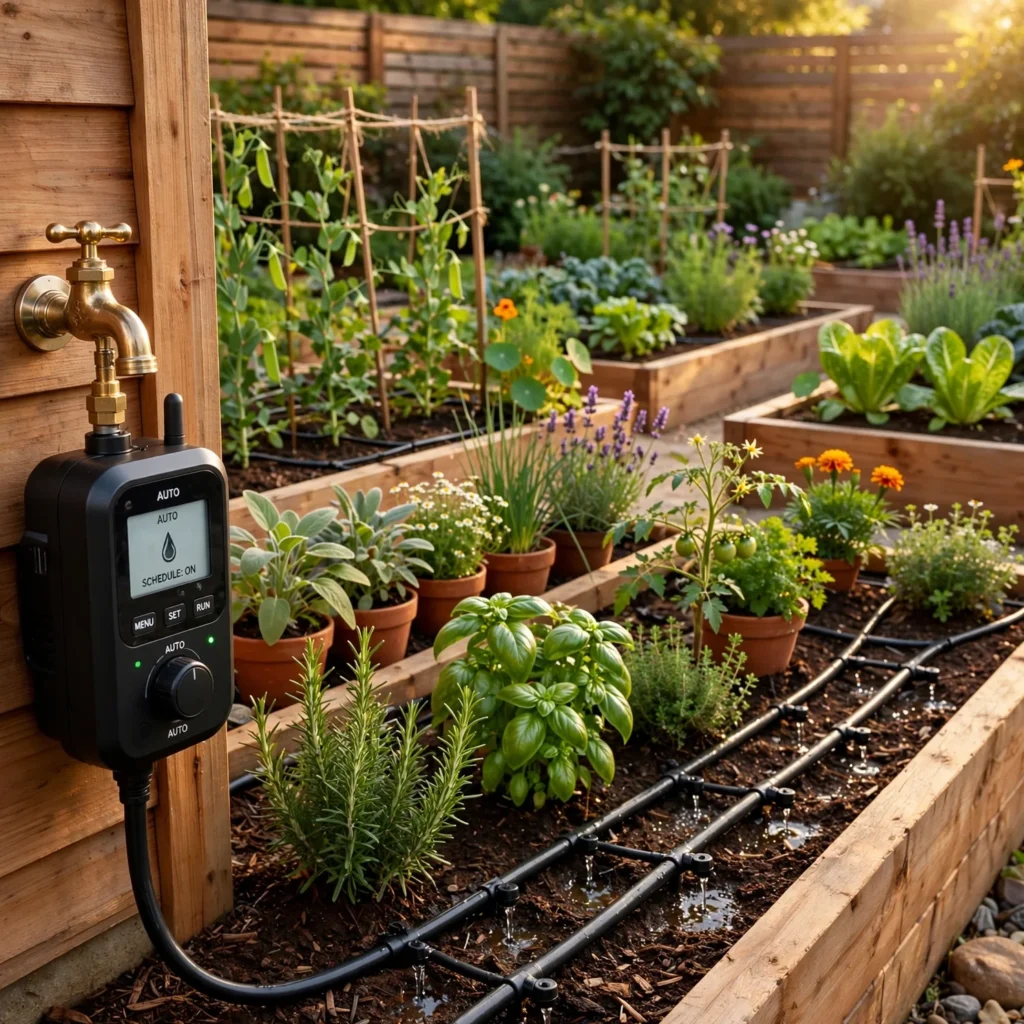
A drip irrigation system on an automatic timer solves the faster evaporation and drying that terrace containers experience compared to ground-level beds, which get some natural moisture retention from surrounding soil that elevated pots never have. Running half-inch poly tubing along the terrace edge with individual emitters at each container ensures consistent watering without daily manual effort. This setup matters even more on terraces than on patios, since a single missed watering day in full sun and wind can stress container plants considerably faster.
9. Vertical Living Wall Panel
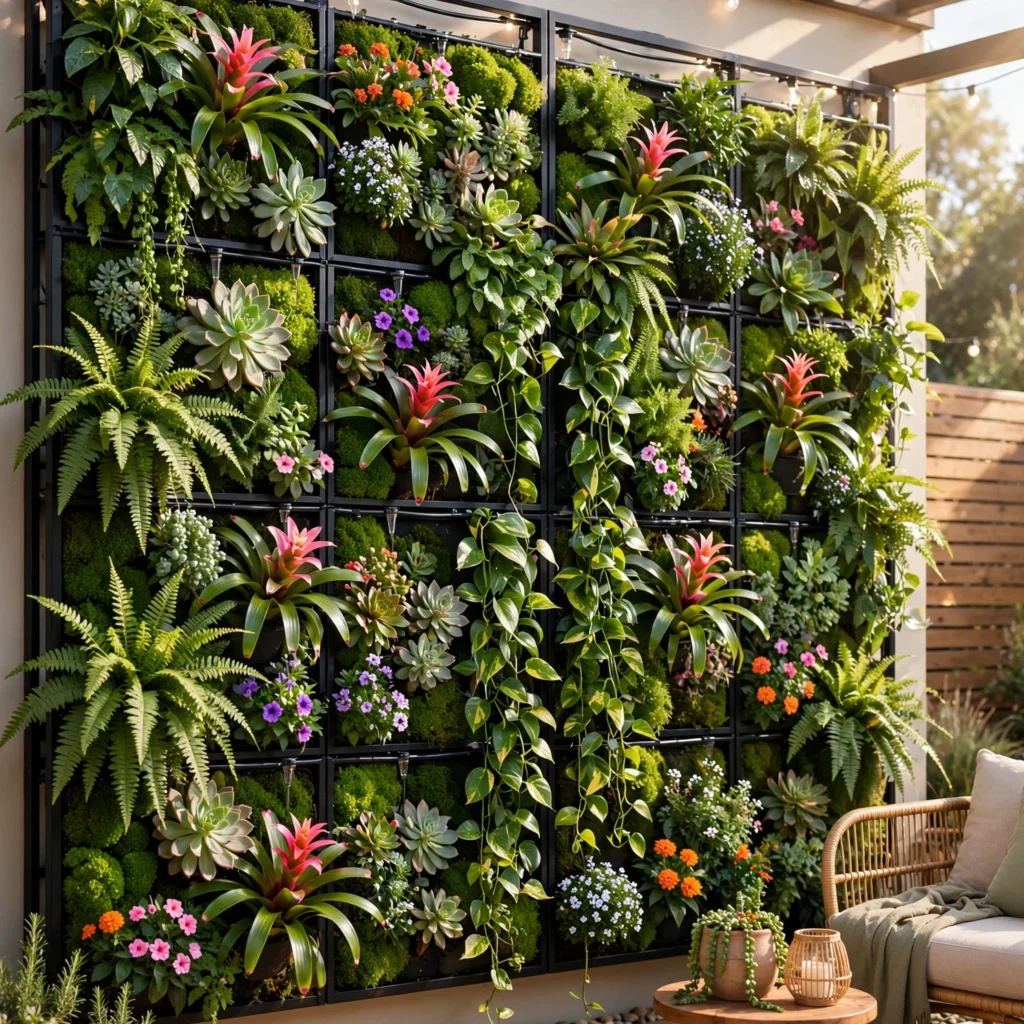
A vertical living wall panel mounted to a terrace parapet or exterior wall adds significant planting area without consuming any of the terrace’s limited floor space. Modular felt pocket systems stay lightweight enough for most terrace weight allowances, while succulents and shallow-rooted herbs handle the thin soil depth these systems typically offer. Positioning the wall on the terrace’s most sheltered side protects the shallow-rooted plants from the wind exposure that would otherwise dry them out quickly.
10. String Light Canopy
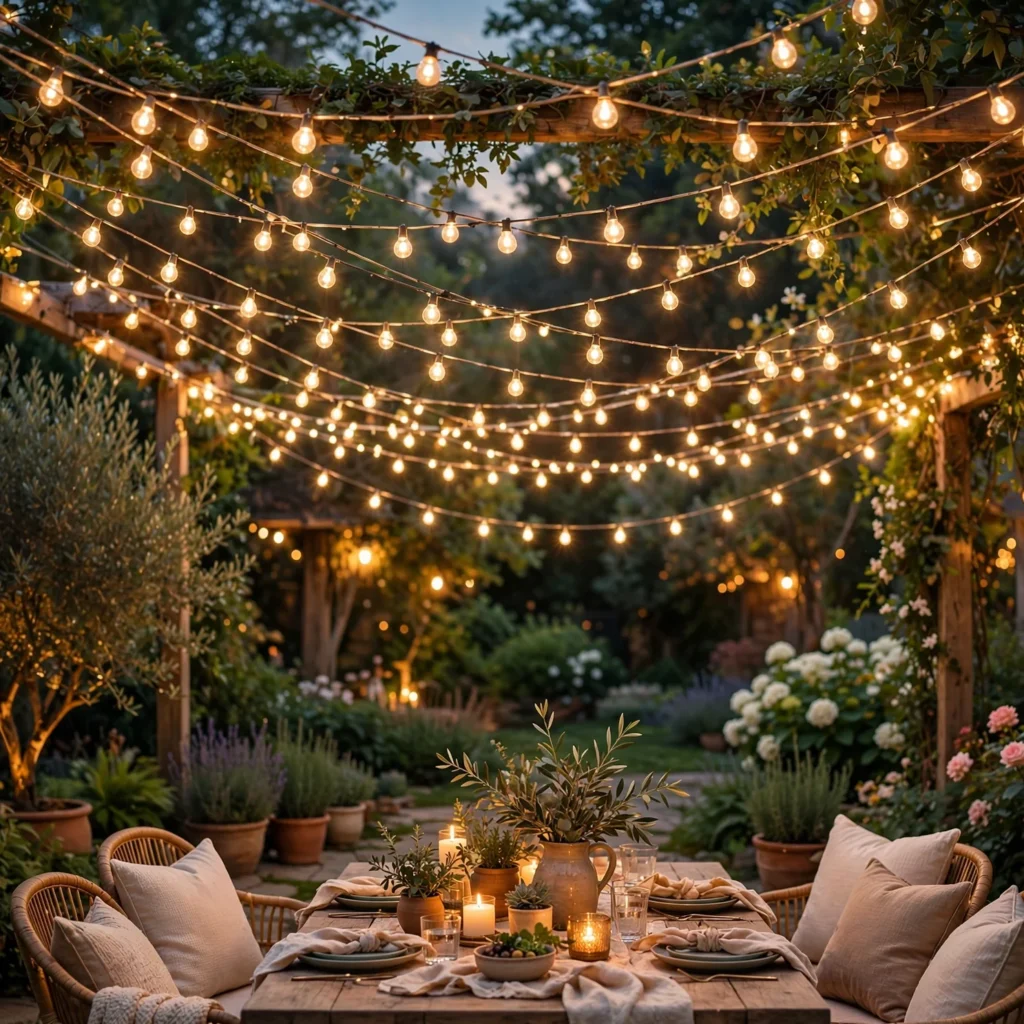
A string light canopy strung between posts or a pergola frame extends terrace use into the evening while adding a soft overhead visual element to a space that otherwise has open sky as its only ceiling. Warm white bulbs in the 2700K range read as more inviting than cooler LED tones, and running the strings in a crisscross pattern across the terrace ceiling creates more even coverage than a single straight line. Securing the lights firmly at each anchor point matters more on a terrace than a ground-level patio, given the additional wind exposure at height.
11. Rooftop Pergola With Shade Sail
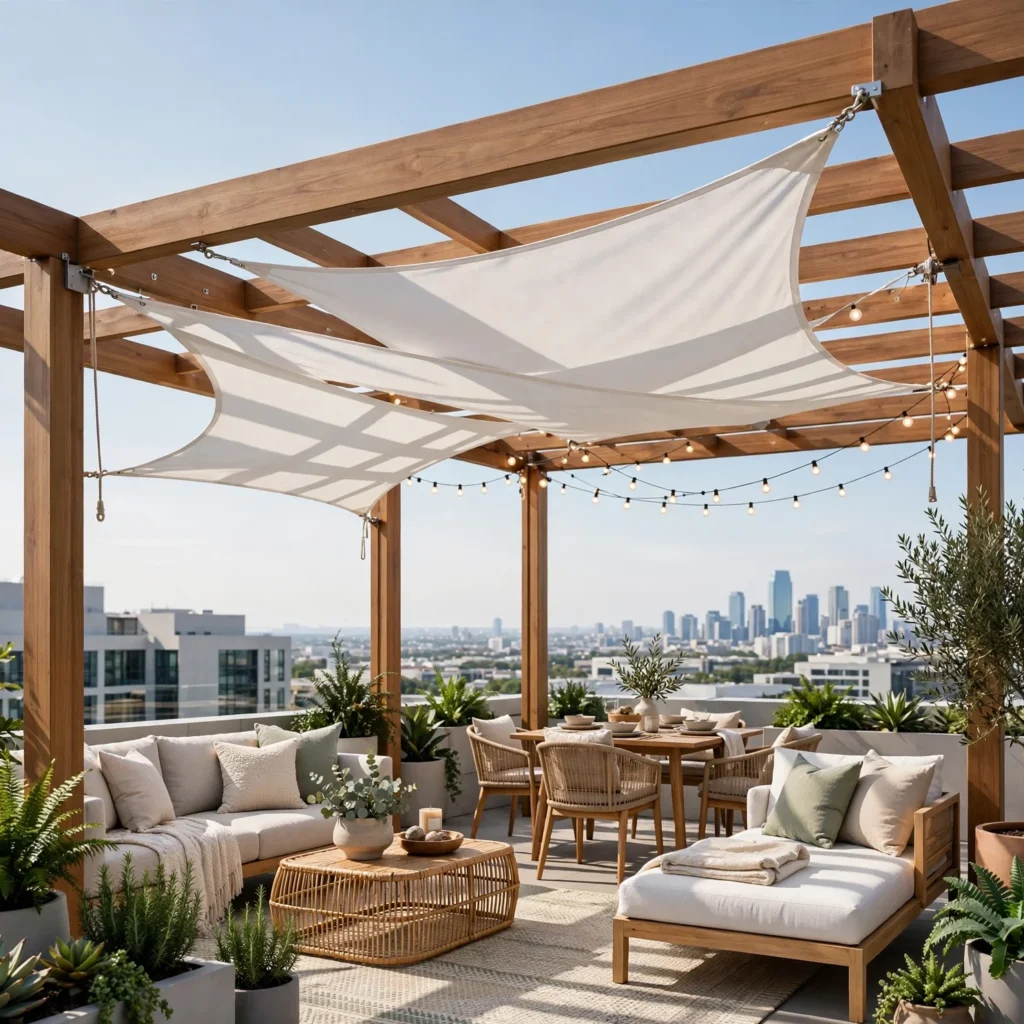
A pergola fitted with a retractable shade sail addresses one of the biggest challenges of terrace gardening: intense, unfiltered sun exposure at height with no surrounding trees or buildings to provide natural shade. A powder-coated aluminum frame resists the corrosion that wood or untreated steel would face from constant weather exposure at rooftop height. Choosing a light-colored shade sail reflects more heat than a dark one, keeping the terrace usable even during peak summer afternoon hours.
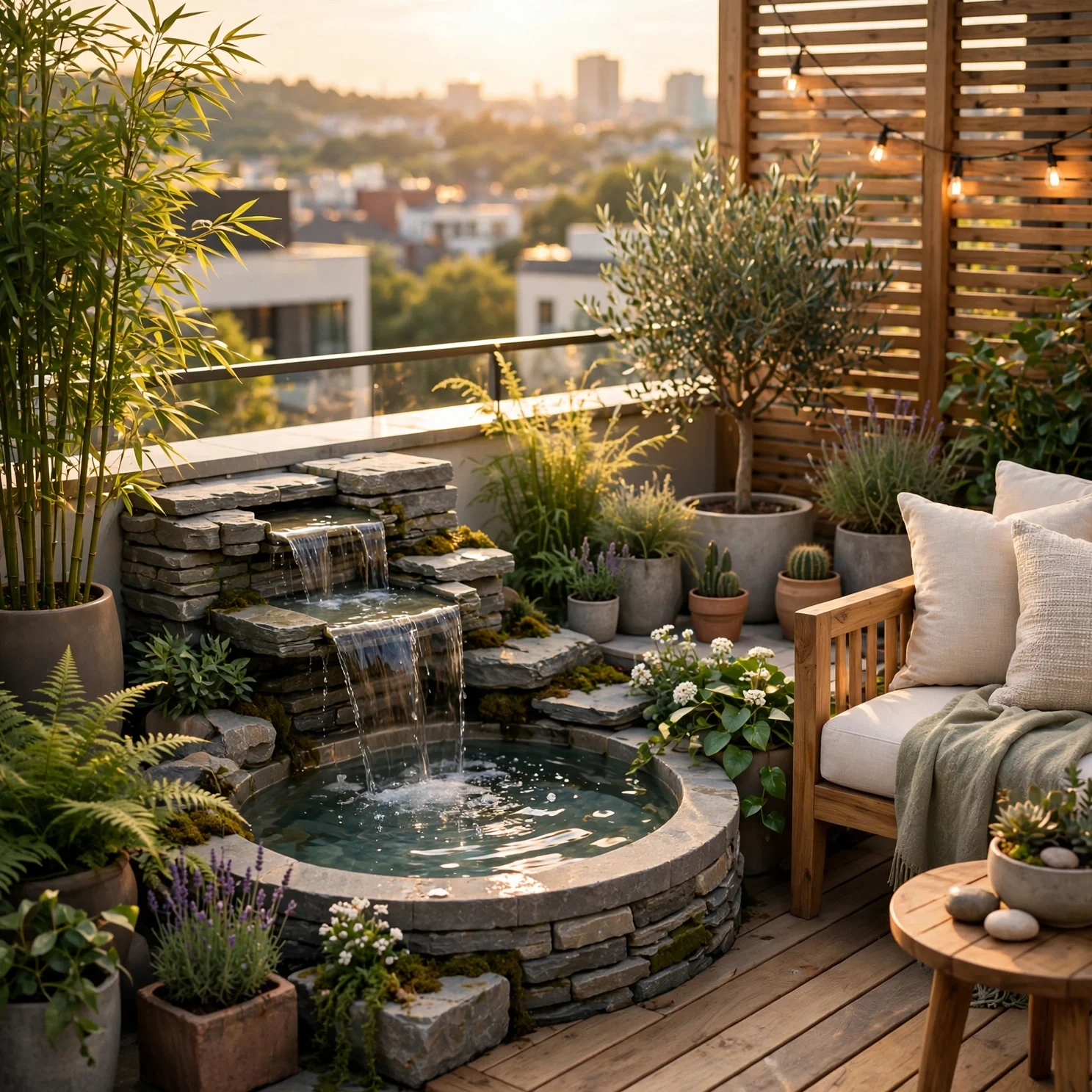
12. Terrace Garden Ideas With a Compact Water Feature
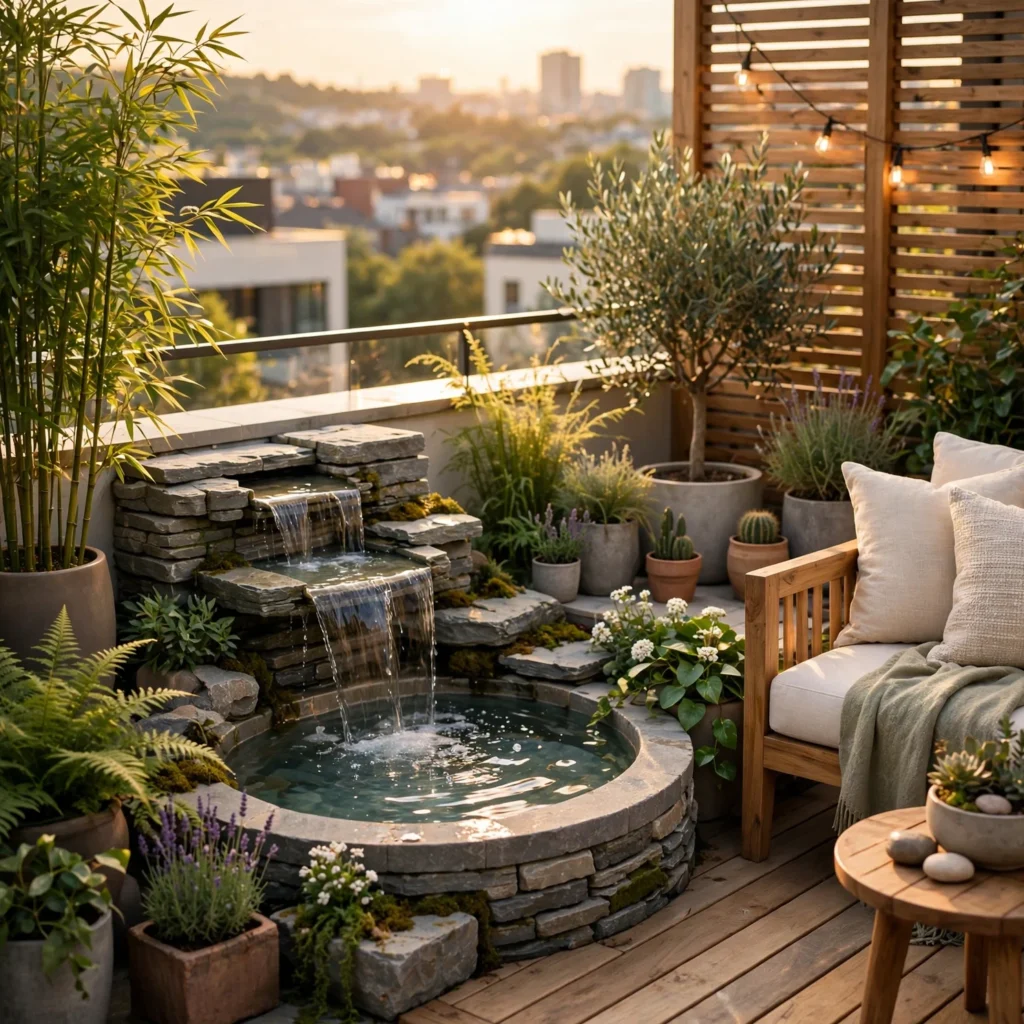
Among the more calming terrace garden ideas is a compact, self-contained water feature built from a lightweight resin basin and a small submersible pump, adding movement and sound without the structural weight concern a stone or concrete fountain would raise at height. Even a basin 16 to 18 inches across can produce enough bubbling sound to help mask street noise that carries up from several stories below. Positioning the feature away from the terrace edge reduces both wind-driven splash and the visual weight it would otherwise add near the exposed boundary.
Shop the Look
A fiberglass raised planter set adds structural bed height without the weight penalty of wood or concrete alternatives. A slatted cedar windbreak panel reduces wind stress along an exposed terrace edge while still allowing partial airflow. A retractable shade sail with a powder-coated aluminum frame handles rooftop sun exposure better than fixed fabric canopies. A battery-powered drip irrigation timer keeps container watering consistent without requiring daily manual attention.
Common Mistake to Avoid
The most common mistake in terrace gardening is filling large containers with standard garden soil instead of a lightweight soilless mix, which can push a terrace well past its structural weight allowance once fully watered and planted. A single 20-gallon container filled with regular garden soil and saturated with water can weigh well over 150 pounds, and multiplying that across a dozen containers adds up fast on a surface with defined load limits. Checking the terrace’s weight capacity with a structural engineer or the building’s documentation before installing anything, and choosing lightweight growing media throughout, avoids this serious safety issue.
FAQs
How much weight can a terrace or rooftop garden hold?
Terrace and rooftop weight capacity varies enormously depending on the building’s construction and age, which makes checking official structural documentation or consulting an engineer essential before installing anything substantial. Many residential balconies are only rated for standard live loads that leave little margin for heavy soil-filled containers once furniture and people are factored in. Lightweight growing media and fiberglass or foam-core planters help stay within typical limits, but confirming the actual number for a specific structure remains the only reliable approach.
What plants survive best in windy terrace conditions?
Ornamental grasses, sedum, and dwarf conifers survive windy terrace conditions best, since their narrow or waxy leaf structures lose less moisture to wind desiccation than broad-leafed plants. Lavender and rosemary also tolerate wind reasonably well once established, given their naturally drought-adapted growth habit. Broad-leafed, delicate plants like hydrangea or hosta struggle considerably in exposed, elevated locations and generally need a sheltered spot behind a windbreak to survive long-term.
How do I protect a terrace garden from strong wind?
Protecting a terrace garden from strong wind typically involves installing a partial windbreak, like a slatted trellis or panel with some openness, since a fully solid barrier can actually create damaging pressure differentials in high gusts. Positioning taller, hardier plants along the most exposed edge to shield more delicate plants behind them extends what can successfully grow on the terrace overall. Securing all containers and structures firmly, rather than relying on weight alone, prevents wind damage during unexpected storm gusts.
Can you have a vegetable garden on a terrace?
A vegetable garden works well on a terrace using large containers of 15 to 20 gallons for dwarf and patio-bred varieties specifically developed for container life. Positioning containers on the terrace’s most sheltered side protects developing fruit and flowers from wind damage more common at rooftop or upper-floor height. Six or more hours of direct sun daily matters as much on a terrace as anywhere else, though the intensity of unfiltered rooftop sun sometimes means afternoon shade protection helps more than it would at ground level.
What is the best flooring for a terrace garden?
Modular composite deck tiles or interlocking rubber pavers work well for terrace flooring since they install without permanent alteration to the underlying roof membrane and include built-in drainage to protect the waterproofing below. Lightweight porcelain pavers on adjustable pedestals offer a more upscale look while still allowing water to drain freely underneath. Whatever material is chosen, ensuring proper drainage to the terrace’s existing roof drains prevents water pooling that could damage the structure over time.
Conclusion
These terrace garden ideas prove that structural limits and wind exposure don’t rule out a genuine garden at height, whether that means a lightweight raised planter system or a full pergola with a retractable shade sail. Starting with a weight capacity check and a windbreak solution before adding plants keeps a terrace garden project both safe and successful from the first season. Save this post to Pinterest for reference, and check the related post on patio garden ideas for pairing inspiration.